What happened?
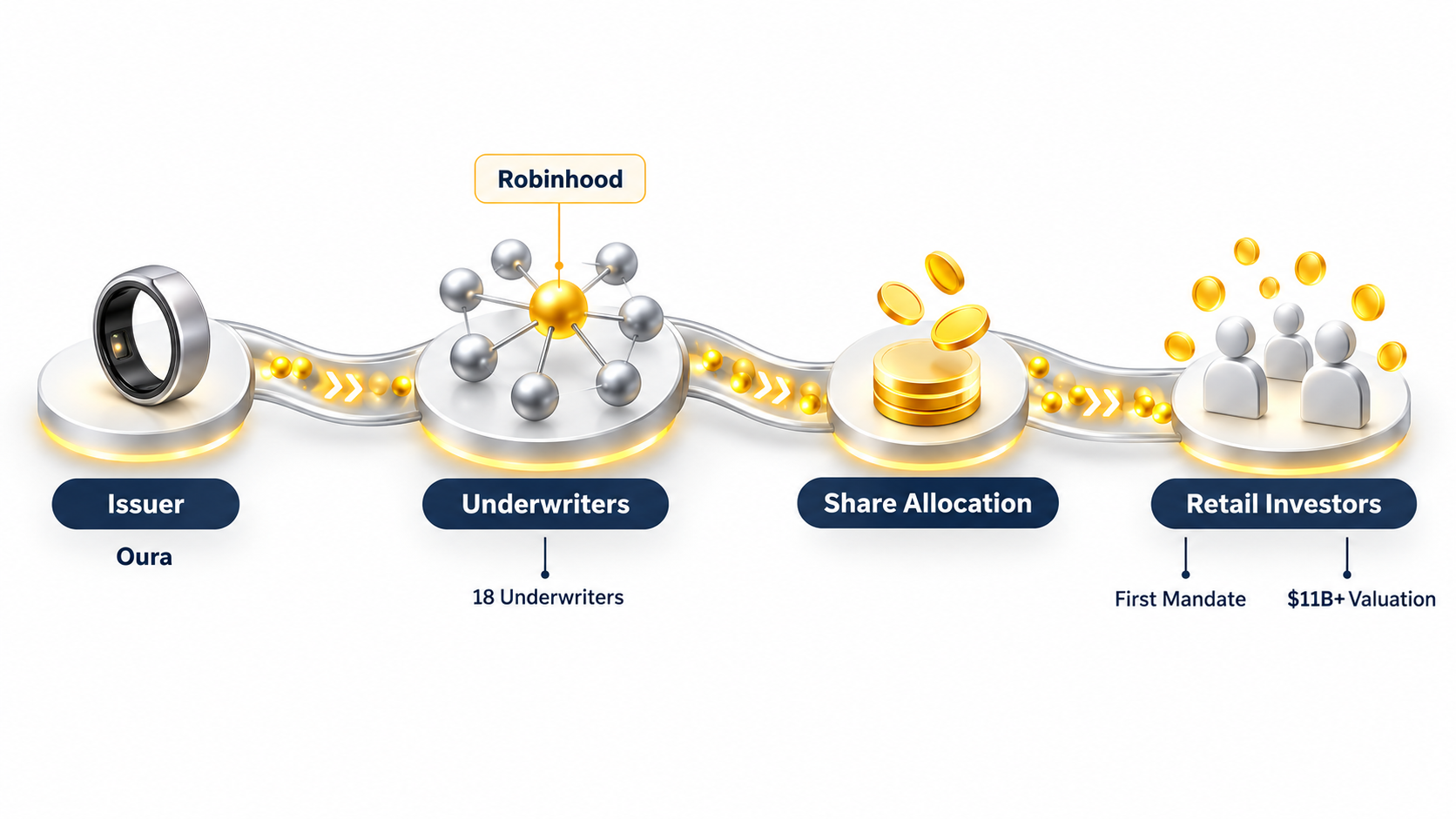
Robinhood has won a formal role in the planned initial public offering of Oura, the company known for its health-tracking smart ring. The Wall Street Journal reported that Robinhood is listed among 18 underwriters on the deal. It sits at the end of the underwriting group, so this is not yet a lead-bank assignment. Even so, it is Robinhood’s first official IPO underwriting mandate.
That distinction matters. Robinhood has already allowed customers to participate in selected IPOs through its IPO Access service. In that model, Robinhood mainly distributes shares to its users. Underwriting goes a step further. An underwriter helps organize an offering, works with the issuer and other banks, and receives a portion of the deal fees.
Oura is reportedly seeking a valuation above $11 billion. That makes the listing a visible test case for Robinhood’s entry into equity capital markets.
Why is Robinhood entering IPO underwriting?
Robinhood began as a commission-free trading app, but its business has expanded well beyond stock orders. The company now earns money from options, crypto, interest income, subscriptions and other financial services. IPO underwriting adds another possible revenue stream.
The logic is simple: Robinhood has millions of retail customers who may want access to new listings. Companies going public want broad demand and strong brand awareness. Robinhood can connect the two groups. Its customer base therefore becomes more than a trading audience; it can become a distribution network for new securities.
This also fits Robinhood’s wider move into capital markets and tokenized assets. Readers who want the background can see how Robinhood stock tokens work and what Robinhood Chain is designed to do.
What does the Oura deal mean for HOOD stock?
The immediate financial effect is likely to be modest because Robinhood is one member of a large underwriting group. The bigger signal is that issuers and established banks are willing to include it in a traditional Wall Street process.
Investors should watch three practical points. First, does Robinhood win more mandates after Oura? One deal proves access; repeated deals would show a real business line. Second, does the company move higher in future underwriting groups? A more senior position generally brings more responsibility, influence and fees. Third, does IPO Access increase customer activity without creating large compliance costs?
If those pieces develop together, underwriting could deepen Robinhood’s relationship with both companies and investors. If the Oura role remains a one-off, its effect on long-term earnings will be limited.
The opportunity and the pressure
Traditional IPO underwriting is dominated by large banks with long corporate relationships. Robinhood brings a different advantage: direct reach to retail investors. That can help an issuer build a wider shareholder base, but Robinhood still needs the research, compliance, allocation and execution capabilities expected in a major offering.
Market conditions also matter. IPO revenue is cyclical. When equity markets are strong, more companies list and fee pools expand. When volatility rises or valuations fall, deals are often delayed. Underwriting can diversify Robinhood’s business, but it will not remove market sensitivity.
What should investors watch next?
- Oura’s filing and pricing: demand for the deal will show how valuable Robinhood’s retail distribution can be.
- Future mandates: another underwriting assignment would turn this from an experiment into a pattern.
- Fee disclosure: Robinhood may eventually provide more detail on capital-markets revenue.
- Customer participation: strong IPO Access use could support engagement across the platform.
The story is therefore larger than one smart-ring IPO. Robinhood is testing whether its consumer trading platform can become part of the infrastructure that brings companies to public markets. That is the clearest reason this news matters to HOOD stock.
For more context on activity around the company’s blockchain strategy, read the update on Robinhood Chain DEX volume.
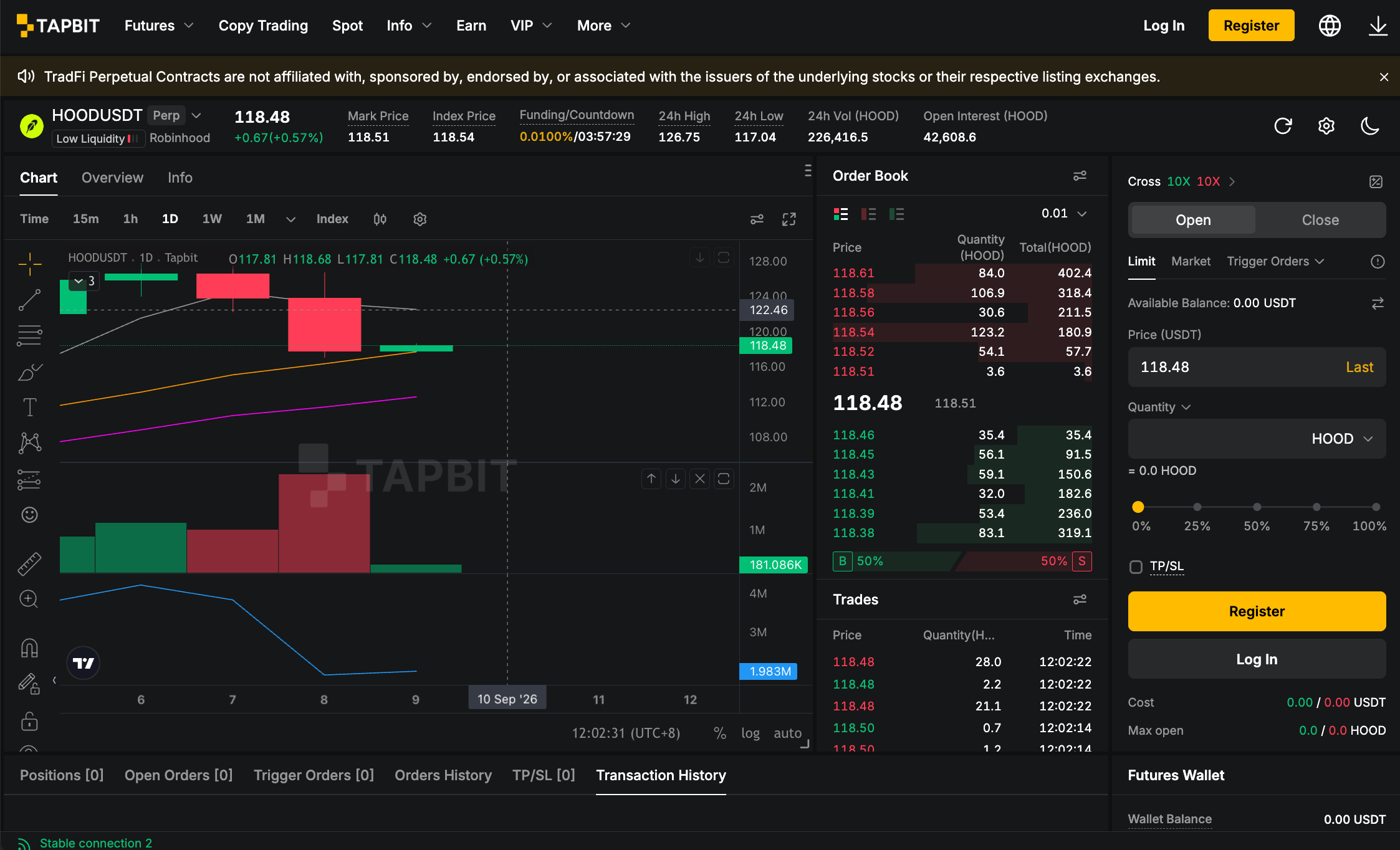
Follow HOOD on Tapbit
Create a Tapbit account, then open the HOOD-USDT futures market to check the live contract price, funding rate and market depth.