

Robinhood Chain has become one of the most watched new blockchain ecosystems after its decentralized exchanges processed more than $1 billion in daily volume. Recent reports cited a first billion-dollar day near $1.06 billion, while another dashboard-based report put daily DEX volume near $1.595 billion. These figures should not be forced into one exact number: data providers may use different time zones, chains, pools and rolling windows.
The record is still meaningful. It shows that activity on the chain has moved beyond a quiet launch phase and that traders are willing to route substantial notional volume through its applications. The harder question is what type of activity produced the volume, how much fee revenue remains after incentives and whether the growth can persist when speculative momentum cools.
What Is the Robinhood Chain DEX Volume Record?
A DEX volume record measures the notional value of swaps completed on decentralized exchanges during a defined period. It does not measure the number of unique users, the amount of liquidity locked or the net value created for token holders. A single wallet can trade repeatedly, and volatile assets can generate high volume without attracting long-term capital.
Readers should therefore record the source, timestamp and methodology beside every number. A daily figure of $1.06 billion and a rolling figure of $1.595 billion may both be accurate within their own definitions. The article should emphasize the direction—volume has crossed the billion-dollar threshold—while avoiding false precision.
Which Activities Are Driving the Volume?
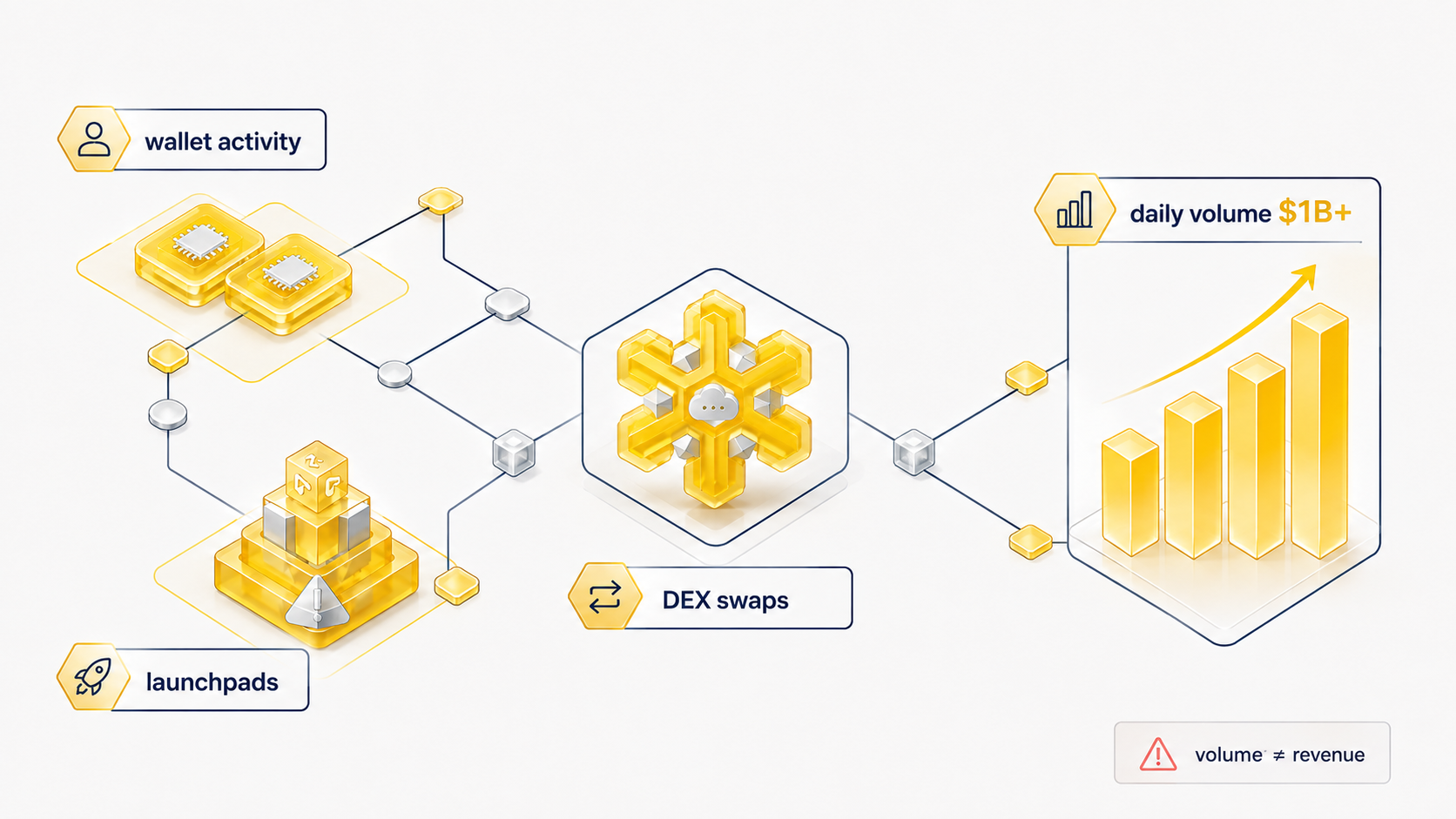
Coverage points to launchpads and memecoins as important sources of flow. These markets can create rapid turnover because traders rotate between new token launches, liquidity pools and short-lived narratives. The activity is useful for measuring attention, but it can also be fragile. When price volatility falls or a launchpad stops producing new tokens, volume can contract quickly.
Tokenized stocks are a separate use case. Robinhood Chain was designed around a broader on-chain trading vision, yet current volume reports suggest that speculative tokens may account for a significant share of activity. That distinction matters for evaluating the network: meme-driven volume may boost fees today, while tokenized-stock adoption would require deeper liquidity, reliable pricing, compliance controls and sustained user demand.
How Does Robinhood Chain Connect to Arbitrum?
Robinhood Chain uses Arbitrum technology, which links the new network to a wider Layer 2 ecosystem. This connection can strengthen the narrative around Arbitrum infrastructure and help explain why traders have watched ARB during the volume surge. It does not mean that every dollar of DEX activity is paid directly to ARB holders.
Value accrual depends on the actual fee path, governance decisions, incentives, token supply and the portion of revenue retained by each participant. A strong ecosystem headline can improve sentiment before fundamentals are fully visible. That is why a volume record should be treated as evidence of usage, not as a guaranteed token-price catalyst.
Does Higher DEX Volume Create Sustainable Revenue?
Fees are generated when swaps pay liquidity providers, protocol operators or other designated recipients. The gross fee number can look large, but incentives, rebates, liquidity costs and infrastructure expenses affect the amount that remains. Sustainable revenue requires repeat users, reliable liquidity and activity that does not depend entirely on temporary rewards.
Useful follow-up metrics include daily active traders, stablecoin balances, total value locked, fee revenue after incentives, pool concentration and the share of volume produced by the largest wallets. If only volume rises while users and retained liquidity remain flat, the record may be more speculative than structural.
Readers should also check whether the same wallets appear repeatedly across pools and launchpad launches. High turnover can be economically useful for a DEX, but it can also magnify slippage and create a misleading impression of broad adoption. A transparent article should label the data source, explain the measurement window and avoid converting a single day into an annualized revenue forecast.
Robinhood Chain and ARB/UNI: Three Market Scenarios
Bull scenario: Volume remains above launch levels, tokenized-stock activity expands and fee retention improves. In this case, ARB and UNI could receive a stronger ecosystem narrative, although direct value accrual would still require confirmation.
Base scenario: Volume normalizes after the launchpad and memecoin surge but remains healthy. The chain becomes a relevant venue, while token prices respond mainly to broader DeFi liquidity and market sentiment.
Bear scenario: Speculative users leave, liquidity thins and the reported record proves difficult to repeat. ARB and UNI may then retrace as traders separate short-term activity from durable fundamentals.
How to Trade HOOD, ARB or UNI Futures
Tapbit provides HOOD-USDT perpetual futures for Robinhood-related price exposure. This is not ownership of Robinhood Chain, its applications, user fees or any tokenized stock. Traders can also review ARB-USDT futures or UNI-USDT futures as separate ecosystem references, not as guaranteed DEX-volume exposure.
Perpetual futures use margin and can be affected by funding, mark price, index price and liquidation. Before opening a position, review the contract specifications and consider whether the underlying news actually relates to the selected ticker. New users can create an account and inspect the futures interface before trading.
Bottom Line
Robinhood Chain’s billion-dollar DEX-volume milestone confirms strong attention, but the composition and durability of that volume matter more than one headline number. Launchpads and memecoins may be driving much of the flow, while tokenized-stock adoption remains a separate test. HOOD-USDT, ARB-USDT and UNI-USDT provide different price exposures and should not be treated as interchangeable.
FAQ
What is Robinhood Chain?
Robinhood Chain is a blockchain ecosystem designed to support on-chain trading activity, including decentralized applications and tokenized-market use cases.
Why is Robinhood Chain DEX volume rising?
Recent coverage points to launchpads, memecoins and broader speculative activity, although exact shares depend on the data source.
Does DEX volume directly increase ARB value?
No. Volume can strengthen an ecosystem narrative, but token value accrual depends on fees, governance, supply and actual revenue distribution.
Is HOOD-USDT the same as owning Robinhood?
No. HOOD-USDT is a perpetual futures contract for price exposure and does not provide Robinhood shares, voting rights or ownership of Robinhood Chain.


