
The gold price forecast for 2026–2027 is supported by central banks that want more reserve diversification, but challenged by the possibility of higher U.S. interest rates. Gold can rise when investors seek protection from geopolitical or currency risk. It can also pause when government bonds offer a more attractive yield.
Our base view is that gold remains structurally supported but moves through wide ranges. The market first needs to hold its core support zone. A return toward $4,900 becomes more likely if the dollar weakens, real yields fall and central-bank demand stays firm. A deeper decline becomes more likely if inflation keeps rates high while the dollar strengthens.
Where Gold Starts in September 2026
Spot gold was near $4,390.50 per ounce on September 8, down about 0.3% in the Reuters market snapshot. U.S. gold futures were near $4,435. The immediate pressure came from higher oil prices, strong U.S. job growth and a market that was assigning a greater chance to another Federal Reserve rate increase.
This current price is only the starting point. Readers looking for the structure behind tokenized gold can first review what Tether Gold (XAUT) is. That article explains the asset; this article focuses on the future gold-price path.
Why Interest Rates Matter for Gold
Gold does not pay interest. When inflation-adjusted bond yields rise, holding cash or bonds becomes more attractive. Investors may then reduce gold exposure even when inflation is elevated. When real yields fall, the opportunity cost of holding gold falls with them.
The direction of rates matters more than a single policy decision. A central bank can keep its policy rate unchanged while market yields rise because investors expect tighter policy later. Gold therefore reacts to inflation data, employment reports and bond-market pricing before an official decision arrives.
Why Central Banks Keep Buying Gold
Central banks hold reserves to protect payment capacity and confidence in their currencies. Gold offers an asset that is not the liability of another country. When reserve managers want less concentration in major foreign currencies or government bonds, they can increase gold holdings.
This demand is slower than speculative trading but can be more persistent. Goldman Sachs Research has argued that central-bank buying and lower expectations for U.S. rate increases could lift gold toward $4,900 by the end of 2026. The exact target matters less than the mechanism: recurring official demand can absorb supply when private investors hesitate.
Key Gold Levels for 2026–2027
| Zone | Meaning | What could move gold there |
|---|---|---|
| Below $4,300 | Pressure is overpowering the recent support area. | Higher real yields, a stronger dollar or weaker investment demand. |
| $4,300–$4,600 | Base consolidation range around current conditions. | Central-bank buying offsets tight monetary policy. |
| $4,600–$4,900 | Renewed upside phase. | Falling rate expectations, softer dollar and continued official demand. |
| Above $4,900 | Breakout beyond the main institutional target area. | A strong combination of monetary easing, reserve buying and geopolitical demand. |
These levels should be read as scenario zones, not as a daily path. Gold can move rapidly between them when interest-rate expectations change. The more useful question is which economic condition is pushing the price into a new zone.
What Could Push Gold Higher?

- Lower real yields: reduces the return advantage of bonds over gold.
- A weaker dollar: makes dollar-priced gold less expensive for buyers using other currencies.
- Central-bank purchases: creates a steady source of demand.
- Geopolitical stress: raises demand for assets used to protect purchasing power.
- ETF inflows: shows private investors are joining official-sector demand.
What Could Hold Gold Back?
The clearest pressure would be a combination of persistent inflation, higher real yields and a stronger dollar. In that setting, gold’s inflation-hedge appeal may remain, but investors can receive a higher yield elsewhere. ETF outflows would add another source of selling.
Oil is relevant because a sharp oil rise can increase inflation expectations and geopolitical demand at the same time. The first effect can lift interest rates, while the second can support gold. This is why gold does not always move in one fixed direction when oil rises. Tapbit Learn’s oil-price explainer covers that transmission in more detail.
Gold Exposure Through XAUT-USDT
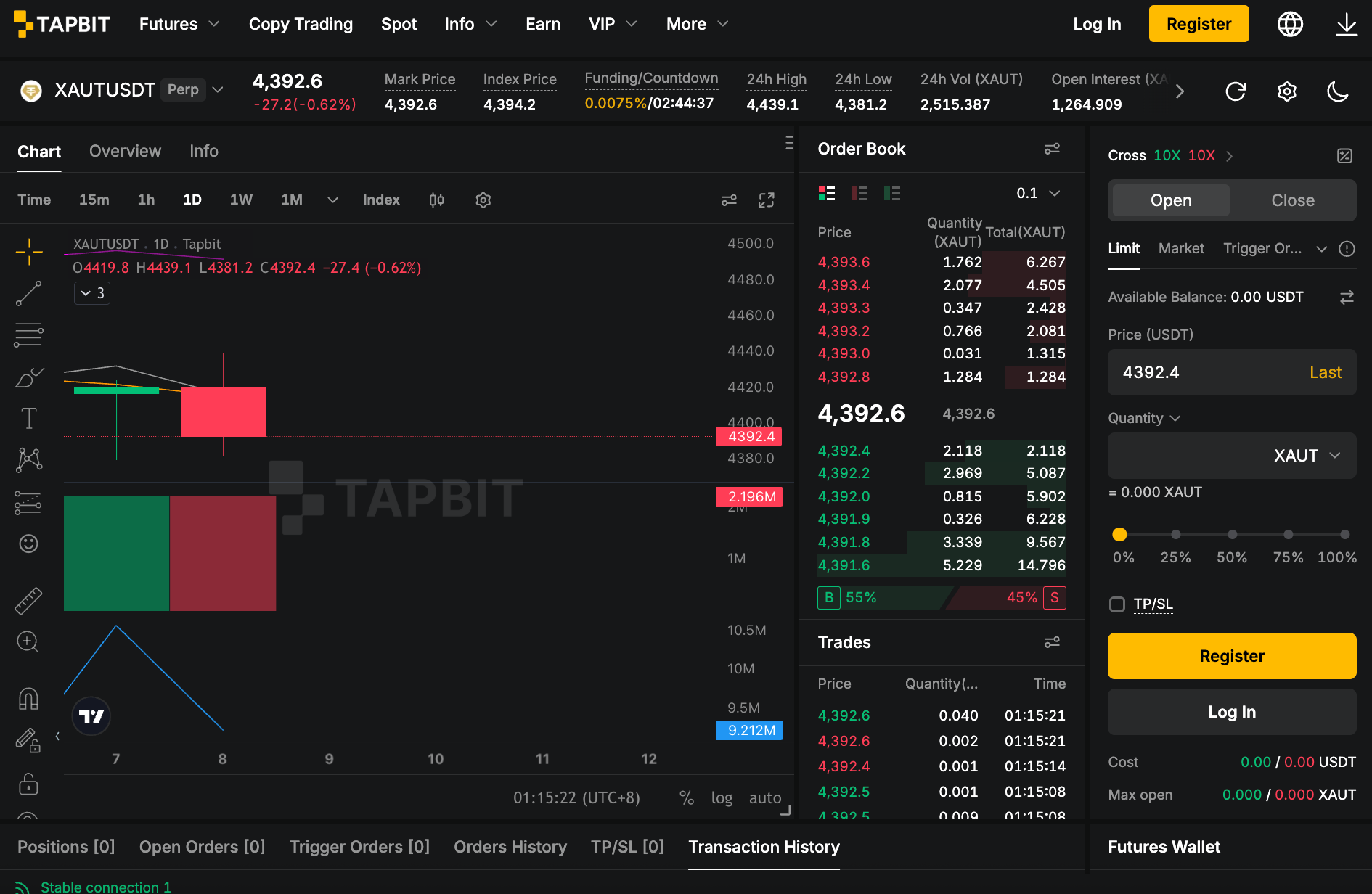
Tapbit provides an XAUT-USDT futures market for users following tokenized-gold price movements. Open the contract page, choose a direction and order type, enter the size, then review margin and order details before confirming. Readers interested in yield products can also review how XAUT Earn works.
Conclusion
The gold price forecast for 2026–2027 remains positive when central-bank demand is strong and real yields stop rising. The main base range is $4,300–$4,600, while $4,900 is the next major upside area supported by the institutional forecast. Inflation, interest rates and the dollar will determine how quickly gold can move between those levels.


