

OpenAI and Anthropic Pre-IPO Perpetuals: What Happened?
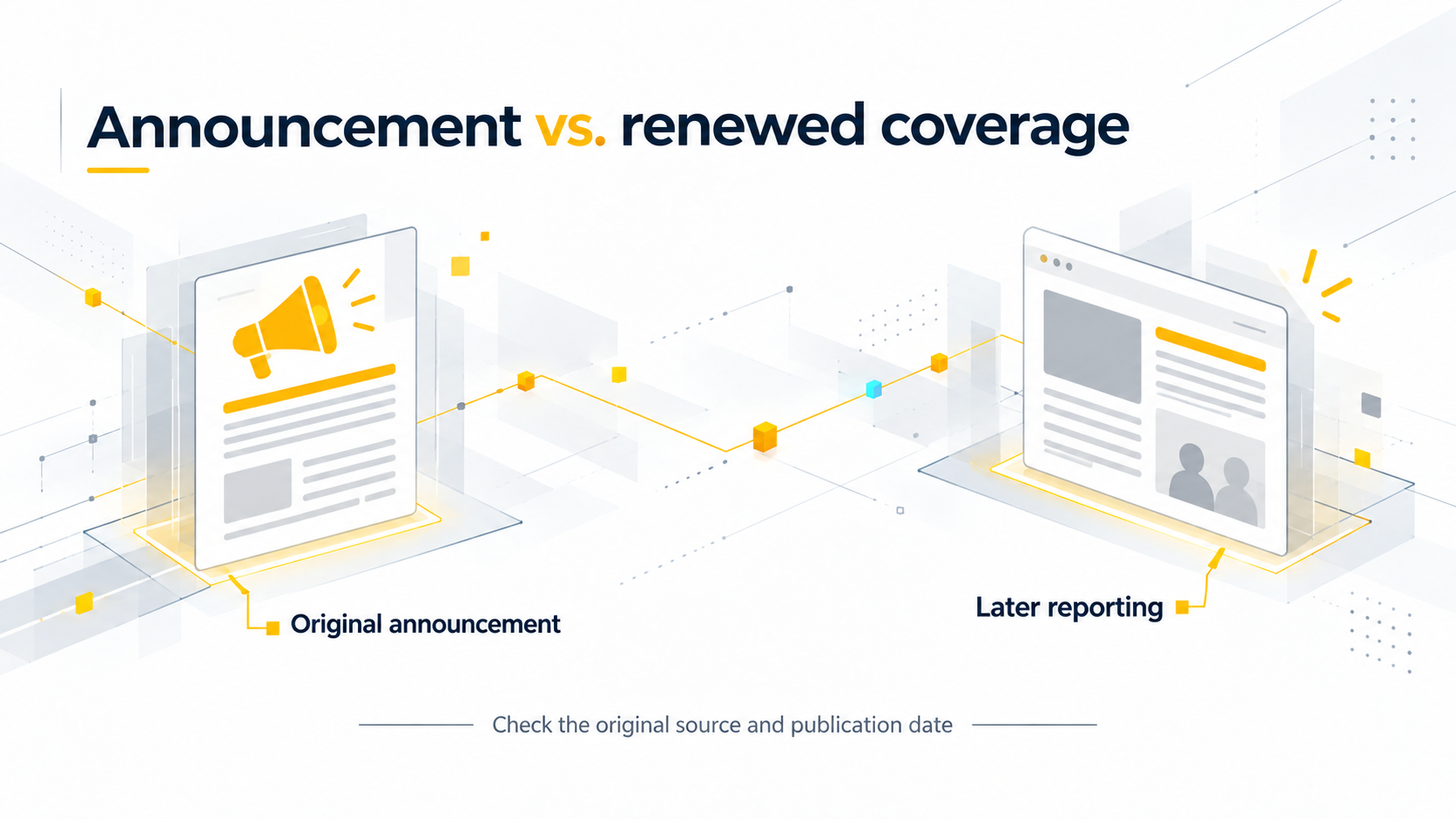
OpenAI and Anthropic pre-IPO perpetuals returned to the news in September, but the launch timeline needs care. Kraken’s original announcement is dated June 15, 2026. It described contracts on both companies, with up to 5x leverage, multi-collateral margin and no expiry for eligible users. Those are Kraken-specific terms.
September 6 coverage highlighted the products again. A later article or promotional post does not reset the original listing date. The accurate news angle is renewed attention to an existing pre-IPO derivatives offering, not a claim that either company completed a public listing.
What the Contract Gives a Trader
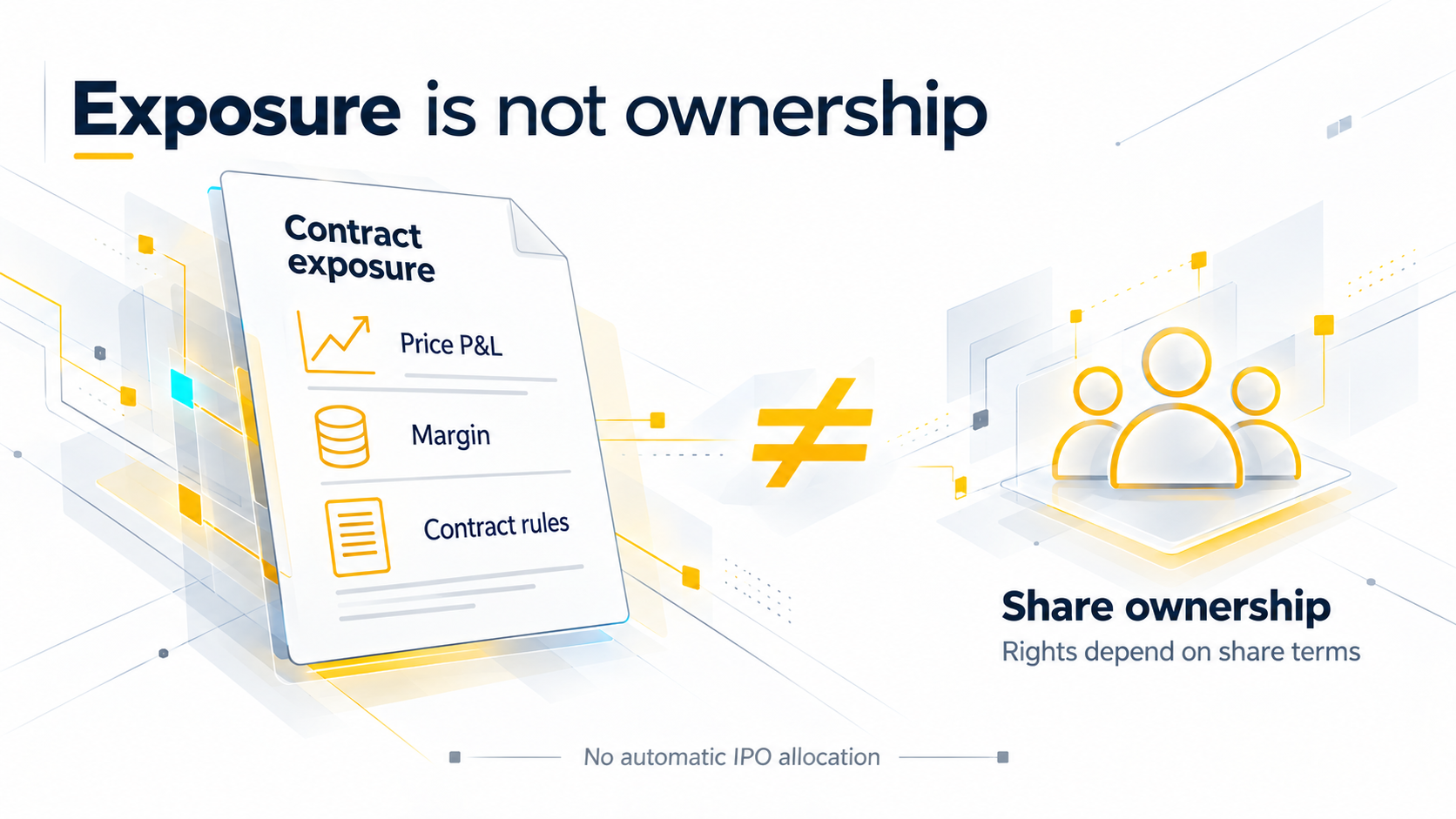
The important boundary is between economic exposure and legal ownership. A derivative can create gains or losses linked to a reference without making the holder a shareholder. It does not, merely because it uses a company’s name, establish rights to company assets, voting or a future share allocation.
For a hypothetical long position, an increase in the relevant contract price can produce a gain before costs, while a decline can produce a loss. A short position reverses that direction. Those mechanics describe a contract between parties under platform rules; they do not describe a private-share purchase agreement.
This distinction also limits the meaning of hedging. A person holding private shares may face transfer restrictions and a different valuation process. A traded derivative can move differently from those shares. Matching a company name is not enough to establish a reliable hedge.
Why Pricing Deserves More Attention Than the Ticker
Kraken’s FAQ describes a synthetic index for these products rather than a continuously quoted public share price. It also discusses funding and the treatment of an eventual IPO. Those details must be checked against the current specification because product rules can change.
A synthetic reference requires readers to understand where the inputs come from and how they are processed. A smooth reference is not an independent appraisal of a private company. Smoothing can reduce short-lived changes in a reference series without removing economic uncertainty.
Traders should distinguish last price, mark price and index price. The last price reflects a trade; other prices may be used to value positions or apply risk rules. When those values differ, the liquidation process can matter more to a leveraged trader than a headline quote. Do not assume the mechanics match a listed equity future.
Leverage, Liquidity and the Cost of Waiting
Leverage makes a position larger than the margin supporting it. In a simplified illustration, $200 of margin supporting $1,000 of exposure gives a 5x ratio. A 5% adverse move corresponds to $50 of loss before fees and other adjustments—25% of the initial margin. This is educational arithmetic, not a calculation of either platform’s liquidation level.
Actual liquidation depends on maintenance requirements, account structure, mark-price rules and other positions. It can occur before a trader’s imagined maximum loss. A stop order is not an unconditional guarantee of exit at a chosen price.
Costs also accumulate over time. A no-expiry contract can still involve funding and other charges. A long holding period should therefore be evaluated through cash costs, collateral requirements and the ability to exit, not just a view about the company’s eventual future.
What an IPO Would—and Would Not—Resolve
A public listing could introduce an observable stock-market reference, but it would not automatically convert every pre-IPO contract into shares. The exchange’s published transition policy determines what happens to a particular instrument.
Before trading, identify the treatment of outstanding positions, any reference change, possible suspension, settlement procedure and advance-notice process. Do not assume the rules are identical across exchanges or that a trading interface’s familiar ticker establishes the legal outcome.
This article makes no IPO-date prediction, no private-company valuation target and no guarantee of automatic share delivery. Those claims would require separate verified evidence and still would not substitute for the contract terms.
Tapbit Routes Must Be Assessed Separately
The user-confirmed Tapbit product list includes OPENAI-USDT and ANTHROPIC-USDT. These links are supplied as related routes, not as evidence that Tapbit uses Kraken’s 5x limit, index formula, collateral system or eligibility restrictions.
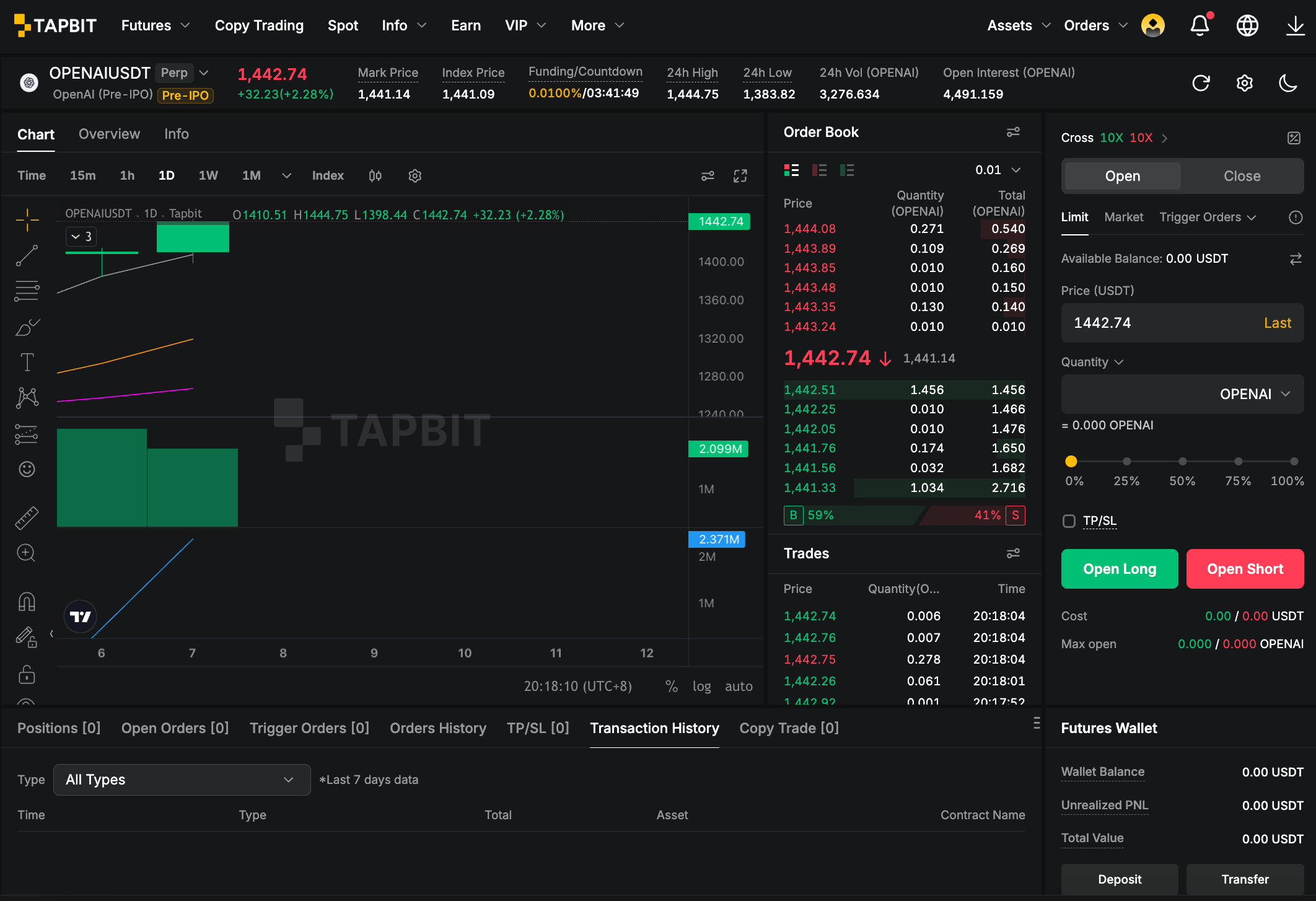
- Register or log in and confirm your jurisdiction’s eligibility.
- Inspect the exact Tapbit contract, including reference methodology, mark/index values, funding, margin and IPO-event provisions.
- Calculate position size and loss capacity, then review direction and order type.
- Set risk controls and monitor liquidity, collateral and liquidation exposure.
If the interface or documentation does not establish a critical term, resolve that gap before taking exposure. A contract label should never be treated as an ownership certificate or a promise that the underlying company endorses the offering.
FAQ
Did Kraken first launch these products in September? Its original announcement is dated June 15, 2026; the reviewed September story concerns renewed coverage.
Does trading a pre-IPO perpetual make me a shareholder? Not by itself. This product is derivative exposure, not a purchase of the company’s shares.
Can the Kraken rules be used to explain Tapbit’s contracts? No. Each venue’s current contract specification must be checked separately.
Does this article predict OpenAI or Anthropic’s value? No. Its focus is the reported offering, timeline and product risks.
Educational content only; not individualized investment advice. Derivatives involve substantial loss and liquidation risk.


