

FOMC meetings affect Bitcoin and cryptocurrency prices because the Federal Reserve influences interest rates, dollar liquidity and investors’ willingness to hold risky assets. When monetary policy is expected to become looser, Bitcoin may benefit from lower yields and stronger demand for alternative assets. When the Fed signals higher rates or tighter financial conditions, crypto prices can face selling pressure.
The market reaction is not determined by the rate decision alone. Traders compare the announcement, economic projections and Fed Chair’s comments with what financial markets had already priced in.
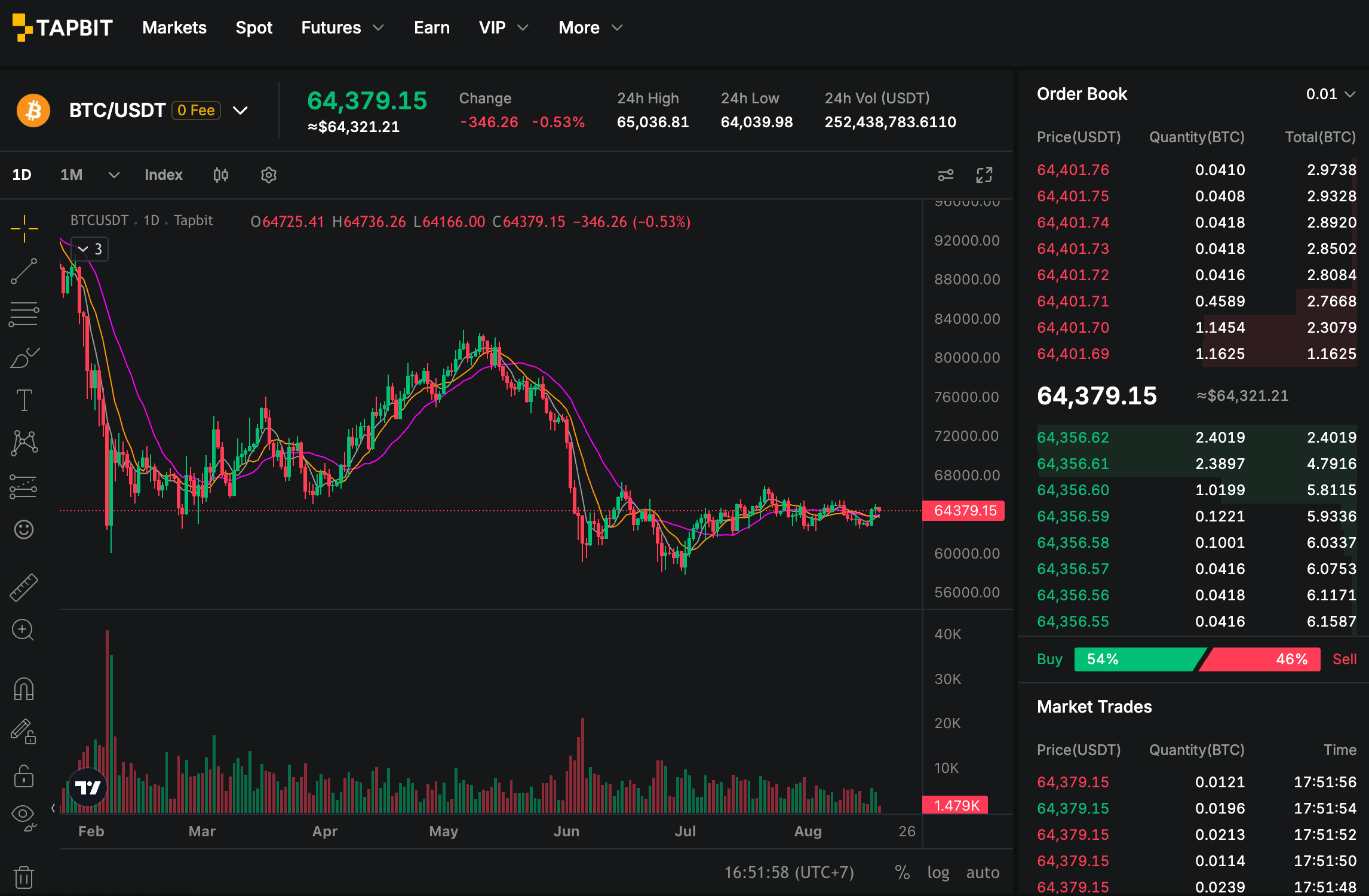
Users can follow the BTC/USDT spot market on Tapbit to observe how Bitcoin reacts to FOMC decisions, inflation data, bond yields and changes in monetary-policy expectations.
What Is the FOMC?
The Federal Open Market Committee, or FOMC, is the Federal Reserve body responsible for setting the direction of US monetary policy. It normally holds eight scheduled meetings each year, although additional meetings can occur when economic conditions require them.
At each scheduled meeting, officials consider inflation, employment, economic growth and financial conditions. Important releases may include the interest-rate decision, policy statement, economic projections, the “dot plot” of officials’ expected rates and the Fed Chair’s press conference. These signals influence markets worldwide because the US dollar is central to international finance.
How Interest Rates Affect Bitcoin
Interest rates change the relative appeal of different investments. When rates are high, government bonds and cash-like instruments can offer more attractive yields. Investors may therefore become less willing to hold volatile assets that do not generate predictable income.
Bitcoin does not pay interest or produce corporate earnings. Its valuation depends heavily on supply, demand, adoption, liquidity and expectations. Higher interest rates can increase the opportunity cost of holding Bitcoin instead of interest-bearing assets.
Lower rates can produce the opposite effect. If bond yields fall and financing conditions become easier, investors may allocate more capital to equities, cryptocurrencies and other risk-sensitive markets. This relationship is not automatic: Bitcoin can still fall during a rate-cutting cycle if cuts are responding to a severe recession or financial crisis.
Why Fed Liquidity Matters for Cryptocurrency Prices
Crypto markets are closely connected to global liquidity. Easier financial conditions can increase the capital available for investment, speculation and leverage. Tighter policy can reduce that capital and make investors more selective.
| Fed Policy Signal | Typical Financial Effect | Possible Crypto Impact |
|---|---|---|
| Rate cut | Lower borrowing costs | May support risk appetite |
| Rate increase | Higher financing costs | May pressure crypto prices |
| Quantitative easing | More system liquidity | Potentially supportive |
| Quantitative tightening | Liquidity withdrawal | Potential headwind |
| Dovish guidance | Easier policy expected | Can lift sentiment |
| Hawkish guidance | Tighter policy expected | Can trigger volatility |
These are tendencies rather than guaranteed outcomes. Crypto-specific news, regulation and leverage can outweigh monetary-policy effects.
The US Dollar and Bond Yields
FOMC decisions can move the US dollar and Treasury yields within seconds. A hawkish Fed signal may push both higher. A stronger dollar can tighten global financial conditions, while higher real yields make traditional fixed-income investments more competitive.
A dovish surprise can weaken the dollar or lower bond yields, potentially making Bitcoin and gold more attractive as alternative stores of value. Bitcoin’s response is often strongest when the dollar, real yields and equity markets all move in a direction consistent with the announcement.
Why Expectations Matter More Than the Decision
Financial markets attempt to predict FOMC decisions before they occur. Suppose the Fed cuts rates by 25 basis points. Bitcoin does not necessarily rise. If traders expected a 50-basis-point reduction, the smaller cut could be interpreted as disappointing and trigger selling.
- A widely expected decision may produce little lasting movement.
- A dovish surprise can support Bitcoin and altcoins.
- A hawkish surprise can cause rapid selling.
- Conflicting signals may create sharp reversals.
- Guidance about future meetings may matter more than the current rate.
This explains why prices sometimes move in one direction after the statement and reverse during the press conference.
Why Altcoins Can React More Than Bitcoin
Altcoins often experience larger percentage movements around FOMC announcements because many have less liquidity and higher speculative sensitivity than Bitcoin. When investors become more confident, capital may move from Bitcoin into Ethereum and smaller tokens. When financial conditions tighten, the process can reverse quickly.
Bitcoin may retain comparatively stronger demand because it is the largest crypto asset and has deeper liquidity. Small-cap tokens can suffer sharper declines when traders reduce leverage or seek assets that are easier to sell.
Volatility, Leverage and Liquidations
FOMC announcements can generate rapid price swings in both directions. Leveraged positions may be liquidated when prices cross margin thresholds, adding forced buying or selling to the initial reaction.
A sudden Bitcoin decline can liquidate leveraged long positions, creating additional market sell orders. If Bitcoin then rebounds, short positions may also be liquidated, producing a sharp reversal. Funding rates, open interest, market depth and positioning can therefore determine how strongly cryptocurrency prices react.
What Crypto Traders Watch During an FOMC Meeting
The headline rate decision is only one part of the event. Market participants commonly monitor changes in the policy statement, inflation and employment language, projected rates, quantitative-tightening plans, Treasury yields, the US Dollar Index, Bitcoin volume, open interest and reactions in technology stocks and gold.
The first price movement is not always the most reliable. Markets may need time to evaluate the full statement and press conference.
Conclusion
FOMC meetings affect Bitcoin and cryptocurrency prices because Federal Reserve policy influences interest rates, dollar liquidity, bond yields and global risk appetite. Lower-rate expectations can support crypto markets, while tighter policy can reduce demand for volatile assets.
Bitcoin responds to the difference between the Fed’s decision and what traders expected—not simply whether rates rise or fall. Positioning, leverage, inflation data and forward guidance can determine whether the initial move continues or reverses.
Frequently Asked Questions
Does Bitcoin always rise when the Fed cuts rates?
No. Bitcoin may fall if the cut is smaller than expected or signals that the economy is weakening rapidly.
What does a hawkish Fed mean for crypto?
A hawkish Fed favors tighter monetary policy, usually through higher rates or delayed cuts. This can pressure crypto by raising yields and reducing risk appetite.
What does a dovish FOMC mean for Bitcoin?
A dovish FOMC suggests easier future policy. Lower expected rates and improved liquidity can support Bitcoin, although other market factors still matter.
Why does Bitcoin move during the Fed Chair’s press conference?
The press conference provides additional guidance about inflation, employment and future policy. Traders may reinterpret the original decision as the Fed Chair answers questions.
Are altcoins more sensitive to FOMC meetings?
Many altcoins are more sensitive because they have thinner liquidity and greater speculative exposure. They can outperform during risk-on moves but decline more sharply when conditions tighten.


