
The Micron stock price closed at $1,011.75 on August 17, 2026, reclaiming the $1,000 level as investors returned to memory and semiconductor stocks. The rebound follows a volatile July correction and reflects renewed confidence that AI data-center demand can keep advanced-memory markets tighter for longer.
Micron sits at the center of one of the most important AI-hardware bottlenecks: memory. GPUs and accelerators cannot operate efficiently without high-bandwidth memory, while data centers also require large amounts of DRAM and storage. That makes the current Micron stock price a test of whether investors believe the memory industry has entered a structurally stronger cycle.
Micron Stock Price Today: Why $1,000 Matters
MU closed at $1,011.75 on August 17 after rising more than 4% in the session. The move brought the stock back above a psychologically important round-number level following the sharp summer pullback.
The stock remains below its earlier summer peak, which means the latest move is still a recovery rather than a confirmed return to record territory. Investors now need to see whether $1,000 can act as support instead of simply becoming a temporary breakout level.
Why Is Micron Stock Rising Again?
AI Data Centers Need High-Bandwidth Memory
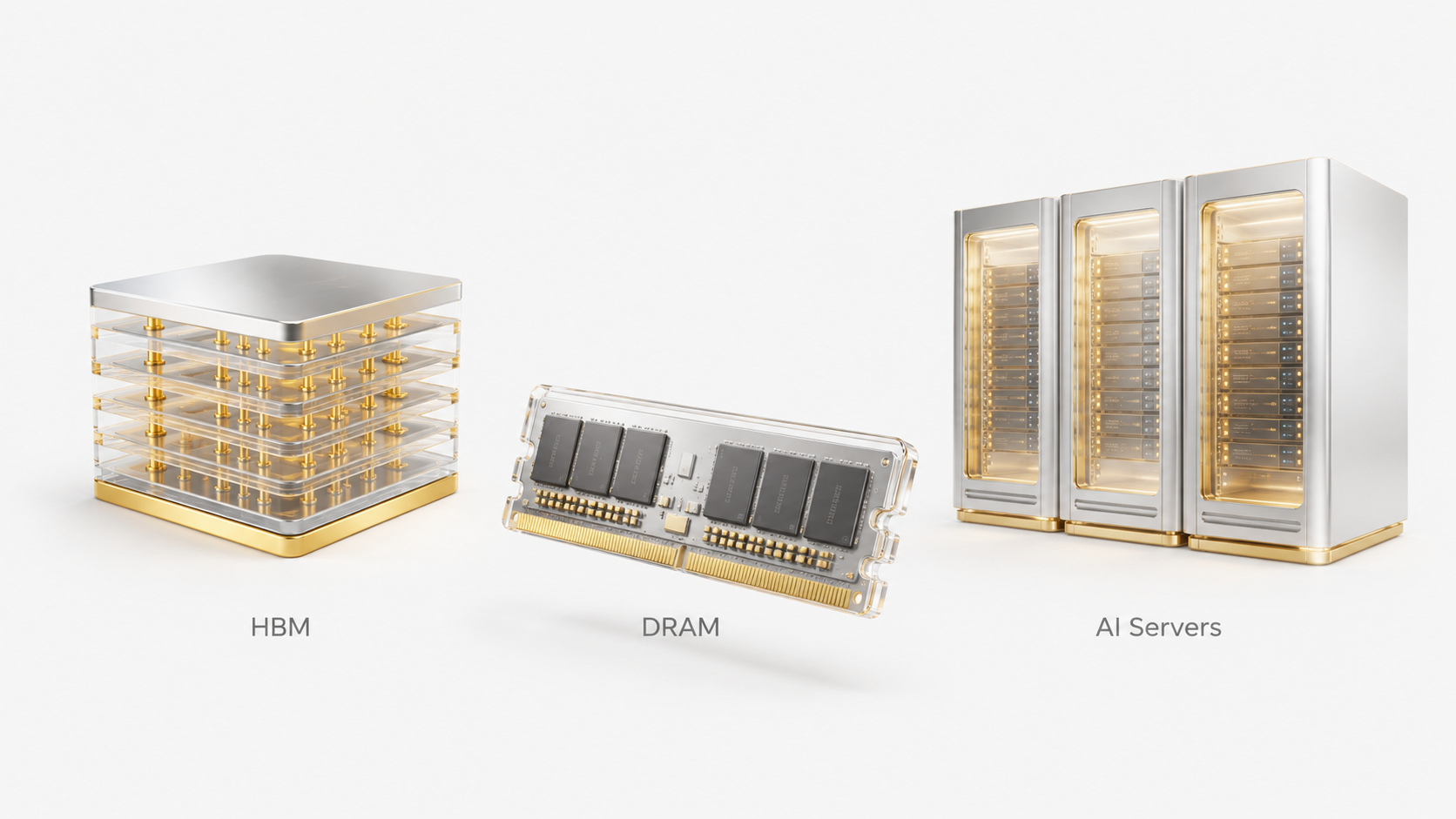
HBM has become a critical component of AI accelerators because it allows processors to access data at extremely high speeds. Demand from GPU and custom-accelerator platforms has made HBM one of the most strategically important memory products.
Micron has invested heavily in advanced HBM generations, giving the company direct exposure to AI-server growth. If hyperscaler capital spending remains strong, the HBM market can support higher revenue and margins than older commodity memory cycles.
Memory Supply Remains Tight
Memory pricing depends heavily on supply discipline. Producers have to balance new capacity against demand because oversupply can cause rapid price declines. The current cycle remains supported by tightness in advanced memory and high demand from AI infrastructure.
That environment has helped the Micron stock price recover because investors increasingly expect stronger pricing visibility and longer customer commitments.
U.S. Policy Is Affecting Chinese Memory Competition
Another catalyst is U.S. policy pressure around sourcing memory products from Chinese suppliers. Recent reports indicate that U.S. officials are discouraging some American companies from relying on Chinese memory vendors, which can improve the competitive position of suppliers such as Micron.
This is not a permanent guarantee of market share, but geopolitical restrictions have become a meaningful part of semiconductor supply-chain economics.
Why This Memory Cycle Could Be Different
Traditional memory cycles often followed a familiar pattern: high prices encouraged capacity expansion, supply exceeded demand, and prices collapsed. AI changes the equation because advanced products such as HBM require complex manufacturing and packaging while customers increasingly seek long-term supply certainty.
Micron has discussed more strategic customer relationships and longer-term commitments, which may reduce some volatility. If that trend persists, investors could assign a higher valuation multiple to future earnings.
However, the word “different” should be used carefully. Memory remains capital intensive. New capacity and new competitors can still pressure pricing, so the industry has not escaped cyclicality.
What Could Push MU Higher?
The first catalyst is successful ramping of newer HBM generations. HBM4 and future products can increase Micron’s content per AI system and improve revenue mix. The second is continued supply tightness across DRAM.
Third, sustained AI data-center capex would reinforce the demand side of the story. Finally, policy restrictions on Chinese memory sourcing could support Micron’s market position in certain customers and regions.
What Could Break the Micron Rally?
The largest risk is an AI-capex slowdown. If hyperscalers reduce infrastructure budgets, expectations for HBM and DRAM demand would fall quickly. Another risk is valuation: the Micron stock price has risen dramatically over the past year, so the market is already pricing in substantial future growth.
Chinese competition remains important as well. Even with export restrictions, domestic Chinese memory suppliers continue investing in capacity. Over time, additional supply could pressure global pricing.
Finally, memory margins can normalize when shortages ease. If investors are currently extrapolating peak conditions too far, earnings estimates could eventually reset.
Micron Support, Resistance and Confirmation
| Reference Zone | Interpretation |
|---|---|
| $1,000 | Key psychological level and immediate support test. |
| $950-$980 | Potential lower support if the breakout fails. |
| $1,050-$1,100 | Near-term resistance and momentum zone. |
| $1,200 area | Major summer high reference. |
A sustained close above $1,000 with broad semiconductor participation would strengthen the recovery case. A quick reversal below that level, especially alongside weaker HBM or AI-capex expectations, would weaken it.
Micron Bull, Base and Bear Scenarios
Bull case: HBM demand remains supply constrained, Micron executes well on new products and AI spending continues to rise. MU pushes through near-term resistance and retests the summer-high region.
Base case: the Micron stock price consolidates around $950-$1,100 while investors wait for the next earnings and memory-pricing data. Fundamentals remain healthy, but valuation caps upside.
Bear case: AI infrastructure spending slows or memory pricing normalizes faster than expected. MU loses $1,000 and revisits lower support as analysts cut future margin assumptions.
How to Trade MU-USDT on Tapbit
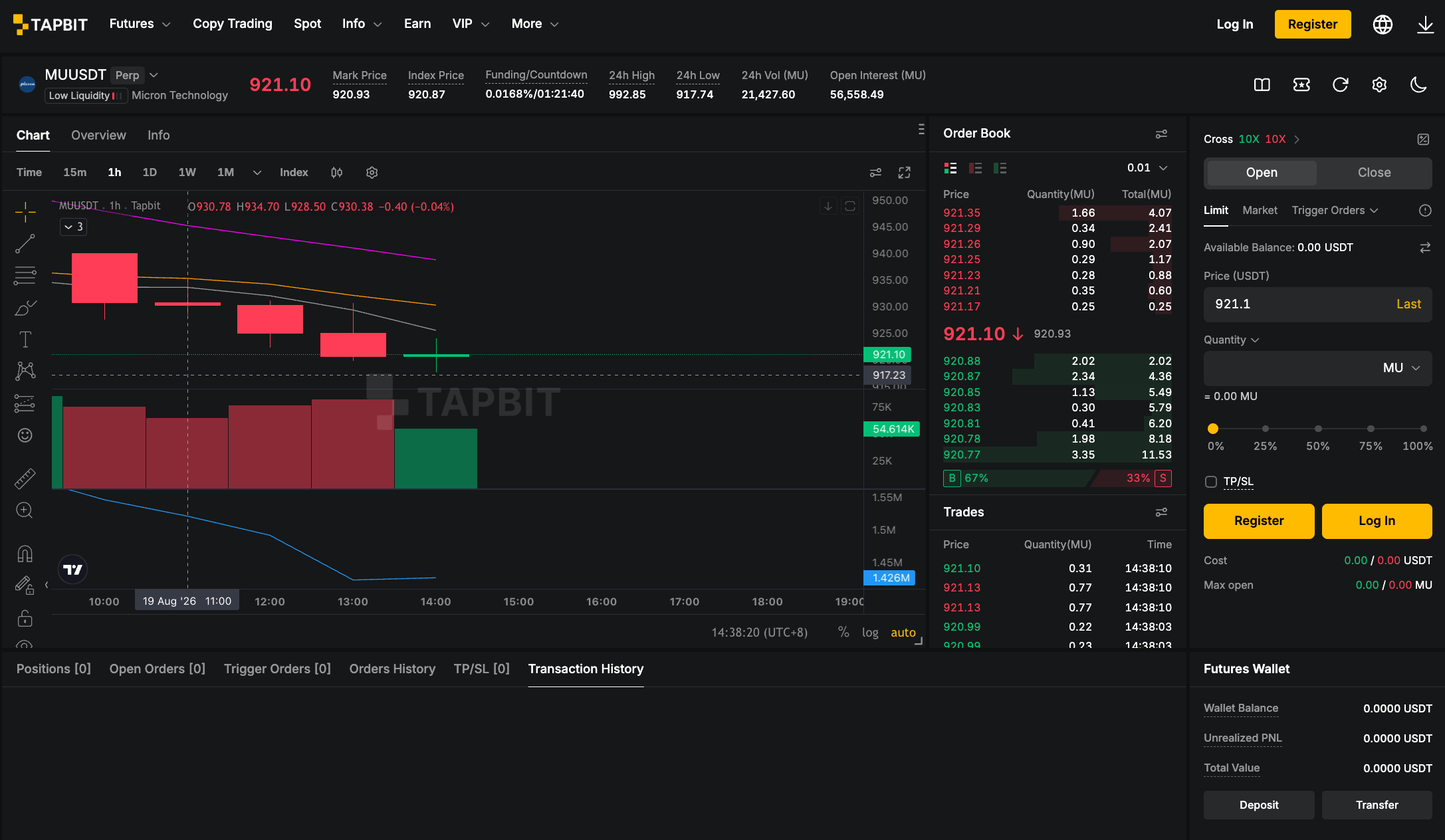
Tapbit offers MU-USDT perpetual futures for Micron-linked derivative price exposure. The contract is not direct ownership of Micron shares and does not provide shareholder voting rights or dividends.
-
Create an account or log in to Tapbit.
-
Open the MU-USDT contract and check the contract name, mark price, index price and funding countdown.
-
Select Limit, Market or Trigger, choose quantity, leverage and margin mode, then Open Long or Open Short.
-
Add TP/SL and monitor margin, Positions, Open Orders, Trigger Orders and liquidation risk.
Near-term confirmation for the Micron stock price should come from both the chart and the memory market. If MU holds above $1,000 while HBM demand and earnings estimates remain strong, the Micron stock price would have a firmer base for another attempt at the summer highs.
Bottom Line
The Micron stock price at $1,011.75 shows that investors are again willing to pay for the AI-memory story after July’s sharp reset. HBM demand, tighter supply and supportive U.S. policy are strengthening the bull case, but valuation and memory cyclicality remain serious risks. Holding above $1,000 would improve the technical setup, while a break below it could signal that the rebound needs more fundamental confirmation. Tapbit’s MU-USDT perpetual futures provide derivative Micron-linked exposure for traders who want to take a directional view.
FAQ
Why is Micron stock rising?
Recent gains have been supported by AI-memory demand, tight supply, HBM growth and policy developments affecting Chinese memory competition.
What was the latest Micron stock price?
Micron closed at $1,011.75 on August 17, 2026.
Is Micron an AI stock?
Micron is a memory manufacturer, but its HBM and DRAM products are critical to AI servers and accelerators, making it an important AI-infrastructure supplier.
Can I trade Micron on Tapbit?
Tapbit supports MU-USDT perpetual futures for derivative Micron-linked price exposure.


