

JPMorgan is reportedly moving deeper into digital-asset finance by preparing loans backed by Bitcoin and other crypto assets for institutional clients. The idea is simple: eligible borrowers could pledge crypto as collateral, receive cash or credit, and retain economic exposure to the asset instead of selling it. However, the final lending terms, launch scope and approved custody arrangements remain subject to confirmation.
For traders following the convergence of traditional finance and crypto, this matters because bank lending could make Bitcoin more useful as institutional collateral. Readers can also create a Tapbit account to explore supported crypto markets and risk-management tools.
What Is JPMorgan’s Bitcoin-Backed Loan Plan?
Under the reported model, selected institutional clients would pledge Bitcoin or Ethereum against a loan. JPMorgan would assess the collateral value, apply a loan-to-value ratio and require additional collateral if market prices fall. The bank may rely on an external qualified custodian rather than holding native crypto directly on its own balance sheet.
This is different from an unsecured loan. The lender’s protection comes from the ability to demand more collateral or liquidate the pledged assets if their value drops below agreed thresholds. For borrowers, the attraction is access to liquidity without creating a taxable sale or abandoning a long-term crypto position, although tax treatment depends on jurisdiction.
How Would a Bitcoin-Backed Institutional Loan Work?
A borrower first transfers approved collateral to a custody arrangement. The lender then advances a percentage of its market value. If Bitcoin is worth $10 million and the maximum LTV is 40%, the initial loan could be up to $4 million. A decline in Bitcoin’s price would raise the effective LTV and could trigger a margin call.
Risk controls are therefore central. Valuation feeds, collateral haircuts, trading liquidity, custody security and liquidation rules determine whether the structure remains resilient during a rapid market move.
Native Bitcoin vs Bitcoin ETF Collateral
| Feature | Native Bitcoin | Spot Bitcoin ETF Shares |
|---|---|---|
| Custody | Specialist digital-asset custodian | Traditional securities custody |
| Trading hours | 24/7 crypto market | Exchange trading hours |
| Operational risk | Private-key and transfer controls | Broker, fund and market structure |
| Liquidation | Crypto venues and OTC desks | Securities markets |
ETF-backed lending fits more easily into established brokerage systems, while native Bitcoin offers direct collateral exposure. That direct exposure also creates additional operational and custody requirements.
Why JPMorgan Is Expanding Into Crypto Lending
Institutional demand has evolved from simple spot exposure toward custody, settlement, tokenization and financing. A large bank can generate lending revenue while keeping clients inside its broader treasury and markets ecosystem. JPMorgan has already explored blockchain-based payments and tokenized settlement through initiatives associated with its institutional digital-asset business.
The shift does not mean the bank has eliminated its concerns about crypto volatility. It suggests that major financial institutions increasingly see a difference between rejecting an asset and managing its risks with conservative collateral policies.
Why Third-Party Custody Matters
Using an external custodian can separate lending decisions from private-key management. The custodian may provide segregated wallets, access controls, insurance arrangements and audited operational procedures. Even so, third-party custody creates counterparty and legal risks: clients need to know who controls the assets, whether they can be rehypothecated and what happens if a custodian fails.
What Are the Main Risks?
- Price volatility: Bitcoin can move sharply outside traditional banking hours, raising liquidation risk.
- Margin calls: Borrowers may need to provide cash or more crypto during stressed conditions.
- Custody failure: Operational mistakes, cyber incidents or legal disputes could restrict access to collateral.
- Rehypothecation: Reuse of collateral may add hidden counterparty exposure unless contract terms are clear.
- Regulatory uncertainty: Capital, custody and disclosure rules can change the economics of the product.
Why the Move Matters for Bitcoin
If a global bank accepts native Bitcoin as collateral, the asset gains another institutional use case beyond trading and treasury allocation. That could improve capital efficiency for professional holders, but it also connects crypto prices more directly to leverage and bank risk controls.
The supplied Tapbit market snapshot shows BTC/USDT trading near $63,336.97, illustrating the continuous price exposure that lenders must monitor when Bitcoin is used as collateral.
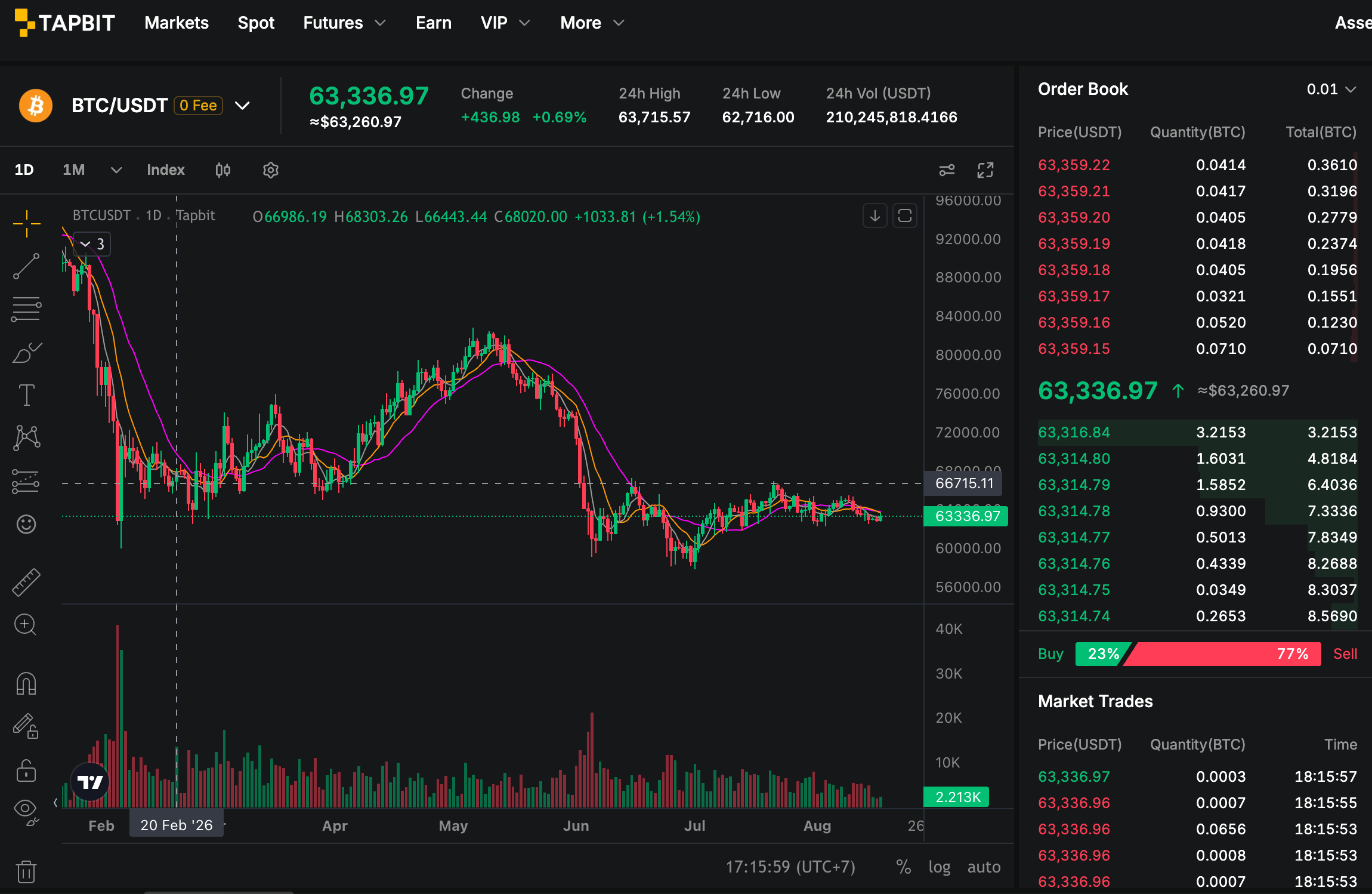
In a severe decline, simultaneous margin calls could force borrowers to sell or add collateral. That feedback loop is one reason conservative LTV limits and orderly liquidation mechanisms are more important than headline loan availability.
What Investors Should Watch Next
- Which clients and jurisdictions qualify
- Maximum LTV ratios and margin-call thresholds
- Approved custodians and collateral segregation
- Whether Ethereum and other assets are included
- Loan pricing, maturity and liquidation procedures
The distinction between announced, reported and fully operational products matters. Investors should wait for confirmed terms before assuming that Bitcoin-backed bank credit will be broadly available.
Conclusion
JPMorgan’s reported Bitcoin-backed lending push would be another step toward integrating crypto into institutional finance. It may help eligible holders unlock liquidity without selling, but the benefit comes with price, custody, leverage and liquidation risks. The most important details will be the final LTV limits, custody model and borrower protections—not the headline alone.
FAQ
Does JPMorgan already offer Bitcoin-backed loans to everyone?
No. Reports concern an institutional product, and broad retail availability has not been confirmed.
Why borrow against Bitcoin instead of selling it?
Borrowing may preserve market exposure and provide liquidity, but it adds interest costs and liquidation risk.
What happens if Bitcoin falls sharply?
The borrower may face a margin call, need to add collateral or have part of the pledged Bitcoin liquidated.
Would JPMorgan hold the Bitcoin itself?
The reported structure may use third-party custody, but confirmed arrangements should be checked in the final product terms.


