
SEC crypto rules are finally becoming easier to explain without a flowchart and three lawyers in the room. In March 2026, the U.S. Securities and Exchange Commission issued an interpretation explaining how federal securities laws apply to different kinds of crypto assets. Paul Atkins also described what a future token safe harbor could look like.
The big idea is simple: a crypto token and the way that token is sold are not always the same legal thing. A token may not itself be a security, but a project can still sell it as part of an investment contract. The SEC is explaining when that contract begins, ends and what a project should disclose.
What Changed in the SEC Crypto Rules in 2026?
The SEC's 2026 interpretation gives the market a clearer token taxonomy. It discusses categories such as digital commodities, digital collectibles, digital tools, payment stablecoins and digital securities. It also explains that a non-security crypto asset can still fall under securities laws when it is sold with promises that create an investment contract.
That distinction matters because the old debate often sounded like a yes-or-no question: “Is this coin a security?” The newer framework asks a better question: what exactly did the buyer purchase, and what promises did the project make?
Think of the token as the object and the investment contract as the deal wrapped around it. The wrapper can change even when the token does not.
What Is a Crypto Token Safe Harbor?
A safe harbor is basically a regulatory runway. A young crypto project may need time to build a working network, attract users and reduce its dependence on the founding team. Requiring a tiny software startup to look like a mature public company on day one can be unrealistic.
Atkins has suggested that the SEC consider tailored exemptions that would let qualifying teams raise money while still providing clear disclosures. Fraud rules would still apply. Projects would still need to tell investors what they are building, how the token works and what risks exist.
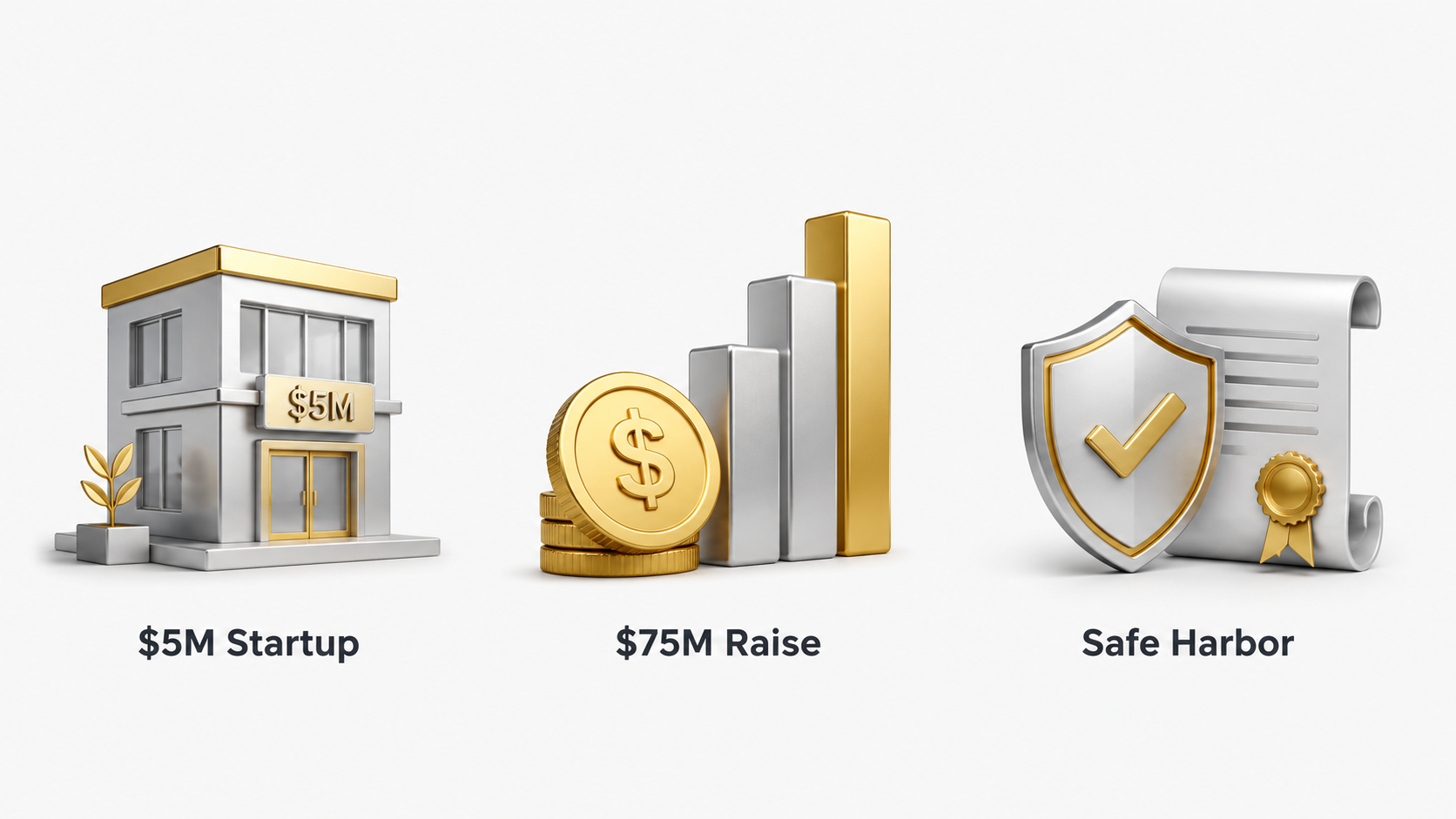
The Possible $5 Million Startup Exemption
One idea is a time-limited startup exemption. Atkins discussed a possible structure lasting up to four years and allowing a project to raise up to roughly $5 million during that period.
For a small team, that could matter. Instead of spending most of its early budget on registration, the project could focus on building while filing simpler notices and disclosures.
The important word is possible. The $5 million amount and four-year period were described as examples of what a future rule could contain. They should not be treated as a blanket exemption that every token project can use today.
The Possible $75 Million Fundraising Exemption
The second idea is a larger fundraising exemption. Atkins discussed allowing certain crypto projects to raise up to about $75 million in a 12-month period while providing more detailed information than a small startup would.
That could include a description of the project, the issuer's financial condition and financial statements. In plain English: the larger the fundraising round, the more information investors should reasonably expect.
This middle path could matter for teams that are too large for a tiny startup exemption but are not ready for the full machinery of a traditional registered securities offering.
When Can an Investment Contract End?
This may be the most important part of the SEC crypto rules. The SEC's interpretation says a non-security crypto asset can be sold as part of an investment contract, but that relationship does not have to last forever.
If the original promises are fulfilled, the network becomes functional and buyers are no longer relying on the same managerial commitments, the investment-contract relationship may end. That does not mean every decentralized project automatically escapes regulation. It means the legal analysis can change as the project changes.
A useful way to think about it is training wheels. They may be necessary at the beginning, but the goal is not to keep them on forever.
Why This Could Change U.S. Token Launches
Clearer exemptions could make the U.S. more attractive to crypto founders worried that a token sale could trigger a costly legal fight. Better rules could also make disclosures more useful by clarifying what regulators expect.
For exchanges and investors, clearer treatment could reduce uncertainty around listings. That does not mean every token becomes easier to list. Projects with weak disclosures, unclear ownership or misleading fundraising claims would still create risk.
The broader effect could be a shift from “launch first, argue later” toward a more predictable path from fundraising to a functioning network.
What Could Still Go Wrong?
First, policy ideas can change before they become formal rules. Final thresholds, eligibility tests and disclosure requirements may look different from the examples discussed in speeches.
Second, decentralization and network maturity are not simple switches. Two projects can look similar on paper while depending very differently on their founding teams. Regulators will still need workable tests.
Third, exemptions can attract bad actors if disclosure rules are too weak. A safe harbor should help builders who are actually building, not become a costume for a token sale with no product behind it.
What Should Crypto Investors Watch Next?
Watch for formal SEC rulemaking rather than relying only on speeches. The details that matter are eligibility, fundraising limits, disclosure requirements, transition rules and how exchanges or brokers can handle covered assets.
It is also worth following the broader U.S. market-structure debate. SEC guidance is only one piece of the puzzle; Congress and the CFTC also shape how crypto markets are divided and supervised. Tapbit readers can review the broader stablecoin regulation framework to see how rulemaking differs across asset types.
Bottom Line
The 2026 SEC crypto rules are moving toward a more practical question: how can a project raise money, build a network and eventually leave an investment-contract structure without leaving investors in the dark? The proposed startup, fundraising and investment-contract safe harbors could create a clearer path, but the public numbers discussed so far are not final universal exemptions. For now, separate confirmed SEC interpretation from future policy ideas and watch the formal rulemaking process closely.
FAQ
What is the SEC crypto safe harbor?
It is a proposed regulatory path that could let qualifying crypto projects raise capital under tailored conditions while providing disclosures and working toward a more mature network.
What is the proposed $75 million crypto exemption?
SEC Chair Paul Atkins has discussed a possible fundraising exemption allowing certain projects to raise up to about $75 million in a 12-month period with required disclosures. It is not a blanket rule for every token today.
Are most crypto tokens securities in 2026?
The SEC's 2026 interpretation says several categories of crypto assets are not themselves securities, but the way an asset is offered or sold can still create an investment contract.
Are the safe-harbor ideas already final rules?
No. The SEC interpretation is official guidance, while the specific startup and fundraising safe-harbor structures discussed by Atkins remain policy ideas that would require further action.
Users who want to explore crypto markets can create an account on Tapbit while keeping regulatory and market risk separate from any trading decision.


