

Scalping sounds easy on paper: get in, grab a few ticks, get out—all within minutes. Do that enough, and those small wins stack up.
The catch? What looks good on the chart doesn't always hit your account.
Fees, spreads, slippage—they can turn a winning one-minute setup into a red trade. Your limit order might not fill. Your stop might execute way below where you expected. Throw in leverage, and a routine wiggle can eat a chunk of your margin before you even blink.
So scalping isn't really about calling the next candle—it's about managing execution. If you're thinking of trying this on Tapbit, make sure you understand how those ultra-short holds change the math on targets, costs, and risk.
What Is Crypto Scalping?
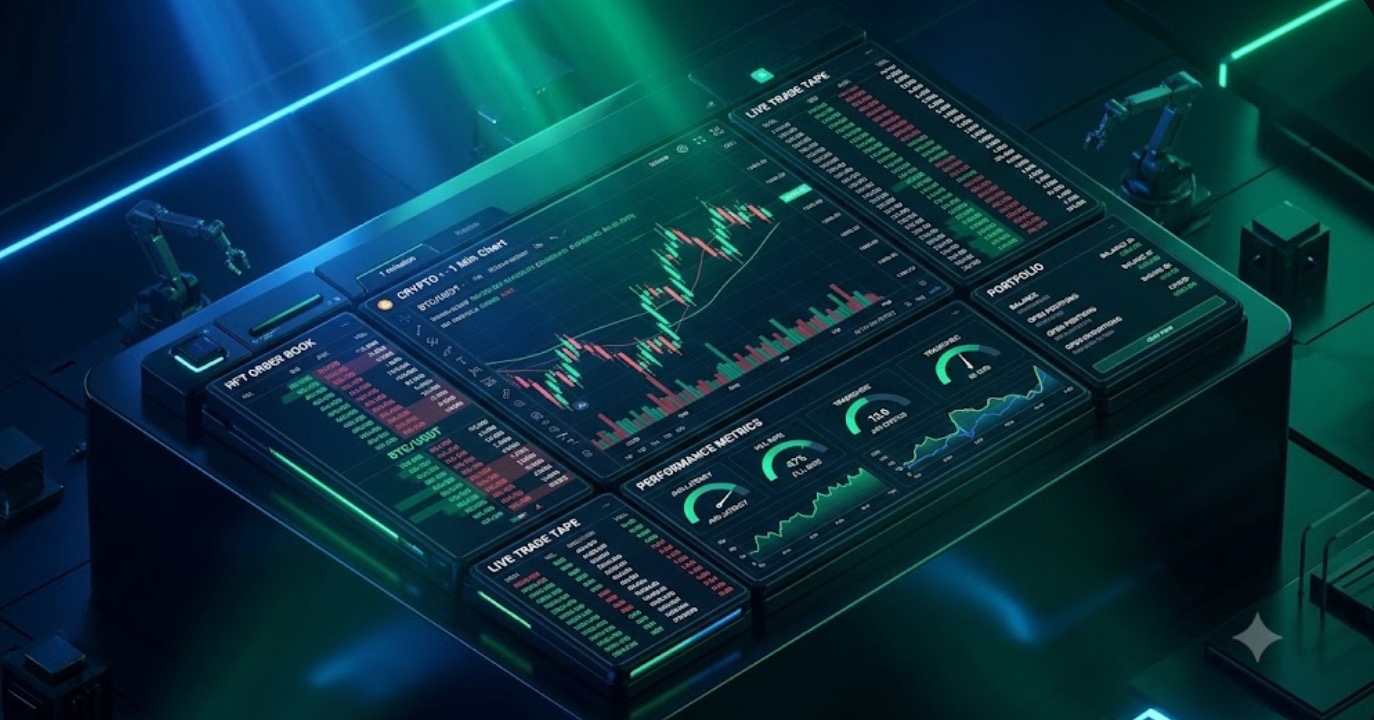
Crypto scalping is a short-term trading approach in which positions are usually held for seconds or minutes. Instead of waiting for a large trend, a scalper attempts to capture small movements repeatedly.
A scalper may trade a range, follow a brief burst of momentum or respond to changes in the order book. Whatever the setup, the intended price move is normally much smaller than the target used by a swing trader.
That makes scalping highly sensitive to execution. A swing trader targeting a 10% move may be able to absorb a small amount of slippage. A scalper targeting 0.20% may not have that room.
High trade frequency also changes the economics. Every additional trade creates another entry fee, exit fee and opportunity for an unfavorable fill. More trades only help when the underlying strategy remains profitable after those costs.
How a Scalping Trade Works
Suppose BTC is trading inside a narrow range. A trader sees buyers repeatedly entering near the lower boundary and opens a long position, expecting another small rebound.
Before entering, the trader should already know the intended entry, profit target, stop level and maximum acceptable loss. The trader should also decide whether to use a market order or wait with a limit order.
If the order fills and BTC moves to the target, the position is closed. The entire trade may last less than five minutes.
The process looks straightforward, but the result depends on more than the difference between the entry and exit prices. The trader also needs to account for the cost of both orders, the bid-ask spread and any difference between the requested and actual fill prices.
The basic calculation is:
Net PnL = Gross Price Move − Entry Fee − Exit Fee − Spread − Slippage − Funding Cost
This is the calculation that matters. A green trade on the chart is not necessarily a profitable trade in the account.
Maker and Taker Fees Matter
A maker order adds liquidity to the order book. It usually waits at a specified price before another participant trades against it.
A taker order removes existing liquidity. Market orders are taker orders, while a limit order can also become a taker order if it crosses the spread and executes immediately.
Take Tapbit’s published USDT perpetual contract fee as an example, the base maker fee is 0.020%, while the base taker fee is 0.060%. Traders should check the current rate displayed on the platform because fees and promotional terms may change.
Consider a position with a notional value of 10,000 USDT. If both the entry and exit are executed as taker orders, each side costs approximately 6 USDT. The total trading fee is therefore about 12 USDT.
If the trader captures a 0.20% move, the gross profit is 20 USDT. After the two taker fees, only 8 USDT remains before accounting for spread and slippage.
A 0.10% move would produce a gross profit of 10 USDT, which is already less than the 12 USDT round-trip taker fee in this example.
This is why a small theoretical edge can disappear in live trading.
Market Orders Versus Limit Orders
Market orders prioritize execution. They are useful when leaving a position quickly matters more than achieving a specific price. The trade-off is that they normally pay the taker fee and may experience slippage.
Limit orders provide greater control over price and may qualify for the maker fee. However, they are not guaranteed to fill. The market may touch the quoted level without completing the entire order, or it may move away before executing any of it.
There is another problem. Sometimes a limit order fills because faster participants have already detected that the market is moving against that price. The trader receives the desired entry, but the position immediately moves into a loss.
Neither order type is always better. The choice depends on liquidity, urgency, position size and the logic of the strategy.
Why Spread and Slippage Cannot Be Ignored
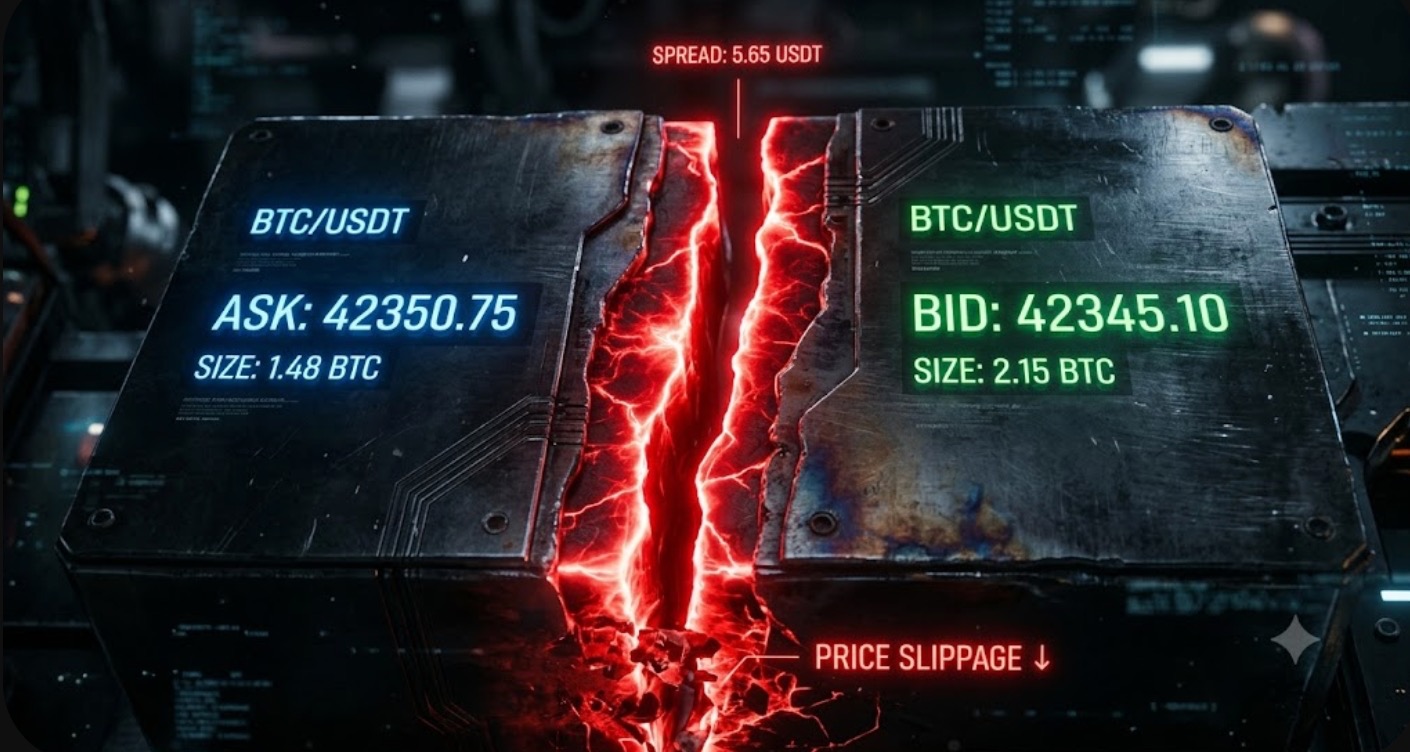
The bid is the highest price currently offered by buyers. The ask is the lowest price accepted by sellers. The distance between them is the spread.
A trader who buys at the ask and immediately sells at the bid begins with a loss equal to that spread, even before trading fees are included.
Slippage is different. It is the difference between the expected execution price and the price at which the order actually fills. It usually becomes more noticeable when volatility rises, liquidity falls or the order is large relative to the available market depth.
Research published by Frankfurt School in May 2026 examined 432 retail round trips across nine MiCA-regulated providers. The study found large differences in total trading costs once fees and spreads were considered. Average round-trip costs ranged from approximately 0.53% to 6.45%.
Those results came from retail applications rather than professional order-book scalping, so they should not be applied directly to every exchange or trading product. They still illustrate an important point: the fee shown on a pricing page may represent only one part of the actual cost.
Liquidity Is More Important Than Volatility Alone
Scalpers need price movement, but volatility without liquidity can be dangerous.
A highly volatile small-cap token may appear attractive because it moves several percent in minutes. Yet if its order book is thin, entering and leaving the position can cause substantial slippage. The displayed price may also change before the order is filled.
A more suitable market normally has active buyers and sellers on both sides, a narrow spread and enough depth to absorb the intended position.
CoinGecko’s 2026 report on centralized exchanges found that stablecoin pairs dominate trading activity across major global platforms, with USDT and USDC accounting for most listed stablecoin pairs. This helps explain why many short-term traders concentrate on actively traded USDT markets.
Still, 24-hour volume should not be used alone. A market can report high total volume while having poor depth at certain times or on a particular exchange. Checking the live order book is essential.
Common Crypto Scalping Approaches
Range scalping focuses on markets moving between identifiable support and resistance. The trader looks for repeated reactions near the edges of the range. The main risk is that the range eventually breaks and the expected reversal never arrives.
Breakout scalping attempts to enter when price moves beyond a recent boundary. Traders often look for rising volume as confirmation. False breakouts remain common, particularly on lower time frames.
Momentum scalping follows short bursts of directional trading. It may work when a clear flow of orders pushes the market in one direction, but momentum can disappear as quickly as it begins.
Order-book scalping looks for changes in bids, asks and market depth. This requires care because visible orders can be canceled. A large buy wall is not proof that those buyers will remain when the price approaches it.
None of these approaches is automatically the “best” strategy. Their performance changes with volatility, liquidity and market structure.
Can Trading Bots Improve Scalping?
Bots can monitor several markets, submit orders quickly and follow predefined rules without becoming tired or emotional. That makes them useful execution tools.
However, they do not solve a weak strategy.
A bot tested on historical candle data may appear profitable because the test assumes every order fills at the desired price. Live trading introduces latency, partial fills, API interruptions, changing spreads and competition from faster systems.
A realistic test should include fees, slippage and order-fill assumptions. It should also examine what happens when the strategy encounters a market condition that did not appear in the original sample.
Automation makes a process faster. Whether that process is profitable still depends on the logic behind it.
Scalping Is Not Market Manipulation
Opening and closing legitimate short-term positions is generally different from manipulating the order book.
Spoofing involves placing orders without an intention to execute them, usually to create a false impression of demand or supply. Wash trading creates artificial activity by arranging trades without genuine market risk.
These practices may violate platform rules and applicable law. Under the EU’s MiCA framework, crypto service providers must maintain systems to detect suspicious transactions, including potentially abusive order cancellations and modifications.
Scalpers should use genuine orders and comply with the rules that apply in their jurisdiction.
Conclusion
Crypto scalping is often presented as a contest of speed. In practice, it is a test of arithmetic and discipline.
The relevant question is not whether the market moved in the expected direction. It is whether the movement was large enough to cover entry and exit fees, spread, slippage and any funding cost while keeping the potential loss under control.
A trader who ignores those details can win frequently and still lose money. A trader who records actual execution results has a much clearer basis for deciding whether the strategy works.
Tapbit users can review the available spot and futures markets before placing an order. Existing users can log in, while new users can register here.
Frequently Asked Questions
What is crypto scalping?
Crypto scalping is a short-term trading approach that attempts to capture small price movements through positions held for seconds or minutes.
How is scalping different from day trading?
Scalpers generally hold positions for less time and execute more trades. Day traders may hold a position for several hours while targeting a larger move.
Is crypto scalping profitable?
It can be profitable, but profitability depends on having a repeatable edge after fees, spreads and slippage. High trade frequency alone does not create profit.


