
VOO is the ticker for the Vanguard S&P 500 ETF. It is an exchange-traded fund designed to track the performance of the S&P 500 Index, which represents 500 leading large-cap U.S. companies. VOO is an investable fund share; the S&P 500 itself is a calculated benchmark.
Vanguard reported a 0.03% expense ratio as of April 28, 2026. That low fee is one reason VOO is widely used for broad U.S. equity exposure, but low cost does not mean low risk. The fund can lose value when the U.S. stock market declines.
What Is the Vanguard VOO ETF?
VOO pools investor capital and holds stocks intended to replicate the S&P 500. Investors can buy or sell fund shares during exchange hours. The share price changes with the value of the portfolio as well as normal market supply and demand.
The fund’s goal is not to outperform the S&P 500 through stock selection. It seeks to track the benchmark as closely as practical after expenses and operating effects. That makes VOO an index ETF rather than an actively managed strategy.
Is VOO the Same as the S&P 500?
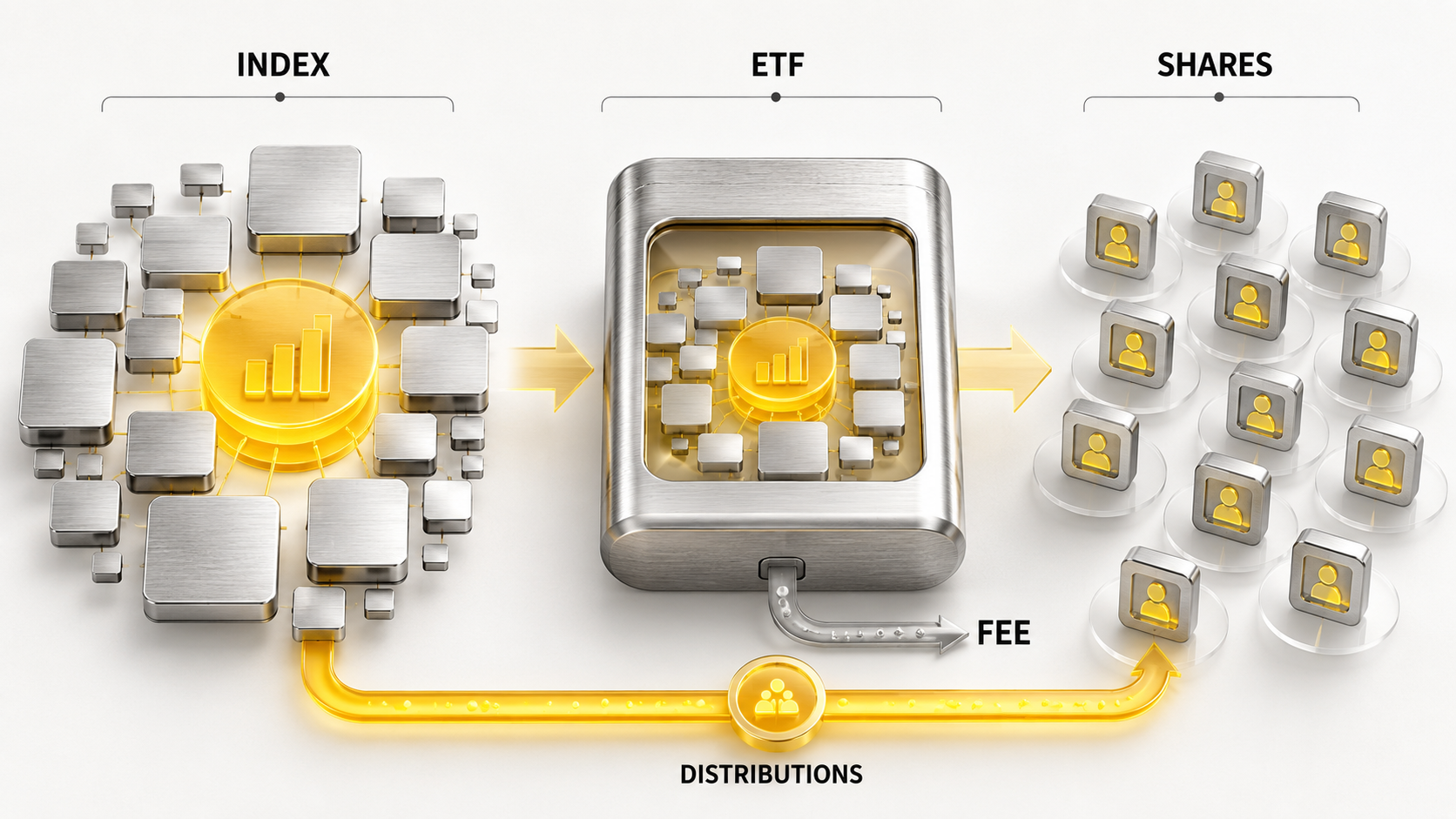
No. The S&P 500 is an index level calculated from its constituent companies. It has no shares, custody account or distribution schedule. VOO is a separate financial product that uses the index as its benchmark.
| Feature | S&P 500 Index | VOO ETF |
|---|---|---|
| What it is | A calculated market benchmark | An exchange-traded investment fund |
| Can it be bought directly? | No | VOO shares can be bought through supported brokerage markets |
| Fees | No investor expense ratio because it is not a fund | 0.03% expense ratio as of April 28, 2026 |
| Distributions | The index itself pays none | The fund can distribute income received from portfolio companies |
Tapbit Learn’s guide to how the S&P 500 Index works explains the benchmark’s construction in more detail.
How Does VOO Track the S&P 500?
Market-Capitalization Weighting
The S&P 500 is float-adjusted and market-cap weighted. Larger companies therefore have more influence than smaller constituents. VOO follows that structure, so the largest U.S. companies can drive a significant share of the fund’s daily move.
This weighting method is efficient because it reflects the market value of publicly available shares. It also creates concentration. VOO may hold hundreds of companies, but a relatively small group of mega-cap stocks can dominate performance during a technology-led market.
Fees, Tracking Difference and Rebalancing
VOO’s 0.03% expense ratio is deducted through the fund structure. The benchmark has no comparable fund fee, so VOO’s return can be slightly lower than the index over time before other effects.
Tracking differences may also arise from cash balances, portfolio transactions, taxes, index changes and the timing of distributions. When the S&P 500 adds or removes a company, the fund adjusts its holdings to continue following the benchmark.
What Does VOO Hold?
VOO holds large U.S. companies across sectors such as technology, financials, healthcare, communication services, industrials, consumer businesses and energy. The exact companies and weights change as market values move and the index committee updates the benchmark.
The portfolio is broad by company count, but it is not equally weighted. A company with a very large float-adjusted market capitalization has a much greater effect than a smaller member. Investors should therefore review both the number of holdings and the concentration of the largest positions.
VOO is also U.S.-focused. It does not directly provide a complete allocation to international stocks, small-cap companies, bonds, commodities or crypto assets.
Does VOO Pay Dividends?
Many S&P 500 companies pay dividends. VOO receives the income generated by its portfolio and can distribute net fund income to shareholders according to its distribution process. The amount is variable because company dividends, portfolio composition and fund expenses can change.
Vanguard reported a 30-day SEC yield of 1.03% as of June 30, 2026. That figure is a standardized yield measure, not a guarantee of future distributions. VOO is generally used for total market return rather than as a high-yield income product.
VOO vs SPY and IVV
VOO, SPY and IVV all seek to provide exposure to the S&P 500. Their holdings and returns are therefore usually similar, but the funds are not identical.
| Factor | What Can Differ |
|---|---|
| Provider and legal structure | Vanguard, State Street and iShares operate different fund vehicles |
| Expense ratio | Fees can differ and should be checked on each provider’s current page |
| Trading profile | Share price, options activity, volume and bid-ask spreads can differ |
| Tracking | Small differences can result from expenses and portfolio operations |
There is no universal winner. A long-term investor may emphasize fees and account compatibility, while an active trader may emphasize liquidity, options markets and execution conditions.
What Are the Main Risks of VOO?
Broad market risk: VOO can fall during recessions, financial shocks, rate increases or widespread earnings weakness.
Mega-cap concentration: A market-cap-weighted portfolio can become increasingly dependent on a small number of very large companies.
U.S. concentration: The fund does not provide complete global equity diversification.
Valuation risk: Strong historical returns can lead investors to pay high prices relative to earnings. Future returns may be lower if valuations compress.
Currency risk: Investors whose home currency is not the U.S. dollar can experience gains or losses from exchange-rate changes in addition to the ETF’s market performance.
VOO Ownership vs 24/7 S&P 500 Derivatives
VOO shares represent an interest in an ETF. A perpetual contract, CFD or tokenized index product is a derivative. It may provide price exposure without fund ownership and can include leverage, funding costs, liquidation risk and trading outside normal U.S. exchange hours.
Tapbit Learn has examined 24/7 S&P 500 derivatives and the structural difference between a continuously traded contract and a traditional ETF. The existence of an index-linked derivative does not mean that the trader owns VOO shares or receives VOO distributions.
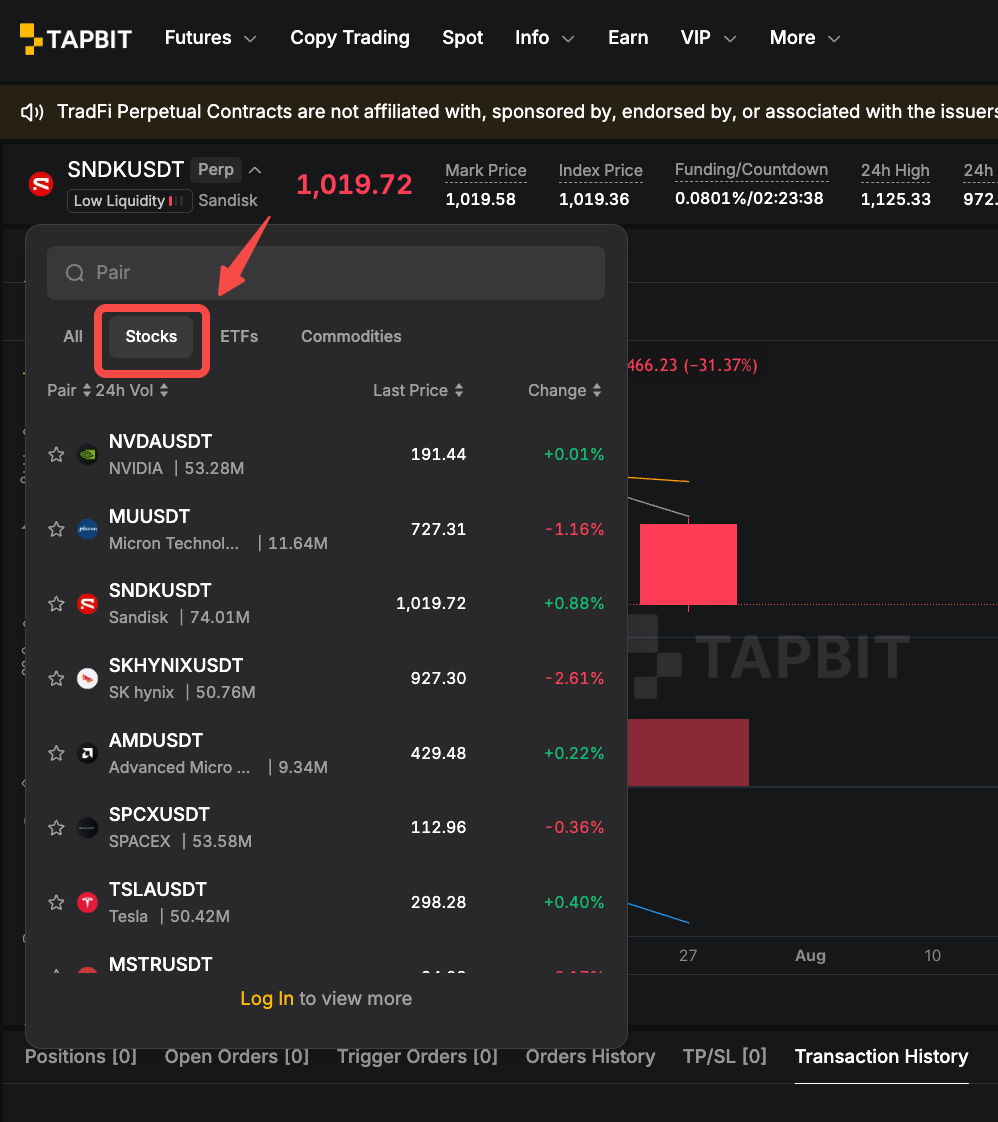
Tapbit has also published an overview of new TradFi perpetual markets. Product availability and URLs can change, so this article does not insert a VOO-specific trading link without current support confirmation.
What Tapbit Users Should Confirm Before Trading Market-Linked Products
Before using any market-linked derivative, confirm the exact underlying reference, trading hours, funding method, leverage, liquidity and whether the product represents direct ownership. An S&P 500-related contract should not be described as VOO unless its legal and pricing documentation specifically says so.
Users can create an account to review currently available Tapbit markets and their contract specifications. The product page, not a general educational article, should be treated as the source of current support status.
VOO is a low-cost route to S&P 500 ETF exposure, but its simplicity should not hide the main risks. It remains a fully exposed equity fund whose return is increasingly influenced by the largest U.S. companies and the valuation of the broad market.


