

What Is USOR Coin?
What is USOR coin? USOR coin, also referred to as U.S. Oil or United States Oil Reserve in some search results, is commonly described as a Solana-based SPL token that launched in early 2026. It gained attention by using a U.S. oil reserve narrative and positioning itself around energy geopolitics.
The important point is that what is USOR coin is not the same as "is USOR backed by real oil?" A token can use oil-related branding without giving holders a legal claim to physical oil.
Based on public information available at the time of writing, there is no independently verified proof that USOR is connected to the U.S. Strategic Petroleum Reserve, any U.S. government body, or any physical oil stockpile.
That does not mean users cannot research it. It means the research must begin with verification.
What Is the U.S. Oil Reserve Narrative?
USOR became visible because oil is a powerful theme.
Oil connects to inflation, geopolitics, energy security, commodities, and national policy. In crypto, those themes overlap with the growing trend of real-world asset tokenization, or RWA. RWA projects try to represent real-world assets, such as bonds, real estate, commodities, or invoices, on-chain.
USOR uses that context. Its name and branding suggest a connection to oil reserves. That can attract attention quickly, especially when energy headlines are active.
But attention is not backing. A narrative can create trading volume without creating legal ownership. That distinction is central to understanding USOR.
From a crypto-market view, USOR sits at the intersection of oil and RWA narratives, the Solana meme-token cycle, on-chain liquidity, and social momentum. That mix can make a token move quickly, but it does not create verified commodity exposure by itself.
Is USOR Backed by Real U.S. Oil Reserves?
This is the main question users ask.
Public data does not independently verify that USOR is backed by U.S. government oil reserves or any physical oil asset. Some project-facing language has referenced ideas like oil exposure or reserve transparency, but such claims require outside verification.
For a token to be genuinely backed by oil, it would normally need:
| Requirement | What It Means |
|---|---|
| Physical custody | A trusted custodian holds verified oil or oil-linked assets |
| Legal claim | Token holders have documented rights or redemption terms |
| Independent audit | A third party confirms reserves and token supply |
| Pricing oracle | Token value connects transparently to oil benchmarks |
| Compliance | The issuer meets relevant legal requirements |
Without those pieces, oil-backing claims should be treated as unverified marketing. That is the careful and accurate way to frame USOR.
Is USOR a Meme Coin, an RWA Token, or Something Else?
USOR sits in a confusing part of the market. To understand it, compare three categories.
| Category | Main Driver | Verification Level |
|---|---|---|
| Meme token | Community, virality, social attention | Usually no asset backing |
| Oil-themed narrative token | Commodity branding and market story | Backing must be verified |
| RWA token | Legal claim to real-world asset | Requires audits and disclosures |
A genuine RWA token needs clear legal structure, custody, audits, and redemption or settlement terms. A meme token usually depends on narrative and community momentum.
Based on currently available public information, USOR fits closer to an oil-themed narrative token than a verified RWA token.
That distinction matters. RWA tokens may offer legal structures. Narrative tokens usually do not. Readers should not assume one category just because a token name sounds serious.
What Can Drive USOR's Price?
This section is not a price prediction. It is a framework for understanding what can move a token like USOR.
Possible drivers include:
- Social media attention
- Energy and oil-related headlines
- Broader Solana ecosystem activity
- Speculative demand
- DEX liquidity
- Holder concentration
- Narrative rotation toward RWA or commodity themes
USOR's price does not reliably track crude oil futures. If oil rises, USOR does not automatically rise. If oil falls, USOR does not automatically fall. A token needs verified structure and pricing mechanics to function as real oil exposure.
This is why "oil-themed" and "oil-backed" must stay separate.
What to Check Before Interacting With USOR
If you are researching USOR, use a verification-first checklist.
① Verify the Basics
Confirm the exact token name, ticker, blockchain, and contract address from primary project sources. Then cross-check the contract on a Solana explorer.
② Check Backing Claims
Look for independent audits, proof-of-reserve documents, custody agreements, or legal disclosures. If these are missing, treat backing claims as unverified.
③ Review On-Chain Data
Check holder distribution, liquidity depth, and trading volume. Thin liquidity can make price moves sharper.
④ Separate Story From Structure
USOR may have a compelling story. But financial structure matters more than branding.
For general context, you can view market data across major crypto assets on Tapbit. If you are new to crypto research, you can create an account, review trading fees, and check Tapbit's proof of reserves.
This does not mean USOR is available on Tapbit. Always confirm asset availability directly on any platform before taking action.
How to Track WTI Oil Futures on Tapbit
USOR uses an oil-reserve narrative, but it is not the same as WTI crude oil and it does not represent verified oil backing. If readers want to observe oil-market-linked price action separately from USOR, Tapbit offers a TradFi oil market-linked futures product.
Here is a simple 4-step workflow:
- Open Tapbit Futures and select TradFi.
- Choose OIL(WTI)USDT.
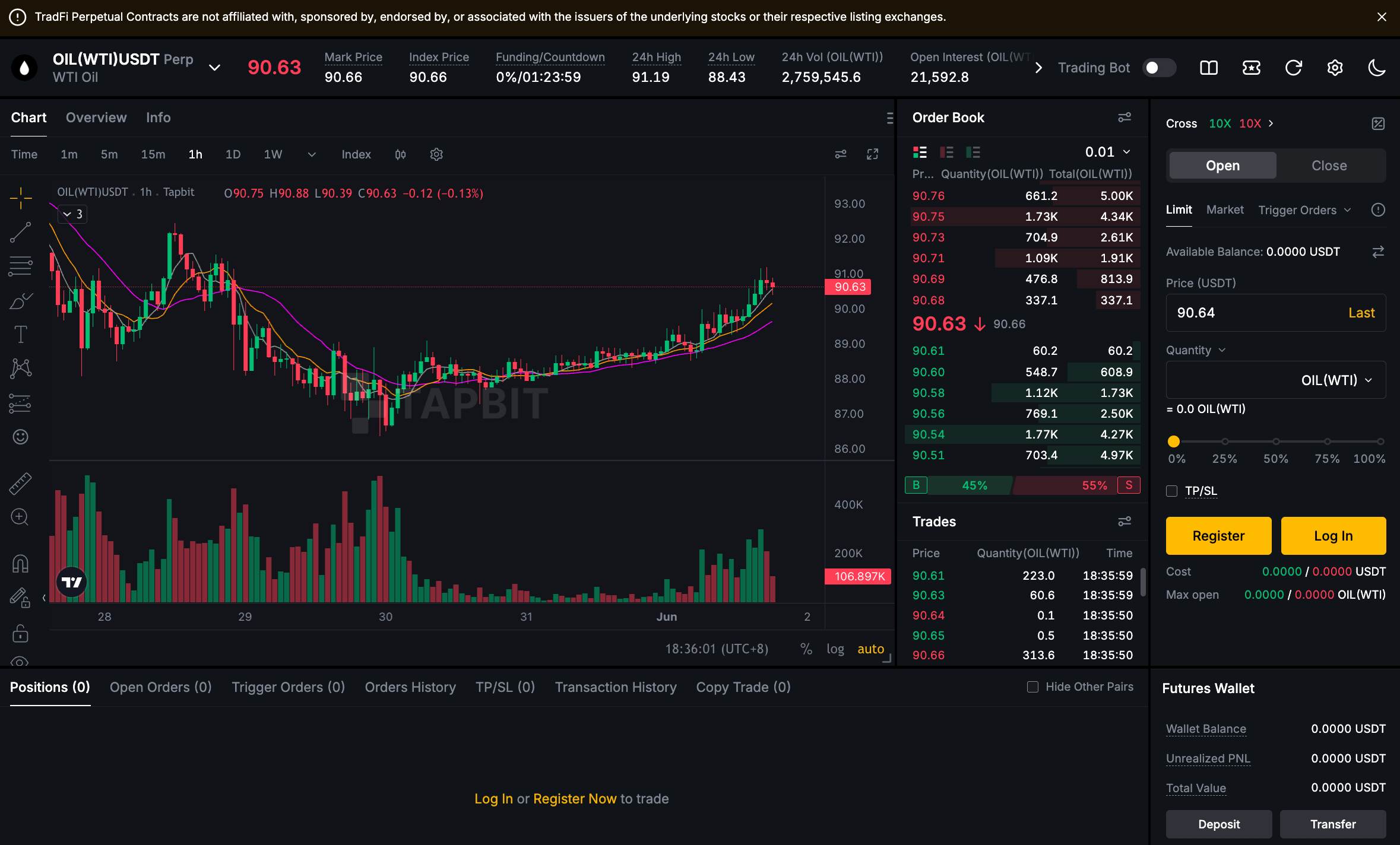
- Check last price, 24H change, 24H volume, and the order book.
- Set margin, leverage, order type, and TP/SL before opening a position.
⚠️ WTI Oil futures are oil market-linked TradFi derivatives. They are not USOR, they do not make USOR oil-backed, and they do not mean USOR is available for trading on Tapbit.
Closing
What is USOR coin in simple terms? USOR coin is an oil-themed, narrative-driven token commonly associated with Solana and the U.S. oil reserve story. But USOR coin is not publicly verified as a U.S. government-backed oil asset or a confirmed tokenized oil RWA. A name is not proof. A narrative is not backing. Research comes first.
FAQ
What blockchain is USOR coin built on?
USOR is commonly described as a Solana-based SPL token. Users should still verify the exact contract address from primary sources.
Is USOR officially connected to the U.S. government?
Public information does not independently verify any official connection between USOR and the U.S. government or U.S. oil reserves.
Does USOR track real crude oil prices?
No verified structure shows that USOR tracks WTI or Brent crude prices. Its price appears to be driven mainly by market sentiment and speculation.
Is USOR a meme coin?
USOR has meme-like and narrative-driven traits. It should not be treated as a verified RWA token unless independent proof of backing appears.
Why did USOR gain attention?
It combined several strong market themes: Solana trading, oil reserves, geopolitics, RWA narratives, and speculative crypto momentum.
What should beginners verify before interacting with USOR?
Check the contract address, liquidity, holder distribution, audits, legal disclosures, and whether any reserve or backing claim is independently verified.


