

Charles Schwab is broadening its direct cryptocurrency offering beyond Bitcoin and Ether. The company says Solana (SOL), Avalanche (AVAX) and Chainlink (LINK) are expected to join Schwab Crypto in the coming months, giving eligible clients a wider selection of major crypto assets inside the Schwab ecosystem.
The expansion matters because it brings three widely followed altcoins closer to a large traditional investing audience. It should not, however, be described as an immediate launch for every Schwab client. The rollout remains phased, exact listing dates have not been published, and geographic and account-eligibility restrictions still apply.
Investors who want to compare opportunities across a broader selection of supported markets can create a Tapbit account and review available spot and futures pairs before deciding how to trade.
What Is Schwab Crypto?
Schwab Crypto is a separate cryptocurrency account offered through Charles Schwab Premier Bank, SSB, an affiliated company within the Charles Schwab group. It is designed to let approved clients buy, sell and hold supported digital assets directly rather than gaining exposure only through exchange-traded products, trusts or futures.
Schwab began its phased spot-crypto rollout in May 2026. Bitcoin and Ether formed the initial product set, consistent with the company's earlier statements that direct trading would start with the two largest crypto assets. The service is integrated with Schwab's online environment, but a standard brokerage account alone is not the same as a Schwab Crypto account.
Which Cryptocurrencies Can You Trade on Schwab?
The initial Schwab Crypto lineup is BTC and ETH. Schwab now plans to add SOL, AVAX and LINK, moving the service from a two-asset offering toward a more diversified group of established networks.
| Asset | Status | Primary Market Role |
|---|---|---|
| Bitcoin (BTC) | Initial rollout | Digital monetary asset |
| Ether (ETH) | Initial rollout | Smart-contract network asset |
| Solana (SOL) | Planned | High-throughput smart-contract network |
| Avalanche (AVAX) | Planned | Layer-1 and custom blockchain infrastructure |
| Chainlink (LINK) | Planned | Oracle and cross-chain infrastructure |
The planned additions do not mean that nearly 40 million Schwab accounts can already trade all five coins. Availability depends on the rollout stage, client approval and location.
When Will SOL, AVAX and LINK Trading Launch?
Schwab has described the timing as the “coming months.” No precise launch day has been announced for SOL, AVAX or LINK. That distinction matters: a roadmap statement is not the same as an active listing.
Clients should rely on the Schwab Crypto product page and their account interface for confirmation. Until an asset appears as tradable in an approved account, price moves based on listing expectations remain speculative.
Is Schwab Crypto Direct Spot Trading?
Yes. Schwab Crypto is intended for direct spot purchases and sales of supported cryptocurrencies. This differs from buying a spot crypto ETP in a brokerage account. An ETP is a security that tracks an asset, while a spot crypto account records ownership of the supported cryptocurrency within Schwab's custody arrangement.
There is also an important wallet limitation. Schwab's official FAQ says supported crypto cannot currently be transferred into or out of a Schwab Crypto account to an external wallet. Clients can trade and hold within the service, but they do not receive the same on-chain withdrawal flexibility available from many crypto-native exchanges.
How Much Does Schwab Charge for Crypto Trades?
Schwab states that the fee is approximately 0.75% of the trade value, with zero additional spread quoted by the platform. A $1,000 purchase would therefore carry a fee of about $7.50, before considering any later selling cost.
The simple percentage model is easy to understand, but active traders should compare total costs carefully. A fee charged on every purchase and sale can accumulate quickly when positions are frequently adjusted.
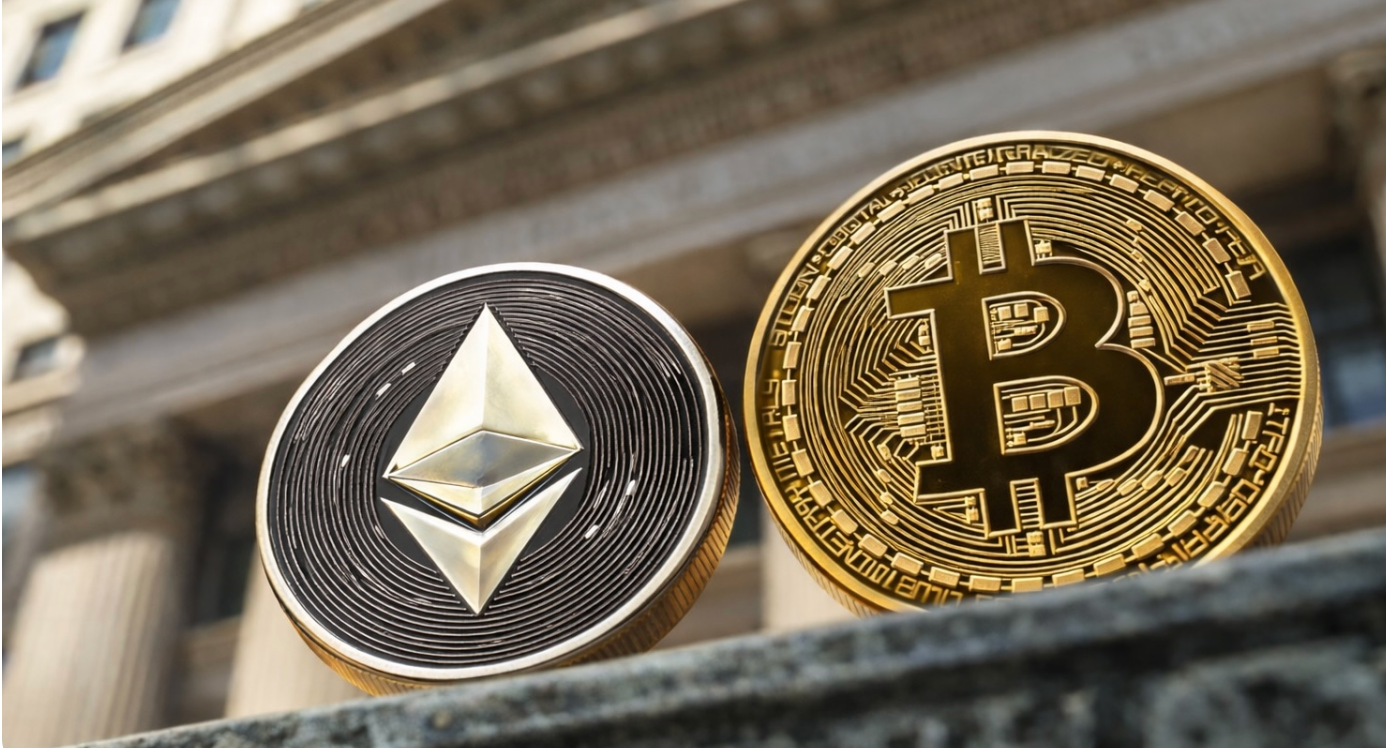
Schwab Crypto vs Coinbase and Robinhood
| Feature | Schwab Crypto | Crypto-Native Exchange | Robinhood-Style Broker |
|---|---|---|---|
| Core audience | Existing traditional investors | Crypto-focused users | Multi-asset retail traders |
| Asset selection | Limited, expanding lineup | Usually much broader | Moderate and jurisdiction-dependent |
| External wallet transfers | Not currently supported | Commonly supported | Supported for selected assets and users |
| Trading fee | About 0.75% | Tier and order-type dependent | Pricing model varies |
Schwab's advantage is convenience for clients who already manage investments through the company. Coinbase and other crypto-native platforms generally offer more assets and on-chain functionality. Robinhood sits between the two models, although features vary by location and asset.
Where Is Schwab Crypto Available?
Schwab says the account is available in U.S. states except New York and Louisiana. It is not offered in U.S. territories or international jurisdictions, and not every applicant will qualify. Accounts may also be restricted if a client moves to an unsupported jurisdiction.
These limits are one reason the expansion should be framed as a controlled rollout, not universal access across Schwab's entire customer base.
What the Expansion Means for SOL, AVAX and LINK
Access through a familiar financial brand could make the three assets easier to evaluate for investors who have avoided standalone crypto exchanges. It may also improve visibility and add another potential source of demand.
Still, a listing does not change the fundamentals of each network. SOL remains tied to Solana adoption and network activity; AVAX depends on Avalanche usage and developer traction; LINK depends on demand for oracle, data and cross-chain services. Any listing-related price reaction can fade if broader crypto liquidity or network fundamentals weaken.
Is Schwab Crypto Safe?
Schwab Crypto benefits from a recognizable institution, a defined fee schedule and an account structure operated by Charles Schwab Premier Bank. Those features may reduce some operational uncertainty for traditional investors, but they do not remove crypto market risk.
Crypto assets in the account are not bank deposits, are not FDIC-insured and can lose substantial value. Clients also depend on Schwab's custody and execution systems because external wallet transfers are not available. The main practical limitations are therefore concentrated custody, a relatively narrow coin list, the 0.75% trading fee and restricted availability.
Conclusion
Schwab's planned addition of SOL, AVAX and LINK is a meaningful expansion beyond its initial Bitcoin and Ether lineup. The development may bring established altcoins to more traditional investors, but the launch is not yet universal and no exact date has been announced. Prospective users should verify account eligibility, calculate round-trip fees and understand that holdings currently remain inside Schwab's custody system.
FAQ
Can Schwab clients trade SOL, AVAX and LINK now?
Not necessarily. Schwab says the assets are coming in the next few months, but exact listing dates and client rollout details have not been published.
Does Schwab offer real Bitcoin and Ether trading?
Schwab Crypto is a direct spot-trading account for supported assets, separate from ordinary brokerage products such as crypto ETPs.
Can Schwab Crypto be sent to a private wallet?
No. Schwab currently says cryptocurrency cannot be transferred to or from an external wallet.
What is the Schwab Crypto trading fee?
The stated fee is about 0.75% of the trade value, with zero additional spread quoted by Schwab.
Is Schwab Crypto available internationally?
No. Schwab says the service is not available in international jurisdictions, U.S. territories, New York or Louisiana.


