
What is INTW stock? INTW is not Intel stock. It is the GraniteShares 2x Long INTC Daily ETF, a leveraged exchange-traded fund designed to deliver about two times Intel’s daily percentage move before fees and expenses.
If Intel rises 5% in one trading day, INTW aims for roughly +10%. If Intel falls 5%, INTW aims for roughly -10%. That sounds simple until you hold it for more than one day. INTW resets its exposure every session, so compounding changes the result.
What Is INTW Stock?
INTW launched on February 13, 2025 and trades under the ticker INTW. Its underlying company is Intel Corporation, ticker INTC.
GraniteShares describes INTW as a leveraged single-stock ETF intended for sophisticated investors who actively monitor their positions. The fund carries the issuer’s highest risk rating and is designed as a short-term trading vehicle rather than a traditional buy-and-hold ETF.
That is the most important answer to what is INTW stock: it gives amplified daily Intel exposure, but it is a different financial product from owning Intel shares.
How Does INTW Work?
INTW does not simply buy two Intel shares for every dollar invested. GraniteShares says the ETF gains its exposure through total-return swaps tied to Intel, with collateral such as cash and short-term U.S. Treasuries.
At the end of each trading day, the fund rebalances so its notional exposure is again close to two times its net asset value.
If INTW ends a day worth $100, the fund aims to begin the next session with around $200 of Intel-linked notional exposure. The scoreboard resets every morning.
What Does “2X Daily” Mean?
| Intel Daily Move | Approx. INTW Daily Objective |
|---|---|
| +5% | About +10% |
| +2% | About +4% |
| -2% | About -4% |
| -5% | About -10% |
The result can differ because of fees, trading costs and tracking. More importantly, the 2X target applies to one trading day, not a week, month or year.
Why Is INTW Not Exactly 2X Intel Over a Month?
Daily rebalancing creates compounding and path dependency.
Suppose Intel rises 5% on day one and falls 5% on day two. A $100 Intel position becomes $105 and then $99.75. A simplified 2X daily product becomes $110 after day one, then loses about 10% on day two and falls to $99.
Intel is down only 0.25% over the two days, while the leveraged product is down about 1%. Same starting point, different path.
That is why GraniteShares warns that INTW should not be expected to provide exactly two times Intel’s cumulative return for periods longer than one day.
What Was the INTW Stock Split?
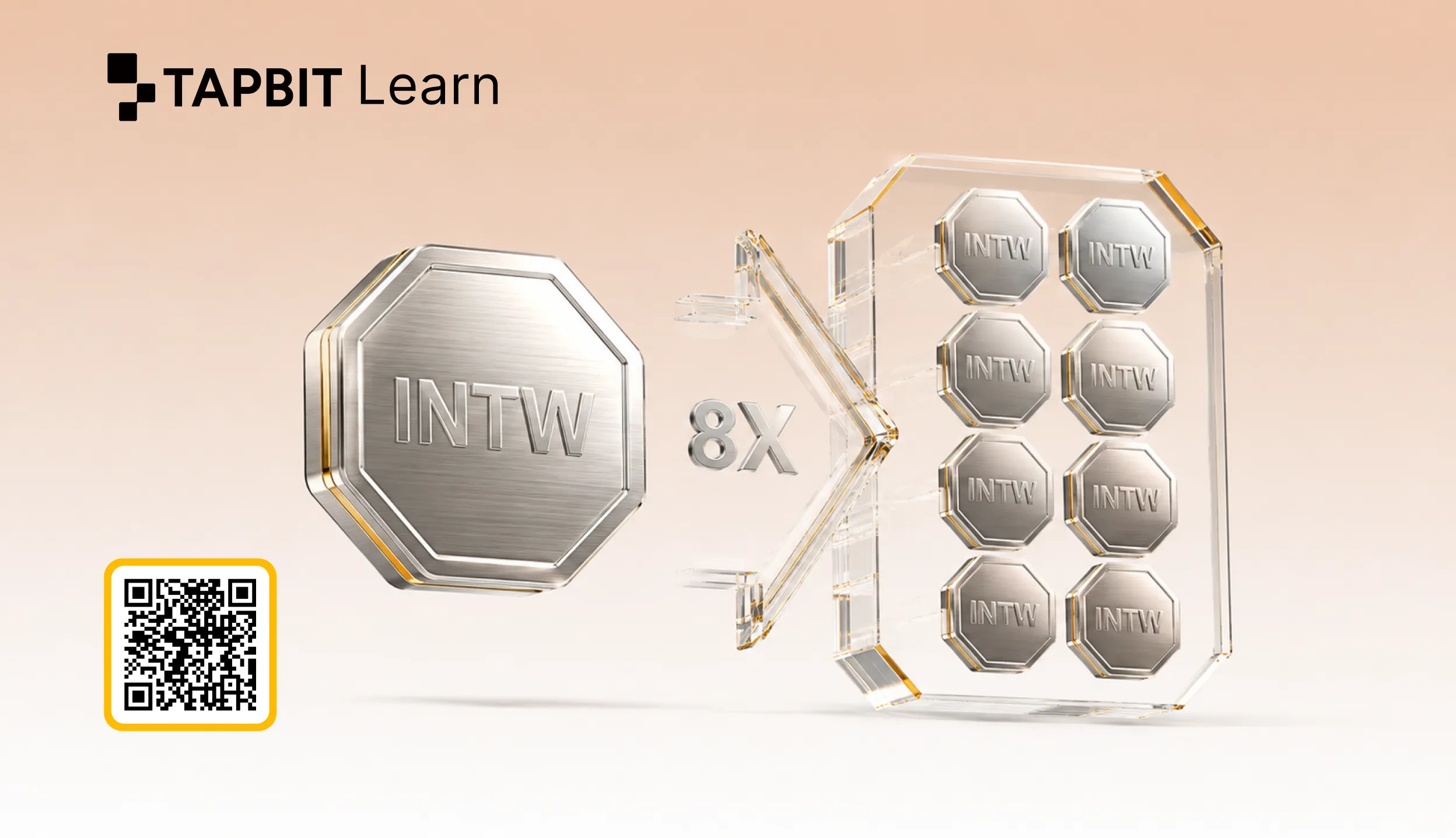
INTW completed an 8-for-1 forward split in June 2026. GraniteShares set the record date at the close of June 24, the payable date after the close on June 25, and the split became effective before the market opened on June 26, 2026.
The ticker remained INTW. The CUSIP also remained unchanged.
What Does an 8-for-1 INTW Split Mean?
An 8-for-1 split gives investors eight post-split shares for every one pre-split share while reducing the price per share by roughly the same factor.
| Example | Shares | Price | Total Value |
|---|---|---|---|
| Before split | 10 | $200 | $2,000 |
| After split | 80 | $25 | $2,000 |
No new wealth appears. It is the same pizza cut into eight times as many slices.
Why Did INTW Have a Forward Split?
A forward split lowers the nominal trading price per share and increases the number of shares outstanding. That can make a high-priced leveraged ETF easier to size and trade.
The split itself is not a bullish signal. It does not change Intel’s business, INTW’s leverage target or the economic value of the fund. It mainly changes the unit count and makes the quoted share price easier to handle.
Did the INTW Split Change the 2X Strategy?
No. After the split, INTW still seeks about 200% of Intel’s daily percentage move before fees and expenses. The fund still resets daily and still carries leverage, concentration, derivative and counterparty risk.
INTW vs Intel Stock
| Feature | INTW | Intel (INTC) |
|---|---|---|
| Product type | Leveraged ETF | Operating-company stock |
| Daily target | About 2X INTC | 1X company share price |
| Daily reset | Yes | No |
| Main exposure method | Swaps / derivatives | Direct equity ownership |
| Designed for | Active short-term trading | Can be held long term |
What Are the Main INTW Risks?
- Leverage risk: Intel’s daily losses are amplified.
- Compounding risk: longer-term performance can differ sharply from 2X Intel.
- Concentration risk: the entire strategy depends on one company.
- Derivative risk: the ETF uses swaps rather than directly holding Intel stock.
- Counterparty risk: swap counterparties matter.
- Loss risk: GraniteShares warns investors could lose the full value of an investment in a single day.
How to Trade INTW Exposure on Tapbit
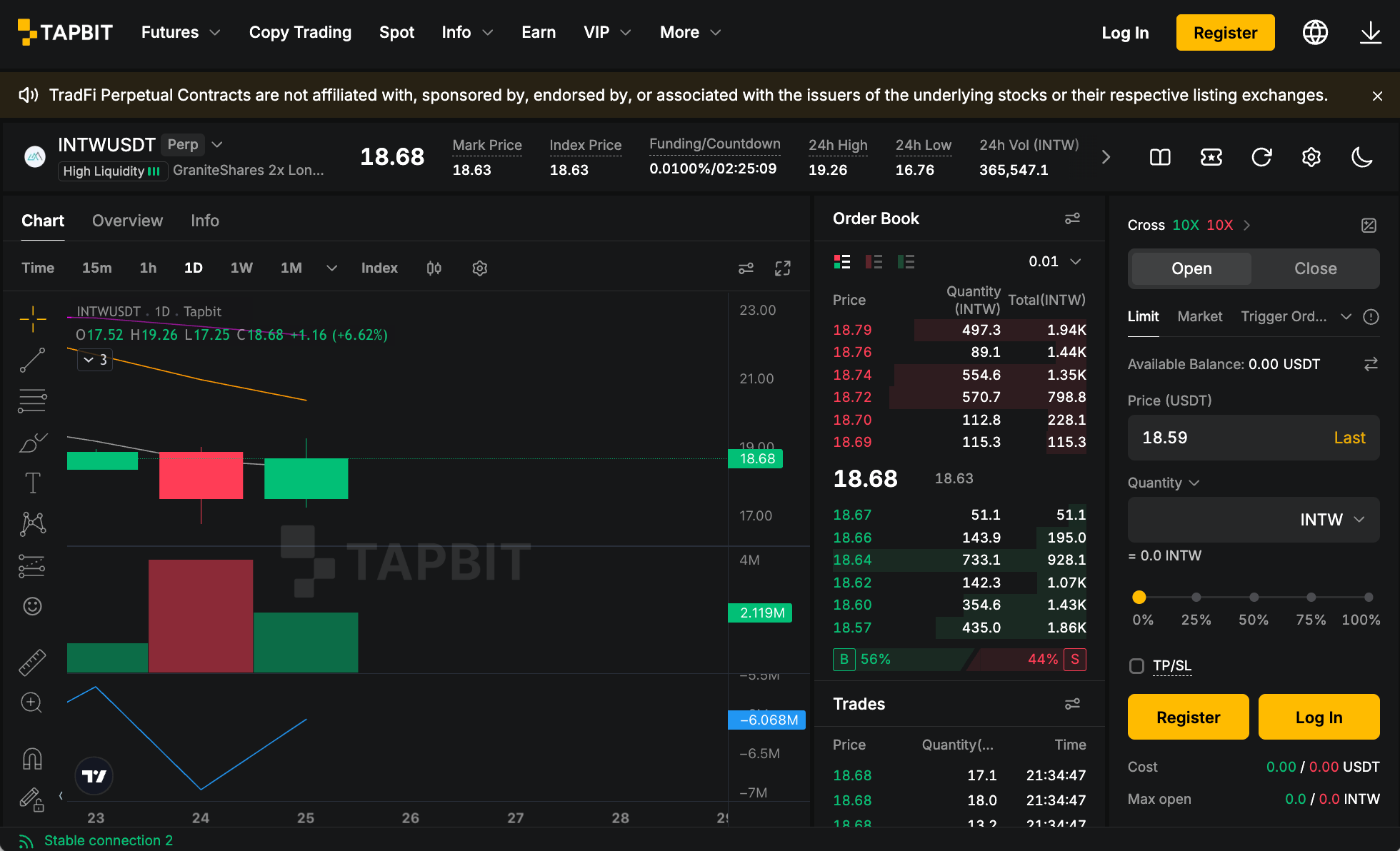
Tapbit lists INTW-USDT perpetual futures. This is another derivative layer: you are not buying the GraniteShares ETF itself, and you do not receive Intel shareholder rights or ETF distributions.
-
Create an account or log in.
-
Open INTW-USDT and review the contract name, mark price, index price and funding.
-
Choose your order type, quantity, leverage and margin mode, then open long or short.
-
Add TP/SL and monitor positions, margin and liquidation risk.
Bottom Line
So, what is INTW stock? INTW is a 2X daily Intel ETF, not Intel common stock. It can amplify short-term INTC moves, but daily resetting makes longer holding periods much less predictable. Its June 2026 8-for-1 forward split only changed the number and nominal price of shares; it did not change the fund’s strategy or economic value. INTW is built for active traders who understand leverage, not for investors who simply want to own Intel for years.
FAQ
Is INTW Intel stock?
No. INTW is a leveraged ETF linked to Intel’s daily share-price movement.
Is INTW a leveraged ETF?
Yes. It seeks approximately 200% of Intel’s daily percentage move before fees and expenses.
What was the INTW stock split?
INTW completed an 8-for-1 forward split effective June 26, 2026.
Can INTW be held long term?
GraniteShares says INTW is intended for sophisticated investors and very short holding periods. Daily compounding can make longer-term results differ substantially from 2X Intel.


