

Copper is trading near its all‑time high, yet one of the world's largest visible stockpiles continues to grow.
On the LME, traders are competing for a shrinking pool of immediately available metal, while COMEX warehouses in the US hold record inventories. The apparent contradiction explains more about the 2026 rally than the familiar claim that AI is consuming every spare tonne.
Copper hasn't simply disappeared from the global market. Tariff expectations and a persistent premium for US‑delivered metal have shifted where it's stored — leaving London short of copper even as New York sits on an unprecedented pile.
The rally has underlying support: mine output is growing more slowly than expected, concentrate treatment charges have turned deeply negative, and manufacturing surveys are improving. Still, the evidence points less to a global shortage and more to a market divided by location, delivery, and policy.
Copper Returns to Record Territory

Three-month copper on the LME traded as high as approximately $14,343 per metric ton on August 25, 2026. It remained within reach of the $14,527.50 intraday record set earlier in the year.
That distinction matters. Copper is near an all-time high, but claims that August 25 established a new record across every price measure are not supported by the available LME data.
The more important development happened in the warehouses.
Orders were submitted to remove about 65,400 tonnes of copper from the LME system over several days. These cancellations followed a temporary increase in available metal that had appeared to ease immediate concerns about supply.
The relief did not last. Once a warehouse warrant is cancelled, the metal is marked for withdrawal. It may still appear in total inventory figures, but it is no longer freely available for delivery in the same way as registered stock.
That difference between total inventory and available inventory has become central to copper pricing.
Half of LME Inventory Is Already Marked to Leave
LME copper inventories stood at 240,250 tonnes on August 21. Of that amount, 121,375 tonnes were represented by cancelled warrants, giving a cancellation ratio of 50.52%.
Registered warrants fell to 118,875 tonnes. In practical terms, the LME had approximately 240,000 tonnes of copper in its warehouse network, but only about half remained registered and readily deliverable. Further withdrawals could tighten that pool quickly.
This is why spot and nearby copper prices have sometimes traded above later-dated contracts. A backwardated curve tells traders that metal available now carries a premium over metal promised for future delivery.
That structure can reflect genuine physical tightness. It can also become more severe when short positions approach delivery and traders need eligible metal to settle them.
The latest LME warehouse figures therefore support the view that the London market is tight. They do not prove that the entire world has run out of refined copper.
The Missing Copper Can Be Found on COMEX
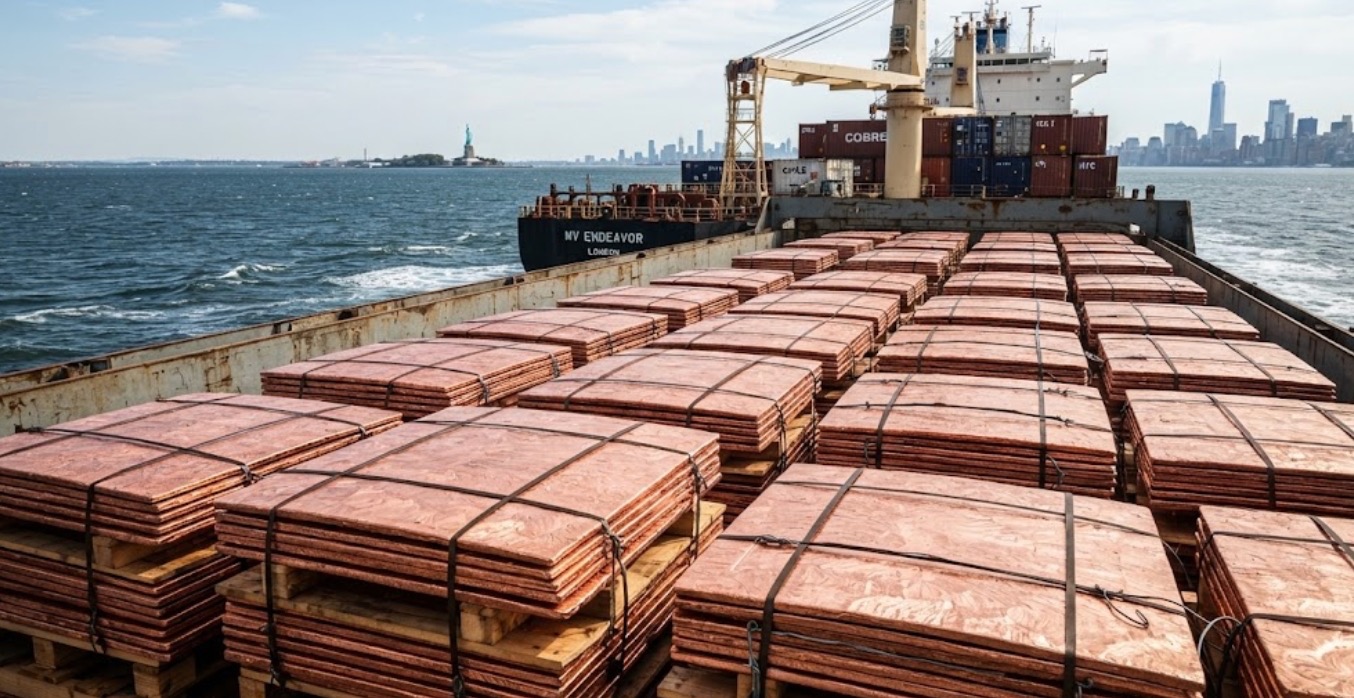
While available LME stocks declined, COMEX copper inventories climbed to roughly 675,000 metric tons, a record for the US exchange. The two trends are connected.
US copper prices have traded above international benchmarks because the market expects the United States may impose tariffs on refined copper imports beginning in 2027. When the COMEX premium is large enough to cover freight, insurance, financing and storage, traders have an incentive to buy copper elsewhere and ship it into the United States.
That trade has been running for months.
The United States imported almost 885,000 tonnes of refined copper cathodes during the first half of 2026. That was slightly above the already elevated level recorded a year earlier and more than double the amount imported during the first half of 2024.
Some cancelled LME warrants are located in US and Asian free-trade-zone warehouses. Industry participants expect part of that metal to move into COMEX storage or be delivered to American consumers.
The result is not a disappearance of supply. It is a redistribution of supply toward the market offering the highest price.
The global refined market may still have enough metal overall, but inventories outside the United States are becoming harder to access.
The Tariff Has Not Been Finalized
The US Department of Commerce previously recommended a 15% tariff on refined copper from 2027, potentially rising to 30% in 2028.
Those rates are not yet final policy.
Public information available through August does not show a definitive presidential decision adopting the proposed schedule. Refined copper was also excluded from the main copper tariffs introduced earlier, even though some semi-finished products and copper-intensive derivatives were covered.
That uncertainty is enough to influence behavior. A trader does not need to know that a tariff will happen to profit from a price spread created by other traders preparing for it.
As long as COMEX copper trades at a meaningful premium, metal can continue moving toward the United States. If the tariff is rejected, delayed or introduced at a lower rate, the premium could shrink. Copper accumulated in US warehouses may then become available to other regions again.
The tariff is therefore supporting copper in two ways. It has raised the perceived value of metal already inside the United States, while draining exchange inventories elsewhere.
It also creates one of the largest risks to the current trade.
Mine Supply Is Tight, Even If Refined Copper Is Not Gone
The inventory movement does not mean supply concerns are imaginary. The International Copper Study Group expects global mine production to grow only 1.6% in 2026, down from its earlier forecast of 2.3%. The revision reflects weaker expectations for the Democratic Republic of the Congo, Chile and Indonesia, along with continuing disruption at the Grasberg and Kamoa-Kakula operations.
Global refined production is projected to grow just 0.4%, partly because concentrate availability has not kept pace with smelting capacity.
Kamoa-Kakula illustrates the problem. Ivanhoe Mines reduced its 2026 production guidance from 380,000–420,000 tonnes to 290,000–330,000 tonnes. Adverse geological and hydrological conditions slowed underground development, while the recovery from earlier flooding continued.
The company expects production to improve during the second half, but the revised guidance still removes a meaningful amount of anticipated supply from the market.
Chile has also struggled to restore the production growth expected from its aging mines. These setbacks matter because new copper projects usually require years of permitting, financing and construction. The industry cannot replace lost mine supply as quickly as an oil producer might increase output from an existing field.
The DRC Export Ban May Change Flows More Than Supply
The Democratic Republic of the Congo announced restrictions on copper and cobalt concentrate exports in August. The policy is intended to encourage domestic processing.
At first glance, an export ban sounds like another direct loss of global copper supply. Its impact may be more limited.
Restrictions on unprocessed concentrate have existed in the DRC for years, often with exemptions. The government can still grant derogations under specified economic or technical conditions. Kamoa-Kakula has also brought a large on-site smelter into operation, allowing more concentrate to be processed domestically.
The policy may reduce exports of concentrate while increasing exports of copper anodes or other processed material. In that case, the form of the exported product changes without removing the same volume of copper from the global market.
The distinction is important when assessing headlines about resource nationalism. A concentrate export restriction is not automatically equivalent to a production shutdown.
There Is No Confirmed Global Refined Copper Deficit Yet
The ICSG’s April forecast projected a refined copper surplus of approximately 96,000 tonnes for 2026. That is a small cushion in a market measured in tens of millions of tonnes. Mine interruptions, stronger demand or lower smelter output could erase it. Forecasts are not guarantees.
Even so, the figure challenges the claim that a severe global refined-metal deficit has already arrived. The current squeeze is most visible in specific delivery systems, especially the LME, while large inventories sit in the United States.
Copper can be in slight global surplus and still experience a sharp price rally if the available metal is stored in the wrong place, registered under the wrong exchange or held in anticipation of a policy change.
That is the situation the market appears to be pricing.
Manufacturing Is Giving Copper a Better Demand Story
Supply and inventories explain the immediate squeeze. Demand data are also becoming more supportive.
August manufacturing PMI readings reached 52.8 in the euro area, 54.1 in Germany, 55.1 in Japan and 53.2 in the United States. Readings above 50 indicate that surveyed manufacturing activity is expanding.
These surveys do not measure copper consumption directly. They do suggest that industrial demand is improving across several large economies at the same time.
Copper is used in machinery, construction, vehicles, electrical systems and consumer products. A sustained manufacturing recovery would make it easier for the physical market to absorb elevated supply and reduce the amount of metal available to return from storage.
The demand case becomes more credible if higher PMI readings are followed by growth in industrial production, new orders and actual refined-copper use. Without that confirmation, surveys remain an encouraging signal rather than completed demand.
Copper’s Rally Is Really About Access
Forget whether there's enough copper in the world — the real question is whether anyone can get it where it's needed, when it's needed.
Mine supply is lagging. Smelters are hungry for concentrate. Manufacturing is picking up, and electrification is building a durable demand base.
But the rally right now isn't just about fundamentals — it's about policy-driven inventory math. Copper has piled up in the US because tariff expectations made American delivery more valuable. Meanwhile, London's shrinking registered stock has made the rest of the world look even tighter.
The copper isn't missing — it's just sitting where the premium is highest.
So at this point, the US tariff decision, the COMEX-LME spread, and warehouse flow direction matter as much as the next AI data center announcement — maybe more
Tapbit’s market coverage looks beyond headline price moves to examine the policy and physical-market changes behind them. Visit Tapbit for more global asset research. Existing users can access the login page, while new users can create an account here.
Frequently Asked Questions
Why is copper trading near a record high?
Copper is being supported by slow mine-supply growth, tight LME registered inventories, improving manufacturing indicators and expectations of stronger long-term demand from electrical infrastructure. US tariff speculation has also redirected physical copper into COMEX warehouses.
What is the copper price record?
The LME three-month copper contract reached an intraday record of approximately $14,527.50 per metric ton earlier in 2026. On August 25, it traded as high as about $14,343, placing it close to that record.
Is there a global copper shortage?
Not according to the latest ICSG base-case forecast. The group projected a refined copper surplus of approximately 96,000 tonnes in 2026. However, mine concentrate is tight, and available exchange inventories are unevenly distributed.


