

Lovesac's stock presents an unusual valuation gap.
The company generated nearly $700 million in revenue last fiscal year, yet its market cap was roughly $235 million after LOVE closed at $16.07 on August 21.
That makes the shares look cheap at first glance — but it also highlights how little confidence investors currently have in the company's ability to convert revenue into sustainable earnings.
Lovesac has moved well beyond its oversized beanbag origins. Its core product is Sactionals, a modular couch system that can be rearranged, expanded and upgraded. Newer additions include reclining seats, embedded audio and smaller‑format furniture.
The concept has built a loyal customer base, but the financial track record hasn't yet persuaded the market that Lovesac can grow consistently while protecting margins.
That's the key question ahead of the next earnings report.
A $700 Million Business Valued at a Fraction of Sales

Lovesac reported fiscal 2026 revenue of $697.1 million, up 2.4% from the previous year. Fourth-quarter sales reached $248 million, helped by the holiday season.
Profit did not keep pace. Full-year net income fell from $11.6 million to $4.1 million, while adjusted EBITDA declined from $47.8 million to $36.1 million. Gross margin also contracted as tariffs, freight expenses and promotional activity raised the cost of doing business.
The weak conversion of revenue into profit helps explain the low valuation. Investors are not questioning whether Lovesac can sell furniture. They are questioning how much money will remain after it pays for products, transportation, stores, advertising and corporate expenses.
That distinction matters. A low price-to-sales ratio can signal an overlooked company, but it can also reflect a business with thin or unpredictable earnings.
The Latest Quarter Did Not Settle the Debate
Lovesac generated $138.2 million in revenue during the first quarter of fiscal 2027, almost unchanged from a year earlier. Comparable omni-channel sales declined 1%, while the company posted a net loss of $11.1 million.
Online sales were more encouraging, rising 7.1%. Inventory fell from $124.9 million to $109.3 million, and the company ended the quarter with $57 million in cash and no outstanding borrowings under its revolving credit facility.
Those improvements gave management room to continue investing in new products. They did not solve the demand problem.
The company reported fewer new and repeat customers during the quarter. Gross margin fell by 160 basis points to 52.1%, partly because of tariffs, transportation costs and warehousing expenses. The operating loss widened to $17.4 million.
Lovesac therefore entered the summer with a stronger balance sheet but little evidence of accelerating sales.
Lovesac Is Betting on a Larger Furniture Platform
The strongest version of the Lovesac investment case does not depend on selling more of the same couch.
Management wants to build a family of compatible products around the Sactionals system. Snugg gives the company a smaller and more accessible seating format. Powered reclining seats add another upgrade to existing configurations, while a higher-end sectional platform is expected later in 2026.
Another project, referred to as “New Room,” is planned for early 2027. Details remain limited, but the strategy is clear: Lovesac wants to sell into more rooms, at more price points, without abandoning the modular approach that defines the brand.
Early comments from management are positive. Snugg is reportedly performing well, and reclining seats are being included in roughly one-third of new Sactionals configurations. These figures suggest some customer interest, but investors still need sales and margin data before deciding whether the products can materially change the business.
Product launches generate attention. Repeat purchases and profitable revenue determine whether that attention has value.
Domestic Production Could Help, but It Is Not a Quick Fix
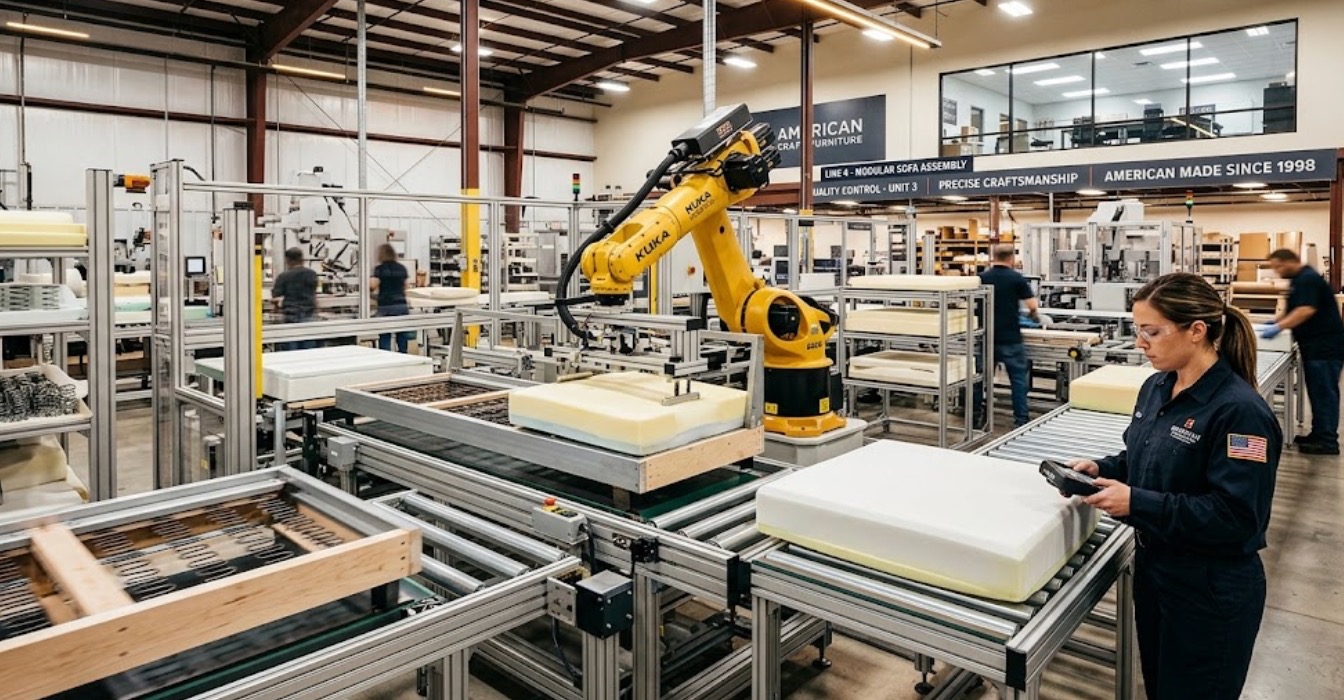
Lovesac expects to begin domestic production of certain Sactionals seat inserts during the summer of 2026. Producing closer to customers could shorten delivery times and reduce exposure to international shipping disruptions.
It may also limit some tariff volatility. The company has already received part of the tariff refunds it requested and expects to recognize approximately $3.6 million of IEEPA tariff refunds in its fiscal second quarter.
That amount could make the next quarterly result look better. It should be separated from the underlying business, however. A refund can lift reported profit for one quarter; it does not show whether normal product margins are recovering.
The more important test will be whether local production lowers costs after the initial setup period and whether faster delivery improves customer conversion.
The Buyback Changes the Per-Share Story
Lovesac expanded its share repurchase authorization by $40 million in March. During the first quarter, it bought back 141,482 shares at an average price of $16.69.
Approximately $51.7 million remained under the authorization as of May 3. That is meaningful beside a market capitalization of roughly $235 million.
Buybacks can increase each remaining shareholder’s claim on future earnings, particularly when shares are repurchased at a low valuation. They are less persuasive when cash flow is weak or operating performance continues to deteriorate.
Lovesac has enough cash to remain active, but an authorization is not a commitment. Investors should watch the company’s cash position and actual repurchase activity rather than assuming the entire amount will be spent.
Why Short Sellers Are Still Heavily Involved
About 3.24 million LOVE shares were sold short as of July 15, representing approximately 24% of the public float. The days-to-cover ratio was above 15. That is a large bearish position for a company of this size.
Short sellers may be focusing on weak discretionary spending, premium furniture prices, declining customer counts and the pressure on margins. Lovesac also competes in a category where purchases can be delayed when consumers feel uncertain about housing, employment or household finances.
The same positioning could make LOVE unusually sensitive to good news. A strong earnings report or improved guidance might force some short sellers to close positions, adding demand for the shares.
This possibility should not be mistaken for a complete investment thesis. High short interest shows disagreement. It does not guarantee a short squeeze.
The Case for LOVE Stock Is Still Open
Lovesac has several qualities that make the stock difficult to dismiss. It owns a recognizable brand, holds more cash than it did a year ago, has reduced inventory and is buying back shares. Its modular furniture system also creates opportunities to sell upgrades to existing customers instead of starting every transaction from zero.
Yet the market is applying a low valuation for understandable reasons. Revenue growth is limited, customer counts have declined and the company’s margins remain exposed to tariffs, freight costs and promotions. New products may improve that picture, but the proof has not appeared in the financial statements yet.
LOVE stock is therefore less a conventional turnaround story than a test of operating credibility. The shares do not need another product announcement. They need evidence that Lovesac can turn its expanding platform into better sales, healthier margins and recurring customer demand.
Readers can follow global stock and crypto market coverage through Tapbit. Existing users can log in, while new users can create an account.
Frequently Asked Questions
What is Lovesac stock?
Lovesac stock represents shares of The Lovesac Company, a modular furniture and home technology business listed on Nasdaq under the ticker LOVE. The company is best known for its Sactionals modular couches and Sacs seating products.
Why is Lovesac stock trading at a low valuation?
Investors remain concerned about slow sales growth, weaker customer traffic and declining profit margins. Lovesac generated nearly $700 million in fiscal 2026 revenue, but rising tariffs, freight costs and operating expenses limited its earnings.
Is Lovesac profitable?
Lovesac reported net income of $4.1 million for fiscal 2026, down from $11.6 million a year earlier. It recorded an $11.1 million net loss in the first quarter of fiscal 2027, although quarterly losses are affected by the seasonal nature of furniture sales.


