

Paras Defence and Space Technologies is approaching a widely searched corporate-action date. The company has fixed August 28, 2026 as the record date for its proposed final dividend for FY2025–26.
The payment is modest: ₹1 for each share with a face value of ₹5. Yet the approaching record date arrives while India’s defence sector is attracting renewed attention, Paras Defence is reporting double-digit growth, and the government is expanding the list of military products that must be sourced domestically.
That combination has pushed Paras Defence stock back onto watchlists. The dividend may explain the search traffic, but it does not explain the full market interest.
What Happens on the August 28 Record Date?
Paras Defence’s board recommended a final dividend of ₹1 per equity share on May 13. The company later set Friday, August 28 as the date used to determine which shareholders are eligible to receive it.
The dividend is not yet unconditional. Shareholders must approve it at the company’s annual general meeting on September 11. If approved, Paras Defence says the payment will be completed within 30 days of the meeting.
Under India’s T+1 settlement system, investors would generally need to purchase the shares by August 27 to appear in the shareholder records on August 28. Shares bought on the ex-dividend date will not normally qualify for the payment.
Anyone trading around the date should still confirm the settlement timetable with their broker. Corporate-action eligibility depends on completed settlement, not simply when an order is placed.
The “20% Dividend” Headline Needs Context
Some market pages describe the Paras Defence dividend as 20%. That number can easily be misunderstood.
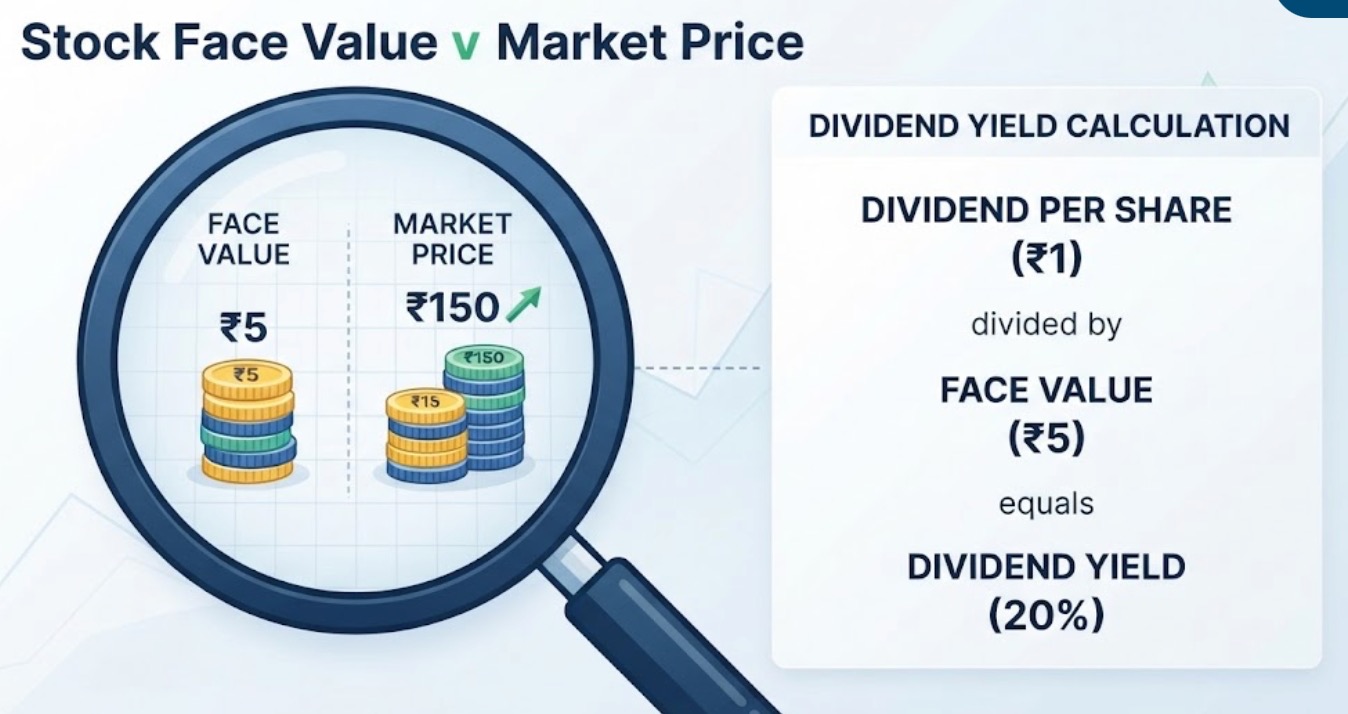
The percentage is calculated against the stock’s ₹5 face value: ₹1 dividend ÷ ₹5 face value = 20%
It is not a 20% return based on the market price of Paras Defence stock. If the shares trade near ₹1,500, a ₹1 dividend represents a yield of less than 0.1%.
The record date may influence short-term positioning, but this is not a high-yield dividend event. Investors buying only to collect ₹1 per share could be exposed to a much larger price movement once the stock trades ex-dividend.
There is also no newly announced bonus issue or stock split attached to the August date. Paras Defence completed its previous split in July 2025, reducing the face value from ₹10 to ₹5 and issuing two shares in place of each old share.
The More Important Number Came From Q1
The latest operating results offer a stronger explanation for the interest in Paras Defence.
For Q1 FY2026–27, consolidated revenue from operations reached approximately ₹127.91 crore, up 37.3% from the same quarter a year earlier. Profit before tax increased by about 44.1% to ₹28.02 crore, while consolidated net profit rose 21.2% to ₹21.22 crore.
The strongest growth came from optics and optronic systems. Segment revenue increased to ₹68.90 crore from ₹42.50 crore a year earlier, a gain of more than 62%.
That division supplies equipment used in surveillance, targeting, night vision and other applications where optical systems must operate under demanding military or aerospace conditions. These are specialized products with higher technical barriers than conventional industrial components.
Defence engineering revenue also increased, although at a slower rate. The two businesses give Paras Defence exposure to both physical defence systems and the sensing equipment used to detect, track and engage targets.
The quarter was not strong in every comparison. Revenue declined from Q4 FY26, showing that order execution can be uneven from one period to another. Defence contracts are often delivered according to project milestones, so quarterly results may move sharply depending on acceptance schedules and customer approvals.
India’s Import-Substitution Policy Added Another Catalyst

Paras Defence gained fresh attention on August 18 after India’s Ministry of Defence published its sixth Positive Indigenisation List. The list covers 405 strategically important products with an estimated business potential of about ₹3,070 crore. It includes components, assemblies, raw materials and replacement parts used across aircraft, helicopters, tanks, missiles and electronic systems.
Despite its name, a Positive Indigenisation List operates partly as an import restriction. Once the relevant deadline passes, the listed products are expected to be procured from Indian manufacturers instead of foreign suppliers.
This creates a long-term opportunity for India’s domestic defence industry. Paras Defence shares rose sharply after the announcement, along with other listed defence manufacturers.
It would be premature, however, to treat the entire ₹3,070 crore opportunity as a Paras Defence order pipeline. The business will be spread across public-sector companies, private manufacturers and specialized suppliers. Paras Defence must still qualify for individual programs and win contracts before the policy opportunity becomes revenue.
The announcement supports the sector. It does not guarantee an equal benefit for every defence stock.
Why Paras Defence Fits the Domestic Manufacturing Theme
Paras Defence operates in several areas that match India’s effort to reduce dependence on imported military technology.
Its capabilities include defence optics, optronics, space engineering, electromagnetic protection, heavy engineering and anti-drone systems. The company has also pursued technology-transfer agreements and international partnerships to expand the range of products it can manufacture locally.
This positioning gives Paras Defence access to multiple parts of India’s defence expansion. A radar shield, optical targeting system and counter-drone product may all serve different programs, customers and procurement cycles.
Diversification can reduce dependence on one product line, but it also introduces execution demands. Each segment requires specialized engineering, certification, manufacturing capacity and customer acceptance. Announcing a technology partnership is only an early step; converting it into repeat orders is what ultimately matters.
The Dividend Does Not Change the Valuation Debate
Paras Defence has benefited from strong investor interest in Indian defence companies. Government spending, localization policies and export ambitions have encouraged the market to assign premium valuations to businesses linked to the sector.
Premium valuations can persist when earnings and order books expand quickly. They can also leave little room for delays.
A ₹1 dividend does not materially alter that equation. The stock’s longer-term performance will depend on revenue growth, order conversion, operating margins and the amount of capital required to expand production.
Investors should also separate policy announcements from company-specific earnings. A new procurement list may enlarge the addressable market, but Paras Defence still needs to secure a commercially meaningful share of it.
Export growth is another area worth monitoring. International sales could make the company less dependent on Indian government procurement, although exports introduce their own approval, geopolitical and delivery risks.
Trading Around the Record Date Carries Its Own Risks
Stocks do not become cheaper in an economic sense simply because a dividend is approaching. On the ex-dividend date, the market price may adjust to reflect the value leaving the company. In practice, the share could move by far more than ₹1 because of trading sentiment, sector news or broader market conditions.
Paras Defence has already shown that it can react strongly to defence-policy announcements. That volatility can work in either direction.
Liquidity conditions also matter. A sudden increase in buying before the record date may reverse once eligibility has been established. Investors entering during that rush could face a post-event decline considerably larger than the dividend received.
The tax treatment of dividends should also be considered. Paras Defence notes that dividend income is taxable in shareholders’ hands and may be subject to tax deducted at source, depending on the investor’s status and documentation.
A Dividend Date, Not a Shortcut
Paras Defence’s upcoming record date is straightforward: eligible shareholders may receive ₹1 per share if the final dividend is approved at the September AGM.
The investment case is less straightforward. Q1 growth was encouraging, particularly in optics and optronics. India’s sixth Positive Indigenisation List strengthens the outlook for domestic defence manufacturing. Paras Defence operates in several technical areas that could benefit from this policy direction.
At the same time, the proposed dividend is economically small, the stock can be volatile and sector-wide opportunities should not be mistaken for confirmed company orders.
For traders following Paras Defence stock, August 28 is a useful calendar event. It is not a substitute for studying earnings, valuation, contract execution and risk.
The August 28 record date will pass quickly, but India’s defence manufacturing cycle will remain worth watching. Tapbit will continue covering the earnings, policy decisions and corporate events shaping globally traded assets. Explore more market coverage on Tapbit, access your account, or register to get started.
Frequently Asked Questions
What is the Paras Defence stock record date in 2026?
Paras Defence has fixed August 28, 2026 as the record date for its proposed final dividend for FY2025–26.
How much dividend has Paras Defence announced?
The board has recommended a final dividend of ₹1 per equity share with a face value of ₹5.
Is the Paras Defence dividend confirmed?
The board has recommended it, but shareholders must still approve the dividend at the annual general meeting scheduled for September 11, 2026.


