
DICK'S Sporting Goods didn't lose nearly one‑third of its market value because shoppers stopped buying sports equipment.
The retail business had another solid quarter — comparable sales rose, revenue increased, and market share continued to grow. The issue was Foot Locker, the sneaker retailer DICK'S acquired for roughly $2.5 billion in 2025.
Foot Locker returned to declining sales and an operating loss just one quarter after showing signs of recovery. Management responded by cutting full‑year earnings guidance, prompting investors to reassess both the timeline and the cost of the turnaround.
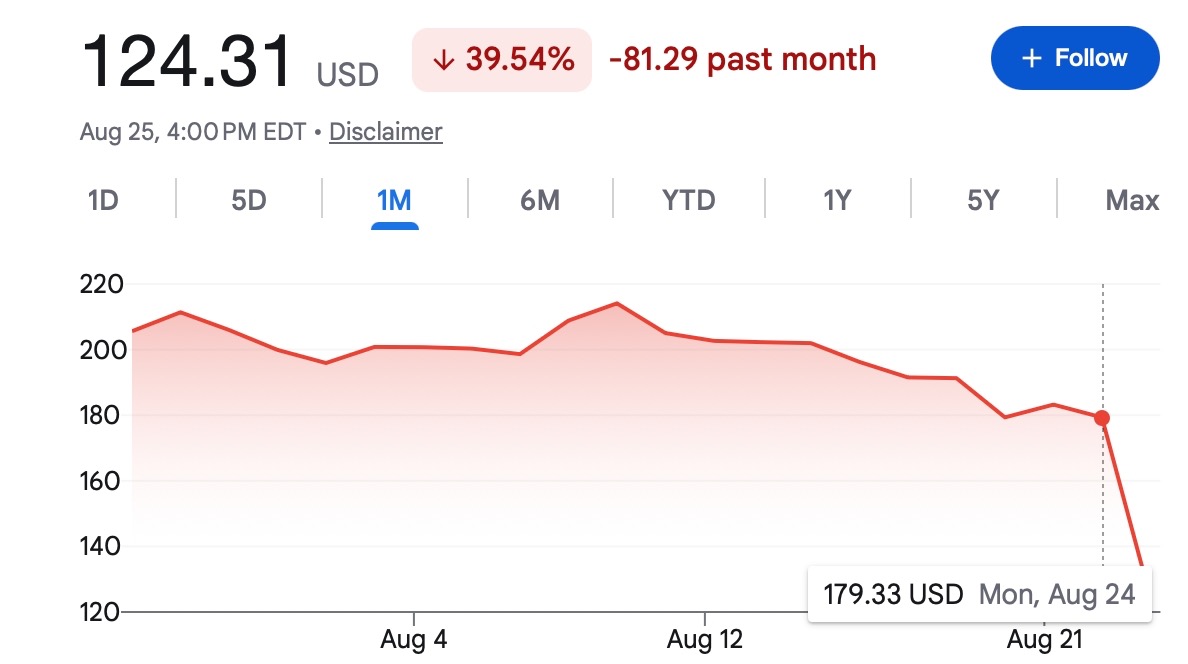
DKS closed at $124.31 on August 25, down 30.68% in one session. The selloff wasn't just a reaction to an earnings miss — it was a reassessment of whether the Foot Locker deal can deliver the returns DICK'S originally expected.
DKS Stock Had Its Worst Day on Record
DICK’S reported adjusted earnings of $3.53 per share for its fiscal second quarter, below the market consensus of approximately $3.76. Revenue reached $5.59 billion, narrowly missing expectations near $5.64 billion.
A modest revenue miss rarely causes a company of this size to lose more than 30% in one day. The guidance revision did.
DICK’S lowered its full-year net sales outlook from $22.1 billion–$22.4 billion to $21.9 billion–$22.2 billion. Its adjusted earnings forecast fell from $13.50–$14.50 per share to $11–$12.
Expected operating income was reduced from $1.69 billion–$1.81 billion to approximately $1.45 billion–$1.55 billion. The size of that cut told investors that Foot Locker’s weakness would not be contained to one quarter.
DKS opened at $142.36 before falling as low as $124. The stock finished at the bottom of its daily range, with approximately 38.6 million shares changing hands. Its recent average had been closer to 1.4 million shares. That volume suggests broad institutional repositioning rather than a thin-market price swing.
The Core DICK’S Business Was Not the Problem
The headline decline hides a sharp division inside the company. The original DICK’S business, which includes DICK’S Sporting Goods, House of Sport, Golf Galaxy, Public Lands and GameChanger, generated approximately $3.85 billion in quarterly sales. Revenue grew about 5.6%, while comparable sales increased 4.9%.
Segment profit rose roughly 2% to $485.2 million.
Those figures do not describe a retailer in collapse. They show that customers continued spending on sporting goods, apparel and footwear even as parts of the consumer economy softened. World Cup demand also supported interest in sports merchandise during the quarter.
The result followed 6% comparable-sales growth in the first quarter. At that time, DICK’S raised the lower end of its annual comparable-sales forecast for the core business. Its current projection of 2.5%–4% growth remains unchanged.
This distinction matters. DKS is not facing the same problem across every store and brand. Its established business is growing, while the company it acquired is moving in the opposite direction.
Foot Locker Reversed Its Early Progress
Management entered 2026 with a clear Foot Locker story. The company planned to remove weak inventory, improve product presentation and expand its Fast Break store initiative. DICK’S believed that better merchandising and closer relationships with major brands could help Foot Locker recover after years of uneven performance.
The first quarter provided some support for that view. Foot Locker reported 0.6% pro forma comparable-sales growth and a segment profit of $17.5 million. DICK’S raised the lower end of its full-year comparable-sales outlook for the business to 1.5%.
Three months later, that progress had disappeared.
Foot Locker’s second-quarter comparable sales declined 3.6%, while the segment recorded a $31.9 million operating loss. Management now expects full-year comparable sales to range from a 2% decline to no growth. The previous outlook called for growth of 1.5%–3%.
The change is more important than the quarterly loss itself. A turnaround can absorb occasional weak periods, but investors need evidence that the direction of travel is improving. Foot Locker moved from positive sales and profitability back into contraction almost immediately.
That made the first-quarter recovery look less like an inflection point and more like an early result that could not yet be sustained.
The Sneaker Market Has Become More Promotional
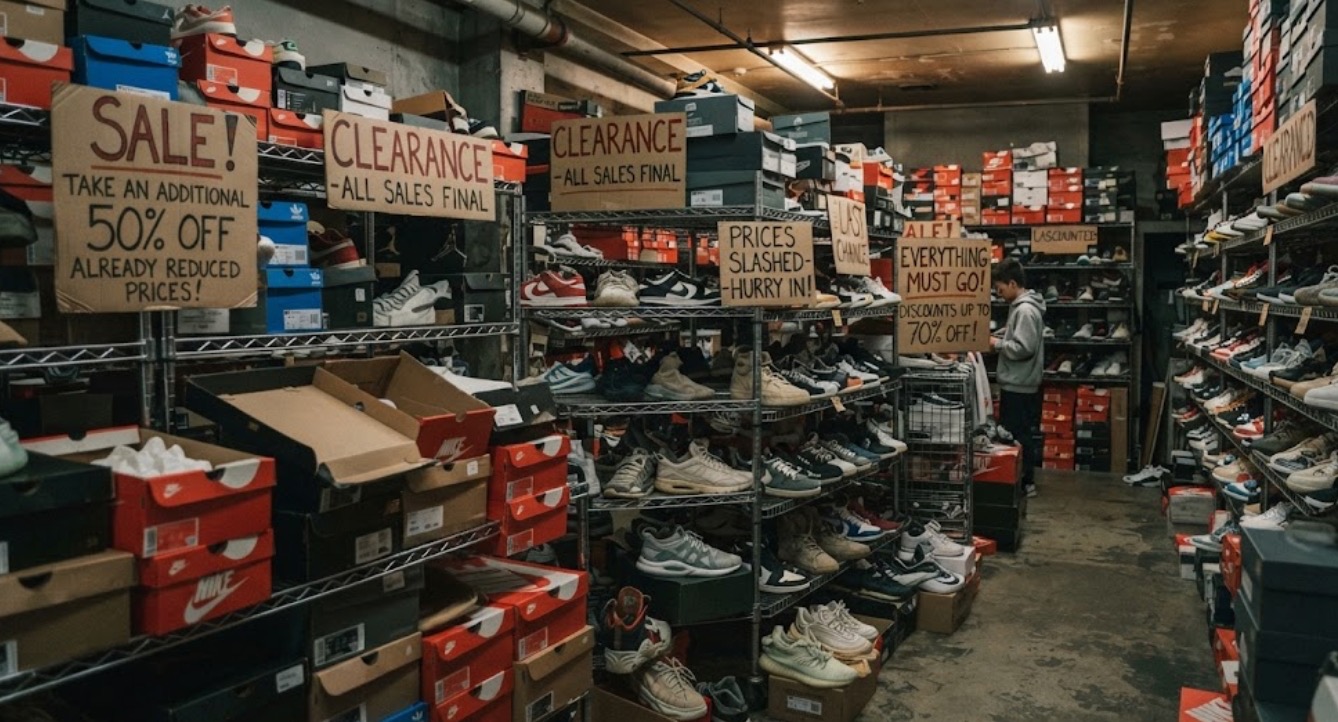
Foot Locker remains heavily dependent on athletic footwear. That concentration is useful when sneaker launches are strong and shoppers are willing to pay full price. It becomes a disadvantage when product cycles weaken.
Management pointed to a more promotional market, softer footwear launches and underperformance among retro and legacy styles. Foot Locker’s exposure to these categories made the impact more severe than it was at the broader DICK’S business.
DICK’S has more ways to capture customer spending. Its stores sell team-sports equipment, fitness products, golf merchandise, outdoor goods, apparel and footwear. House of Sport adds climbing walls, batting cages and other experiences that cannot be easily reproduced by an online discount seller.
Foot Locker has a narrower proposition. It competes with brand-owned stores, online platforms, department stores, resale marketplaces and other sneaker chains for many of the same customers and products.
When demand slows, retailers often discount inventory to protect sales. That can reduce gross margin even before revenue declines become severe. It also makes the timing of a turnaround harder to predict because improvement depends partly on the product calendars of Nike, Adidas and other suppliers.
The Acquisition Changed the Risk Behind DKS Stock
Before the Foot Locker deal, DICK’S was largely valued on its own comparable-sales growth, margins and expansion of House of Sport. The acquisition added global scale, more than 2,000 stores and a larger position in sneaker culture.
It also changed the company’s risk profile. DICK’S issued 9.6 million shares as part of the transaction. It took on integration expenses and inherited a retailer that needed substantial operational work. Foot Locker’s international presence added exposure to markets where DICK’S had less experience.
The combination makes consolidated revenue much larger. Second-quarter sales increased more than 50% year over year largely because Foot Locker was included in the results. That growth rate should not be mistaken for a comparable improvement in the underlying business.
Profit tells the more useful story. Consolidated operating margin fell to approximately 7.9% from 12.4% a year earlier. Part of that decline reflects the lower-margin Foot Locker business and costs associated with the acquisition.
The market is now asking whether DICK’S can transfer its retail discipline to Foot Locker quickly enough to justify the purchase price. Until Foot Locker produces sustained positive comparable sales and operating profit, the acquisition will remain a drag on the valuation rather than a reason to expand it.
Is DKS Stock Cheap After the Crash?
At $124.31, DKS traded at roughly 10.8 times the midpoint of management’s new adjusted EPS guidance. Its annualized dividend of $5 per share implied a yield of approximately 4%.
Those figures are much lower than they were before the earnings release. They do not settle the valuation question.
A low forward multiple is meaningful only if earnings have stopped falling. If the $11–$12 forecast proves reliable and Foot Locker begins improving, the August decline may eventually appear excessive. The core business is profitable, comparable sales remain positive and DICK’S still has valuable store concepts.
The opposing case is that Foot Locker will require a longer and more expensive restructuring. Continued sales declines could lead to more promotions, inventory charges, store closures or investment spending. Another guidance cut would make the apparent earnings multiple less attractive.
The dividend deserves similar caution. DICK’S has not announced a reduction, and the payout remains covered by projected earnings. Still, a higher yield created by a collapsing share price is not the same as an improving income profile.
DKS has become cheaper. Whether it has become undervalued depends largely on a business that has not yet demonstrated a durable recovery.
What Could Rebuild Confidence?
A rebound in the share price will require more than management repeating its long-term confidence in Foot Locker.
Investors will look for positive comparable sales that persist across more than one quarter. Foot Locker must also return to segment profitability without relying heavily on discounting.
The Fast Break program will be another test. DICK’S planned to expand the concept to approximately 250 locations by the back-to-school period. Those remodeled stores need to produce measurable improvements in traffic, conversion and merchandise productivity.
Inventory will show whether the footwear market is becoming healthier. Lower promotional activity and stable gross margins would suggest that demand and product supply are moving back into balance.
Meanwhile, the original DICK’S business must maintain its momentum. If its comparable-sales growth weakens while Foot Locker remains unprofitable, the company would lose the main support visible in the current results.
The Foot Locker Deal Now Has to Prove Itself
DICK’S bought Foot Locker to create a larger company spanning sport, footwear and youth culture. The strategic idea has not been disproved by one quarter, but the timetable behind it has become less credible.
The August earnings report exposed the tension inside DKS. One business is gaining share and producing nearly 5% comparable-sales growth. The other has returned to declining sales and losses after briefly appearing to turn the corner.
That is why DKS stock fell 30.68%. Investors did not suddenly reject the DICK’S Sporting Goods brand. They rejected the assumption that Foot Locker’s recovery would be smooth, quick or inexpensive.
The next meaningful catalyst will not be a price-target change or a short-term bounce from oversold conditions. It will be evidence that Foot Locker can generate sales without excessive promotion and convert those sales into profit.
More market research is available on Tapbit. Users can log in to access their accounts, while new users can register here.
Frequently Asked Questions
Why did DICK’S Sporting Goods stock crash?
DKS stock fell after DICK’S missed second-quarter earnings expectations and sharply reduced its 2026 profit guidance. Weak sales, increased promotions and a $31.9 million segment loss at Foot Locker were the main concerns.
How much did DKS stock fall?
DICK’S Sporting Goods shares closed at $124.31 on August 25, 2026, down 30.68% for the day. The stock touched a new 52-week low of $124 during the session.
What did DICK’S report for second-quarter earnings?
The company reported adjusted earnings of $3.53 per share and revenue of approximately $5.59 billion. Both figures were below market expectations.


