

Bitlayer’s BTR token moved from roughly $0.04 to more than $0.15 within 24 hours on August 27, 2026. We find its daily gain of approximately 278%, while the seven-day performance exceeded 400%.
The rally coincided with the first anniversary of BTR’s token generation event and the final scheduled release of part of its original community airdrop. That timing attracted traders, but it does not fully explain a move of this size.
No comparable product launch, financing announcement or surge in network adoption has been confirmed. The available evidence points to an event-driven rally in a relatively small token market, supported by rapidly rising volume and social attention.
BTR’s Rally Is Large Relative to Its Market Size
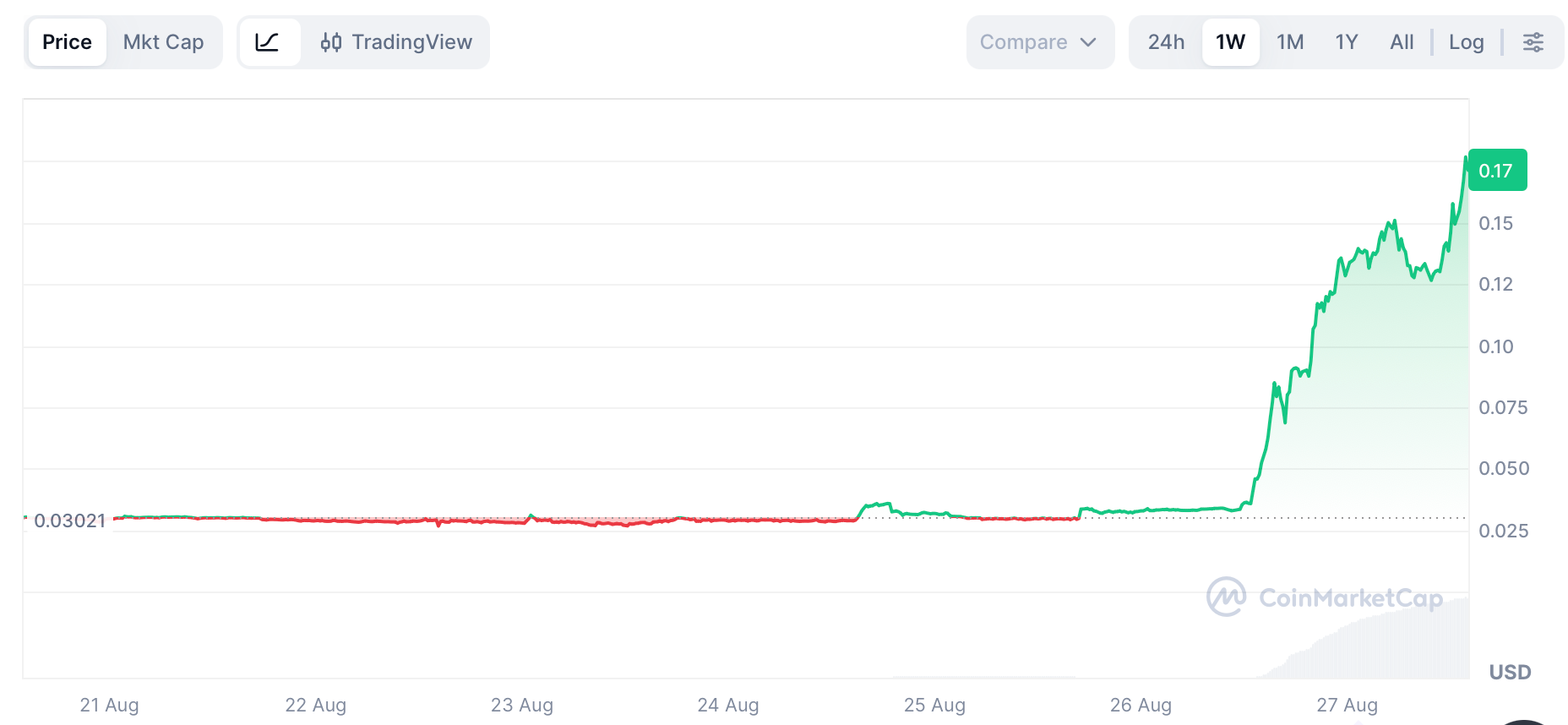
BTR traded near $0.154 with approximately $346 million in 24-hour volume at the time of review. Its circulating market capitalization was only about $40 million. This means reported daily turnover exceeded the token’s market value by more than eight times.
Heavy turnover can reflect strong demand, but it can also indicate rapid speculative trading across exchanges. It should not automatically be read as evidence that long-term investors are accumulating the token.
CoinGecko estimated a circulating supply of approximately 261.6 million BTR, equal to about 26% of the fixed one-billion-token supply. At the current price, fully diluted valuation was close to $155 million.
The gap between circulating market capitalization and fully diluted valuation matters because additional BTR will continue to enter the market through vesting and ecosystem distributions.
The August 27 Airdrop Release
BTR launched on August 27, 2025. Under the original airdrop rules, several categories of community rewards followed an 80-10-10 release schedule.
Eligible users received 80% at the token generation event, another 10% six months later and the remaining 10% twelve months after TGE. The final portion became claimable on August 27, 2026, at 10:00 UTC.
This does not mean 10% of the total BTR supply was unlocked. It applies only to the remaining share of specific Racer Center, Gems, Points and ecosystem campaign allocations.
The project has not published a simple, current total showing exactly how many tokens will be claimed during this window. The official BTR airdrop rules explain the percentages, but the actual market impact depends on eligibility, claim participation and whether recipients transfer their tokens to exchanges.
An unlock increases the amount of BTR that may become available for sale. It does not guarantee selling. Wallet movements and exchange deposits will provide better evidence than the scheduled date alone.
Is the Rally Connected to Bitlayer’s BTCFi Business?
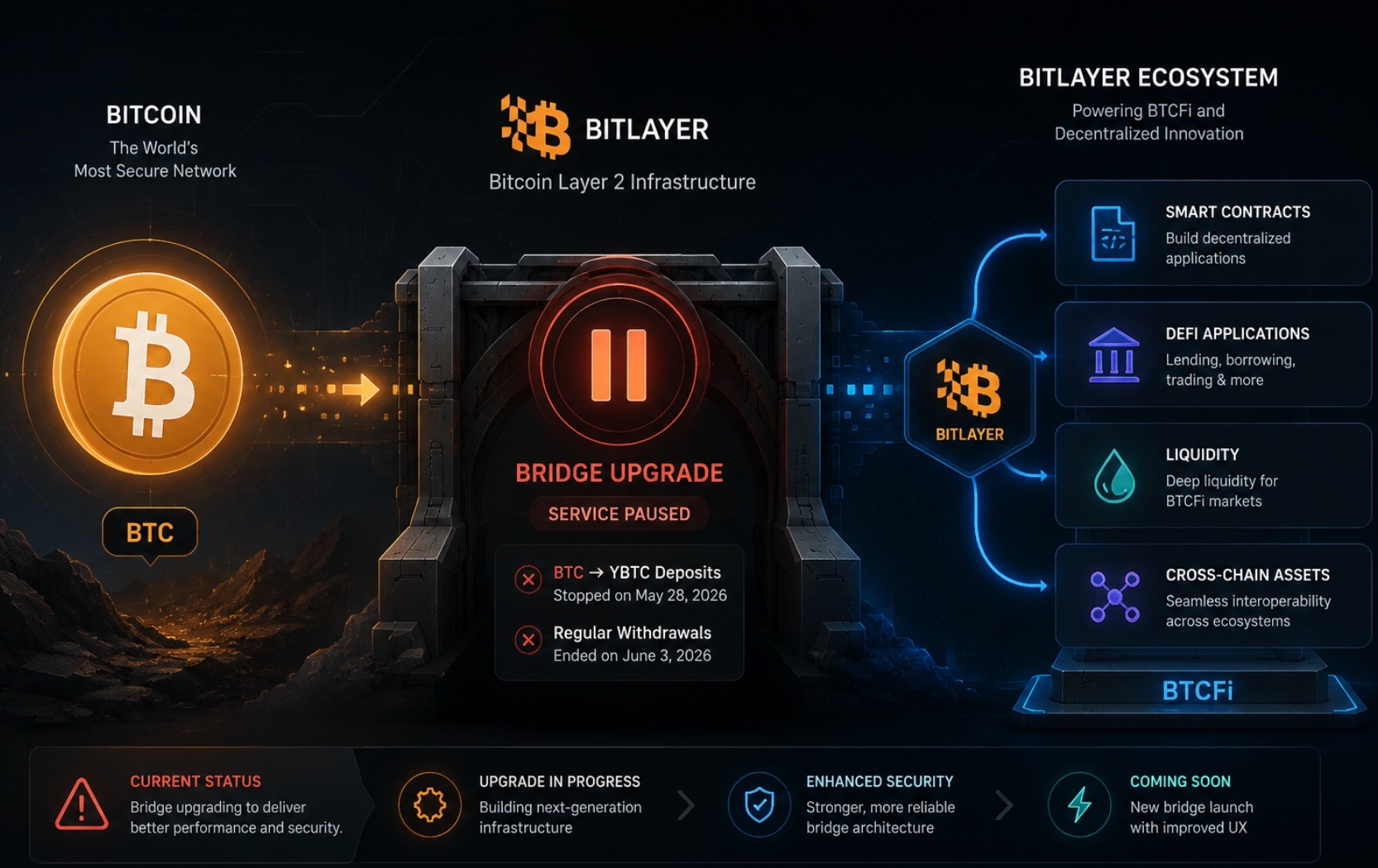
Bitlayer was developed as Bitcoin infrastructure built around the BitVM model. Its broader pitch involves bringing smart contracts, cross-chain assets and decentralized finance applications to the Bitcoin ecosystem.
That gives BTR exposure to the BTCFi narrative, but the latest rally has not been accompanied by verified evidence of a similar increase in network usage or protocol revenue.
There is also an operational issue to consider. In May 2026, Bitlayer discontinued its existing BitVM Bridge service as part of what it described as a comprehensive architectural upgrade. BTC-to-YBTC deposits stopped on May 28, while regular withdrawals ended on June 3.
Bitlayer may replace that system with upgraded infrastructure, but the discontinued bridge should not be presented as a currently expanding product. Traders need a new launch, usage data and a clear operating timeline before treating the present price move as confirmation of BTCFi adoption.
Earlier Token Disclosures Required Correction
Bitlayer published a token transparency report in May 2026 after a Bithumb audit identified differences between public vesting information and actual distribution terms.
The foundation disclosed that approximately 30 KOL investors had more favorable terms than standard investors. Their agreements included a three-month cliff and twelve-month vesting period. Standard investors had a six-month cliff and longer monthly vesting.
The project also acknowledged that standard investor distributions began on February 27, 2026, one month earlier than the date described in previous public materials.
Bitlayer called the issue an operational oversight and published wallet information and distribution records for independent verification. The corrective disclosure is useful, but the original inconsistency remains relevant when assessing supply risk.
Where the Remaining BTR Supply Sits
BTR’s one-billion-token supply includes 400 million tokens for ecosystem incentives and 202.5 million for investors and advisors. The team allocation accounts for another 120 million tokens.
The team allocation is scheduled to remain locked until August 27, 2027. Investor tokens are already vesting, while ecosystem and node rewards can continue entering circulation.
A large ecosystem allocation is not automatically negative. It can fund developers, users and liquidity programs. Its effect depends on how tokens are distributed and whether those incentives create activity that continues after the rewards end.
For BTR, future research should compare new token issuance with active users, bridged Bitcoin, total value locked and protocol-generated fees. Rising supply without corresponding demand would weaken the market structure after the current momentum fades.
What the Price Move Does and Does Not Prove
The rally proves that BTR can attract substantial trading activity when attention returns to the token. It does not prove that Bitlayer usage has increased by a similar amount.
Several factors are present at the same time: the airdrop anniversary, an approaching claim window, a low circulating market value, unusually high turnover and renewed attention toward smaller BTCFi assets.
That combination can produce a fast repricing. It can also produce severe reversals.
The most useful confirmation would come from claimed tokens staying off exchanges, deeper order books, sustained volume after the event and a concrete update on Bitlayer’s replacement bridge infrastructure.
Without those signals, the safer interpretation is that BTR is experiencing an event-driven momentum rally rather than a confirmed fundamental revaluation.
The Next Data Matters More Than the Headline Gain
BTR’s 278% daily move has pushed Bitlayer back into the market’s view, but it has also increased the cost of getting the analysis wrong.
The immediate questions concern supply. How many airdrop tokens are claimed? How many reach exchanges? Does liquidity remain available if early holders begin selling?
The longer-term questions concern the product. Bitlayer still needs to show that its upgraded Bitcoin bridge and BTCFi infrastructure can attract users, assets and recurring activity.
Traders monitoring BTR and other active crypto markets can find additional market coverage through Tapbit. Account access is available from the Tapbit login page, while new users can register here.
Frequently Asked Questions
What is Bitlayer’s BTR token?
BTR is the ecosystem token of Bitlayer, a project developing Bitcoin Layer 2 and BTCFi infrastructure based around the BitVM model.
Why did BTR rise more than 278%?
The rally coincided with BTR’s TGE anniversary and an airdrop release. Rapidly increasing trading volume and market attention also contributed to momentum. No single fundamental announcement has been verified as sufficient to explain the full move.
Is BTR the same as Bitrue Coin?
No. Bitlayer and Bitrue Coin both use the BTR ticker, but they are unrelated assets with different contracts, prices and token economics.


