

Movement Labs’ bankruptcy has created an awkward situation for MOVE holders. The company that originally developed the Movement blockchain is now in Chapter 11, yet the network continues to operate under a different organization.
That distinction matters, but it does not make the bankruptcy irrelevant.
MVMT Labs remains tied to Movement’s history, including the MOVE launch, the controversial market-making agreement and several unresolved contractual obligations. Move Industries, the company now developing the network, says it is legally separate and operating normally. Court records, however, show that Move Industries is also one of MVMT Labs’ creditors.
The result is not a clean collapse or a clean separation. It is a restructuring story with unfinished business on both sides.
Which Movement Company Filed for Bankruptcy?
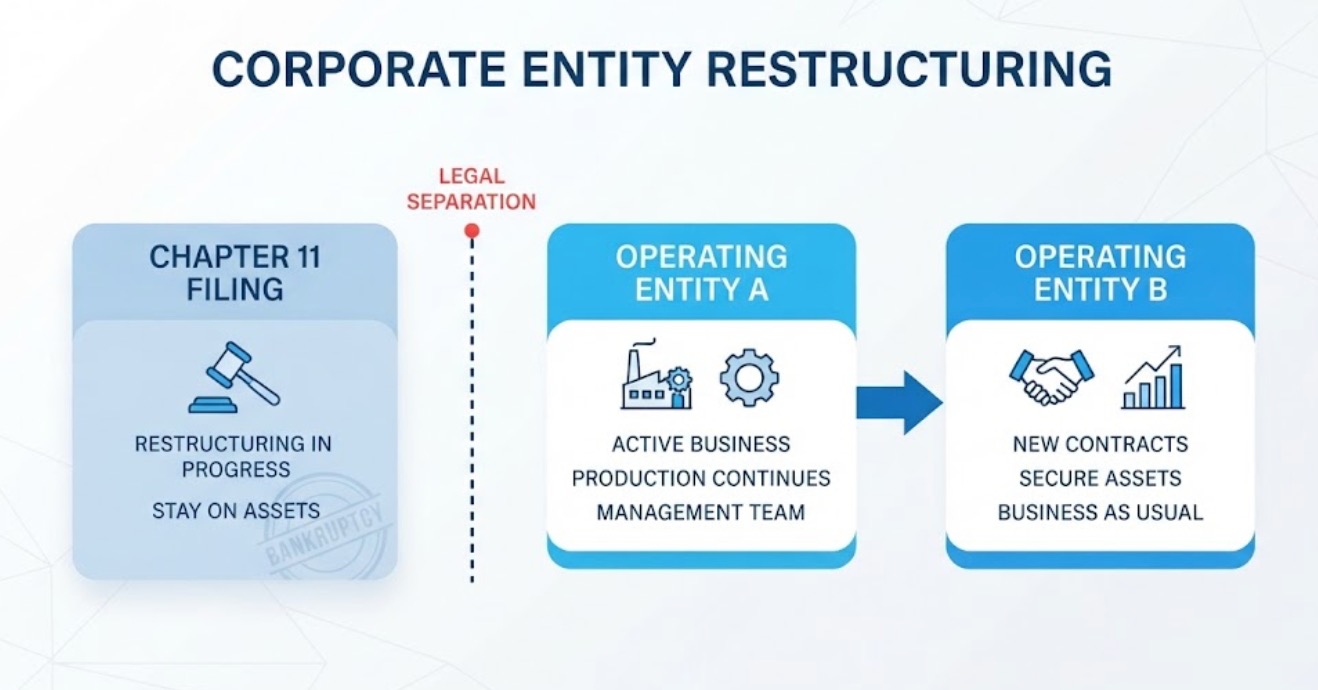
The debtor is MVMT Labs, Inc., the original core development company behind the Movement blockchain. MVMT Labs filed for Chapter 11 protection in the U.S. Bankruptcy Court for the District of Delaware on July 15, 2026. The case is being heard under docket number 26-11113-TMH.
The filing does not include the Movement Network itself, the Movement Network Foundation or Move Industries, Inc. MOVE remains tradeable, and the blockchain has not stopped processing transactions because of the case.
This is why saying “Movement went bankrupt” leaves out an important part of the story. A more accurate description is that Movement’s former development company entered bankruptcy while another company continued the network’s development and commercial strategy.
Legal separation, however, does not erase the old company’s role in creating the project or launching its token.
What the Bankruptcy Filing Reveals
MVMT Labs entered Chapter 11 with a remarkably small asset base for a company that had previously raised substantial venture funding.
Court information lists estimated assets between $100,001 and $500,000, against liabilities ranging from $1 million to $10 million. The case includes hundreds of potential creditors.
Former co-founder Rushikesh “Rushi” Manche holds the largest disclosed unsecured claim, worth more than $1.6 million. He also retains a 34.25% equity interest in MVMT Labs, according to reporting based on the court filing.
Other listed creditors include Anchorage Digital, security auditor OtterSec, government agencies and Move Industries.
That last name deserves attention. Move Industries has stressed that it is a separate company and is not part of the bankruptcy. Both statements may be true while a financial relationship still exists between the two entities. Being listed as a creditor suggests that MVMT Labs owes Move Industries money or has another unresolved obligation to it.
Until further schedules and court documents are published, the extent of that relationship remains unclear.
The proposed deadline for general creditors to file claims is September 14, while government claims are due by January 11, 2027. Recent docket activity also refers to the Fenix Agreement and proposed token delivery arrangements, suggesting that some token-related obligations remain part of the restructuring process.
The Bankruptcy Did Not Start MOVE’s Crisis
MOVE was already in trouble long before MVMT Labs entered Chapter 11. The decisive break came after the token’s December 2024 launch. Binance later said that a project-linked market maker sold approximately 66 million MOVE shortly after listing while placing very few buy orders. The exchange said the market maker earned about $38 million, terminated its access and froze the proceeds.
A market maker is expected to quote both sides of a market. Selling a large token allocation without providing meaningful bid liquidity is very different from maintaining an orderly trading venue.
The fallout spread beyond Binance. Coinbase suspended MOVE trading, Movement launched a token repurchase initiative, and an independent review examined how the market-making agreement had been approved. Rushi Manche was suspended and later removed from the company.
The dispute damaged more than the token price. It raised questions about internal controls, disclosure and the concentration of launch liquidity in the hands of intermediaries.
MVMT Labs’ bankruptcy is therefore better understood as the latest chapter in a longer breakdown, rather than the event that caused it.
Move Industries Is Building a Different Version of Movement

After the leadership change, Move Industries took over core development and gave Movement a new commercial direction. The project had originally been positioned as an Ethereum scaling network built with the Move programming language. That placed it in a crowded market alongside established Layer 2 networks and newer high-performance chains.
Move Industries now describes Movement as a stablecoin settlement and yield layer for emerging markets. Its focus has shifted toward cross-border payments, remittances, treasury services and dollar-based savings products.
The company says it can access licensed payment infrastructure in the United States, Canada and the European Union through commercial partners. It has also announced integrations or relationships involving USDCx, KAST, Avant, Sorted Wallet, Yuzu Money and several tokenized-asset platforms.
There is an important regulatory distinction here: Move Industries states that it is not itself a licensed bank, money transmitter or electronic money institution. Access to regulated payment rails comes through third parties and remains subject to their terms and approvals.
Move Industries continued hiring after the bankruptcy became public. In late July, it announced appointments covering Latin American expansion, marketing and recruitment. That supports its claim that day-to-day operations are continuing, although hiring announcements do not prove that the new business model has achieved meaningful payment volume.
MOVE Found a New Low Before Rebounding
MOVE is now priced near $0.00794, with a market capitalization of roughly $34.4 million. The token reached a new all-time low of about $0.005752 on August 19, placing it approximately 99.5% below its December 2024 peak of $1.45.
MOVE subsequently gained close to 29% over seven days. That rebound may appeal to short-term traders, but the percentage needs context. A token can produce a sharp rally after losing almost all of its previous value without repairing the underlying damage.
Trading activity also remains heavily influenced by market structure. CoinGecko reported around $8.9 million in 24-hour volume and approximately 4.33 billion MOVE in circulation, compared with a maximum supply of 10 billion.
That supply gap matters. Future token releases can affect liquidity and valuation even if the network succeeds in attracting new users.
Prices and market data change continuously. Readers should check the latest figures before making any assessment.
Can the New Payment Strategy Support MOVE?
Movement’s pivot gives the network a clearer target market, but the connection between payment growth and MOVE demand needs to be demonstrated.
A successful stablecoin settlement network does not automatically create value for its native token. The answer depends on how MOVE is used.
Transaction fees, validator requirements, staking, governance and ecosystem incentives may all contribute to token demand. Yet those uses must be weighed against emissions, unlocks, treasury distributions and the possibility that users interact mainly with stablecoins without holding much MOVE.
The relevant question is not whether Movement can announce payment partners. It is whether those partnerships produce recurring settlement volume that requires, locks or otherwise supports demand for MOVE.
Public metrics will eventually matter more than corporate messaging.
Movement’s Second Act Has to Be Proven
MVMT Labs’ bankruptcy closes part of Movement’s original corporate story, but it does not settle the future of the network or MOVE.
Move Industries is still operating, hiring and pursuing a stablecoin payment strategy. That gives Movement a path forward. It does not remove the consequences of the token launch, the market-making controversy or the unresolved relationship between the old and new companies.
For now, MOVE is trading on expectation rather than confirmed recovery. The price has bounced from its August low, while adoption data for the new business remains limited and the bankruptcy case continues.
Movement does not need another rebrand or a brief price rally to rebuild credibility. It needs clearer court disclosures, measurable payment activity and a convincing explanation of how that activity creates sustainable demand for MOVE.
Readers can follow crypto market research and educational coverage through Tapbit. Existing users can log in here, while new users can create an account.
Frequently Asked Questions
Did Movement Labs file for bankruptcy?
Yes. MVMT Labs, Inc., the original developer of the Movement blockchain, filed for Chapter 11 bankruptcy protection in Delaware on July 15, 2026.
Did the Movement blockchain go bankrupt?
No. A blockchain network cannot enter corporate bankruptcy in the same way as a company. The bankruptcy filing applies to MVMT Labs, not the Movement Network, Movement Network Foundation or Move Industries.
Is Move Industries included in the bankruptcy?
Move Industries says it is a separate legal entity and is not a debtor in the case. However, it appears on the creditor list, indicating an unresolved financial or contractual relationship with MVMT Labs.


