

The US Senate has placed the CLARITY Act back on its calendar, though that doesn't mean a comprehensive crypto market structure law is imminent.
A procedural vote is scheduled for September 15. Before the bill can be debated, supporters must secure 60 votes to overcome a filibuster. The unresolved issues that prevented an August vote remain — political conflicts of interest, stablecoin rewards, financial crime provisions, and the legal treatment of crypto developers.
So the September vote matters, but not because it will resolve US crypto regulation in a single session. It matters because it will test whether the bipartisan coalition behind the bill still holds when support moves from committee statements to the Senate floor.
How the CLARITY Act Reached the Senate Floor

The Digital Asset Market Clarity Act, known as the CLARITY Act, is designed to establish a federal framework for digital asset markets. Among its central goals is a clearer division of responsibility between the Securities and Exchange Commission and the Commodity Futures Trading Commission.
The House of Representatives passed H.R. 3633 in July 2025 by a vote of 294–134. That margin suggested that market structure legislation could attract support beyond the crypto industry’s usual allies.
Progress in the Senate took considerably longer. The Senate Banking Committee advanced its version in May 2026 by a 15–9 vote, with two Democrats joining Republicans. Senator Cynthia Lummis then released an updated draft on July 22 that combined work from the Banking and Agriculture committees.
The resulting Senate proposal runs for more than 600 pages. It addresses digital commodities, token fundraising, trading platforms, stablecoin rewards, decentralized protocols, illicit finance and the respective roles of the SEC and CFTC.
That breadth explains both the bill’s importance and its difficulty. Every new section brings another industry, regulator or political constituency into the negotiation.
What Will Actually Happen on September 15?
Senate Majority Leader John Thune filed cloture on the motion to proceed to H.R. 3633 before the August recess. The Senate’s published schedule says that motion will ripen at 2:15 p.m. on September 15.
This is not a final vote on the CLARITY Act.
The Senate will initially decide whether to end procedural delay and begin considering the bill. Supporters need 60 votes. If they succeed, senators may still debate the legislation, propose amendments and vote on the final text.
A Senate victory would not necessarily send the bill directly to the White House either. The Senate has substantially revised the legislation already approved by the House. Unless the House accepts the Senate version without further changes, the two chambers will have to reconcile their texts.
That leaves several steps between the September 15 vote and a signed law. With the November midterm elections approaching, the calendar is not a minor detail. It is one of the main threats to the bill.
Ethics Has Become the Hardest Vote to Find
The debate is no longer limited to whether the SEC or CFTC should regulate a particular token. Some of the most difficult negotiations concern the financial interests of elected officials and their families.
Democrats have pushed for stronger restrictions on presidents, senior officials and lawmakers profiting from crypto ventures while in office. The issue has become more contentious because President Donald Trump and members of his family have direct connections to digital asset businesses.
Senators Ruben Gallego and Angela Alsobrooks supported the bill during the Banking Committee vote but have not promised to support it on the Senate floor. Both have called for stronger protections against political self-dealing.
That distinction matters. A 15–9 committee result can be described as bipartisan, but the full Senate requires a much wider coalition. Losing even the two Democrats who backed the committee version would make the 60-vote target harder to reach.
Gallego and Republican Senator Thom Tillis reportedly sent the White House a compromise proposal before the recess. Its details have not been fully published, and outside groups have questioned whether it would genuinely prevent covered officials and their families from benefiting from crypto projects affected by government policy.
The White House’s response could determine whether the ethics dispute produces a deal or becomes the reason the bill stalls.
Stablecoin Yield Is Back in the Negotiations
The current compromise would restrict interest paid simply for holding a stablecoin balance while allowing certain rewards linked to transactions or other activity. Crypto companies see that distinction as a way to preserve payment incentives and product innovation without turning stablecoins into conventional deposit accounts.
Banking groups argue that the exception may be too broad. In their view, an activity-based reward could still function like interest if the requirements are easy to satisfy. They are concerned that yield-bearing stablecoin products could draw deposits away from regulated banks and affect credit availability.
The dispute does not divide lawmakers neatly along party lines. Republican senators Jerry Moran and Mike Rounds have expressed concerns about the bill’s treatment of yield, according to Roll Call. That complicates the vote count because supporters cannot assume that every Republican will back the current draft.
The final wording could shape how exchanges, payment companies and fintech platforms design stablecoin products in the United States. It is not a technical footnote. It determines whether rewards are treated as a normal part of using digital dollars or as a bank-like product requiring tighter restrictions.
Regulators Are No Longer Waiting for Congress
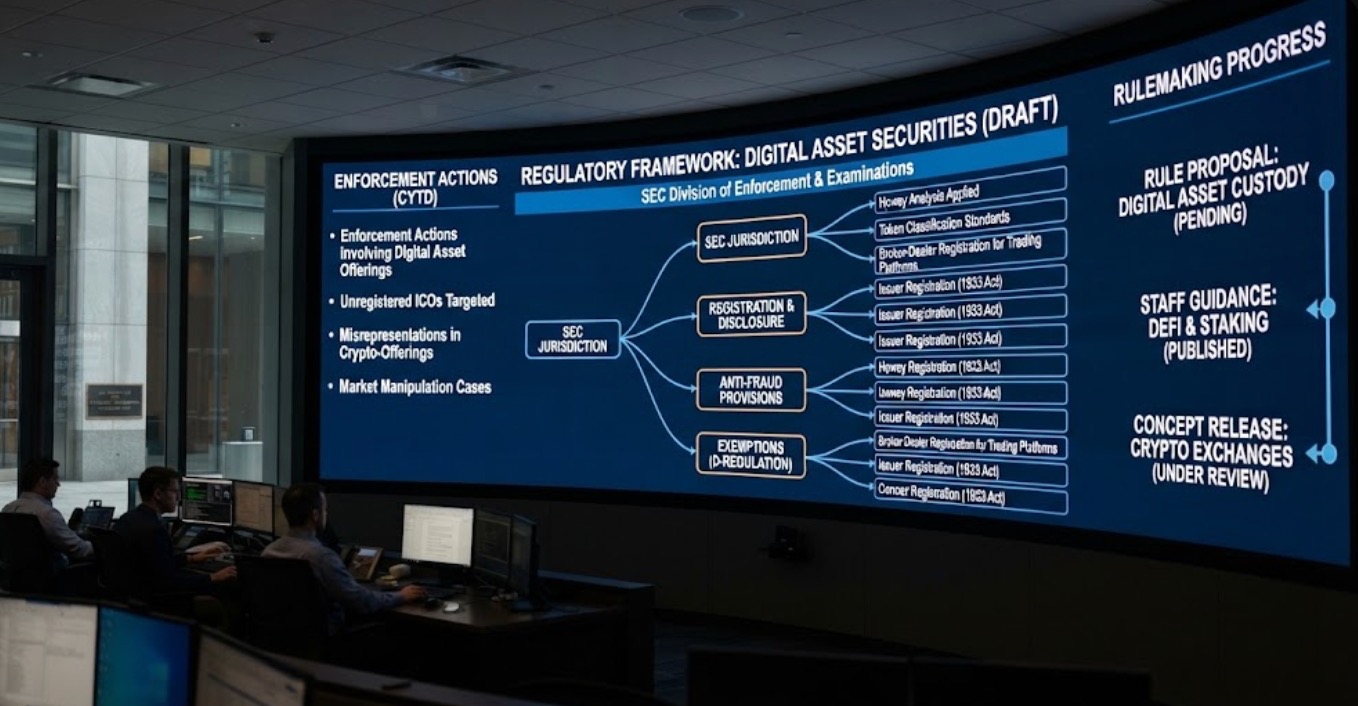
While the CLARITY Act remains unfinished, federal agencies are moving ahead under their existing authority.
The SEC has proposed Regulation Crypto Assets, a tailored offering framework for certain investment contracts involving crypto assets that are not themselves securities. The proposal attempts to address a long-running problem: an asset may be distributed as part of a securities transaction without remaining a security forever.
The CFTC has also been considering how current statutes can be applied to crypto markets, infrastructure and event contracts. Its Innovation Advisory Committee met on August 20 to discuss regulatory modernization in the absence of a comprehensive federal market structure law.
These actions reduce the chance of a complete policy standstill. They do not provide the same durability as legislation.
Agency interpretations can be challenged in court, revised by future commissions or limited by statutes written before modern digital asset markets existed. Congress remains the only institution capable of establishing a lasting division of authority between the SEC and CFTC.
The longer the CLARITY Act is delayed, however, the more of the regulatory framework will be built through agency rules rather than a single act of Congress.
What the CLARITY Act Could Change for Crypto Businesses
The bill’s immediate significance is regulatory, not a guaranteed move in Bitcoin or altcoin prices.
A workable market structure law could give exchanges and token issuers clearer registration routes. It could define when an asset falls under CFTC commodity oversight, establish disclosure requirements for token fundraising and clarify the legal position of certain decentralized services.
Failure would preserve more of the current uncertainty. Projects would continue relying on agency guidance, enforcement history and court decisions when determining whether a token or service falls under securities law.
Large decentralized assets such as Bitcoin may be less sensitive to these classification questions. The consequences are more direct for US-facing exchanges, stablecoin products, DeFi developers and projects planning token distributions.
Markets may react to the September vote, but traders should avoid treating passage as automatically bullish or failure as automatically bearish. The details of the final text could matter more than the existence of the bill itself.
September Will Test the Coalition, Not Finish the Debate
Calling the CLARITY Act dead ignores the cloture motion already on the Senate calendar. Calling passage imminent ignores almost everything that must happen afterward.
The most revealing signal will be whether supporters can produce 60 votes on September 15. That result will show whether months of negotiations have created a durable coalition or only a temporary committee agreement.
Attention should then turn to the amendments. Ethics language will determine whether undecided Democrats remain involved. Stablecoin provisions may decide whether skeptical Republicans and banking interests accept the compromise. Developer protections and illicit finance rules will shape how the law reaches beyond centralized trading platforms.
The CLARITY Act still has a route forward. It is simply a narrower route than its supporters had hoped to be navigating this late in the congressional term.
Crypto regulation increasingly affects how assets are issued, traded and accessed across global markets. Tapbit examines these policy changes alongside the market signals that matter to traders. Explore the latest coverage on Tapbit, access an existing account through the login page, or register here to get started.
Frequently Asked Questions
What is the CLARITY Act?
The Digital Asset Market Clarity Act is proposed US legislation intended to establish a federal regulatory framework for digital asset markets. It would clarify parts of the SEC-CFTC jurisdictional divide and introduce rules for digital commodity trading, token fundraising and related market activities.
Has the CLARITY Act passed?
It has passed the House of Representatives and advanced through the Senate Banking Committee, but it has not passed the full Senate or become law.
When is the next CLARITY Act vote?
A Senate procedural vote is expected on September 15, 2026. The cloture motion is scheduled to ripen at 2:15 p.m., according to the Senate’s published schedule.


