

Bitcoin is trading near $80,000. Ethereum has gained ground over the past month. And individual altcoins continue to deliver sharp rallies. But the broader market is not yet in altcoin season.
The Altcoin Season Index recently registered around 37 out of 100 — an improvement from the late-August low of 24, but still well below the threshold typically used to confirm broad altcoin leadership.
This is not as contradictory as it might appear. Crypto prices can rise without most altcoins outperforming Bitcoin. Capital is flowing back into the market, but much of it is still choosing BTC.
What an Altcoin Season Index of 37 Means
The Altcoin Season Index measures how many major cryptocurrencies have outperformed Bitcoin over the previous 90 days.
CoinMarketCap defines altcoin season as a period when at least 75% of the eligible top 100 cryptocurrencies beat BTC. Stablecoins and wrapped assets are excluded. A reading of 25 or lower indicates Bitcoin Season, while the wide area between 26 and 74 represents a mixed market.
A September 4 historical snapshot placed the 90-day index at 37. It had fallen to 24 between August 31 and September 2 before recovering.
That rebound shows that more altcoins have started to improve against Bitcoin. It does not show that the improvement has spread across the market.
The index is also a headcount, not a measure of returns. A token that beats Bitcoin by 1% receives the same weight as one that beats it by 100%. This makes the index useful for measuring breadth, but less useful for judging the strength or quality of individual rallies.
Bitcoin Dominance Is Moving in the Wrong Direction for Altseason
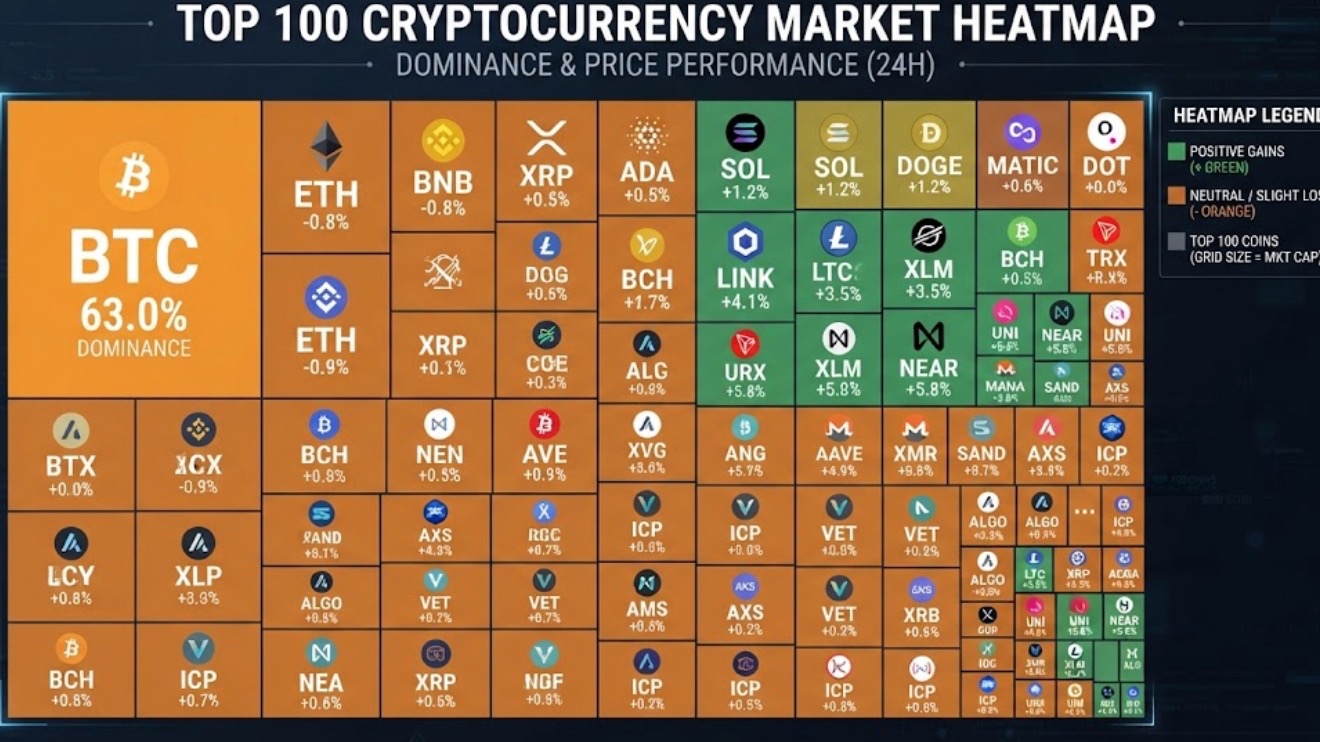
Bitcoin dominance provides a second view of the same market structure. BTC represents approximately 57.5% of the total cryptocurrency market. That share was about 56.6% one month earlier.
Ethereum accounts for roughly 10.8%, while stablecoins hold another 10.5%. The remaining market is divided among thousands of other crypto assets.
For altcoin season to develop, Bitcoin dominance normally needs to decline as capital spreads into ETH and other assets. The current increase suggests the opposite: Bitcoin is absorbing a larger share of the market’s value.
Dominance calculations vary between data providers because some include different stablecoins, wrapped assets or smaller tokens. The exact percentage is therefore less important than the direction. Across the most commonly followed measures, BTC remains dominant.
Ethereum Has Improved, but Has Not Taken Control
Ethereum often acts as the bridge between a Bitcoin rally and a wider altcoin cycle.
When ETH begins to outperform BTC consistently, traders become more willing to move further along the risk curve. Capital may then spread into major layer-1 networks, DeFi protocols and eventually smaller tokens.
The ETH/BTC ratio is currently close to 0.0308. Ethereum has gained ground against Bitcoin over the past month, but the ratio recently slipped from approximately 0.0314. That pullback shows that ETH has not yet established a decisive leadership trend.
The distinction matters. Ethereum rising in US dollar terms is not enough. If Bitcoin rises faster, ETH is still losing relative strength, and the usual path toward altcoin season remains incomplete.
A sustained rise in ETH/BTC would carry more weight than a short-lived increase in the Altcoin Season Index because it would show that meaningful capital is moving beyond Bitcoin.
ETF Flows Still Favor Bitcoin
US spot Bitcoin ETFs attracted approximately $731 million in net inflows on September 3. BlackRock’s IBIT accounted for about $454 million of that amount. It was the largest daily total for the Bitcoin ETF group since January.
Ethereum ETFs also recorded positive flows of about $141 million, but the amount was considerably smaller. The Block’s ETF report shows that institutional demand is returning to both assets, though Bitcoin remains the preferred destination.
This is one reason the current market can feel bullish without producing a broad altcoin season. New capital is entering crypto, but it is not being distributed evenly.
ETF demand also favors assets with regulated investment products, deep liquidity and institutional custody support. Most altcoins do not have the same access to that pool of capital.
Isolated Rallies Are Not an Altcoin Season

A few tokens can rise dramatically while the wider altcoin market remains weak. Project announcements, exchange listings, token burns, short squeezes and social-media attention can all produce large individual moves. These rallies may offer genuine trading opportunities, but they say little about the overall cycle unless similar strength appears across many unrelated sectors.
A real altcoin season should be visible beyond one narrative. Large-cap tokens should begin beating Bitcoin at the same time that trading volume broadens across DeFi, infrastructure, payments, gaming and other categories.
That is not the structure visible today. The market is producing selective winners rather than broad leadership.
This environment also creates a familiar risk: traders see several exceptional gains and assume every lagging token will eventually catch up. Some will. Others are underperforming because they lack liquidity, users or a credible reason for renewed demand.
Why the Index Can Change Without a Major Market Move
The Altcoin Season Index uses a rolling 90-day window. Every new day enters the calculation while the oldest day drops out.
As a result, the index can rise because altcoins performed well today, because Bitcoin weakened, or because an unusually poor session from three months earlier disappeared from the dataset. A one-day increase does not reveal which factor caused the change.
The composition of the index also changes as cryptocurrencies enter or leave the top 100. Comparing readings from different providers can be misleading when one tracks 50 assets and another tracks 100.
The practical solution is to follow one methodology consistently and focus on the trend over several weeks. A sudden move from 24 to 37 is worth noticing. It is not equivalent to a confirmed move above 75.
The Market Is Bullish, but Still Selective
The latest data do not support the idea that altcoin season has arrived.
Bitcoin dominance remains elevated, ETF flows favor BTC, and Ethereum has not yet established sustained relative strength. The Altcoin Season Index has recovered from its late-August low, but a reading near 37 still means that most tracked altcoins have failed to beat Bitcoin over the past 90 days.
That does not make every altcoin unattractive. It means the market is rewarding specific catalysts rather than lifting the entire category.
In this phase, the useful question is not “When will every altcoin rise?” It is “Which assets are attracting real liquidity, and why?”
Tapbit publishes market research for readers who want to examine those signals before acting on short-term headlines. Explore the latest coverage through Tapbit Learn, or review available markets directly on Tapbit.
Frequently Asked Questions
What is the Altcoin Season Index today?
A recent September 4 snapshot placed the 90-day index near 37 out of 100. Live readings can change daily and may differ between providers because they use different groups of cryptocurrencies.
What Altcoin Season Index level confirms altseason?
CoinMarketCap uses 75 as the threshold. This means at least 75% of the eligible top 100 cryptocurrencies have outperformed Bitcoin over the previous 90 days.
Is an index reading above 50 enough?
No. A move above 50 would show improving market breadth, but it would remain below the formal altcoin-season threshold of 75.


