
Origin Dollar currently advertises a yield of roughly 5.6% with no staking or lock-up requirements — the balance simply increases in a compatible wallet.
That convenience can make the return appear almost native to OUSD. It isn't.
The yield comes from USDC being lent and deployed across various DeFi protocols. OUSD packages those positions into a single stablecoin, manages the allocation, and passes part of the income to holders.
So assessing OUSD means looking beyond the token itself. The relevant questions include not just whether it holds its peg, but also who is borrowing the collateral, which protocols manage it, and what could interrupt the return stream.
Origin Dollar Now Runs on a Simpler Collateral Model
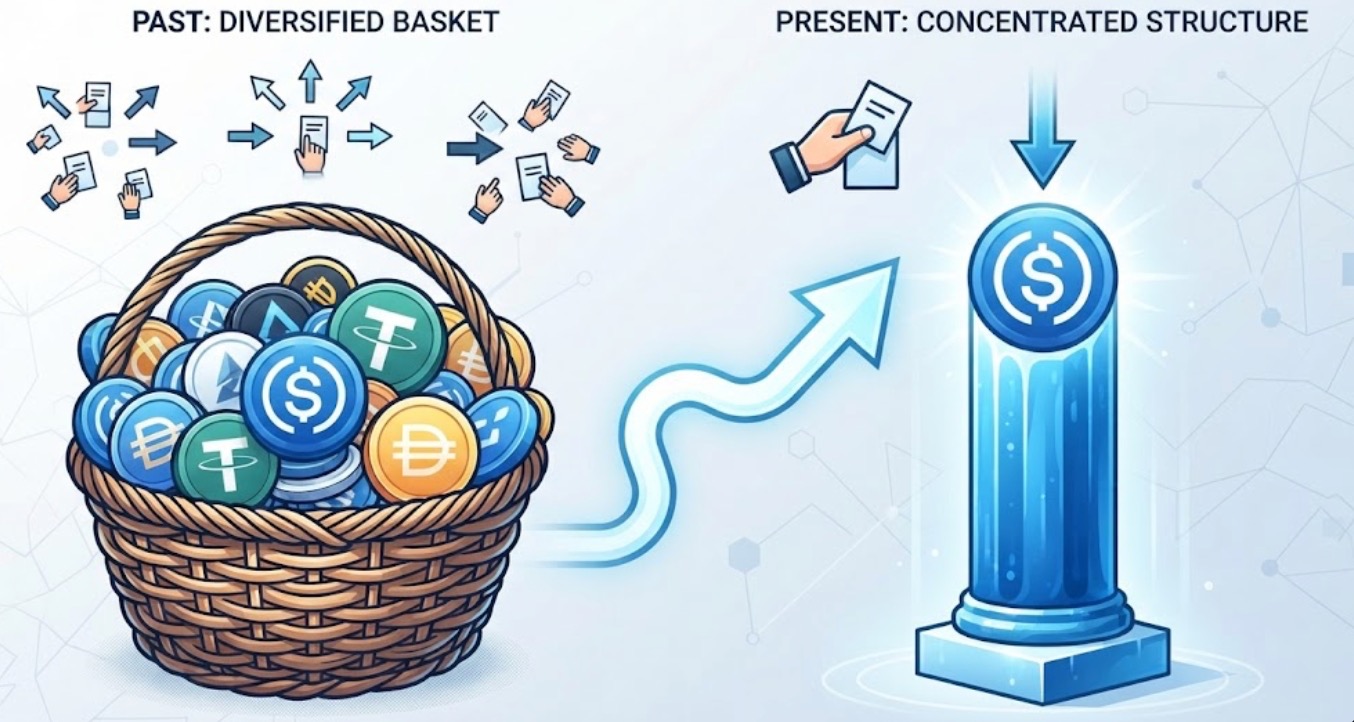
Origin Protocol launched OUSD in 2020 as a yield-bearing stablecoin. It originally accepted a basket containing USDC, USDT and DAI.
That structure changed following a governance decision in late 2025. OUSD is now described by Origin as being fully backed by USDC. Users exchange USDC for OUSD, and the protocol deploys the collateral into selected on-chain strategies.
Concentrating on one stablecoin makes accounting and redemption easier. It also removes the need to manage several collateral assets with different risk profiles.
The other side of the change is concentration. OUSD is now closely tied to USDC. A serious problem involving Circle, USDC reserves or address controls would affect the asset supporting the entire system.
“Backed by USDC” also does not mean that every dollar remains idle in a wallet. Much of the collateral is put to work, which is how OUSD generates its return.
Morpho Is the Main Yield Engine
Origin Dollar earns most of its current yield by supplying USDC to lending markets on Morpho.
The protocol uses a dedicated vault developed with Yearn. That vault moves capital among selected Morpho markets where borrowers deposit collateral and pay interest to borrow USDC.
The rate rises when demand for USDC borrowing is strong. It can fall when demand weakens or more lenders enter the same markets. This is why OUSD’s APY changes over time rather than remaining fixed.
Origin reported a 30-day APY of 6.2% for May 2026, 5.1% for June and 5.5% for July. Its live product page showed approximately 5.61% at the time of writing. These figures describe past or current performance, not a guaranteed future rate.
Part of the Return Comes From Curve
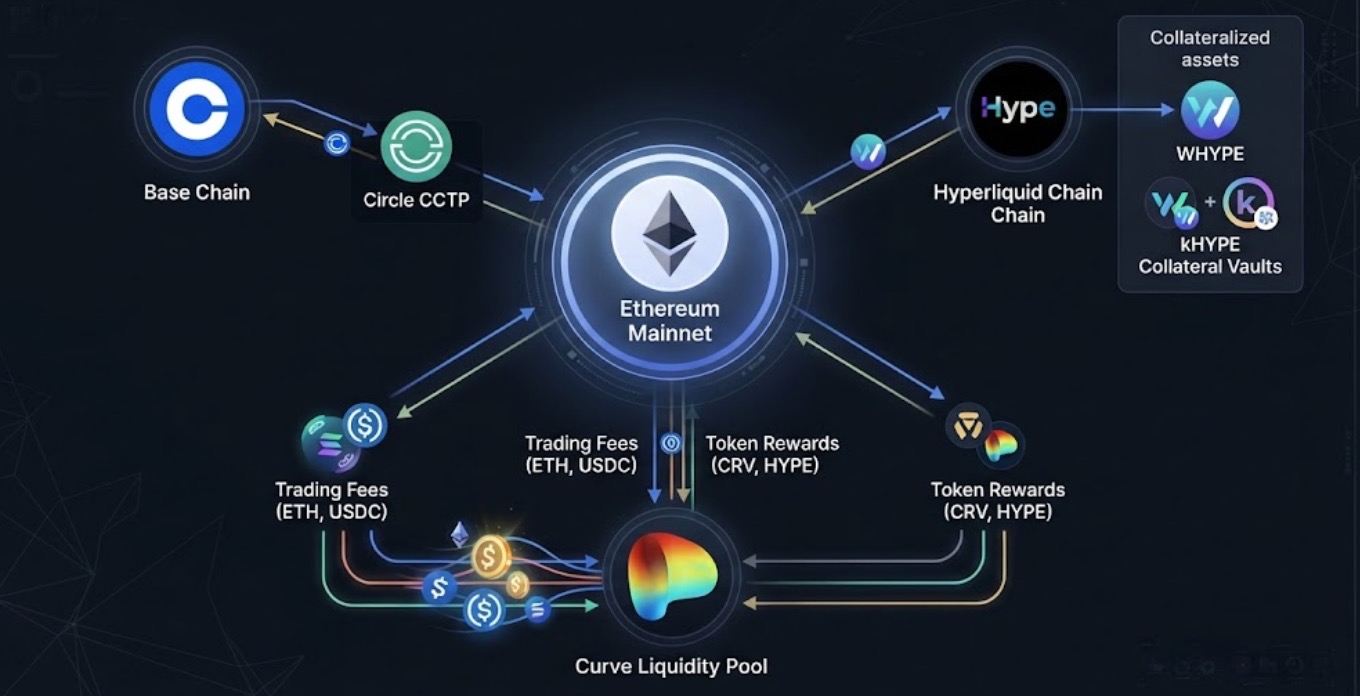
OUSD also uses Curve to support liquidity and generate income. When protocol-owned assets provide liquidity to an OUSD market, they may earn trading fees and token incentives. Those proceeds can be converted and passed back into the OUSD system.
Curve plays two different roles here. It gives users somewhere to exchange OUSD, while also providing another source of yield for the protocol.
The arrangement introduces exposure to Curve contracts, pool liquidity and incentive conditions. A high rate shown on a particular Curve pool should not be confused with the basic OUSD return. Liquidity providers may receive temporary token rewards and accept additional risks that ordinary wallet holders do not.
The Collateral Has Gone Multichain
OUSD remains an Ethereum-based token, but its USDC collateral no longer earns exclusively on Ethereum.
Origin expanded its capital allocation system to Base in March 2026. USDC can be moved through Circle’s Cross-Chain Transfer Protocol and supplied to Morpho lending markets on Base. The resulting yield returns to the OUSD system on Ethereum.
In April, Origin added Morpho markets on Hyperliquid. Those markets lend USDC to borrowers using WHYPE and kHYPE as collateral.
OUSD holders do not directly own HYPE through this arrangement. They are supplying USDC to overcollateralized lending markets. Still, the quality and liquidity of the borrower collateral matter. A rapid decline in HYPE-related assets could test liquidation mechanisms and market depth.
The multichain strategy gives Origin access to lending demand outside Ethereum. It also adds dependencies involving bridges, messaging infrastructure, lending contracts, price oracles and separate blockchain networks.
More yield sources can improve diversification. They can also create more places where something may fail.
How the Rebase Reaches Holders
OUSD is designed to stay near one dollar. Instead of allowing the token price to rise as income accumulates, the protocol increases the number of OUSD tokens held in eligible wallets.
A holder with 1,000 OUSD might therefore see the balance rise over time while each token continues targeting a value of one dollar.
This process is known as a positive rebase. It removes the need to claim rewards manually and automatically compounds future earnings on the larger balance.
Not every address handles rebasing in the same way. Standard externally owned wallets generally receive the balance increase, while smart contracts must support or opt into the mechanism. Users holding OUSD through an exchange, pool or third-party application should confirm how that service treats rebases.
Wrapped OUSD, or wOUSD, provides an alternative. Its token balance stays constant while its redemption value increases as yield accumulates. That structure is easier for many DeFi protocols to integrate.
OUSD Is Small Despite Its Long History
Origin’s live dashboard showed approximately $5.65 million in OUSD TVL at the time of writing. CoinGecko placed its circulating supply and market capitalization at roughly $6.26 million.
The difference reflects how platforms measure circulating tokens, reserves and capital deployed inside the protocol.
More important is the scale itself. OUSD has existed since 2020 but remains a small stablecoin. Daily exchange volume is limited, and most trading takes place through decentralized liquidity rather than major centralized markets.
Recent protocol data does not show uninterrupted growth. Origin reported about $5.4 million in TVL in May, $6.8 million in June and more than $5 million in July. The APY remained near 5%, but capital moved in and out.
That makes OUSD more relevant as a specialized DeFi yield product than as a general-purpose trading dollar.
Why OUSD Is Not Challenging USDT
Origin Dollar and Tether serve different markets.
USDT is widely used for exchange liquidity, derivatives collateral, payments and international settlement. Its value comes largely from distribution and the ability to move across numerous platforms and networks.
OUSD is built to automate DeFi yield. Its appeal lies in turning a USDC-backed lending strategy into a transferable stablecoin.
The automatic return may be attractive to some users, but OUSD does not approach USDT in circulation, trading volume or acceptance. It should not be presented as a likely replacement for Tether based on its current size.
A more useful comparison is between OUSD and other tokenized DeFi vaults. The question is whether its rebasing design offers enough convenience to justify the additional protocol dependencies.
The 2020 Exploit Still Matters
Origin Dollar suffered a major exploit shortly after launch. In November 2020, an attacker used weaknesses in its minting logic to drain more than $7 million.
Origin subsequently relaunched the protocol with modified contracts and introduced a compensation program for affected users. The incident remains part of OUSD’s risk history and should not be removed from any assessment of the product.
The current system has undergone additional reviews. Origin lists a February 2026 Sigma Prime assessment of the latest OUSD upgrade and says it maintains an ongoing auditing relationship with OpenZeppelin. Its public audit directory also contains work from Trail of Bits, Certora, yAudit and other firms.
Audits reduce the likelihood that known vulnerabilities remain unnoticed. They cannot prove that every future upgrade, integration or market condition will be safe.
Where the Risk Actually Sits
Holding OUSD creates a chain of dependencies.
USDC must remain redeemable. Origin’s contracts must account for collateral and rebases correctly. The Yearn-managed vault must allocate funds as intended. Morpho markets must remain solvent, while liquidations need enough liquidity to function during sharp market moves. Curve pools must continue operating, and Circle CCTP must move funds correctly between networks.
A failure does not always mean that holders lose their entire balance. It may instead reduce yield, delay withdrawals, weaken liquidity or push OUSD temporarily away from one dollar.
That distinction matters. Stablecoin risk is rarely limited to a binary choice between perfect operation and total collapse.
Users should watch the collateral composition, strategy allocations, available redemption liquidity and any governance proposal that changes where USDC can be deployed.
OUSD’s Real Test Is Capital Retention
Origin Dollar’s design is easy to understand once the return is traced back to its source. USDC is supplied to lending and liquidity markets. Borrower interest, trading fees and incentives produce revenue. The protocol distributes part of that revenue through a rebase.
The product removes the work of selecting and managing individual positions. It does not remove their underlying risks.
OUSD’s latest multichain expansion may help it access better rates, but the protocol still has only a few million dollars in TVL. The meaningful test is whether it can retain more capital without relying on temporary incentives or taking progressively more complicated exposure.
Readers researching stablecoins and DeFi markets can follow related coverage through Tapbit. Account holders can access the platform from the login page, while new users can review the registration process here.
Frequently Asked Questions
What is Origin Dollar?
Origin Dollar is a USDC-backed stablecoin created by Origin Protocol. It uses DeFi lending and liquidity strategies to generate yield for holders while targeting a price of one dollar.
What is the current OUSD APY?
Origin’s product page showed a 30-day moving APY of approximately 5.61% at the time of writing. The rate is variable and can change with lending demand, protocol incentives and market conditions.
Does OUSD require staking?
No. OUSD distributes yield through positive rebases to compatible wallets. Users do not need to stake the token or manually claim rewards.


