
Sui is a Layer 1 blockchain built to support fast, scalable, and user-friendly Web3 applications. It is designed for use cases such as decentralized finance, gaming, NFTs, social applications, payments, and on-chain consumer products.
The native token of the Sui network is called SUI. It is used to pay transaction fees, secure the network through staking, and participate in governance. Sui has attracted attention because it combines the Move programming language with an object-based blockchain architecture that aims to make high-throughput applications easier to build.
What Is Sui Crypto?
Sui is a public blockchain network developed by Mysten Labs, a company founded by former Meta engineers who worked on the Diem blockchain project. Like Aptos, Sui uses the Move programming language, but Sui has its own architecture, execution model, and ecosystem strategy.
| Feature | Description |
|---|---|
| Blockchain Type | Layer 1 |
| Native Token | SUI |
| Programming Language | Move |
| Consensus Model | Delegated Proof of Stake |
| Main Focus | Speed, scalability, and Web3 apps |
| Core Use Cases | DeFi, gaming, NFTs, payments, and consumer apps |
The project is often grouped with other high-performance Layer 1 networks, but its design choices make it different from traditional account-based blockchains.
How Does Sui Work?
Sui uses an object-centric data model. Instead of treating all blockchain activity as changes to account balances or shared global state, Sui organizes assets and smart contract states as objects. This can make some transactions easier to process efficiently.
In simple terms, if two transactions do not depend on the same shared object, the network can process them in parallel. That parallel execution model is one of the main reasons Sui is often described as a scalable blockchain.
This design is especially useful for applications that involve many independent user actions, such as gaming items, NFT transfers, payments, or consumer apps where speed and low fees matter.
What Is the SUI Token Used For?
The SUI token has several roles in the Sui ecosystem. It is not only a speculative market asset; it also supports the network's basic operations.
| SUI Use Case | Why It Matters |
|---|---|
| Gas fees | Users pay SUI to send transactions and interact with apps |
| Staking | Token holders can stake SUI with validators |
| Network security | Staking helps support validator participation |
| Governance | SUI may be used in ecosystem decision-making |
| DeFi activity | SUI can be used in lending, liquidity, and trading applications |
Like other Layer 1 tokens, SUI's long-term value depends on whether real users and developers continue building activity on the network.
Why the Move Language Matters
Move is a smart contract programming language designed with digital assets in mind. It was originally developed during Meta's Diem project and later adopted by several blockchain teams.
Move focuses on resource-oriented programming, which can help developers define assets more safely and clearly. For a blockchain ecosystem, that matters because many applications involve tokens, NFTs, in-game assets, and financial contracts.
Sui's use of Move is one reason developers pay attention to the network. It may help reduce certain types of smart contract mistakes, although no programming language removes risk completely.
Why Is Sui Popular?
Sui has become popular because it targets one of crypto's biggest challenges: scalability. Many blockchains become slower or more expensive during periods of heavy activity. Sui's design attempts to make high-throughput applications more practical.
Several factors have helped Sui attract attention:
- A high-performance Layer 1 narrative
- Use of the Move programming language
- Growing DeFi and gaming activity
- Interest from developers building consumer crypto apps
- Strong focus on speed and user experience
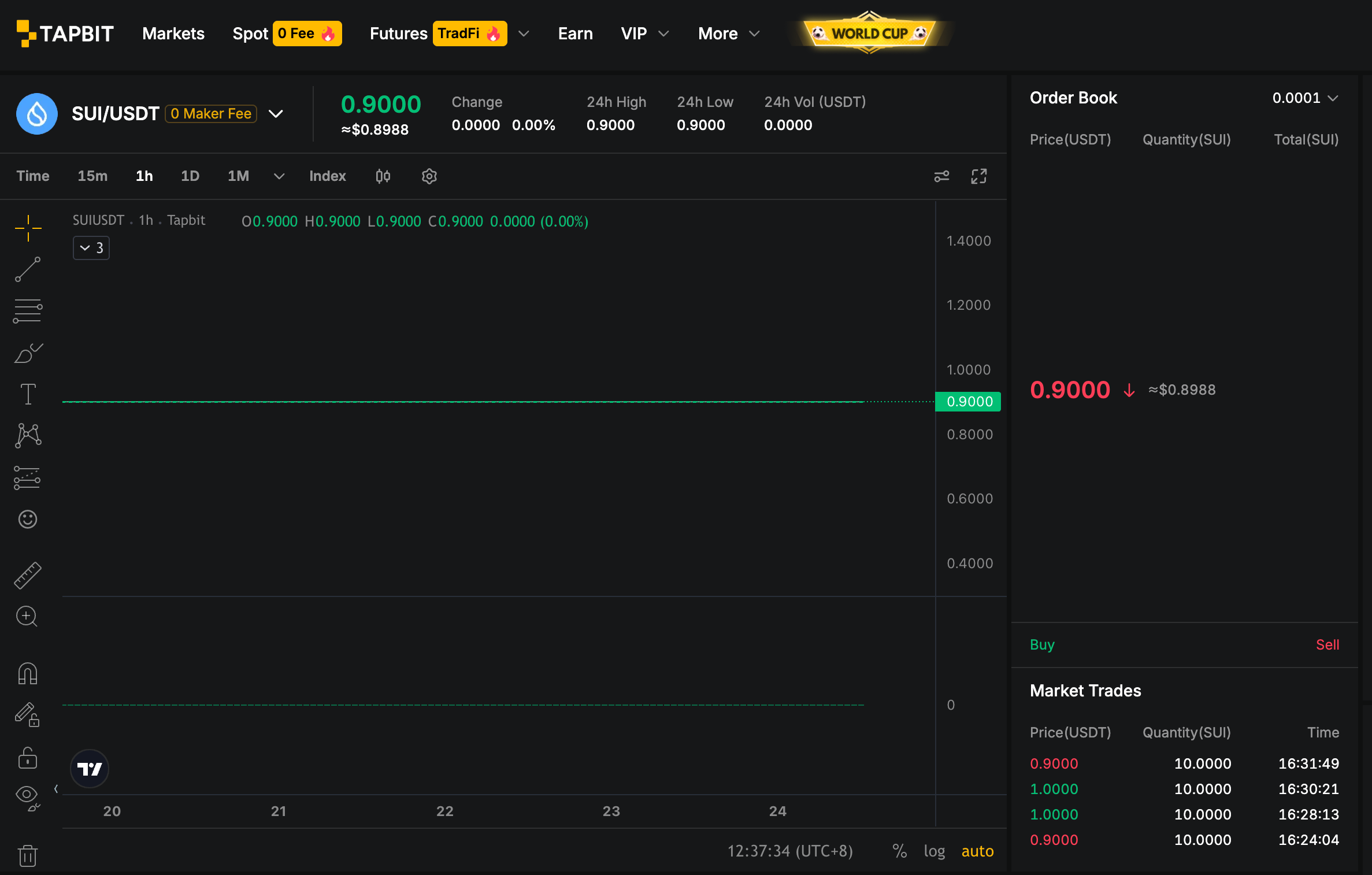
For users exploring crypto markets and ecosystem opportunities, the Tapbit registration page provides access to market tools and digital asset trading features.
Is Sui a Good Investment?
Sui may be interesting for investors who believe in high-performance Layer 1 blockchains and the growth of consumer-friendly Web3 applications. However, SUI is still a crypto asset and carries significant risk.
Investors should watch the network's ecosystem growth rather than focusing only on short-term price movement. Useful indicators include developer activity, total value locked in DeFi, daily active users, transaction volume, validator decentralization, and token unlock schedules.
| Metric to Watch | Why It Matters |
|---|---|
| Developer activity | Shows whether builders are using the network |
| TVL in DeFi | Reflects liquidity and financial application growth |
| Daily active users | Helps measure real adoption |
| Token unlocks | Can affect supply pressure |
| App ecosystem | Determines whether Sui can attract long-term users |
Sui has strong technology and a clear narrative, but long-term value depends on real adoption.
Key Risks of Sui
Sui faces strong competition. The Layer 1 market is crowded, and many networks are fighting for developers, liquidity, users, and applications. Sui competes not only with other Layer 1 chains, but also with Ethereum Layer 2 networks that are trying to solve similar scalability problems.
| Risk | Why It Matters |
|---|---|
| Layer 1 competition | Many chains target similar users and developers |
| Token unlocks | Can increase selling pressure |
| Ecosystem maturity | Adoption is still developing |
| Market volatility | SUI can move sharply with crypto sentiment |
| Technical execution | Network reliability matters for long-term growth |
Investors should also remember that technically strong blockchains do not automatically become dominant. Liquidity, users, developers, integrations, and market cycles all matter.
Final Verdict
Sui is a high-performance Layer 1 blockchain designed for scalable Web3 applications. Its use of Move, object-based architecture, and parallel execution model make it one of the more technically interesting blockchain projects in the market.
However, SUI should still be viewed as a high-risk crypto asset. Investors should focus on real ecosystem adoption, developer growth, liquidity, and tokenomics rather than hype alone.
Disclaimer: This article is for informational and educational purposes only. It does not constitute financial, investment, trading, legal, or tax advice. Cryptocurrency markets involve high risk, and users should conduct independent research before making decisions.
FAQ
What is Sui crypto?
Sui is a Layer 1 blockchain designed for fast, scalable decentralized applications. Its native token is SUI.
What is SUI used for?
SUI is used for transaction fees, staking, governance, and ecosystem activity across the Sui network.
Who created Sui?
Sui was developed by Mysten Labs, a company founded by former Meta engineers involved in blockchain infrastructure work.
Is Sui similar to Aptos?
Sui and Aptos both use the Move language, but they have different architectures, execution models, and ecosystems.
Is Sui risky?
Yes. SUI is a volatile crypto asset and faces risks from competition, token unlocks, market cycles, and adoption uncertainty.


