
A prediction market is a marketplace where people trade contracts based on the outcome of future events. Instead of buying a stock or cryptocurrency directly, users trade on questions such as whether a candidate will win an election, whether inflation will fall, whether a team will win a match, or whether Bitcoin will reach a certain price by a specific date.
The basic idea is simple: if many people are willing to pay for one outcome, the market price can reflect the crowd’s expectation of that outcome happening.
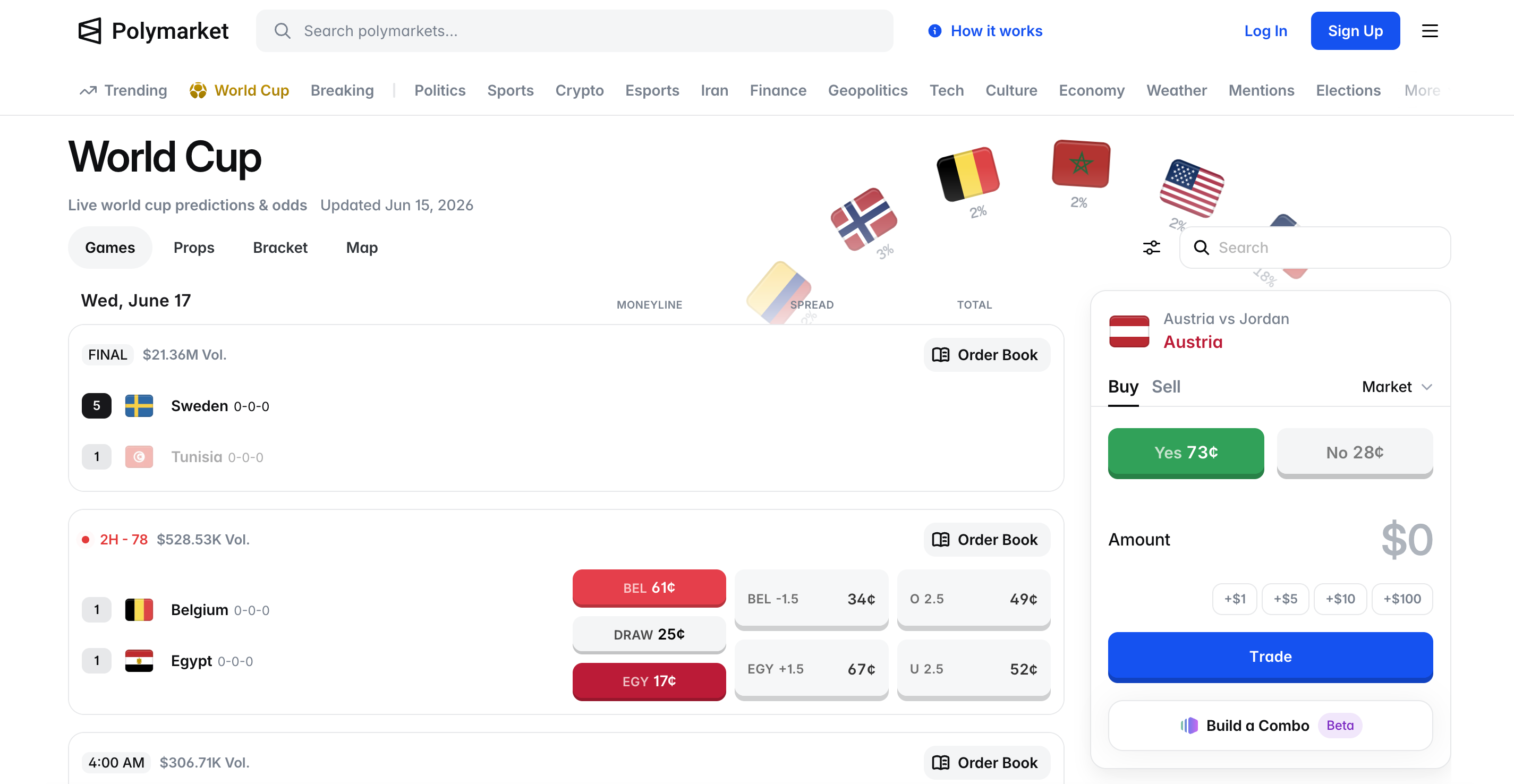
For example, if a contract pays $1 if an event happens and trades at $0.65, traders may interpret that as the market pricing the event at roughly a 65% probability. This is not a guarantee. It is only a market-implied view based on current buyers and sellers.
How Prediction Markets Work
Prediction markets usually create contracts tied to clear outcomes. Each market has a question, a deadline, possible outcomes, and settlement rules.
| Market Element | Description |
|---|---|
| Event Question | The future outcome being traded |
| Possible Outcomes | Usually yes/no or multiple choices |
| Market Price | Reflects implied probability |
| Settlement Rule | Defines how the final outcome is decided |
| Liquidity | Determines how easily users can enter or exit |
| Deadline | When the event is resolved |
A simple yes/no market may ask: Will Bitcoin close above $100,000 by December 31? If the Yes side trades at $0.40, the market is suggesting a 40% implied probability at that moment.
Why Crypto Users Care About Prediction Markets
Prediction markets have become popular in crypto because they match several strengths of blockchain-based finance. Crypto users are already familiar with tokens, stablecoins, wallet-based trading, smart contracts, and global market access.
Prediction markets can also provide a different kind of market signal. Instead of relying only on polls, analyst reports, or social media opinions, traders can watch where people are actually putting money.
This makes prediction markets useful for tracking election sentiment, sports expectations, economic data forecasts, crypto price probabilities, ETF approval expectations, Fed rate decision expectations, and geopolitical event risk.
For users following broader digital asset trends, the Tapbit platform can be a useful entry point for exploring crypto market tools and trading access.
Prediction Markets vs Sports Betting
Prediction markets and sports betting may look similar, but they are not exactly the same.
Sports betting is usually focused on wagering against odds set by a sportsbook. Prediction markets allow users to trade event contracts with prices that can change based on supply and demand.
| Comparison | Prediction Market | Sports Betting |
|---|---|---|
| Pricing | Market-driven | Odds-driven |
| Tradability | Positions can often be bought and sold | Bets usually settle after the event |
| Events | Politics, finance, crypto, sports, economics | Mostly sports |
| Market Signal | Reflects trader sentiment | Reflects bookmaker odds and betting flow |
| Risk | Liquidity and resolution risk | Betting and platform risk |
Prediction markets can cover a wider range of topics, especially in crypto-native environments.
Why Prediction Market Prices Change
Prediction market prices move when new information changes expectations. A debate, injury report, inflation print, ETF filing, central bank speech, or major crypto market move can shift probabilities quickly.
Prices may also move because of new data, breaking news, large trades, liquidity changes, social media narratives, market manipulation attempts, and changing risk appetite.
Because of this, prediction markets are dynamic. They should be read as live sentiment indicators, not permanent forecasts.
Are Prediction Markets Accurate?
Prediction markets can be useful, but they are not always accurate.
In theory, markets can aggregate information from many participants. When people risk money, they may have stronger incentives to research carefully. This can make prediction markets more informative than casual social media opinions.
However, prediction markets can still be wrong. Thin liquidity, biased participants, unclear event rules, and emotional crowd behavior can distort prices.
A market showing a 70% chance does not mean the event will definitely happen. It means traders are currently pricing that outcome as more likely than alternatives.
Main Risks of Prediction Markets
Prediction markets are not risk-free. Beginners should understand that these platforms can involve financial, legal, and operational risks.
| Risk | Explanation |
|---|---|
| Low Liquidity | Users may struggle to exit positions |
| Regulatory Limits | Access may vary by country or region |
| Market Manipulation | Large traders may distort prices |
| Resolution Disputes | Event outcomes may be hard to define |
| Emotional Trading | Users may overtrade on personal beliefs |
| Smart Contract Risk | Crypto markets may depend on code and settlement systems |
These risks are especially important for political, sports, and breaking-news markets, where emotions can move faster than evidence.
How Beginners Should Use Prediction Markets
Beginners should treat prediction markets as information tools before treating them as trading tools. Watching how probabilities change can help users understand market sentiment without needing to take large positions.
A simple research process includes reading the market question carefully, understanding the settlement criteria, checking liquidity before trading, comparing prices with external data, avoiding emotional position sizing, tracking how probabilities move after news, and understanding local rules and restrictions.
Users can also visit the Tapbit rewards page to explore platform campaigns and market access while building a broader understanding of crypto market behavior.
Conclusion
A prediction market is a marketplace for trading future event outcomes. It turns crowd expectations into live market prices, allowing users to track probabilities for politics, sports, economics, crypto, and other major events.
Prediction markets can be useful because they show where traders are willing to put money, not just what people say they believe. But they are not perfect forecasting machines.
For beginners, the best approach is to use prediction markets as one signal among many. Always check liquidity, settlement rules, event definitions, and regulatory risks before trading.
FAQ
What is a prediction market?
A prediction market is a marketplace where users trade contracts based on future event outcomes.
How do prediction market prices work?
Prices often reflect implied probability. A contract trading at $0.60 may suggest the market sees roughly a 60% chance of that outcome.
Are prediction markets always accurate?
No. They can be useful sentiment tools, but they can be wrong due to low liquidity, bias, manipulation, or unclear event rules.
Are crypto prediction markets different?
Crypto prediction markets may use blockchain technology, stablecoins, smart contracts, and transparent settlement systems.
What are the main risks?
Main risks include low liquidity, regulatory limits, manipulation, event-resolution disputes, smart contract risk, and emotional trading.


