
What Polygon Is and How It Got Here
Polygon started life in 2017 as Matic Network, a project founded by four Mumbai-based engineers — Jaynti Kanani, Sandeep Nailwal, Anurag Arjun, and Mihailo Bjelic — with one goal: make Ethereum usable for everyday transactions without prohibitive fees or slow confirmation times. It rebranded to Polygon in 2021 as the scope expanded from a single sidechain into a broader infrastructure toolkit for the Ethereum ecosystem.
By 2026 that description has evolved again. Polygon now describes itself as a "value layer for the internet" — infrastructure designed to let multiple specialized blockchains share liquidity and users as if they were a single network, all while settling to Ethereum for security. The shift from a standalone sidechain to a multi-chain aggregation ecosystem is the defining strategic pivot of the past two years, and it explains why the native token was upgraded from MATIC to POL.
As of May 2026, POL trades around $0.09 with a market cap just under $1 billion (source: CoinGecko, April 2026). Network fundamentals tell a different story from the price: Q1 2026 set an all-time record for transaction volume per Polygon's official quarterly report, and the stablecoin supply tracked by DeFiLlama nearly doubled in a single quarter — reflecting genuine usage growth in payments and DeFi rather than speculative positioning.
According to DeFiLlama, Polygon's Total Value Locked (TVL) across all deployed protocols stands at approximately $800 million as of April 2026, placing it in the top ten EVM-compatible chains by DeFi activity.
How Polygon Works
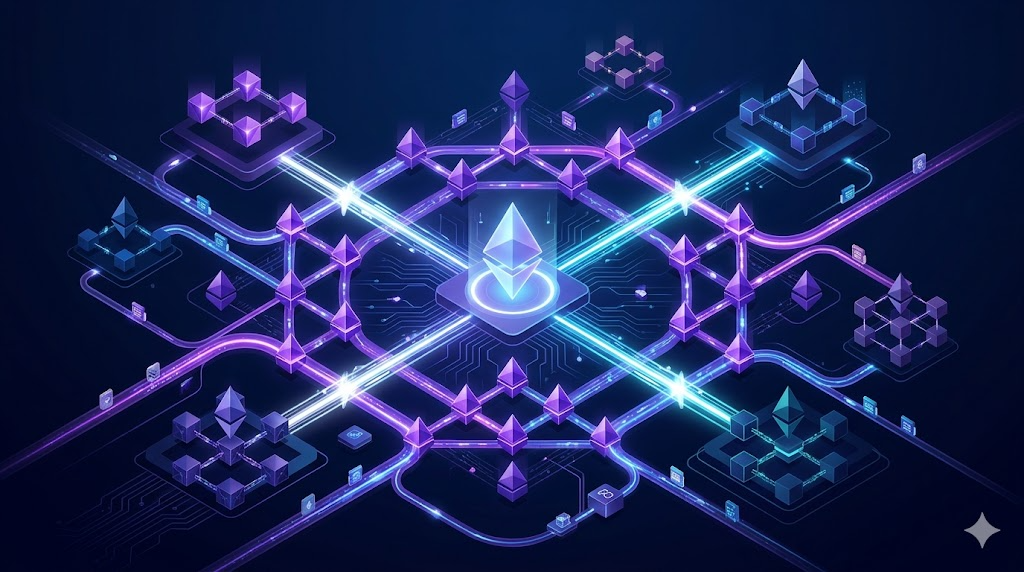
Polygon operates as a Layer 2 network, which means it processes transactions off Ethereum's main chain and then periodically submits a summary back to Ethereum for finality. This architecture gives Polygon access to Ethereum's security guarantees while allowing it to offer throughput and fees that the Ethereum mainnet cannot match on its own.
The Polygon PoS chain — the original and still most active chain — currently processes transactions in roughly four to five seconds following the Giugliano hard fork in April 2026, which was the network's most significant consensus upgrade since 2020. Gas fees remain fractions of a cent. The longer-term Gigagas roadmap, currently in testnet with internal benchmarks already exceeding 5,000 TPS, targets over 100,000 transactions per second — comparable to Visa-level throughput at peak.
Beyond the PoS chain, Polygon offers two other scaling approaches:
-
Chain Development Kit (CDK): Lets teams deploy custom Ethereum-compatible chains with configurable execution environments and data availability settings. These are application-specific chains for projects that need fine-grained control over their own execution environment — not general-purpose competitors to the PoS chain.
-
Zero-knowledge technology: Built partly through Polygon's 2022 acquisitions of Hermez and Mir, this underpins both the CDK chains and the AggLayer protocol described below.
Security across all Polygon chains relies on Proof of Stake consensus, where validators stake POL to participate in block production. Misbehavior results in slashing of staked tokens. Because each chain ultimately posts data or proofs back to Ethereum, the Ethereum mainnet provides the final layer of settlement security.
AggLayer: Why Multi-Chain Liquidity Fragmentation Is the Problem Polygon Is Solving
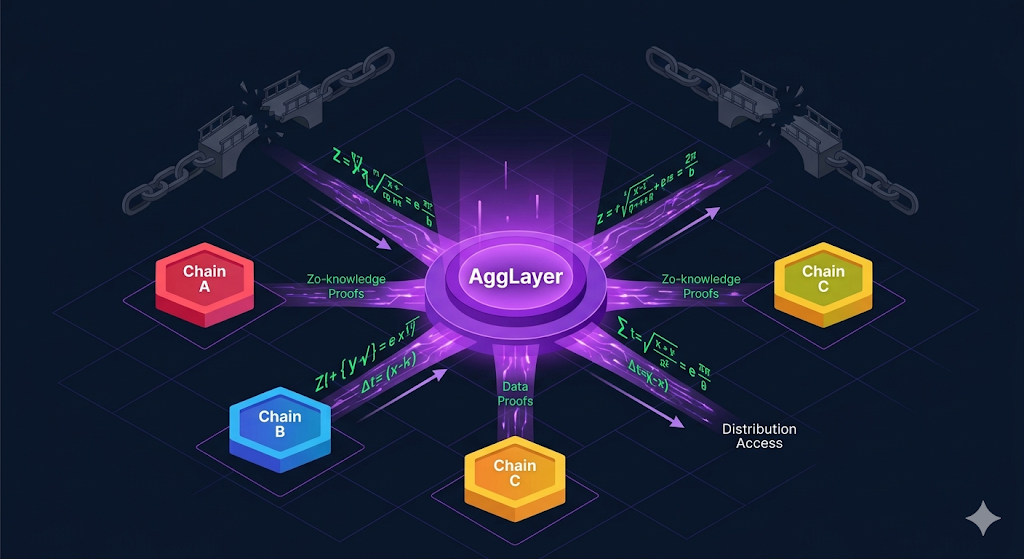
The practical limitation of the rollup era is fragmentation. Every new Layer 2 chain that launches splits users and liquidity into another isolated environment. Moving assets between chains means using bridges, which have historically been among the most exploited infrastructure in crypto — in 2025, bridge-related losses contributed significantly to the more than $2.17 billion stolen in crypto hacks through mid-year, per blockchain security firm Immunefi's annual report.
AggLayer is Polygon's architectural response. Rather than building yet another general-purpose rollup, Polygon reoriented its strategy around building the interoperability layer that connects Polygon-powered CDK chains into a shared liquidity pool. The mechanism is a form of zero-knowledge proof called a pessimistic proof: each chain must cryptographically prove to AggLayer that it is not withdrawing more assets than were deposited, without relying on a committee of human signers. This removes the trust assumption that makes traditional bridges vulnerable.
AggLayer went live on Ethereum mainnet in late 2024, with pessimistic proofs activated in February 2025. Full maturity — enabling seamless, near-instant cross-chain settlement for the entire ecosystem — is targeted for 2026. The strategic implication is significant: Polygon's zkEVM chain, which competed directly with Arbitrum and zkSync as a general-purpose rollup, is scheduled to sunset during 2026, allowing engineering and incentive resources to consolidate around AggLayer as the single strategic priority.
Polygon's bet is that solving the fragmentation problem is more valuable and more defensible than winning the TPS race on any one chain. For a deeper technical overview of how zero-knowledge proofs power cross-chain state verification, the Polygon AggLayer documentation covers the pessimistic proof system in detail.
The POL Token: From MATIC to Multi-Chain Staking

MATIC was the original token of the Polygon PoS chain, used primarily for gas payments and staking on that single chain. POL replaced it at a 1:1 ratio through a migration completed in September 2024; by early 2025, 99% of MATIC supply had been converted, per on-chain migration data tracked on Dune Analytics.
The substantive change is not cosmetic. POL is designed for what Polygon calls multi-chain staking: a validator's staked POL can simultaneously secure multiple Polygon chains, earning rewards and transaction fees from each. The same token that helps run the PoS chain can also validate CDK-built chains connected to AggLayer, giving validators diversified income streams and giving the network a single economic layer tying everything together.
POL has an initial supply of 10 billion tokens, matching MATIC's supply at migration. Key tokenomics at a glance:
-
Annual emissions: ~2%, split evenly between validator rewards and a community treasury
-
Gross staking APY: ~5.5% for validators (compressed to ~2.5–3% net in recent months as the validator set has grown)
-
Fee burn: A portion of transaction fees is burned to partially offset new supply, with net effect dependent on usage levels and governance decisions
The most significant recent development is sPOL, Polygon's first native liquid staking token, launched on April 14, 2026. sPOL lets stakers keep their POL productive — earning validator rewards — while simultaneously using it across DeFi protocols without unbonding. At launch it unlocked approximately $330 million in previously idle staked capital, backed by $100 million in initial liquidity from the Polygon Foundation.
For eligible users interested in earning yield on POL, Tapbit's Earn section lists available staking and savings options as they become available. Note: availability varies by jurisdiction.
Real-World Usage and Competitive Position
Polygon's usage data for Q1 2026 shows concrete adoption across multiple verticals:
Transactions & On-Chain Finance Transaction volume hit 711 million in Q1 2026 — an all-time high, 49% above Q4 2025 — per Polygon's official quarterly data. On-chain stablecoin supply reached $3.28 billion according to DeFiLlama's stablecoin tracker, nearly double the prior quarter. The network has processed over $1.14 billion in tokenized real-world assets.
Payments Stripe has integrated Polygon for crypto payment processing. Mastercard's partnership advances on-chain payments infrastructure. Polygon Labs is reportedly in early talks to raise $100 million to launch a regulated stablecoin payments business, following its acquisitions of payments firm Coinme and wallet provider Sequence.
DeFi & Prediction Markets Aave, Uniswap, and Curve all operate on Polygon for lower-cost trading and lending. Polymarket, the prediction market that handled hundreds of millions in volume around the 2024–2025 U.S. elections, runs on Polygon.
Competitive Landscape The honest assessment is that Polygon is no longer the default Ethereum scaling choice it was in 2021–2022. According to L2Beat, which tracks Layer 2 activity by TVL and security posture:
-
Arbitrum and Optimism dominate the optimistic rollup category by TVL and developer activity
-
Base (Coinbase's Layer 2) grew from zero to one of the highest-transaction-volume chains in crypto during 2024–2025
-
zkSync and StarkNet compete on the ZK proof front that was positioned as Polygon's primary technical advantage
Polygon's strategic answer to this pressure is AggLayer: rather than trying to win the throughput competition on a single chain, it is betting that the interoperability problem is larger, less solved, and more durable as a foundation for long-term differentiation.
Validator Economics Staking APY has compressed to roughly 2.5–3% as emissions are distributed across a growing validator set. With POL trading near $0.09, the USD return on running a validator node is slim. If token prices remain depressed, validator participation could decline — a factor investors and users should include in their network security assessment.
Key Risks of Investing in POL
Before taking a position, consider these four material risks:
-
Competitive pressure: Polygon faces well-funded competitors in every sub-segment of the Layer 2 market. Its general-purpose scaling advantage has narrowed significantly since 2022, and AggLayer's success is not yet proven at scale.
-
Validator economics: With POL near $0.09 and net staking yields at 2.5–3%, running a validator node is only marginally profitable in USD terms. A sustained low-price environment could reduce validator participation and impact network security.
-
Liquidity concentration risk: A significant portion of on-chain liquidity is concentrated in a small number of DeFi protocols (Aave, Uniswap, Curve). A large protocol exploit or withdrawal event could rapidly reduce TVL and on-chain stablecoin supply, distorting the Q1 2026 usage metrics.
-
Ethereum dependency: Polygon's security model relies on Ethereum for final settlement. Material changes to Ethereum's protocol — including future upgrades to its fee market or consensus mechanism — could affect Polygon's risk profile in ways that are difficult to predict.
How to Get Started with POL on Tapbit
Available to eligible users only. Please verify your jurisdiction before trading.
Getting exposure to POL on Tapbit takes four steps:
-
Create your account — Register here and complete identity verification.
-
Deposit funds — Use crypto or supported fiat options via the deposit page.
-
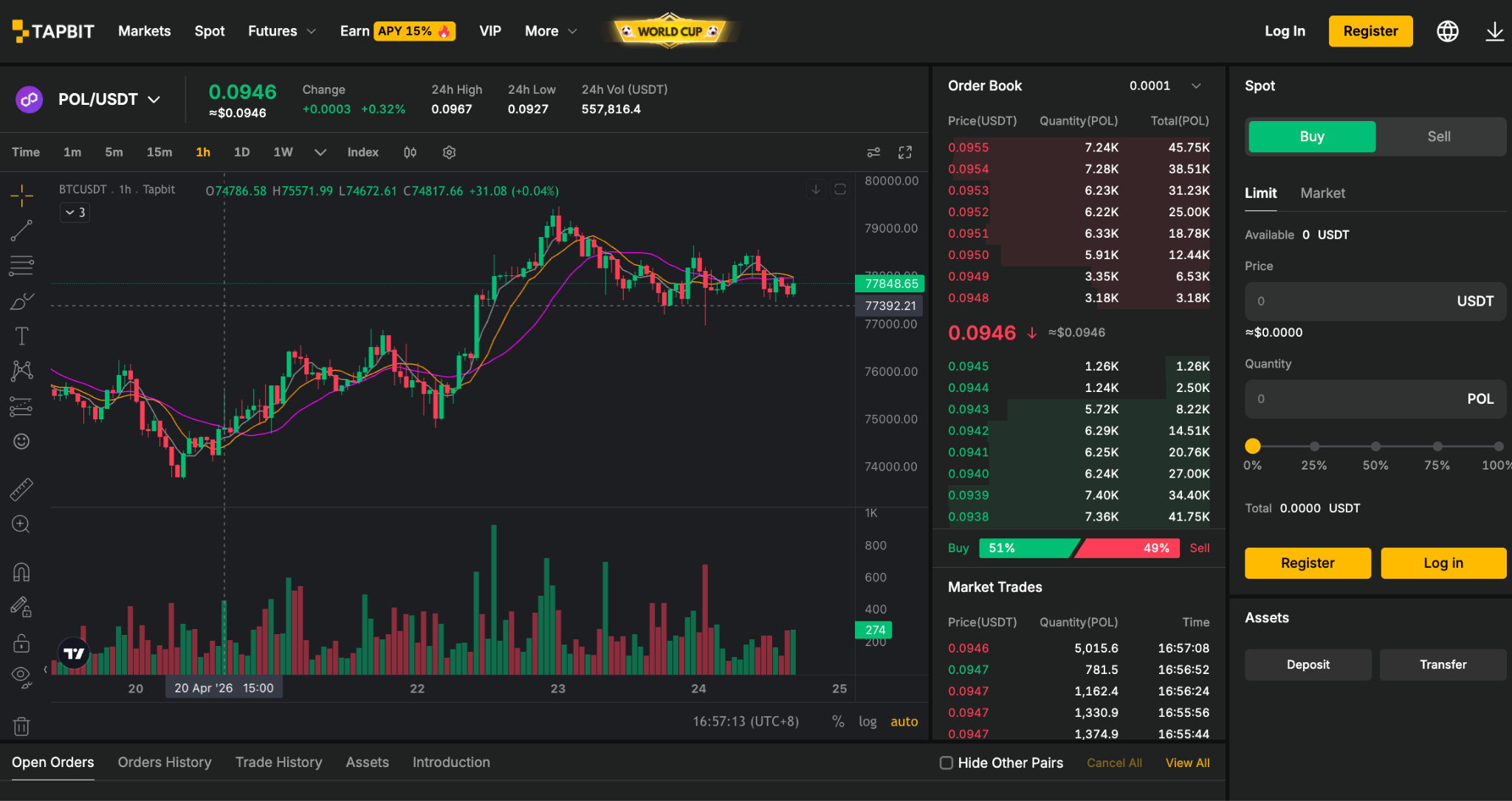
Trade POL — Navigate to the POL/USDT spot market and place a market or limit order at your target price.
-
Optional: Copy Trading — Tapbit's copy trading lets you mirror verified trader strategies while setting your own risk limits — useful if you prefer not to manage positions manually.
Tapbit's proof of reserves is independently audited, so you can verify that funds are fully backed at any time.
FAQ
What is the difference between Polygon and Ethereum?
Ethereum is the base Layer 1 blockchain where transactions achieve final settlement and security is guaranteed by a global validator set. Polygon is a Layer 2 network that processes transactions separately — at higher speed and lower cost — and then posts a cryptographic summary back to Ethereum for finality. Think of Ethereum as the settlement layer and Polygon as a faster processing environment that inherits Ethereum's security. Users interact with Polygon through a bridge or compatible wallet such as MetaMask, which moves assets between the two networks.
What is the difference between POL and MATIC?
MATIC was the original token of the Polygon PoS chain, used mainly for gas fees and staking on that single chain. POL replaced it at a 1:1 ratio in September 2024. The functional upgrade is multi-chain staking: POL can secure multiple Polygon chains at once, earning rewards from more than one network simultaneously. As of early 2025, 99% of the original MATIC supply had completed the migration, per Dune Analytics on-chain tracking.
What is AggLayer and why does it matter?
AggLayer is Polygon's cross-chain protocol that connects multiple CDK-built chains into a shared liquidity environment using zero-knowledge pessimistic proofs — eliminating the need for trusted bridge signers. Instead of using traditional bridges — which rely on trusted signers and have been repeatedly exploited — AggLayer cryptographically verifies that each chain is not spending more than it holds. The practical effect is that assets can move between Polygon-connected chains without the bridge risk that has caused billions in losses across the industry.
What is sPOL and how does it work?
sPOL is Polygon's native liquid staking token, launched in April 2026, which lets holders earn validator rewards while simultaneously using their position in DeFi. Normally, staked POL is locked and unavailable for other uses. sPOL represents your staked position as a transferable token — usable for lending, borrowing, or liquidity provision — without requiring you to unbond first. At launch, sPOL unlocked approximately $330 million in previously idle capital.
How does Polygon compare to Arbitrum and Base in 2026?
By transaction count, Polygon PoS remains one of the highest-volume EVM chains; by TVL, Arbitrum leads the Layer 2 category. According to L2Beat, Arbitrum holds the largest share of Layer 2 TVL, while Base has grown rapidly in user volume. Polygon differentiates through AggLayer's interoperability thesis rather than competing directly on TVL — a strategic bet that remains unproven but is architecturally distinct from both Arbitrum's optimistic rollup model and Base's Coinbase-distribution advantage.
What are the main risks of Polygon?
Four risks stand out: competitive pressure, validator economics, liquidity concentration, and Ethereum dependency. Polygon faces well-funded competitors in every L2 sub-segment. Net staking yields of 2.5–3% at a $0.09 token price make validator economics tight. A significant share of TVL is concentrated in a few DeFi protocols, creating withdrawal risk. And Polygon's security ultimately relies on Ethereum — changes to Ethereum's protocol could affect Polygon in unpredictable ways. Investors should weigh all four before allocating capital.
Data Sources
-
Polygon Official Quarterly Report — Q1 2026 transaction volume and stablecoin supply data
-
DeFiLlama — TVL, stablecoin supply, and protocol-level on-chain data
-
Dune Analytics — MATIC→POL migration tracking, on-chain staking data
-
L2Beat — Layer 2 TVL rankings and security posture comparison
-
Immunefi Annual Crypto Security Report 2025 — Bridge hack losses figure
-
CoinGecko — POL price and market cap data, April 2026
-
Polygon Official Blog (polygon.technology/blog) — sPOL launch, Giugliano hard fork, AggLayer milestones
-
Polygon AggLayer Documentation (docs.polygon.technology/agglayer) — Technical pessimistic proof overview


