
What is AAPL split history? An AAPL split is a stock split by Apple Inc. It does not change Apple's total business value by itself. Instead, it changes how many shares exist and what each share costs on a split-adjusted basis.
For example, in a 4-for-1 split, one share becomes four shares, and the price per share is divided by four. A shareholder owns more shares, but the total value is theoretically the same at the moment of the split.
What Is AAPL Split?
An AAPL split is a corporate action where Apple increases its share count and lowers the share price proportionally. Companies often split shares after long periods of price appreciation, making the stock look more accessible to smaller investors.
This does not mean Apple becomes cheaper in valuation terms. Market cap, revenue, profit and cash flow do not change simply because of a split.
Think of it like cutting a pizza into more slices. More slices exist, but the pizza is the same size.
Apple Stock Split History
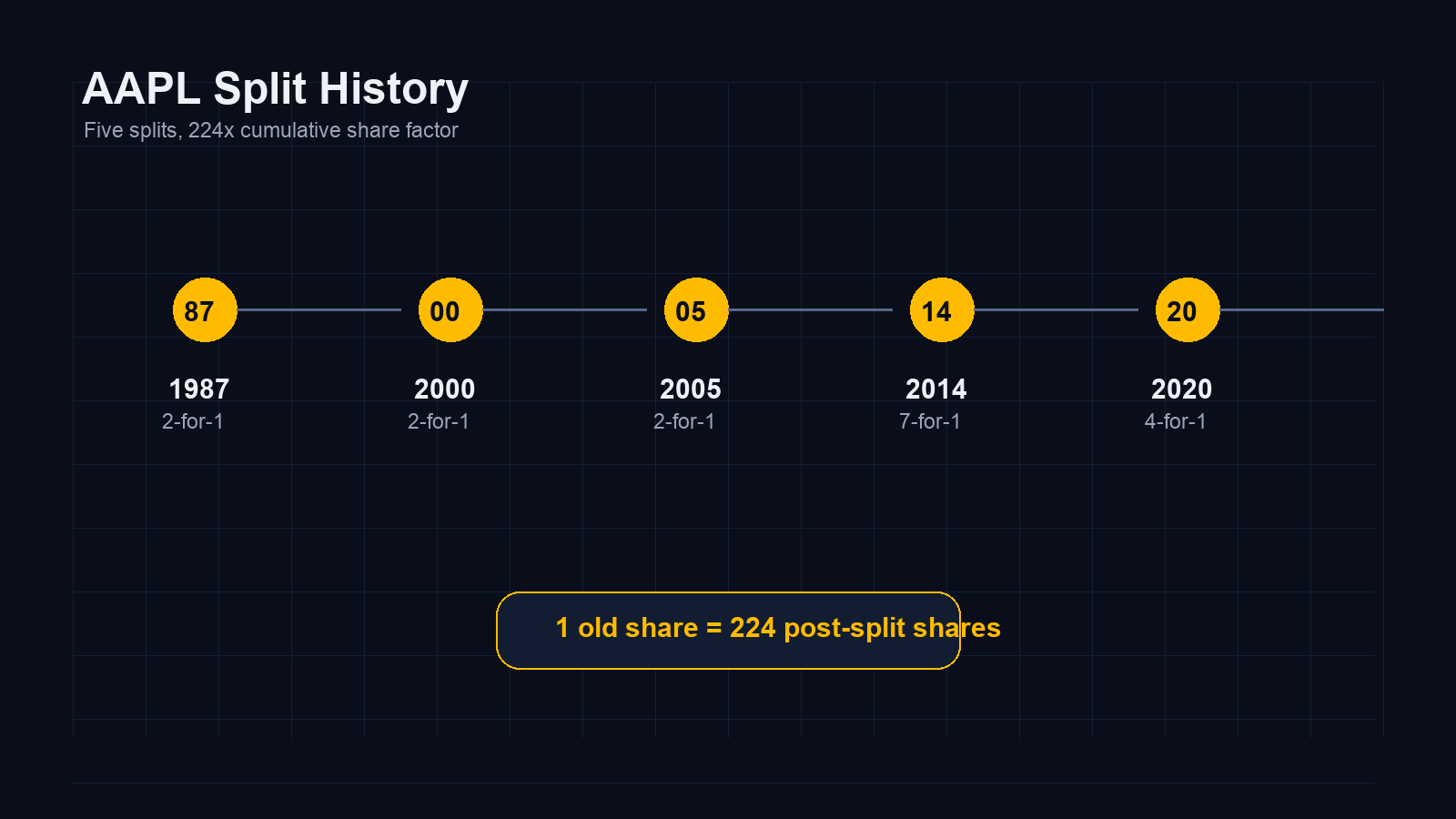
Apple has split its stock five times. The most cited split history includes:
| Year | Split Ratio | Simple Meaning |
|---|---|---|
| 1987 | 2-for-1 | 1 share became 2 |
| 2000 | 2-for-1 | 1 share became 2 |
| 2005 | 2-for-1 | 1 share became 2 |
| 2014 | 7-for-1 | 1 share became 7 |
| 2020 | 4-for-1 | 1 share became 4 |
The combined effect is 224-for-1. That means one Apple share held before all five splits would equal 224 shares after those splits, before considering dividends or taxes.
Tapbit Learn's earlier what is aapl stock split guide also covers Apple split basics for readers who want a shorter reference.
Why Did Apple Split Its Stock?
Apple split its stock after major long-term price gains. A split can make the share price easier to understand for retail investors. It can also improve perceived affordability and trading activity.
However, a split is not a magic bullish signal. It does not create revenue, profit or cash flow. Investors still need to evaluate Apple's business fundamentals.
This is why stock splits are often psychological events. They can increase attention, but the long-term price depends on earnings power.
Does an AAPL Split Change Apple's Market Value?
An AAPL split changes the share math, not the company. If Apple had 1 share at $400 and completed a 4-for-1 split, the holder would have 4 shares at roughly $100 each. The total position would still be about $400 before market movement, fees or taxes.
That is why a split-adjusted chart matters. Without adjustment, Apple's old prices would look artificially low compared with today's prices. With adjustment, traders can compare past and present price action more fairly.
For crypto-native readers, the idea is similar to token supply optics. A token with a lower unit price is not automatically cheaper if the total supply is much larger. Market value depends on price multiplied by supply, not price alone.
This is also why split headlines often create confusion. A lower post-split price can feel like a discount, but the ownership percentage is unchanged. The real question is whether the company's future earnings can support a higher total market value after the split attention fades.
Will Apple Split Again in 2026?
There is no confirmed Apple stock split for 2026 at the time of writing. Many users search "Is Apple going to split this year?" because Apple has split after large price increases in the past.
But a split usually requires board approval and an official company announcement. Without that, any claim about a new split is speculation.
If Apple trades much higher over time, a future split could become more plausible. Still, investors should watch official Apple investor relations updates rather than social-media rumors.
How AAPL Split History Matters for Traders
Split history helps traders interpret old Apple prices correctly. A chart before 2020, 2014 or 2005 may be split-adjusted. That means historical prices are restated so the chart remains comparable.
It also matters for long-term return calculations. A user asking "How much is $10,000 invested in Apple 20 years ago?" must account for splits, dividends and reinvestment assumptions.
For stock-market context, Tapbit Learn's what is S&P 500 index guide explains why companies like Apple can have a large impact on index performance.
Can You Trade Apple Price Exposure on Tapbit?
Tapbit offers AAPLUSDT Perp, a TradFi-linked derivative for Apple price exposure. It is not direct Apple stock ownership.
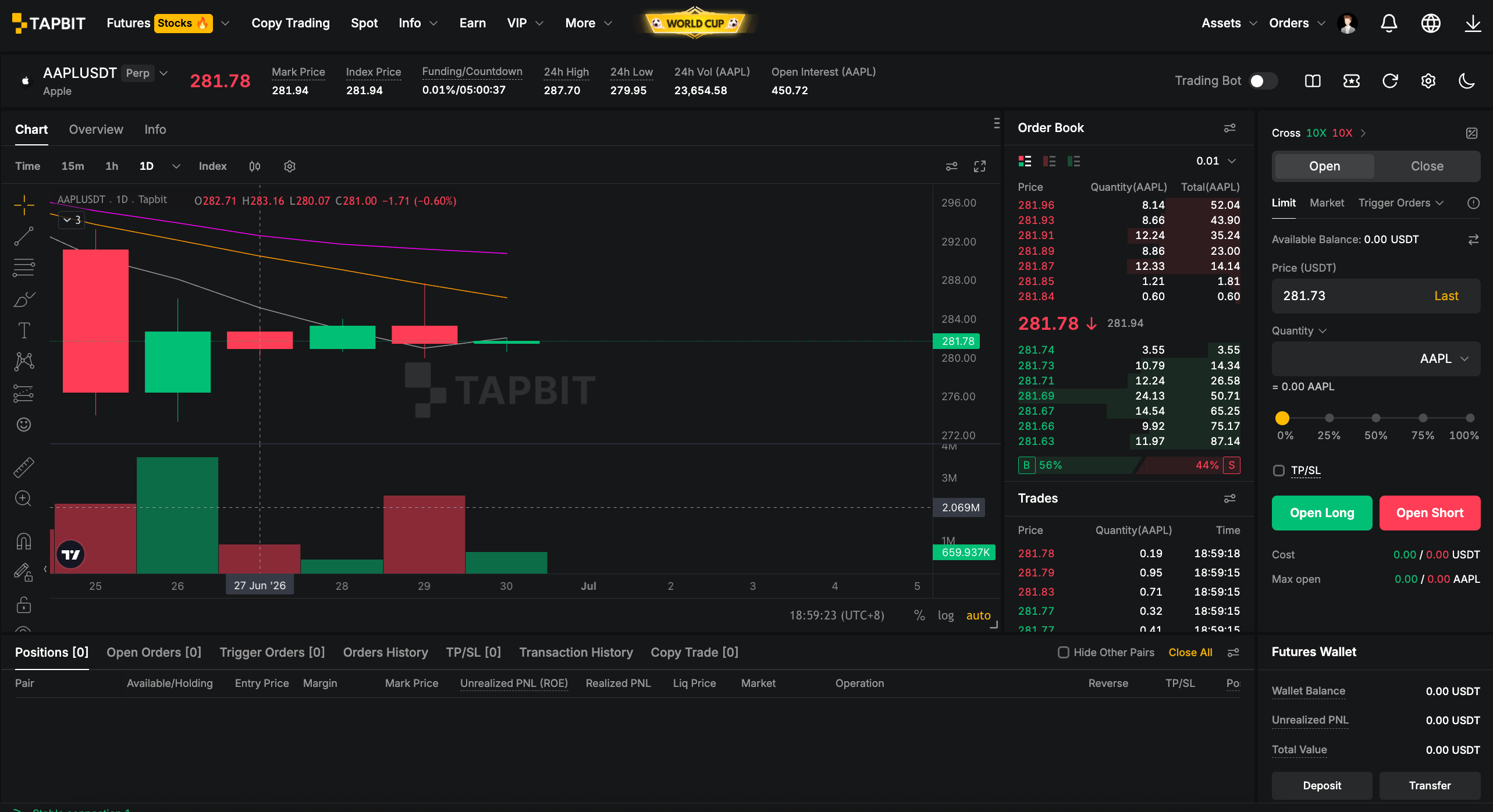
- Open the AAPLUSDT futures page.
- Review the current price, mark price, volume and order book.
- Choose margin, leverage and order type.
- Set TP/SL before opening a position.
You can create an account to explore the interface. Tapbit Learn's is PLTR a good stock to buy article is another useful reference for traders comparing stock-linked TradFi products with crypto-style trading tools.
FAQ
How many times has Apple stock split?
Apple has split its stock five times since going public.
What was Apple's most recent stock split?
Apple's most recent split was a 4-for-1 split in 2020.
Does a stock split make Apple cheaper?
It lowers the per-share price, but it does not lower Apple's valuation by itself.
Will Apple split in 2026?
There is no confirmed 2026 Apple split unless Apple officially announces one.
What does 224x split factor mean?
It means one old Apple share before all historical splits became 224 post-split shares.


