

What is Ansem token? In current crypto search intent, Ansem token most commonly points to The Black Bull ($ANSEM), a Solana-based meme coin associated with the ANSEM name. The token is described as inspired by the crypto trader and influencer Ansem, but not officially created or endorsed by him. Recent market reports described ANSEM as a fast-moving Pump.fun-style meme coin that surged about 190x in 24 hours and pushed its market cap close to $97M-$100M.
That makes ANSEM less like a traditional utility protocol token and more like a high-attention social meme asset. For beginners, the safest answer is this: Ansem token is best researched from the contract upward. Before asking whether ANSEM can keep rising, first confirm the Solana mint address, official sources, liquidity depth, holder distribution and whether the market page is tracking the real The Black Bull ($ANSEM) token.
What Is Ansem Token?
Ansem token is not a broad blockchain category like Bitcoin, Ethereum or Solana. In the current SERP context, Ansem token usually means The Black Bull, ticker ANSEM or $ANSEM. It is framed as a community-driven Solana meme coin, not an app protocol, governance system, or verified utility asset.
Still, the name-based risk matters. Depending on the market page, wallet, DEX, or social post a user opens, ANSEM may refer to the intended token contract, a community meme token, or a copycat asset using a similar ticker. Token names are not centrally protected across every chain. A ticker can be reused. A logo can be copied. A social name can be turned into a token without the person, brand, or community officially approving it.
That is why a clean definition of Ansem token must include four checks:
- exact token name;
- ticker symbol;
- blockchain network;
- contract or mint address.
Without those four details, "ANSEM" is only a label, not a verified asset.
Why ANSEM Crypto Can Trend Quickly
ANSEM crypto can trend because meme tokens and social tokens move on attention. A token does not always need deep utility to attract traders. It may gain short-term traction through posts, influencer references, trading groups, DEX activity, a viral ticker, or creator-linked distribution narratives.
This is especially common in low-cap markets. The recent ANSEM move appears to have combined three catalysts: Solana meme coin liquidity, the Ansem social narrative, and rapid attention around a new token launch. Reports of a roughly 190x one-day move are exactly why users should treat timing carefully. The same attention that creates upside can create fast reversals when liquidity thins or early holders sell.
Tapbit Learn has covered similar name-sensitive token research in its guide to what is hype coin. The lesson is useful here: a popular word or ticker can create interest, but users still need to identify the real asset behind the name.
Is Ansem Token a Meme Coin or Utility Token?
For The Black Bull ($ANSEM), the market narrative currently points more toward a meme coin than a utility token. Some pages may describe it as community-driven, transparent, or socially inspired, but that is different from having protocol revenue, governance rights, staking mechanics, or product access.
The honest answer still depends on the exact contract. Other ANSEM-branded assets may claim community utility, social identity, or trading features. The claim itself is not enough.
Use this simple framework:
| Check | Meme-Style Signal | Stronger Utility Signal |
|---|---|---|
| Website | Thin page, mostly social links | Clear product, docs and roadmap |
| Contract | Recently created, small holder base | Verified address and transparent ownership |
| Liquidity | Low or unstable pool depth | Deeper liquidity across venues |
| Utility | Mainly narrative and community | Defined fees, access, governance or app use |
| Risk | Copycat and pump cycles | Still risky, but easier to research |
Even if an ANSEM token has a website and active community, that does not automatically make it a strong investment. Utility should be visible in the product, token mechanics and user demand.
How to Verify Ansem Token Before Trading
Before trading any Ansem token, verify the asset from the contract upward.
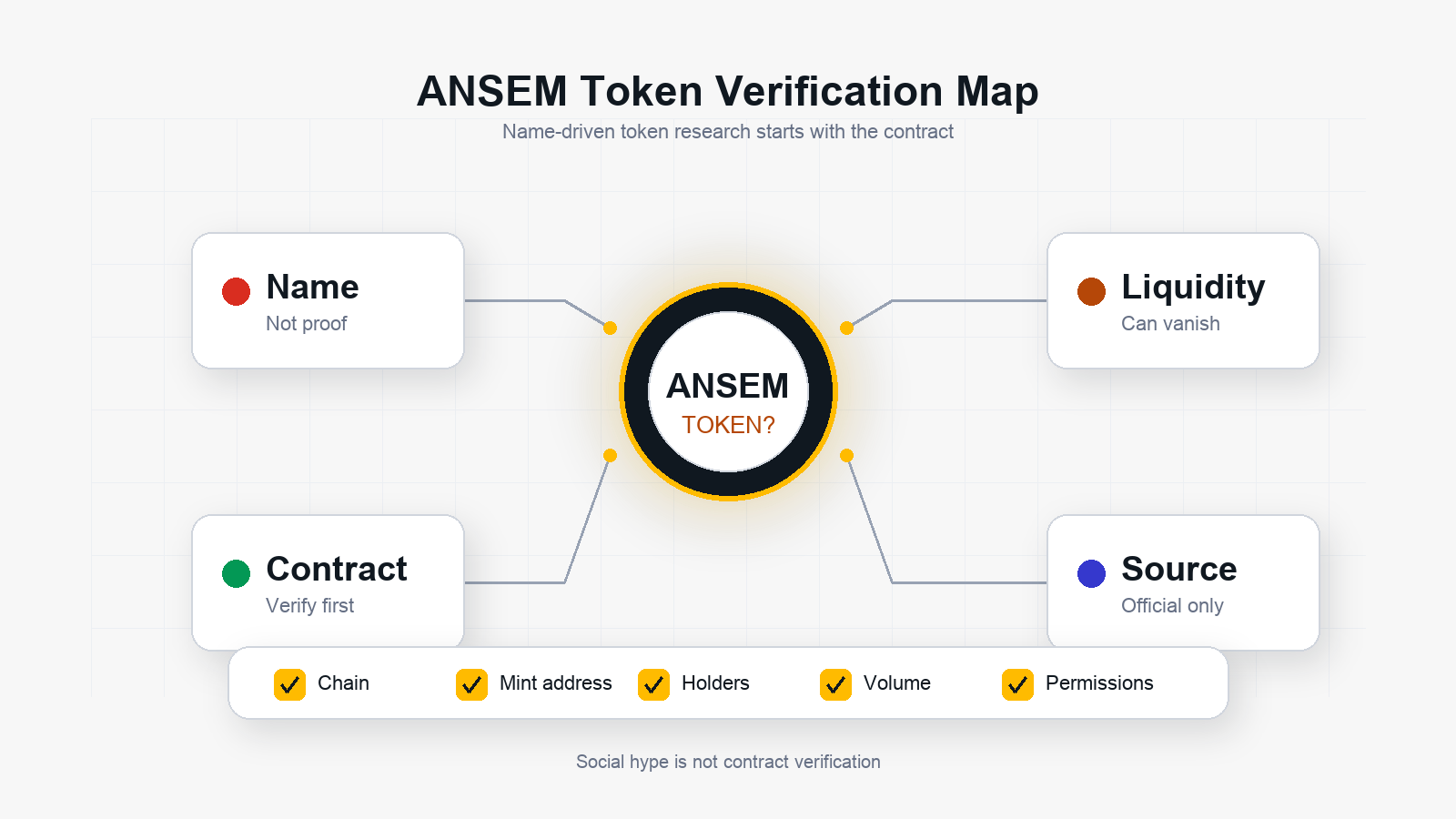
Start with the official source. If a project claims to be the real ANSEM token, it should publish the correct contract address or mint address from its own website or verified account. Then cross-check that address on the correct chain explorer.
Next, inspect liquidity. A token may show a price, but a thin liquidity pool can make entry and exit difficult. Look at trading volume, holder concentration, buy/sell tax rules if any, and whether contract permissions allow suspicious changes.
Finally, compare multiple data sources. If one page shows ANSEM on one chain and another shows a different address, do not assume they are the same token. This is where Solana-style token research tools can matter. Tapbit Learn's sol incinerator guide is a useful reminder that on-chain tools and exact token addresses matter when working with fast-moving token ecosystems.
What to Check on Market Data Pages
Market data pages can help, but they are not a substitute for contract verification. When checking ANSEM crypto, look for:
- market cap and fully diluted valuation;
- circulating supply and total supply;
- chain and contract address;
- liquidity depth;
- 24H volume;
- holder distribution;
- exchange or DEX support;
- official website and social links;
- recent unlocks or ownership changes.
If you are new to crypto platforms, you can create an account on Tapbit and view crypto prices to learn how market data, volume and price movement are displayed before touching smaller tokens. This does not mean ANSEM is available on Tapbit. Always confirm asset availability directly on the platform you plan to use.
Tapbit Learn's how to buy safemoon guide also covers the broader habit of checking token availability, network compatibility and trading steps before acting on a small-cap altcoin.
Is Ansem Token Risky?
Yes. ANSEM-style tokens can be risky because they may depend heavily on narrative, liquidity and social momentum. That does not mean every token using the ANSEM name is fake, but it does mean users should slow down.
Key risks include:
- wrong contract address;
- copycat token;
- low liquidity;
- concentrated holders;
- sudden price swings;
- lack of official confirmation;
- unclear token utility;
- exchange availability confusion.
Before taking action, review Tapbit's fee structure and understand how costs work on any platform you use. For platform transparency, Tapbit also provides proof of reserves. These links help with platform research, but they do not validate any specific ANSEM token.
In short, what is Ansem token is best answered as: a name-driven crypto token search that requires contract-level verification. Ansem token may attract attention because of crypto social culture, but attention is not the same as verified utility. Define the asset first, verify the contract, check liquidity, and only then decide whether it deserves more research.
FAQ
Is Ansem token an official project?
Not automatically. A token using the ANSEM name does not prove official endorsement. Users should verify the issuer, contract address and official source.
Is ANSEM a meme coin?
It may behave like a meme or community token depending on the contract and market. Do not assume utility without documentation and real usage.
Where can I buy Ansem token?
Availability can change quickly. Check reputable market data pages, the official project source, and the exact contract address before using any exchange or DEX.
Is Ansem token on Solana?
Some ANSEM-related searches may point to Solana-style token markets, but users must verify the exact chain and mint address before assuming the asset is Solana-based.
What should I check before trading ANSEM crypto?
Check the contract address, chain, liquidity, holder distribution, official website, exchange support, trading volume, and whether the token has real utility beyond social hype.


