

A contract asking whether a team will win looks like a sports wager. Put that contract on a federally regulated exchange, label it a swap, and clear it through a derivatives market — and the legal status becomes far less clear.
That ambiguity is now central to Kalshi's dispute with New York. The state argues that Kalshi is operating an unlicensed gambling business. Kalshi and the CFTC contend that its event contracts fall within the federal derivatives framework.
With federal courts reaching conflicting decisions and New Jersey asking the Supreme Court to intervene, the resolution could determine the future of prediction markets across the United States.
Why New York Sued Kalshi
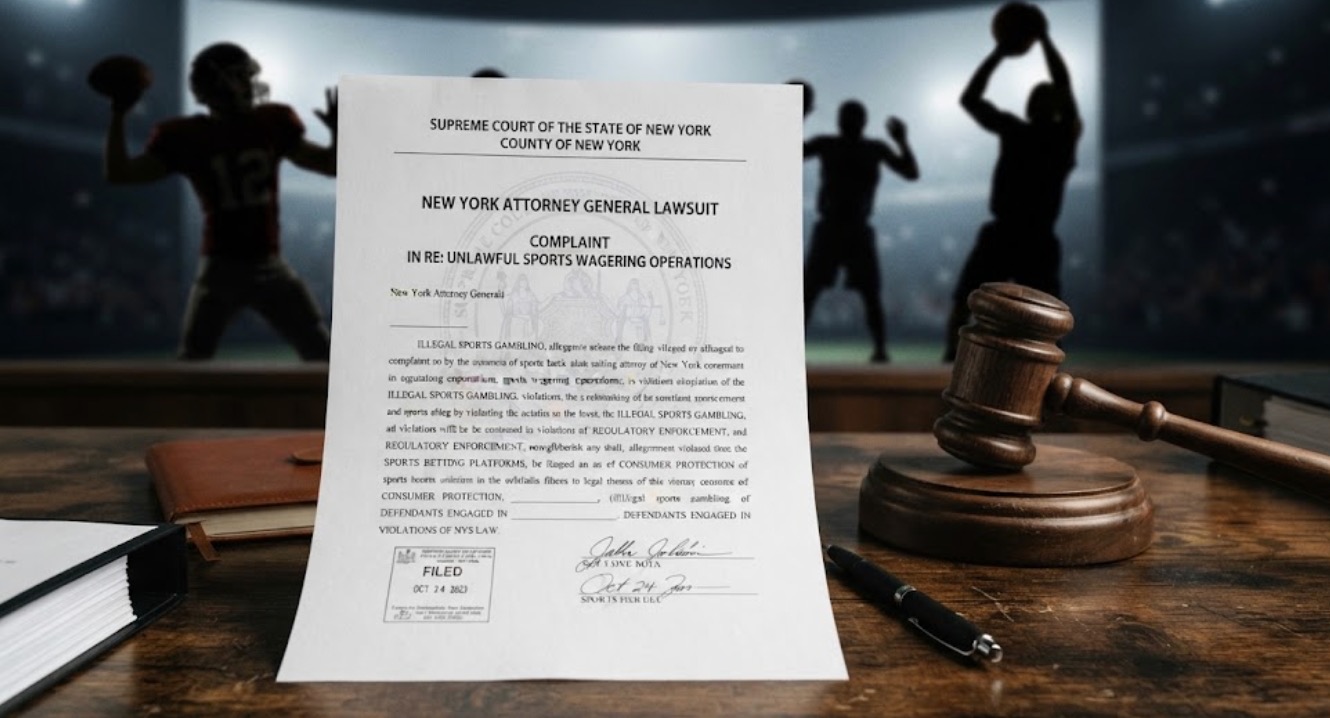
New York Attorney General Letitia James filed a lawsuit against Kalshi on July 31, 2026. The state alleges that the platform offers products that function as sports wagers without holding a New York gambling license.
Kalshi is registered with the CFTC as a designated contract market. That status allows it to list federally regulated derivatives, subject to the Commodity Exchange Act and CFTC oversight. Kalshi maintains that its event contracts are financial instruments rather than conventional bets.
New York rejects that distinction. Its complaint focuses on the economic substance of the products: users put money behind uncertain sporting outcomes and receive a payout if their prediction is correct.
The state has also raised consumer-protection concerns. Kalshi accepts users from the age of 18, while New York requires mobile sports-betting customers to be at least 21. Licensed sportsbooks must also follow state rules covering taxes, responsible gambling and operating standards.
The lawsuit seeks restitution, forfeiture of alleged illegal gains and penalties equal to three times those gains.
Where the $36 Billion Figure Comes From
The New York Attorney General’s public announcement does not state a fixed $36 billion demand. That figure appears in the CFTC’s August 11 statement, which says New York is seeking more than $36 billion in damages.
The amount should not be mistaken for Kalshi’s valuation or trading volume. It represents the potential total attached to New York’s claims for penalties, restitution and disgorgement. The court has not awarded that amount, and Kalshi disputes the underlying allegations.
The number is still significant because it shows how high the stakes have become. New York is not asking for a minor compliance adjustment. It is challenging the legal basis on which Kalshi offers event contracts in the state.
Why the CFTC Declared an Emergency
Kalshi notified the CFTC that New York’s lawsuit could create a market emergency. The company argued that a sudden shutdown might force open contracts to be closed and disrupt customers outside New York because trades are matched and cleared through one national exchange.
On August 11, the CFTC used its emergency authority and ordered Kalshi to continue operating in accordance with the core principles of the Commodity Exchange Act.
CFTC Chairman Michael Selig argued that Congress intended derivatives markets to operate under a uniform federal framework rather than a patchwork of state gambling laws. From the agency’s perspective, allowing individual states to shut down products on a designated contract market could undermine national market continuity.
The action was unusual, but its effect has limits. It did not decide whether Kalshi’s sports contracts are legal under New York law. It did not invalidate the state’s lawsuit, and it did not require federal courts to accept the CFTC’s interpretation.
The CFTC acted to preserve an orderly market. The courts still have to decide who has the stronger claim to regulatory authority.
New York Says the CFTC Order Changes Nothing
New York responded in an August 31 court filing, arguing that the emergency order should carry no weight in the underlying lawsuit.
The state contends that the CFTC cannot create federal preemption simply by stating its preferred interpretation of the Commodity Exchange Act. It also points to court decisions that have allowed state gambling regulators to act against Kalshi.
That argument gained support from an August 28 ruling in Nevada. A three-judge panel of the Ninth Circuit refused to let Kalshi resume sports and election contracts in the state while litigation continues. The court found that Kalshi had not shown that federal commodities law prevents Nevada from applying its gambling rules to sports contracts.
Sports, entertainment and election contracts remain blocked for Kalshi users in Nevada while the company seeks further review.
Federal Courts Are Split
Kalshi has not lost everywhere. In April 2026, the Third Circuit reached the opposite conclusion in a case involving New Jersey. A divided panel held that federal law preempted New Jersey’s attempt to regulate Kalshi’s sports markets.
The conflict is now difficult to ignore. The Third Circuit has supported federal control, while the Ninth Circuit has left room for state gambling enforcement. Courts in New York, Connecticut and other jurisdictions are considering related questions.
On September 2, New Jersey asked the U.S. Supreme Court to review its loss. The state says the dispute affects its power to regulate sports wagering and could allow prediction platforms to bypass gambling laws simply by listing wagers as federally regulated contracts.
The Supreme Court has not agreed to hear the case. If it does, the ruling could provide the national answer that neither the CFTC nor the lower courts have been able to deliver.
Trading Contract or Sports Bet?
The legal dispute turns on more than terminology. Some event contracts can serve recognizable financial purposes. A contract tied to inflation, interest rates, elections or government policy may help a business or investor hedge exposure to a future event.
The case for sports contracts is harder. A market on whether a team will win or a player will exceed a performance target closely resembles products already offered by sportsbooks.
Kalshi argues that exchange trading, central clearing and CFTC surveillance make its model different. States respond that federal infrastructure does not change the underlying nature of a sports wager.
Courts must now decide whether the platform on which a contract trades determines its legal status, or whether the contract’s practical purpose matters more.
The Enforcement Problem Is Growing Too
Legal classification is not the industry’s only challenge.
Prediction markets can be vulnerable to trading by people with private knowledge of an outcome. The CFTC has already pursued cases involving individuals accused of trading on information connected to their own conduct or employment.
Kalshi announced in August that it had permanently banned former U.S. Representative George Santos after concluding that he likely traded with inside knowledge about whether he would attend an event. The case showed that regulated prediction markets need surveillance systems capable of identifying participants who know or can influence the outcome.
The CFTC has also signed information-sharing agreements with major sports leagues, including MLB and the NHL. These arrangements are intended to detect manipulation and improper use of nonpublic information.
Such enforcement may strengthen the argument that event markets can operate within a regulated framework. It also confirms that their risks are not theoretical.
The Next Decision Matters More Than the Emergency Order
The CFTC's intervention preserved a visible federal position, but it did not fully protect Kalshi from state‑level restrictions. Court rulings have continued, and the regulatory landscape has become increasingly fragmented.
The next major developments to watch include Kalshi's New York appeal, the Supreme Court's response to New Jersey's petition, and any final CFTC rulemaking on event contracts.
Until those issues are resolved, federally registered prediction markets may be available in one state and restricted in another. That creates uncertainty for platforms, liquidity providers, and users who cannot assume that federal registration automatically ensures nationwide access.
Tapbit follows regulatory developments that influence crypto markets, derivatives and emerging trading infrastructure. More market coverage is available through the Tapbit platform. Existing users can log in, while new users can open an account.
Frequently Asked Questions
Why did New York sue Kalshi?
New York alleges that Kalshi offers unlicensed gambling products, particularly sports wagers presented as event contracts. The state is seeking to stop the activity and recover penalties, alleged illegal gains and customer restitution.
Is New York demanding $36 billion from Kalshi?
The CFTC says New York’s lawsuit seeks more than $36 billion in damages. New York’s public announcement describes the requested remedies as restitution, forfeiture and penalties equal to three times alleged illegal gains. No court has awarded the amount.
Did the CFTC order Kalshi to stay open?
The CFTC ordered Kalshi to continue operating in accordance with the Commodity Exchange Act’s core principles after the exchange reported a market emergency. The order was intended to preserve market stability, but it did not settle the legality of Kalshi’s sports contracts.


