

PONS vs. Pump.fun: What Happened?
A September 5 Crypto.news feature reported that Pons, a launchpad on Robinhood Chain, had exceeded Pump.fun in daily fees since August 29. It cited $4.89 million in fees on August 31 and described creator incentives and subsidized network costs as part of the competitive story. These are attributed historical claims, not independently verified live dashboard readings.
The focus here is narrow: what the fee comparison says, what it does not establish and which facts require verification. This is not a PONS price prediction, a buy recommendation or a forecast for Robinhood stock.
Separate the Launchpad, Token and Network
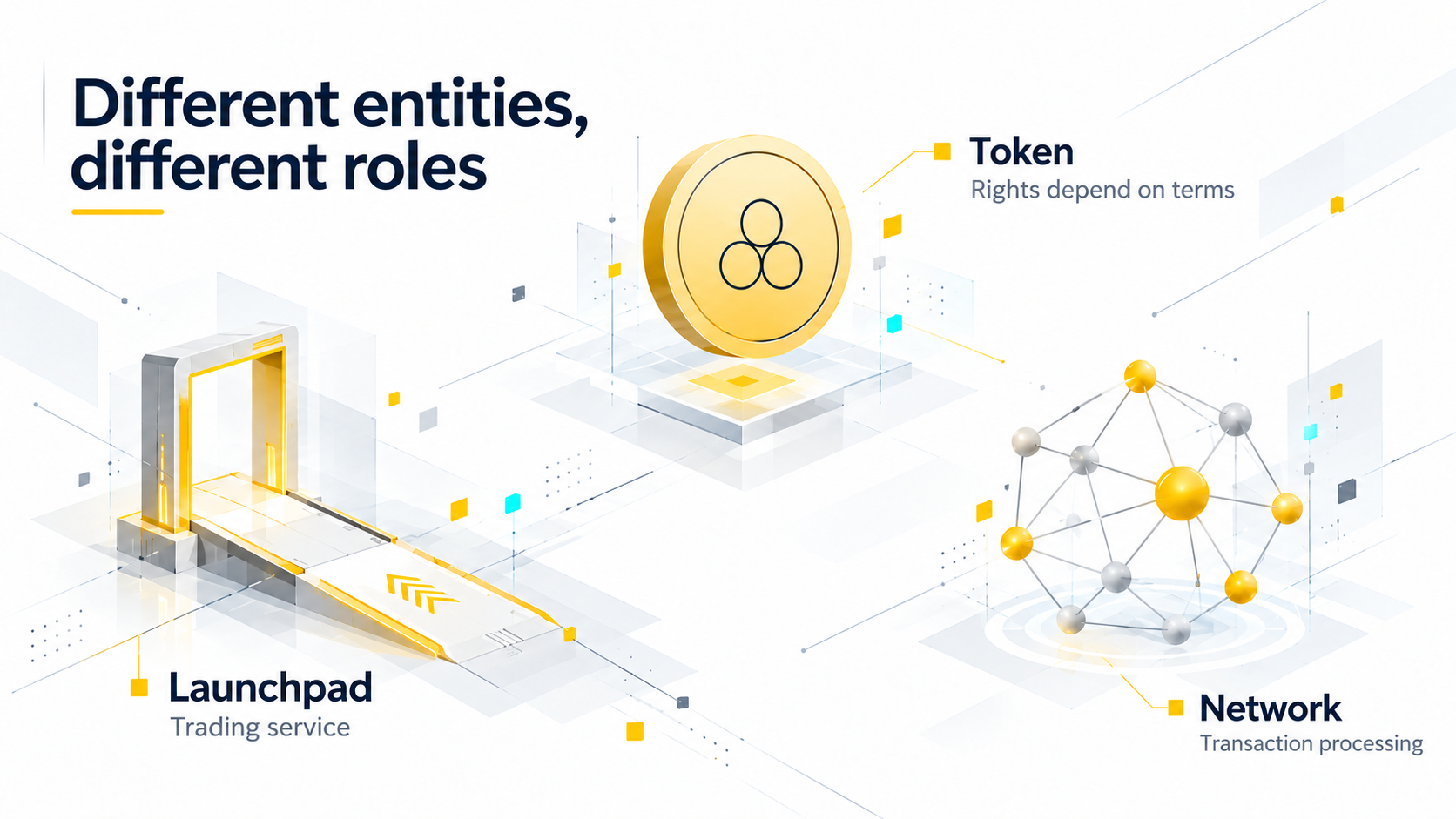
A launchpad provides a way to create and trade tokens. A network processes transactions. A token may have its own contractual or technical rights. These are three different objects, even when marketing uses the same ecosystem language for all of them.
To evaluate a launchpad story, first ask which activity the metric measures. Token issuance counts describe launches. Trading volume describes turnover. Fees describe what users pay. Net revenue describes what the relevant business or protocol retains after specified distributions or costs. None is automatically a measure of profit available to tokenholders.
A platform can have rising activity while a token has weak economic rights. Conversely, a token can rally on expectations before those rights exist. A responsible news article must not bridge that gap with an unsupported claim that tokenholders own the platform’s income.
Why the Fee Definition Changes the Headline
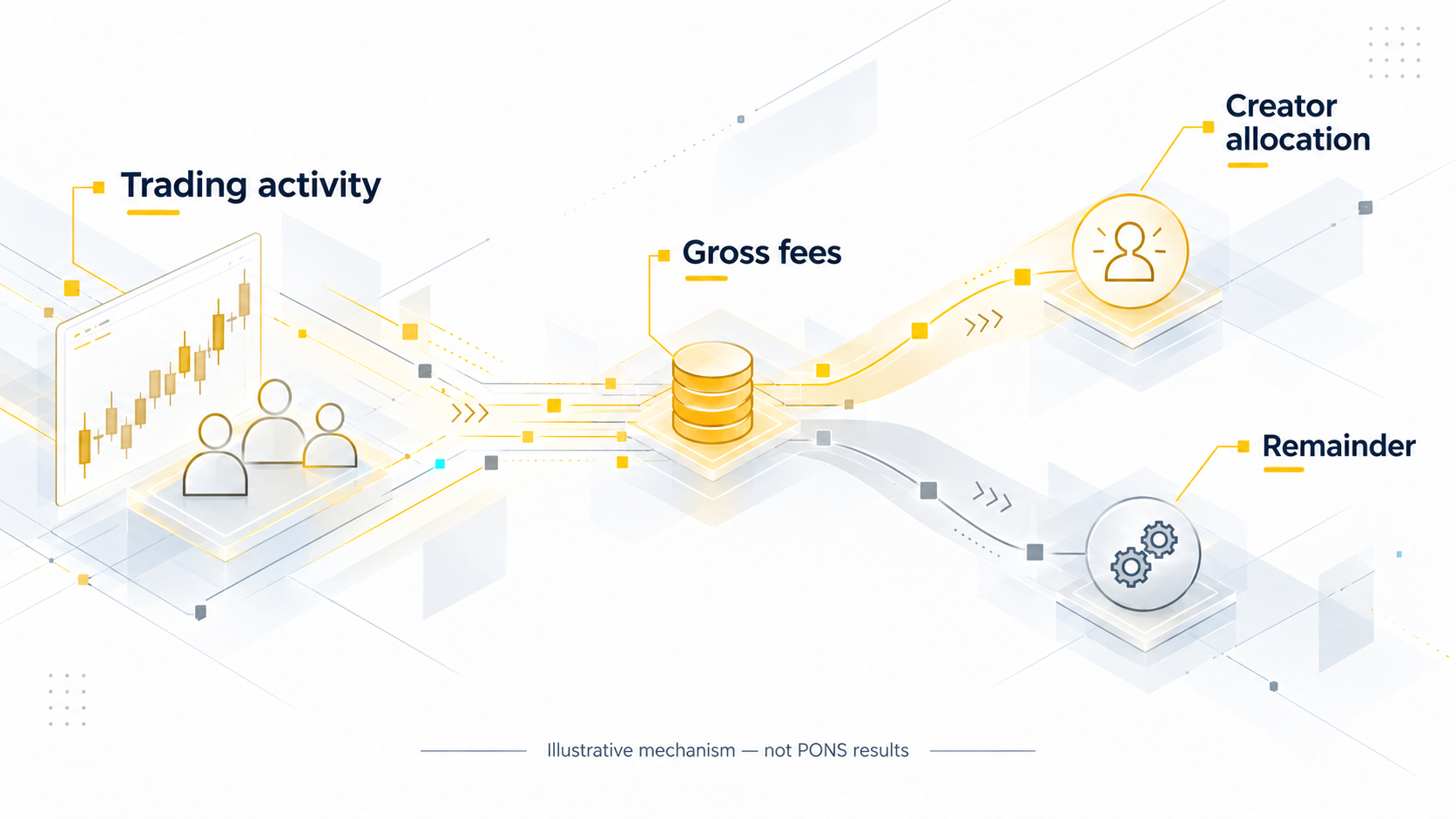
Consider an illustrative platform with $100 million of volume and a 1% trading charge. That produces $1 million in gross fees before any distribution. If 70% is allocated to creators, the remaining amount is $300,000 before other costs. This is a hypothetical calculation, not verified PONS financial reporting.
Comparing that $1 million figure with a competitor’s retained revenue would exaggerate the difference. A fair comparison uses the same period, currency, product boundary and definition on both sides. It should also say whether a dashboard includes creator allocations, liquidity-provider fees or only protocol income.
A single strong day does not establish a durable market-share shift. Several days can be newsworthy, but the conclusion still depends on consistent methodology and genuine user activity. The right wording is that a source reported a lead in a specified metric, not that one platform has permanently defeated another.
Subsidies and Activity Quality
Network gas charges and a launchpad’s trading fee are separate costs. Reducing one does not make the entire trade free. Users can still encounter trading charges, price impact, token-transfer conditions and losses on the asset itself.
Promotions can bring users to a product, but the key question is what they do after the incentive changes. Retention should be measured with a consistent definition of an active user, not inferred from raw address counts alone. One person can control multiple addresses, while a service can transact for many people through a limited number of accounts.
Repeated transactions can also inflate turnover without demonstrating equivalent new capital. This does not prove manipulation in either platform. It explains why organic activity requires evidence rather than confidence in a large headline number.
What Has Not Been Established
The supplied coverage is inconsistent about Uniswap’s involvement: one reference uses acquisition language while the PONS-specific story describes purchases of PONS tokens. Those are materially different actions. This draft makes no acquisition claim.
It also does not present a token contract address, current token price, fee-sharing right or subsidy-expiry date as independently confirmed. Those details need project documentation, an authenticated announcement or a reproducible dashboard before inclusion as facts. A missing confirmation should remain a gap, not be filled with a plausible-looking number.
For readers, the practical distinction is between interest in a news story and authentication of an asset. A familiar ticker alone does not establish identity. Similar names, copied branding and wrong-network tokens can lead to a completely different product.
Robinhood-Linked Exposure Is Not PONS Exposure
Tapbit HOOD-USDT futures is the user-specified related route. It is not a PONS contract, not ownership of Robinhood Chain and not a direct claim on launchpad fees. Robinhood-related share-price exposure may respond to many factors unrelated to PONS.
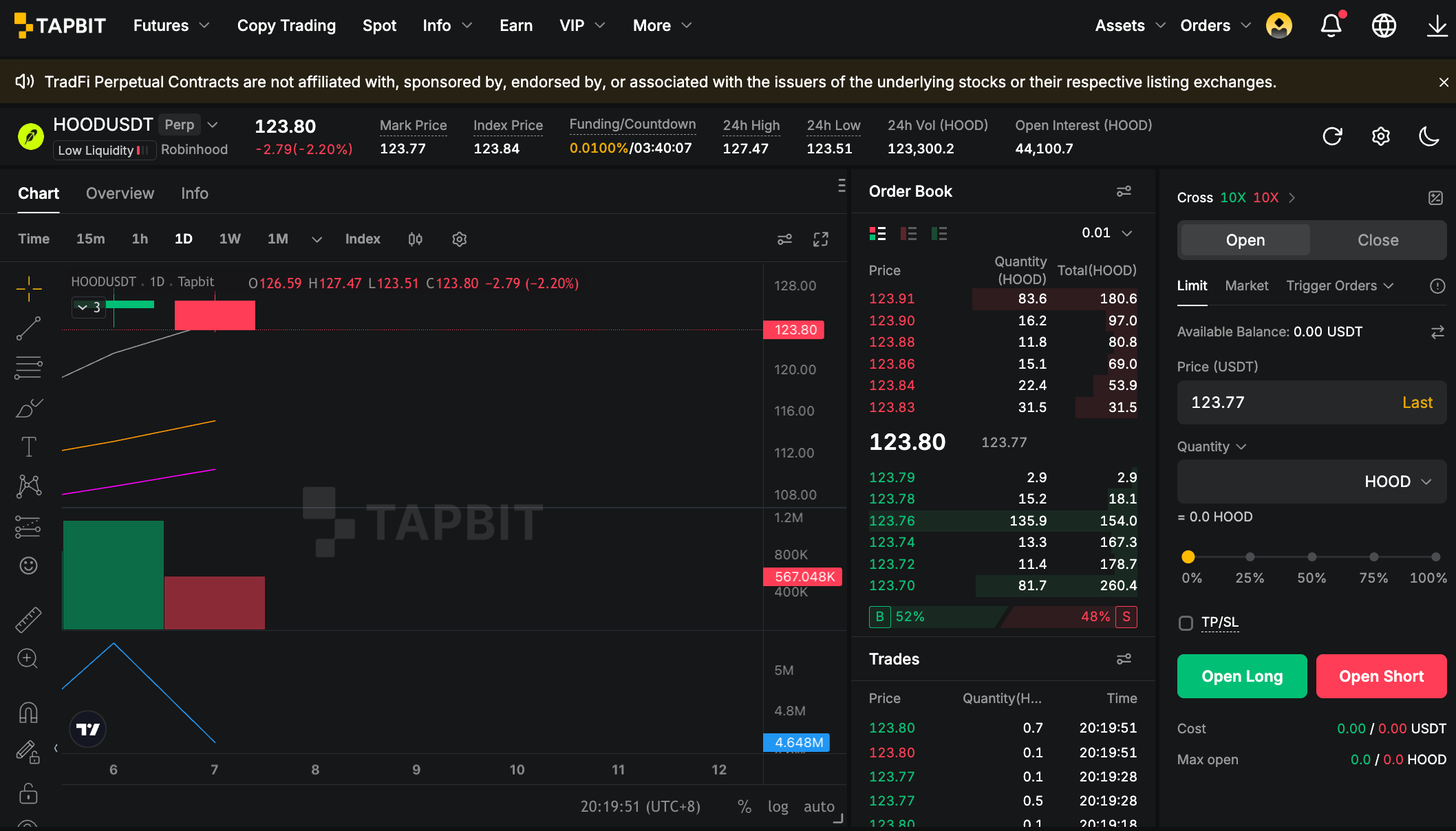
- Log in and check eligibility.
- Open the exact HOOD-USDT page and verify its reference, mark/index prices, costs and contract rules.
- Review direction, order size and margin without assuming the position tracks PONS.
- Set risk controls and monitor spread, gap and liquidation risk.
HOOD is a related company exposure, not an equivalent substitute for a token position. Do not use it as a claimed one-for-one hedge.
FAQ
Does higher launchpad revenue guarantee a higher token price? No. Token rights and market pricing must be evaluated separately.
Is Robinhood Chain the same thing as HOOD? No. The chain, the company and a stock-linked derivative are different.
Why omit a live PONS price? This article addresses a launchpad fee news comparison. A current-price article requires separate verified asset identification and market data.
Educational content only; not individualized investment advice. Derivatives involve substantial loss and liquidation risk.


