

The most common metric promoted in DePIN is hardware supply — GPUs, hotspots, storage drives, sensors, and connected devices — presented as proof of growth.
The less comfortable question is whether anyone is paying to use that hardware.
That question now defines the DePIN market. Several networks have built substantial infrastructure, and AI has created genuine demand for compute, storage and data. Yet much of the sector still relies on token rewards to keep hardware online.
DePIN's next phase will be determined by revenue, utilization and customer retention — not the number of devices on a dashboard.
What DePIN Actually Builds
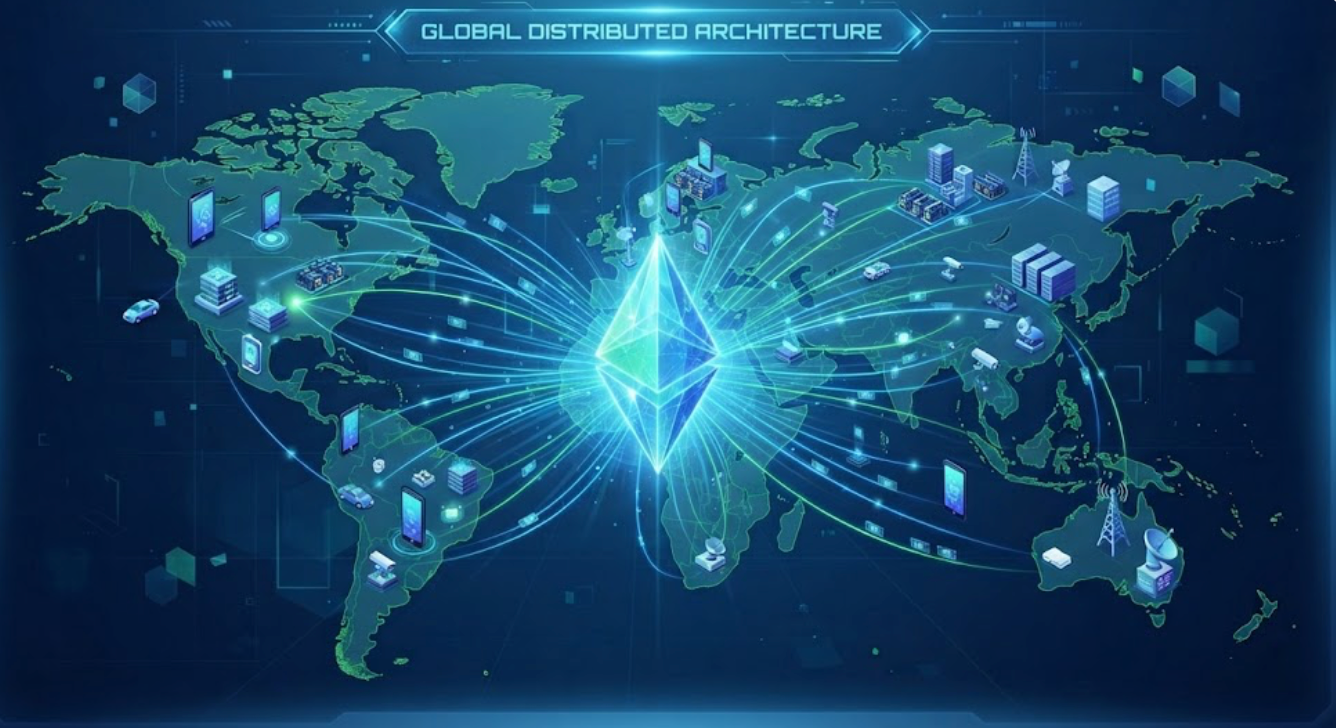
DePIN stands for decentralized physical infrastructure networks. These projects use blockchain-based payments and incentives to coordinate physical resources owned by independent participants.
The resources vary by network. They may include GPUs for AI workloads, hard drives for data storage, wireless hotspots, vehicle cameras, weather stations or mapping devices.
Blockchain does not provide the underlying service. It records activity, coordinates payments and distributes rewards. The useful work still comes from physical machines.
This structure allows a network to grow without one company buying every server or installing every device. Instead, participants contribute resources and receive compensation when the network verifies their work.
The model is attractive because it turns underused hardware into an open market. It is also difficult to sustain because suppliers often arrive before customers.
The Supply Side Grew Faster Than Demand
Early DePIN networks used token emissions to solve a cold-start problem. A wireless network has little value without coverage, but few customers will pay for coverage that does not exist. A storage network cannot attract large clients without available capacity, yet providers have little reason to install drives before demand appears.
Tokens allow projects to build supply in advance. Contributors accept rewards in the expectation that the network will eventually attract paying users.
That works during the expansion phase. It becomes a problem when rewards remain the main reason for participation.
If a project distributes more value through token emissions than it earns from customers, its infrastructure is being subsidized by token holders. Falling token prices can then reduce operator income, push hardware offline and weaken the service.
The critical transition is from token-funded supply to customer-funded usage.
Filecoin Is Rewriting Its Priorities Around Paid Storage
Filecoin offers one of the clearest examples of this transition.
The network spent its early years building enormous decentralized storage capacity. Its 2026 network strategy now shifts the emphasis from adding supply to generating paid, on-chain storage deals.
Filecoin wants more companies to use its infrastructure for persistent data, AI pipelines, blockchain records and verifiable archives. It also plans to direct incentives toward paid activity and improve storage-provider economics.
This is an important change in how progress is measured.
A file stored at no cost through a heavily subsidized deal demonstrates technical capacity, but not necessarily commercial demand. A customer that repeatedly pays to store and retrieve data provides stronger evidence that the service has value.
Filecoin’s challenge is no longer proving that decentralized storage can exist. It is making that storage easy enough, reliable enough and useful enough for customers to pay for it.
AI Gives Compute Networks a Real Market
Decentralized GPU projects have the strongest demand story in DePIN. AI developers need access to GPUs for model training, fine-tuning, inference and image generation. Centralized cloud providers may impose quotas, offer limited availability or charge prices that smaller teams cannot justify.
Networks such as Akash, Render, io.net and Aethir try to aggregate hardware from independent providers and sell it as cloud capacity.
The opportunity is credible, but raw GPU counts reveal little. A machine only produces economic value while it is running a paid workload.
Akash recently published a case study involving Astria, a generative-image company serving fashion and professional photography applications. Astria says it has run production workloads on Akash for more than a year, including model fine-tuning, inference and image upscaling.The case study is more meaningful than a partnership announcement because it describes sustained use.
It remains one customer example. The broader test is whether decentralized providers can repeat that result across many clients while meeting enterprise expectations for uptime, latency, privacy and support.
io.net Is Trying to Connect Rewards With Usage

io.net introduced an Incentive Dynamic Engine in 2026 to make its token economics more responsive to network demand.
The idea is straightforward: IO supply should not grow independently of the amount of compute being purchased. Rewards and token flows should reflect actual activity instead of following a fixed emissions schedule regardless of utilization.
That change signals a broader problem across DePIN. Static rewards can encourage operators to add hardware even when the network already has more capacity than customers need.
A responsive system may reduce unnecessary emissions, but its effectiveness will depend on transparent data. Researchers still need to see paid GPU hours, repeat customers, workload completion rates and revenue distributed to providers.
Project-reported contract values should not be treated as realized revenue until the services are delivered and payments can be verified.
Physical AI Is Expanding the DePIN Market
The next DePIN category may involve data collected for machines rather than infrastructure rented directly by people.
Vangrid raised $9 million to build a spatial-data network for robotics and autonomous systems. Contributors collect geospatial information, while the network aims to sell that data to companies developing Physical AI applications.The funding round included HashKey, Crypto.com Capital and Animoca Brands.
The opportunity comes with a difficult verification problem.
A network must determine whether submitted data is original, accurate, recent and collected from the claimed location. It also needs customers that require decentralized collection rather than existing commercial datasets.
Thousands of contributors can generate enormous quantities of information. That information only becomes an asset when a buyer can trust and use it.
Revenue Does Not Automatically Support a Token
Even when a DePIN project generates revenue, its token may not capture that value.
Customers might pay in dollars or stablecoins while providers receive newly issued tokens. The protocol may collect fees without burning tokens, distributing them to holders or requiring customers to acquire the native asset.
In that situation, the network can grow while token demand remains weak.
A stronger value-capture model connects commercial activity with the token through payments, staking, collateral, fee distribution or supply reduction. The mechanism must still be evaluated carefully. Buybacks and burns cannot compensate for weak demand if token issuance remains larger than revenue.
Investors should compare three figures:
-
Revenue paid by external customers
-
Rewards distributed to infrastructure providers
-
New token supply entering the market
When rewards consistently exceed customer revenue, the network is still relying on subsidies.
How to Tell Whether a DePIN Network Is Working
The right metric depends on the service. For decentralized compute, utilization, paid GPU hours and repeat workloads matter more than registered machines. Storage networks need paid data, retrieval activity and customer retention. Wireless projects should report traffic and Data Credit consumption. Mapping networks need data purchases, not only miles recorded.
Across every category, a few questions remain useful:
Who pays for the service? How often do they return? Can providers earn a reasonable return without excessive token rewards? Does the token participate in the resulting economic activity?
A project that cannot answer these questions may still be an interesting experiment. It has not yet demonstrated a sustainable infrastructure business.
DePIN’s Next Cycle Will Be About Utilization
DePIN no longer lacks hardware or market attention. It has GPU clusters, wireless coverage, storage capacity and a growing collection of physical-data networks.
The missing piece is consistent demand.
AI may help close that gap because compute and storage requirements continue to grow. It will not rescue every project. Customers will choose providers based on price, reliability, performance and ease of integration, not because their infrastructure uses a token.
The DePIN projects worth following are those moving from rewards to revenue without losing their suppliers. That transition will be slower and less exciting than a token launch, but it is where lasting value is more likely to emerge.
Tapbit readers can follow the tokens, infrastructure trends and market data shaping this sector through Tapbit. Account access is available from the login page, while new users can begin with registration.
Frequently Asked Questions
What is DePIN?
DePIN stands for decentralized physical infrastructure networks. It uses blockchain systems and token incentives to coordinate independently owned hardware such as GPUs, storage drives, wireless hotspots, sensors and mapping devices.
Why is DePIN connected to artificial intelligence?
AI requires large amounts of computing power, storage and bandwidth. DePIN networks attempt to aggregate unused or independently operated infrastructure and make it available to AI developers.
Which DePIN sectors have the clearest demand?
Decentralized compute and storage currently have the most direct connection to AI demand. Wireless, mapping and spatial-data networks also have potential, but commercial adoption varies widely by project.


