
Web3 gaming has gone through several cycles.
The first major wave was driven by Play-to-Earn. Many users entered blockchain games because token rewards were attractive. But that model also exposed a weakness: if the game is not fun, and if token rewards are the only reason users participate, the economy can become fragile.
Pixels, the Web3 farming and exploration game behind the PIXEL token, reflects a different direction.
Instead of positioning crypto as the entire product, Pixels places blockchain ownership, rewards and staking inside a broader game experience. The project’s official Lite Paper describes Pixels as an open-ended world of farming and exploration where players gather resources, advance skills, build relationships and progress through quests, while blockchain ownership is connected to player progress and achievements.
That makes PIXEL a useful case study for the next phase of GameFi. The question is no longer simply whether a game can issue a token. The better question is whether the token can support a real in-game economy.
What Is Pixels?
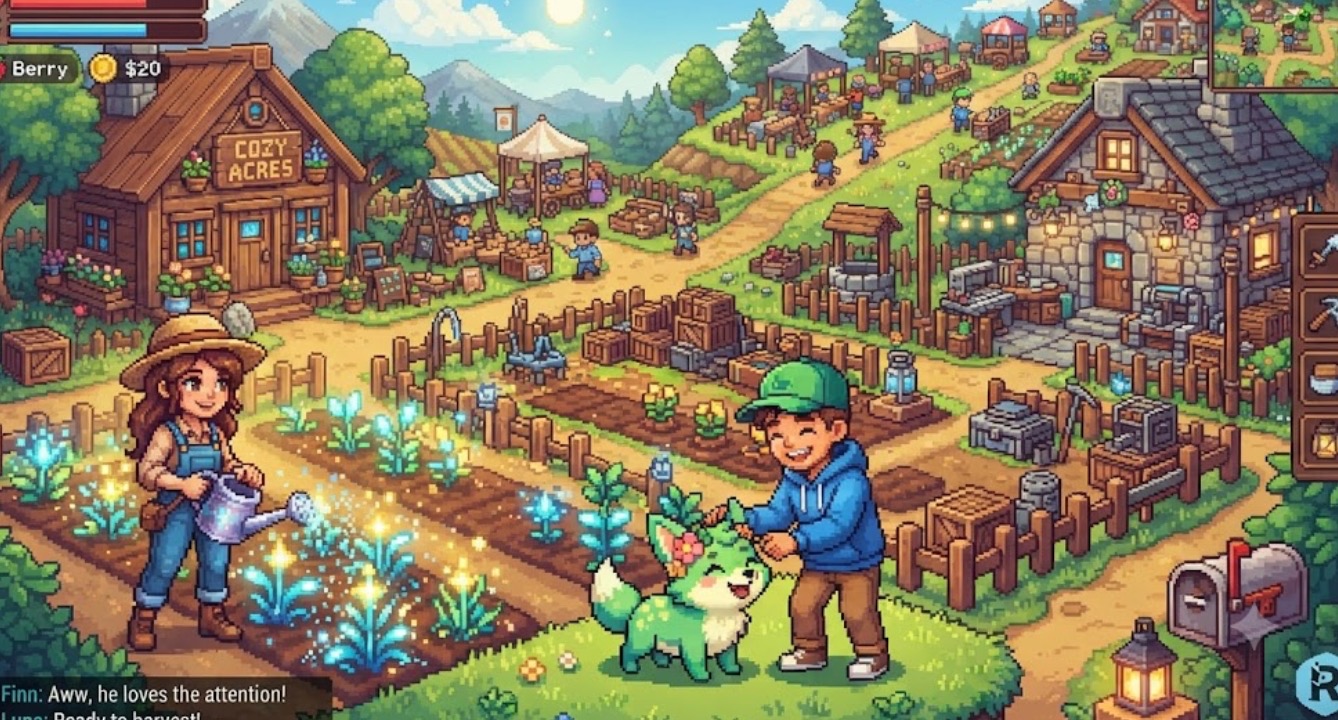
Pixels is a Web3 farming and exploration game where users can manage resources, develop skills, interact with other players and participate in a blockchain-backed world.
The official Pixels website describes the game around several core ideas: playing with friends, managing crops, raising animals, earning rewards, building a world and owning what users create. It also highlights $PIXEL staking as part of the project’s economy.
This matters because Pixels is not only presenting itself as a speculative token project. It is trying to build a game loop where users have reasons to return, interact and participate.
That is the direction many GameFi projects are trying to move toward: from reward farming to player retention.
PIXEL Token and the Game Economy
PIXEL is the token connected to the Pixels ecosystem.
In GameFi, a token can serve several possible roles. It may support rewards, staking, access, governance, upgrades, marketplace activity or other in-game functions. The challenge is making sure those functions are tied to actual user demand rather than only speculative trading.
Pixels’ official site says staking $PIXEL can unlock gameplay perks, rewards and ways to shape the Pixels universe.
This is important because the strongest GameFi token models usually depend on repeated in-game utility. If users only buy a token because they expect the price to rise, the model becomes vulnerable. If users need the token because they are actively participating in the game economy, the project has a stronger foundation.
PIXEL’s long-term relevance therefore depends on more than price action. It depends on whether Pixels can keep players engaged and make the token useful inside the game.
Why Ronin Matters for Pixels
Pixels is also closely connected to Ronin, a blockchain ecosystem known for Web3 gaming.
DappRadar lists Pixels as a Games category project and shows that it supports Ethereum and Ronin. DappRadar describes Pixels as an interoperable Web3 farming game where users can make a home, master skills, play with friends, build communities and explore a farming empire.
Ronin matters because Web3 games need infrastructure that feels smooth for users. If transactions are expensive, slow or confusing, casual players may leave before they understand the game. A gaming-focused blockchain can help reduce friction and make blockchain features feel more natural inside the product.
For Pixels, this infrastructure layer supports the broader goal: make Web3 ownership part of the gaming experience instead of forcing users to think like DeFi traders from the beginning.
From Play-to-Earn to Digital Economies
The GameFi market has learned a difficult lesson.
Token rewards can attract users quickly, but rewards alone do not create a sustainable game. If players join only to extract value, token inflation and weak retention can damage the economy. Many early Play-to-Earn projects struggled because the financial incentive became stronger than the gameplay itself.
Pixels points toward a more mature model. The project focuses on farming, exploration, collaboration, ownership and community. These are not only financial mechanics. They are game mechanics. If players care about their land, resources, progress, social relationships and digital identity, the economy has more depth.
This is why the PIXEL token should be analyzed as part of an ecosystem, not only as a chart.
A better GameFi model needs three things:
-
real gameplay,
-
a reason for players to stay,
-
a token economy that supports activity instead of replacing it.
Current Market Snapshot
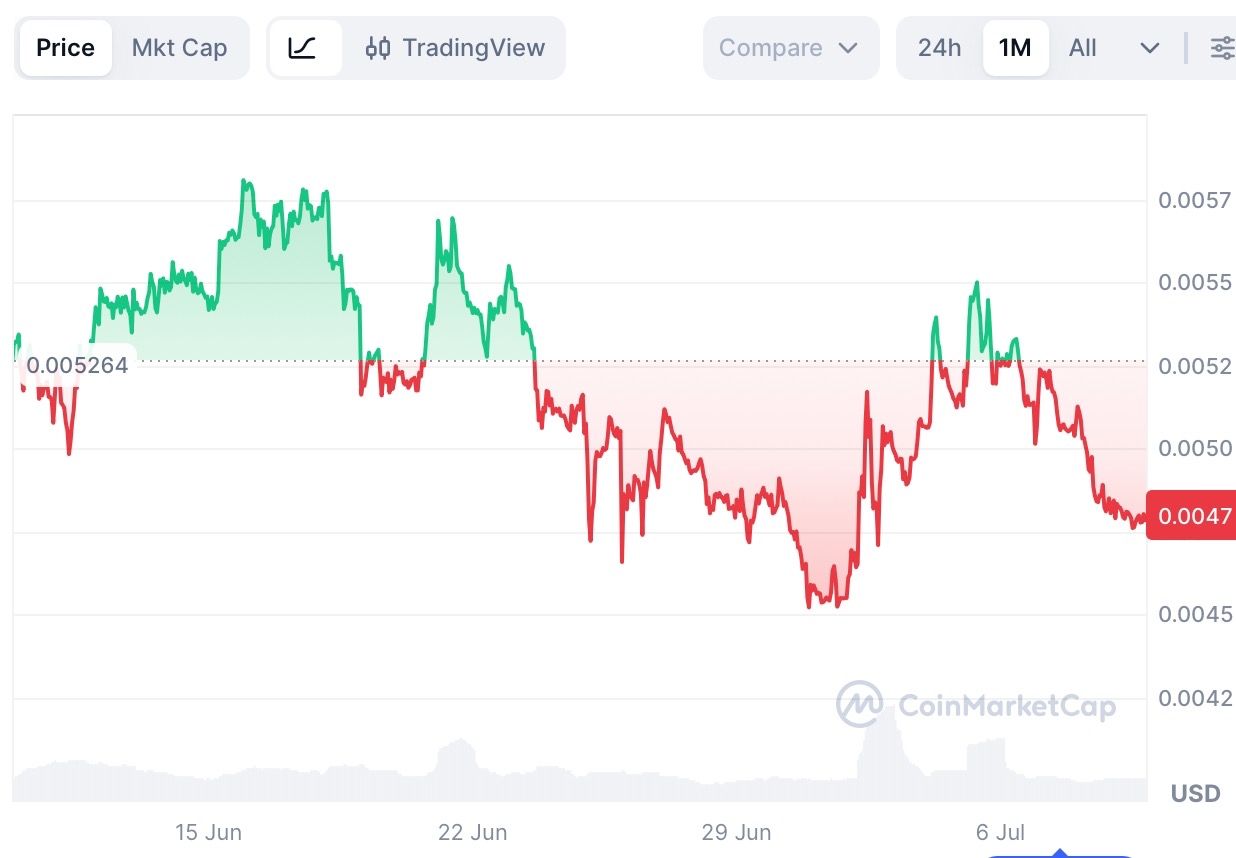
PIXEL is still a relatively small crypto asset compared with major gaming and Layer 1 tokens.
CoinGecko recently listed PIXEL around $0.004775, with a market cap of about $3.68 million, 24-hour volume of about $6.70 million, circulating supply of about 771 million PIXEL and maximum supply of 5 billion PIXEL. CoinGecko also noted that PIXEL had no exchange-integrated trading activity recorded in the previous 30 days on its page, which is a reminder that liquidity data should be checked carefully across multiple sources.
DappRadar showed different market figures for PIXEL, including a market cap of about $6.40 million and 24-hour volume of about $7.54 million on its Pixels page.
This difference does not necessarily mean one source is wrong. Crypto data platforms can use different feeds, update times, exchange coverage and supply assumptions. For traders, the lesson is clear: always compare multiple data sources before making decisions.
Key Risks for PIXEL and GameFi Tokens
PIXEL also carries risks that traders should not ignore.
The first risk is liquidity. Smaller tokens can move quickly in both directions, especially when trading depth is limited.
The second risk is player retention. A GameFi token needs an active player base. If users stop playing, the in-game economy may weaken.
The third risk is tokenomics. Rewards, emissions, staking incentives and unlocks can all affect supply pressure.
The fourth risk is bot activity. Web3 games often need to manage farmers, bots and users who interact only for rewards.
The fifth risk is narrative fatigue. Gaming tokens can attract strong attention during hype cycles, but interest may fade if gameplay updates or user growth slow down.
The sixth risk is data uncertainty. Different platforms may report different market data, so traders should not rely on one dashboard alone.
Tapbit View
PIXEL token shows how Web3 gaming is evolving.
The strongest GameFi projects cannot rely only on token rewards. They need gameplay, community, ownership, sustainable incentives and real reasons for players to return.
Pixels is interesting because it tries to place blockchain features inside a familiar gaming structure: farming, exploration, social interaction and world-building. That makes it a useful example of how GameFi may move beyond the first Play-to-Earn cycle.
For Tapbit users, the broader lesson is simple. Do not judge a gaming token only by its price. Look at the game behind it. Look at player activity, economy design, staking utility, update frequency, liquidity and whether the token has a reason to exist inside the product.
A token can attract attention quickly. A game economy takes much longer to prove.
Users can visit Tapbit to explore supported crypto services. Existing users can access their accounts through Tapbit Login, while new users can start through Tapbit Register.
Frequently Asked Questions (FAQ)
What is PIXEL token?
PIXEL is the token connected to the Pixels Web3 gaming ecosystem. It is used within the project’s broader game economy, including staking and reward-related features.
What is Pixels?
Pixels is a Web3 farming and exploration game where players can gather resources, develop skills, interact with others and build in a blockchain-backed world.
Is Pixels on Ronin?
Yes. DappRadar lists Pixels as supporting Ethereum and Ronin, and describes it as an interoperable Web3 farming game.


