
The AI trade started with GPUs, but it has moved much further down the semiconductor supply chain.
Investors are no longer watching only Nvidia, AMD or memory stocks. They are also watching the companies that provide the equipment needed to manufacture advanced chips. That is where Applied Materials, known by its ticker AMAT, becomes important.
Applied Materials supplies key semiconductor manufacturing equipment and services used in chip production. As AI infrastructure demand grows, chipmakers need more capacity for leading-edge logic, memory, HBM, advanced packaging and other complex manufacturing processes.
That has helped AMAT stock become one of the market’s major AI infrastructure trades.
But after a sharp rally, the question is no longer simply whether demand is strong. The better question is whether the market has already priced in too much of that demand.
Why Applied Materials Matters in the AI Supply Chain
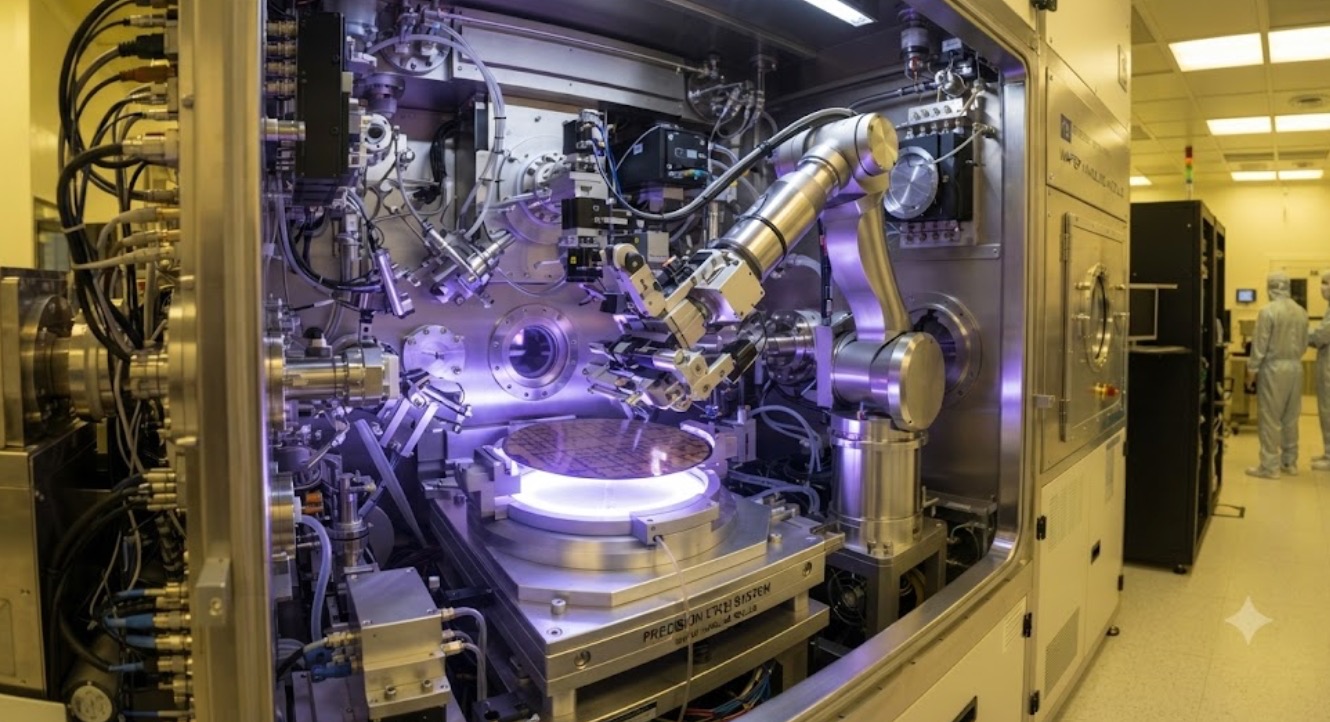
Behind every GPU, AI accelerator, high-performance memory stack and data center chip is a manufacturing chain that depends on specialized equipment. Wafer fabrication equipment, often called WFE, includes the tools used by semiconductor manufacturers to process wafers into chips.
Applied Materials plays an important role in that ecosystem. Its tools support areas such as deposition, etch, materials engineering, inspection and advanced packaging. These processes become more important as chips become smaller, denser and more complex.
This is why Applied Materials is not just a traditional semiconductor equipment company in the current market cycle. It has become part of the AI infrastructure story.
As AI models require more computing power, chipmakers must invest more in manufacturing capacity and process innovation. That creates demand for companies that supply the machines and services behind the chip industry.
Strong Results Support the AMAT Stock Story
Applied Materials’ latest results showed why investors have been paying attention.
The Wall Street Journal reported that Applied Materials raised its outlook as semiconductor equipment demand grew, with the company expecting stronger sales for its semiconductor equipment business than previously forecast. The report also noted that the company’s latest quarter delivered higher profit and sales, both above Wall Street expectations.
The same report said Applied Materials expects its semiconductor equipment business to grow more than 30% this calendar year, reflecting strong demand tied to artificial intelligence computing.
That matters for AMAT stock because the market is looking for evidence that AI infrastructure demand is not limited to chip designers. Applied Materials provides one of the clearest examples of how AI spending can flow into the equipment layer.
AI Is Expanding the WFE Cycle
The AI infrastructure buildout has changed how investors think about semiconductor equipment.
In past cycles, WFE demand often rose and fell with PC, smartphone or memory cycles. Today, AI data centers are adding a new source of demand. Hyperscalers need more AI accelerators. Chipmakers need more advanced nodes. Memory producers need more DRAM and HBM capacity. Advanced packaging is becoming more important because AI chips increasingly rely on complex system-level integration.
Barron’s reported that Barclays remains positive on chip equipment makers, arguing that recent chip-stock weakness is not necessarily a sign of trouble for the companies that manufacture equipment for chipmakers.
This is the key idea behind the AMAT stock thesis: AI does not only increase demand for chips. It also increases demand for the tools needed to make those chips.
Advanced Packaging Is Becoming More Important
One of the most important themes for Applied Materials is advanced packaging.
As AI chips become more complex, manufacturers need better ways to connect compute, memory and other components. Advanced packaging helps improve performance, reduce latency and support chiplet-based architectures.
This matters because AI workloads are not only limited by raw compute. They are also limited by memory bandwidth, power efficiency and system design. Technologies such as HBM, chiplets and 3D integration all increase the importance of equipment companies that can support advanced manufacturing steps.
For Applied Materials, this creates an opportunity beyond traditional wafer processing. If advanced packaging demand continues to grow, it can become a meaningful part of the company’s AI-related growth story.
Why AMAT Stock Still Has Valuation Risk
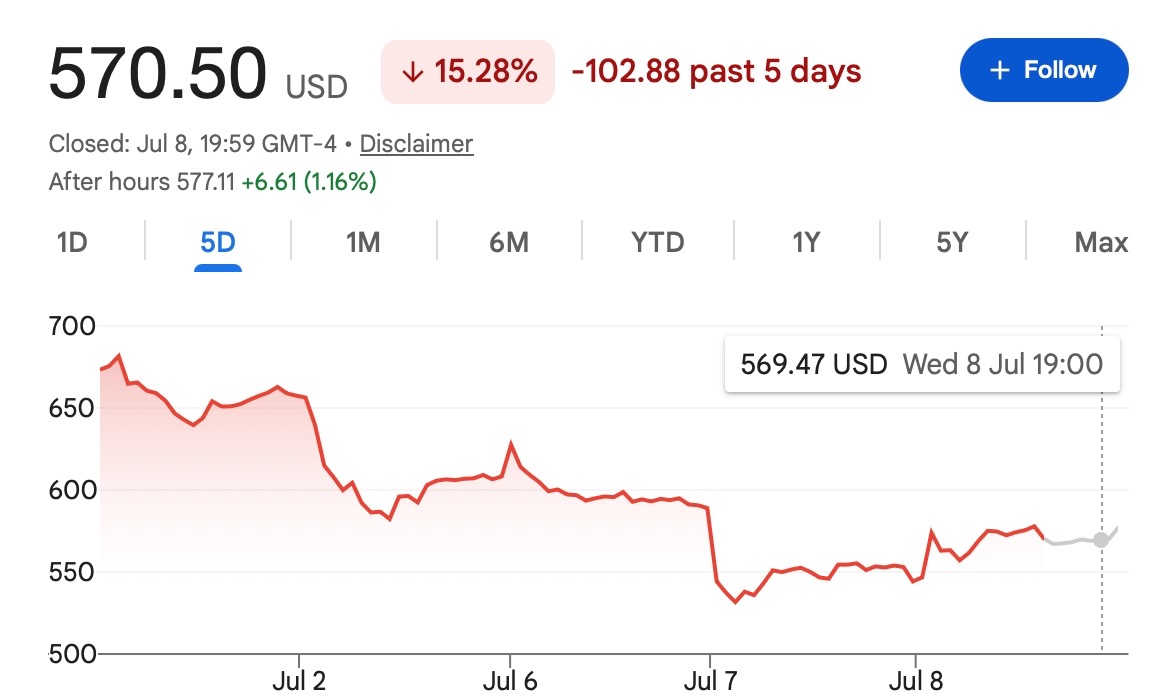
Strong demand does not eliminate risk. AMAT stock has already rallied sharply, which means expectations are high. When a stock becomes closely tied to a powerful theme like AI, the market often prices in future growth before all of that growth is confirmed.
That can create vulnerability. If future orders slow, if chipmakers delay capacity expansion, if memory investment cools, or if AI capital expenditure expectations moderate, AMAT stock could face pressure even if Applied Materials remains a strong company.
Recent market action has already shown that AI-related semiconductor names can correct quickly. Axios reported that AI and semiconductor stocks stumbled at the start of Q3, with the SOX index dropping 6.3% and Applied Materials falling about 10% during a broader chip-stock selloff.
That move does not mean the AI equipment story is broken. It shows that crowded trades can unwind sharply when investors begin taking profits or reassessing valuations.
The Bigger Market Lesson
Applied Materials shows how AI is moving from a single-stock theme to a full supply-chain theme.
At first, investors focused on the most visible winners: GPU makers and AI software companies. Then the trade expanded to memory, networking, data centers and power infrastructure. Now, semiconductor equipment is becoming another key part of the story.
This is similar to what happens in crypto markets.
A major theme often starts with one clear winner, then expands into related infrastructure. In crypto, a Layer 1 rally may later benefit wallets, bridges, DeFi protocols or data platforms. In AI-linked equities, GPU demand can later support memory stocks, WFE suppliers, packaging companies and power equipment firms.
But the same rule applies across markets: the wider a theme spreads, the more important valuation discipline becomes.
Tapbit TradFi Special Event
For users interested in traditional finance market opportunities, Tapbit is running a TradFi Special event from July 6 to July 13.
Users can visit the official campaign page here: Tapbit TradFi Special Event
The AMAT stock case is a useful example of why TradFi themes matter for modern traders. AI infrastructure, semiconductor equipment, memory, advanced packaging and data center investment can all influence broader risk appetite across both traditional markets and digital assets.
Users should review the event details carefully and understand product risks before participating.
Tapbit View
AMAT stock shows that the AI trade has become much broader than GPUs.
Applied Materials is important because AI infrastructure depends on real manufacturing capacity. More advanced chips require more advanced tools, and that places semiconductor equipment companies at the center of the supply chain.
However, traders should avoid assuming that strong demand automatically removes risk.
When a stock has already rallied sharply, the market may demand continued upside surprises. Good earnings may not be enough if expectations are too high. A strong long-term theme can still face short-term corrections when investors reassess valuation or sector momentum.
For Tapbit users, the lesson is clear: follow the supply chain, but also follow expectations.
AI equipment demand may remain strong, but AMAT stock will still depend on guidance, order momentum, customer spending and whether the market believes future growth has already been fully priced in.
Users can visit Tapbit to explore supported crypto services. Existing users can access their accounts through Tapbit Login, while new users can start through Tapbit Register.
Frequently Asked Questions (FAQ)
What is AMAT stock?
AMAT stock refers to Applied Materials, a major semiconductor equipment company that supplies tools and services used in chip manufacturing.
Why is Applied Materials linked to AI?
Applied Materials is linked to AI because AI chips require advanced manufacturing equipment, memory capacity, HBM, leading-edge logic and advanced packaging.
What is WFE?
WFE stands for wafer fabrication equipment. It refers to the tools used by semiconductor manufacturers to process wafers into finished chips.


