
Prediction markets have attracted attention in sports, politics, macro events and crypto-related narratives. Instead of only asking what has already happened, prediction markets ask a different question: what does the crowd believe is likely to happen next?
The 2026 Formula 1 drivers’ championship is a useful example. After the British Grand Prix, Kimi Antonelli remained the official championship leader with 179 points, followed by George Russell with 154 points, Lewis Hamilton with 147 points, Charles Leclerc with 108 points and Lando Norris with 97 points.
At first glance, Antonelli looks clearly ahead. But prediction markets tell a more nuanced story.
On Polymarket’s “F1 Drivers’ Champion” market, Antonelli was priced around 57%, with Russell around 20%. Polymarket explains that a share priced at 57 cents implies that the market collectively assigns a 57% chance to that outcome, and that prices move as traders react to new information.
That gap between the points table and the market probability is the key lesson. Antonelli is leading, but the market is not treating the title as settled.
Why F1 Is a Good Case Study for Prediction Markets
Formula 1 is full of variables.
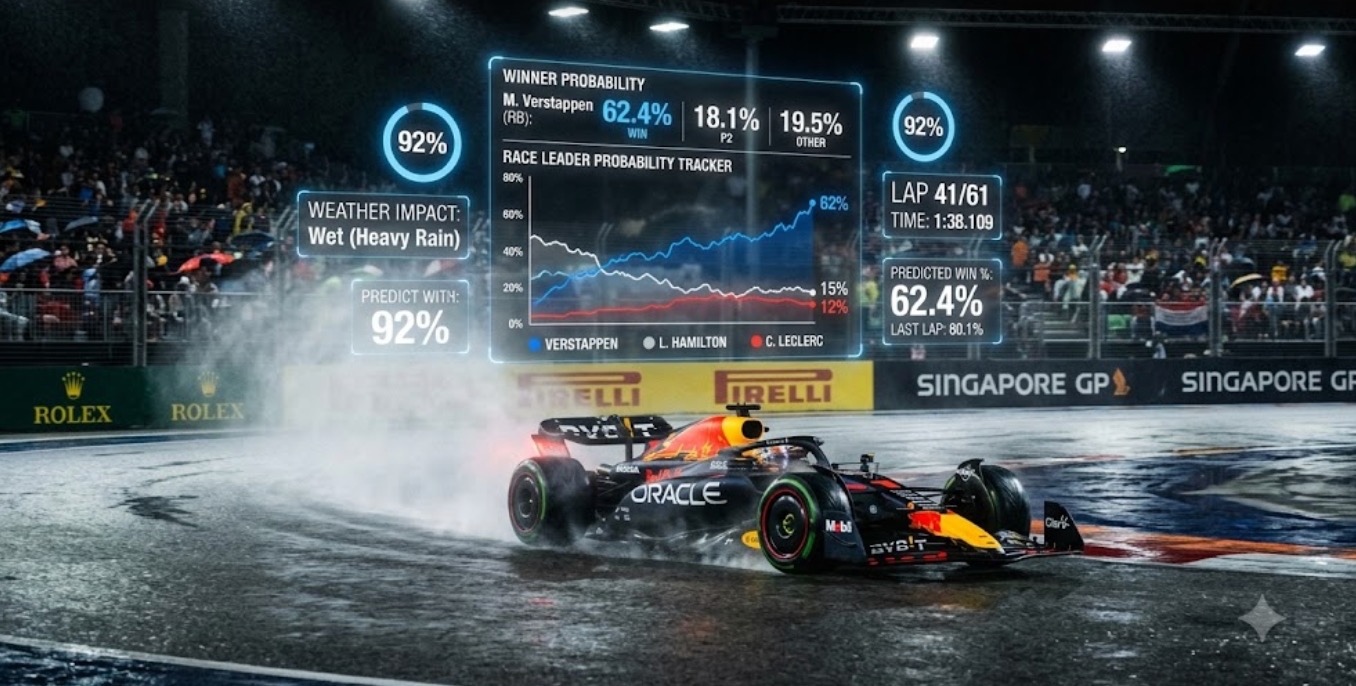
A driver can lead the championship and still face risk from mechanical issues, penalties, weather, strategy mistakes, car upgrades, teammate competition and race incidents. One race weekend can change the title picture quickly.
The British Grand Prix showed this clearly. Charles Leclerc won at Silverstone, while Antonelli suffered a front-left wheel shield problem, lost time and eventually finished outside the points. The Guardian’s live report noted that Antonelli remained the championship leader with 179 points, but the race cut into his advantage and showed how quickly momentum can shift.
This is exactly the kind of uncertainty prediction markets are designed to price. A traditional standings table tells users who is ahead today. A prediction market tries to estimate who is most likely to win when the season ends.
Those are different questions.
How Prediction Market Prices Work
Prediction markets usually convert uncertain outcomes into tradable shares.
In a simple Yes/No market, a share can be priced between 0 and 100 cents. If the outcome happens, the winning share pays out at 1 dollar. If it does not happen, the share becomes worthless. This is why a 57-cent price is often read as an implied probability of about 57%. Polymarket describes its F1 Drivers’ Champion market this way, with prices reflecting real-time crowd-sourced probabilities.
This does not mean the market is always correct. It means the price reflects what participants are willing to pay based on the information they have, the risks they see and the liquidity available.
That is why prediction markets can change quickly. If Antonelli wins the next race, his implied probability may rise. If Russell closes the gap, Hamilton wins again, Ferrari improves, or Mercedes faces reliability issues, the market may reprice the title race.
Prediction markets are therefore not static forecasts. They are live sentiment indicators.
What Traders Can Learn From the F1 Market
The first lesson is that leadership is not a certainty.
Antonelli leads the F1 standings, but the market still gives meaningful probability to other drivers. PredictMarketCap’s tracker showed the F1 Drivers’ Champion market at 57% for Antonelli, 20% for Russell, 13% for Hamilton, 3% for Leclerc and 2% for Verstappen as of July 7, 2026. It also listed more than $183 million in volume and roughly $14.7 million in liquidity for the market.
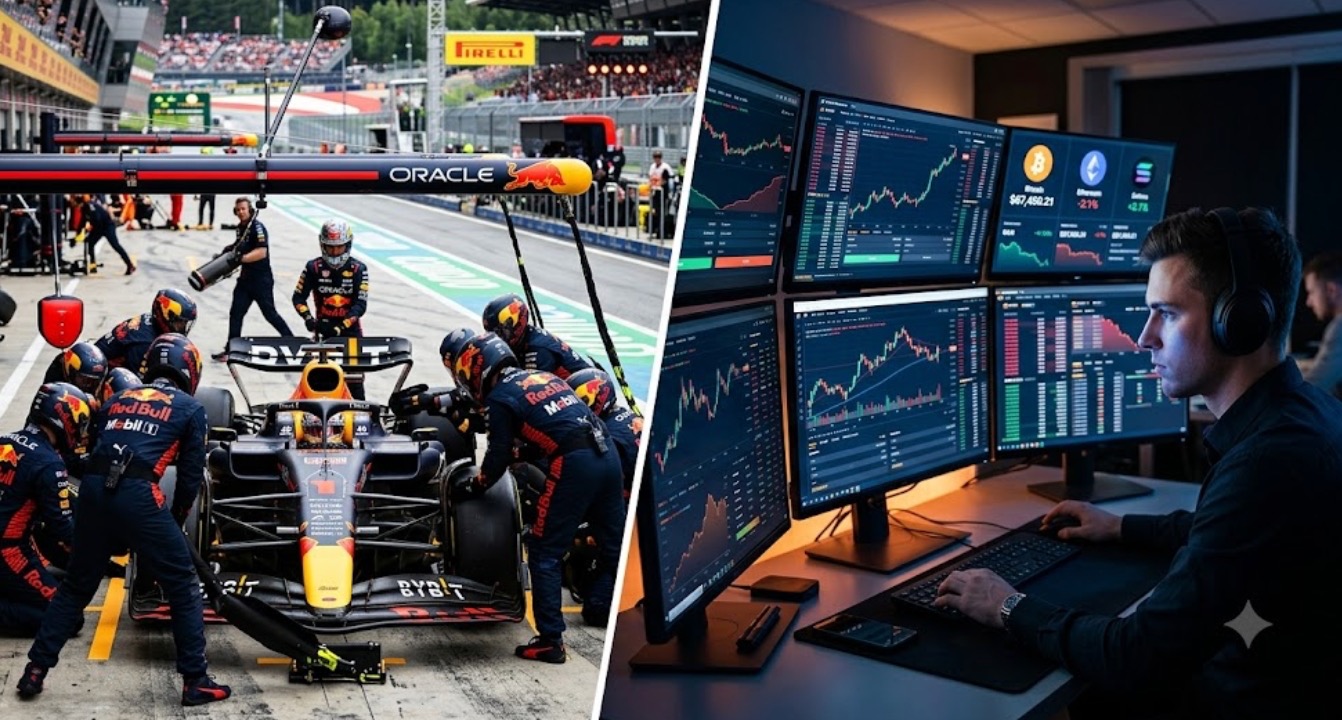
This is similar to crypto. A token may lead a sector, dominate social media or outperform for several weeks, but that does not make the future certain. Markets constantly price the possibility of reversal, competition, regulation, unlocks, liquidity shocks and narrative fatigue.
The second lesson is that new information matters more than old assumptions.
Before Silverstone, Antonelli looked strong. After his mechanical issue and Leclerc’s victory, traders had to reconsider reliability, Ferrari’s momentum and the remaining calendar. This is similar to how crypto markets react to ETF news, exchange listings, protocol upgrades, security incidents or macro data.
The third lesson is that price is a probability signal, not a guarantee.
A 57% market probability does not mean an outcome will happen. It means the market currently leans that way. The remaining 43% still matters.
Crypto traders often make this mistake too. They may treat a strong chart or popular narrative as certainty. But markets are usually pricing probabilities, not promises.
Why This Matters for Crypto Markets
Crypto is one of the most sentiment-driven markets in the world. Prices often react to future expectations before fundamentals are fully visible. A token can move because traders expect a listing, a partnership, a token burn, an airdrop, a network upgrade or a regulatory decision. In many cases, the market moves before the event happens.
Prediction markets make this process more explicit.
They show the probability that traders assign to a future event. Crypto spot and derivatives markets do something similar, but less directly. When a token rallies ahead of a major event, the market is effectively saying that traders expect the event to matter. When the token sells off after the news, it may mean the expectation was already priced in.
This is why prediction market thinking can help crypto traders..
The Risk of Reading Prediction Markets Too Simply
Prediction markets can be helpful, but they are not perfect.
Liquidity matters. A market with deeper liquidity may produce more reliable signals than a thin market. Spread matters too, because the gap between buy and sell prices can affect execution. Market rules also matter, especially when event resolution depends on official sources or specific settlement conditions.
Users should also remember that prediction markets can be affected by crowd behavior. Popular outcomes may become expensive when many traders pile into the same story. Underdogs may be underpriced or overpriced depending on sentiment, media attention and available liquidity.
This is why prediction markets should be viewed as one tool, not the final answer.
For crypto traders, the same rule applies. A price chart, social trend, funding rate or prediction market signal should not be used alone. Better analysis usually combines several inputs.
Tapbit View
The 2026 F1 drivers’ championship shows how markets process uncertainty.
Antonelli leads the standings, but prediction market pricing still reflects meaningful doubt. Russell, Hamilton and other drivers remain part of the market’s probability map. A mechanical issue, race result or strategy change can quickly shift expectations.
Crypto markets work in a similar way. Prices are not only reactions to what already happened. They are also live estimates of what traders think may happen next. That is why market sentiment can move before official announcements, and why prices can reverse even after good news.
For Tapbit users, the key lesson is not to copy prediction market prices directly. The lesson is to understand how markets think.
Strong narratives can move prices, but they do not remove uncertainty. Leading assets can remain vulnerable. Popular trades can become crowded. New information can change probabilities quickly.
In fast-moving markets, the best traders do not only ask, “What is happening now?” They also ask, “What does the market already believe, and what could change that belief?”
Users can visit Tapbit to explore supported crypto markets and educational resources. Existing users can log in, while new users can register here
Frequently Asked Questions (FAQ)
What is a prediction market?
A prediction market allows users to trade shares based on whether a future event will happen. Prices often reflect the market’s implied probability of an outcome.
Why is F1 useful for understanding prediction markets?
F1 has many changing variables, including race results, mechanical reliability, penalties, weather and team strategy. This makes it a good example of how markets update probabilities in real time.
What does a 57% probability mean?
A 57% probability means the market currently assigns about a 57% chance to that outcome. It does not mean the outcome is guaranteed.


