
A seed phrase doesn't look dangerous. It's just a few ordinary words written down when you set up a wallet. No account number, no private key, no indication that those words might be worth thousands or millions.
But for a self-custody wallet, that recovery phrase is arguably the most sensitive information you'll ever hold.
Anyone who gets hold of it can restore your wallet on another device and walk away with everything — no phone, hardware wallet, or PIN required.
That's why the golden rule of crypto security hasn't changed: Never share your seed phrase.
The problem is, the ways attackers go after it have changed. In 2026, it's not just phishing emails. There are fake apps, scams tailored to individuals after data leaks, fraudulent recovery services, and even incidents where the seed generation itself was flawed.
Memorizing the rule isn't enough. Understanding what that seed phrase actually unlocks — that's what keeps you from becoming the next headline.
What Is a Seed Phrase?
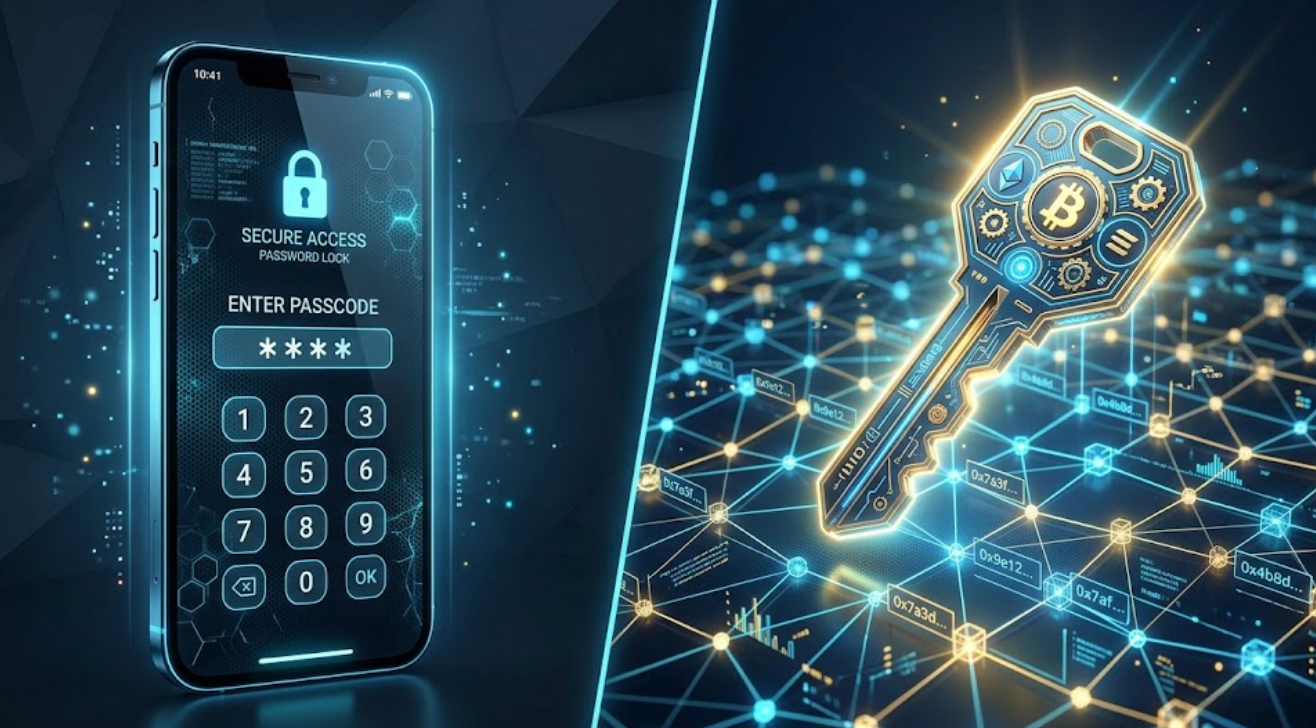
A seed phrase, also called a recovery phrase, wallet backup or mnemonic phrase, is a sequence of words used to reconstruct the cryptographic keys associated with a self-custody wallet.
Depending on the wallet, it commonly contains 12 or 24 words. The crypto itself is not stored inside those words. Assets remain recorded on their respective blockchains.
What the seed phrase provides is a way to recreate the keys that give a user control over those assets.
This distinction becomes important when a phone is lost or a hardware wallet stops working. The physical device can often be replaced. If the owner still has the correct recovery phrase, the wallet can usually be restored on a compatible device.
That makes a seed phrase extremely useful. It also makes it extremely dangerous in the wrong hands.
A Seed Phrase Is Not the Same as a Password
One of the most common wallet-security mistakes is treating a recovery phrase like another login password.
They serve very different purposes. A wallet password or PIN generally protects access to a particular device or local wallet application. An attacker who learns the password may still need access to that device. A seed phrase is portable.
Someone who obtains it may be able to import the wallet elsewhere without knowing the original device password.
That is why changing a wallet password does not solve a seed phrase compromise. If an attacker already has the recovery phrase, the underlying secret has not changed. A useful way to think about it is: A password protects an interface. A seed phrase can restore ownership.
What Happens If Someone Gets Your Seed Phrase?
The attacker may not need to “hack” anything. They can open compatible wallet software, choose the recovery option, enter the stolen words in the correct order and reconstruct the wallet.
Once the keys have been restored, they may be able to transfer the assets to addresses they control.
Blockchain transactions are generally difficult or impossible to reverse once confirmed. There is no universal customer-service department capable of undoing an unauthorized Bitcoin or Ethereum transaction simply because the real owner was tricked.
This creates an important security rule: Once a seed phrase has been exposed to another person or entered into an untrusted service, the safest assumption is that the wallet has been compromised.
The fact that no funds have moved yet does not prove the phrase is still private. An attacker may wait.
Seed Phrase Scams Are Becoming More Convincing
Modern phishing no longer has to look amateurish. Attackers can know your real name, email address, phone number, home address or even the hardware-wallet brand you purchased.
A recent Trezor-related incident shows why. On August 12, 2026, Trezor disclosed that one of its shipping providers, ShipMonk, had suffered unauthorized access. Trezor said 11,742 customers had information including names, emails, phone numbers and shipping addresses exposed, while another 1,947 customers had more limited information exposed. Trezor stressed that its wallets and systems were not compromised.
The security concern is what could happen next.
An attacker with real customer information can construct a much more believable phishing message:
-
“Your Trezor order has been affected.”
-
“We have detected a security issue linked to your device.”
-
“Use this recovery portal immediately.”
A victim may trust the message because the sender knows details that appear private. But possession of your personal information does not prove that the sender represents the wallet manufacturer.
A New Wallet Risk in 2026: Weak Seed Generation
Most seed phrase education focuses on what happens after the wallet has been created. A major 2026 security incident demonstrated that the creation process itself also matters.
On July 30, Coldcard manufacturer Coinkite disclosed a seed-generation issue affecting certain firmware versions. Coinkite said an integration error caused affected wallet generation to use a software pseudorandom number generator instead of the intended hardware random-number path.
The problem is that a seed generated with insufficient cryptographic randomness may be more predictable than it should be.
Coinkite's current guidance states that affected users should migrate to a completely new seed generated using corrected firmware. Importantly, updating the firmware alone does not repair an already affected seed.
That principle is worth remembering: Moving a weak or compromised seed to a new device does not make the seed stronger. The weakness belongs to the secret itself.
Weak Seed Generation Is Not Only a Hardware-Wallet Problem
MetaMask's July 2026 crypto security report also highlighted the “Ill Bloom” research into weak wallet seed generation.
According to MetaMask's summary of the findings, thousands of wallets were potentially exposed because of weak seed-generation practices associated primarily with certain older or lesser-known wallet implementations. MetaMask emphasized that a compromised seed should be treated as a seed-level problem and that the effective fix is to create a completely new wallet with secure randomness and move the assets.
This adds an important qualification to the familiar rule: “Never share your seed phrase.”
That rule remains essential, but modern wallet security also requires confidence that the phrase was generated correctly in the first place.
AI Is Making Impersonation More Difficult to Detect

Even video calls are becoming less reliable as proof of identity. In July 2026, the FBI warned about scammers impersonating FBI and Internet Crime Complaint Center personnel while targeting people who had already lost money to fraud.
The FBI said scammers were using spoofed sites as well as AI-generated videos, including material intended to resemble executives, officials or other trusted figures.
This matters for crypto users because “I saw the person on video” is becoming weaker evidence.
If someone claiming to represent a wallet provider, exchange, law-enforcement agency or recovery company asks for wallet secrets or payment, verify the request through an independent official channel.
Do not verify the person using the phone number, link or QR code that the same person gave you.
What Should You Do If Your Seed Phrase Has Been Exposed?
If you have strong reason to believe a recovery phrase has been exposed, the underlying wallet should be treated as compromised.
The safer approach is generally to generate a completely new wallet with a new recovery phrase using trusted wallet software or hardware, verify the new backup carefully and move assets to addresses controlled by the new keys.
Users dealing with an official wallet vulnerability should follow the manufacturer's verified migration instructions. Coinkite's response to its 2026 seed-generation incident follows exactly this model: install corrected firmware, create an entirely new seed, verify the backup and move funds carefully.
Avoid searching for random “wallet migration tools” after a security incident. Major security events often create opportunities for secondary phishing campaigns.
Seed Phrase vs. Exchange Account Security
Self-custody wallets and centralized exchange accounts use different security models.
A standard exchange account is normally protected by account credentials, identity controls and authentication mechanisms rather than a wallet seed phrase that the user manages directly.
For example, Tapbit recommends enabling Google Authenticator-based two-factor authentication for account actions including login, withdrawals and changes to security settings. Tapbit also states that its staff will not ask users to disclose account passwords or authentication verification codes.
That distinction matters because scammers often mix terminology deliberately. A legitimate exchange support process should not suddenly require a user to provide the seed phrase for an unrelated self-custody wallet.
Users accessing their exchange account should also make sure they are using the official domain. Tapbit warns users about fake websites and states that tapbit.com is its official platform domain.
Users can access the official Tapbit website, use the Tapbit login page for an existing account, or register a Tapbit account.
Final Thoughts
A seed phrase is not simply a wallet password. It is a recovery mechanism capable of recreating the keys that control a self-custody wallet.
That is why sharing it can be so costly.
A thief who obtains the phrase may not need your hardware wallet, phone, PIN or password. If the wallet can be restored elsewhere, the attacker can attempt to move the assets from somewhere else.
The security environment has also become more complicated. Phishing messages can contain real customer information. Fake wallet applications can appear in trusted marketplaces. AI can make impersonation more convincing. And, as recent seed-generation incidents demonstrate, users also need confidence that their wallet created the seed securely in the first place.
The rule remains simple: Do not share your recovery phrase, do not enter it into untrusted software and treat a known compromise as a reason to move to completely new keys.
In self-custody, protecting the recovery phrase is not just protecting access to the wallet. It is protecting ownership.
Frequently Asked Questions
What is a seed phrase in crypto?
A seed phrase is a sequence of words used to recover the cryptographic keys associated with a self-custody crypto wallet. It is also commonly called a recovery phrase or wallet backup.
Is a seed phrase the same as a private key?
Not exactly. A private key controls a particular blockchain account or address. A seed phrase can be used by compatible wallets to derive multiple private keys and restore an entire wallet structure.
Is a seed phrase the same as a wallet password?
No. A wallet password or PIN usually protects access to a particular application or device. A seed phrase can be used to reconstruct the wallet elsewhere.


