

Watching the Initia (INIT) ecosystem updates this month, the disconnect is jarring. On GitHub and Twitter, the development team is relentless. They are actively pushing their highly anticipated Reactor+ architecture—a complex infrastructure upgrade designed to unify execution and interaction across multiple rollups. Developer tooling is getting sharper, and the foundational layer is solidifying.
But if you pull up the INIT chart on your trading terminal, you are looking at a bloodbath.
The token is currently pinned in the $0.090 to $0.093 range. It is down a staggering 87% from its $1.44 all-time high. The circulating market cap has bled out to roughly $24 million.
How does a project ship tier-1 updates while the token gets completely dismantled on the open market? Retail traders often assume that heavy development equals immediate green candles. It doesn't. Here is our breakdown of what is actually happening with INIT’s order book and why the market is aggressively repricing the asset in Q2 2026.
Stop Bidding on Plumbing
To understand the current price action, you have to understand how institutional capital prices Web3 assets today.
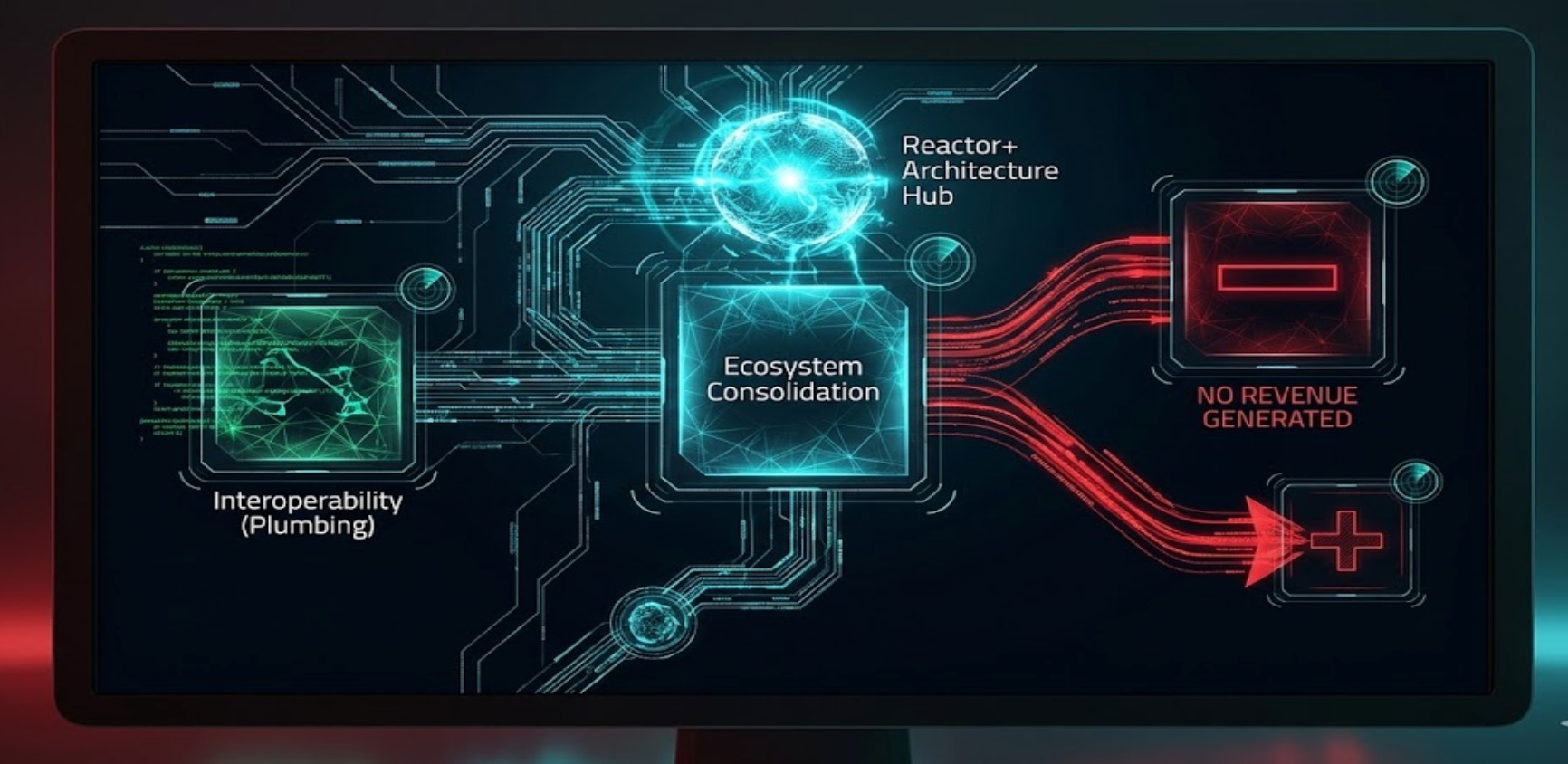
The Reactor+ upgrade is a massive architectural achievement. It solves genuine friction points for rollup interoperability. But from a purely trading perspective, Reactor+ is just plumbing. Building better pipes is necessary to scale a network, but pipes do not generate immediate revenue.
Capital in 2026 does not bid on "potential capabilities." An infrastructure upgrade like Reactor+ does not trigger an overnight explosion of Daily Active Users (DAU) or instantly lock hundreds of millions in Total Value Locked (TVL). Because the upgrade doesn't immediately alter the on-chain fee generation, smart money is perfectly content to sit on the sidelines. They aren't shorting the tech; they are just waiting for the tech to actually print money.
The Math Problem: Fighting the Supply
Even if you love the ecosystem, you cannot trade against the math. The primary headwind suffocating the INIT price is the tokenomics overhang.
Initia has a hard-capped maximum supply of 1 billion tokens, but only about 194 million are currently circulating. When you look at the allocation breakdown—heavy tranches reserved for protocol developers (15%), VIP ecosystem rewards (25%), and early backers—the market's hesitation makes sense. This structure guarantees continuous emission pressure.
When a project transitions from its initial hype phase into its building phase, early allocations begin to unlock. If the network does not have a massive, continuous influx of new spot buyers to absorb those unlocking tokens, the price mathematically must drop. Right now, algorithmic traders view buying INIT as stepping in to become exit liquidity for early investors and grant recipients.
The Purgatory of Validation
Every crypto asset survives on one of two things: narratives or data.
During the narrative phase—which INIT enjoyed during its run to $1.44—capital buys the whitepaper. The market prices the asset based on the idea of what the ecosystem could eventually become.
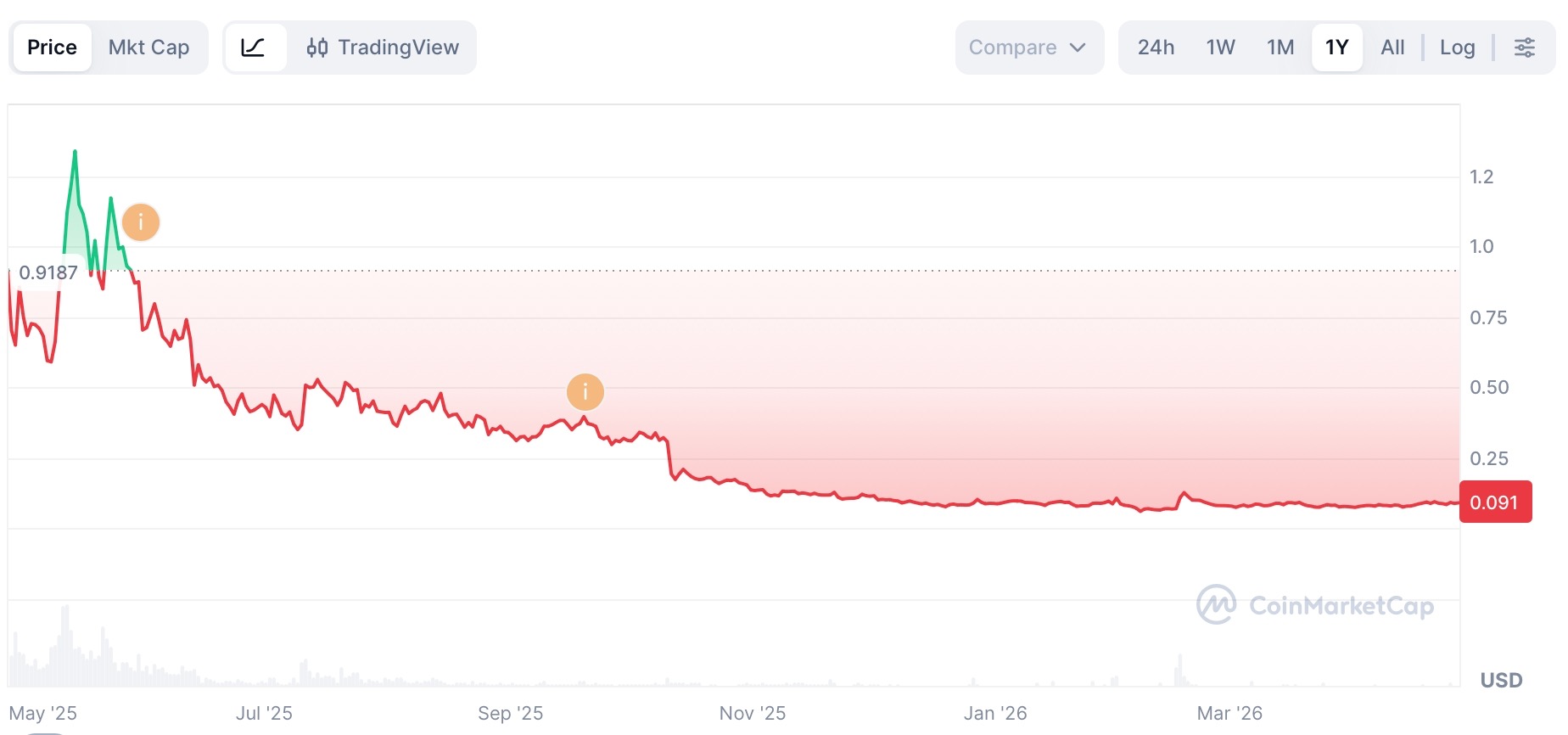
Today, INIT has entered the validation phase. The architecture is built. The tokens are live. Now, the market is demanding proof. Institutional desks do not care how fast the rollups are; they want to see the trading volume of the DApps built on them. Until Initia’s core metrics—active wallets, transaction fees, and retained capital—show quantifiable growth, the token will remain in this "prove it" purgatory, drifting lower on low volume.
The Execution Strategy
If you are trading INIT, you must separate your feelings about the technology from the reality of the tape.
Buying INIT simply because $0.09 looks "cheap" relative to $1.44 is a fast way to lose capital. This is known as anchoring bias. In a macro environment where liquidity is heavily concentrated in top-tier assets, mid-cap infrastructure plays can grind sideways for months.
We do not catch falling knives based on Github commits. We are setting our terminal alerts for volume anomalies. If we see a sustained spike in on-chain TVL or a sudden, verifiable influx of developer deployments that translates to actual network usage, that is the structural break required to front-run a reversal.
-
Mapping out your levels? Log in to your Tapbit terminal to check the real-time spot depth and perpetual futures funding rates for INIT.
-
Ready to trade the volatility? Whether you are hedging against token unlocks or scaling into a long-term spot position, register your Tapbit account today for institutional-grade execution.
Frequently Asked Questions (FAQ)
If the Reactor+ upgrade is successful, why is the INIT price dropping?
Because financial markets price in future expectations early. The anticipated success of the Reactor+ architecture was likely priced into the token months ago. Now that the tech is live, it functions as backend infrastructure. Until that infrastructure attracts high-volume decentralized applications that burn fees and lock capital, the market won't assign a higher valuation to the token.
Is INIT a good buy because it is down 87% from its All-Time High?
Not necessarily. A token being down 87% does not automatically make it "cheap." Valuations are based on current circulating supply and active demand. With significant portions of the 1 billion total supply still slated for unlocks and ecosystem incentives, the token can continue to face downward pressure unless buy-side demand aggressively outpaces the new supply.
What metric should I watch to know when the trend is reversing?
Ignore the marketing announcements and look at the raw on-chain data. You are waiting for quantifiable metrics: an undeniable uptick in Total Value Locked (TVL) across the Initia rollups, a sustained increase in daily active addresses, and rising network fee generation. When the data proves the network is being utilized, the chart will follow.


