
Golem Network Token moved from roughly $0.088 on August 17 to above $0.11 later in the month — a gain of more than 20% in under two weeks. Trading volume rose with the move, and GLM's market cap returned to about $110 million.
The price action fits one of the market's strongest narratives: demand for computing power. AI developers need GPUs and CPUs, centralized cloud capacity is expensive, and crypto projects are building open marketplaces to rent unused hardware on demand.
Golem has been working on that idea since 2016. But the recent GLM rally hasn't been accompanied by a clear network upgrade, tokenomics change, or major commercial announcement. It looks more like a broader re‑interest in AI and DePIN tokens than a shift in Golem's fundamentals.
That leaves a more useful question than "why is GLM up?" — is demand for the Golem Network actually growing along with the token?
What Does the GLM Token Do?
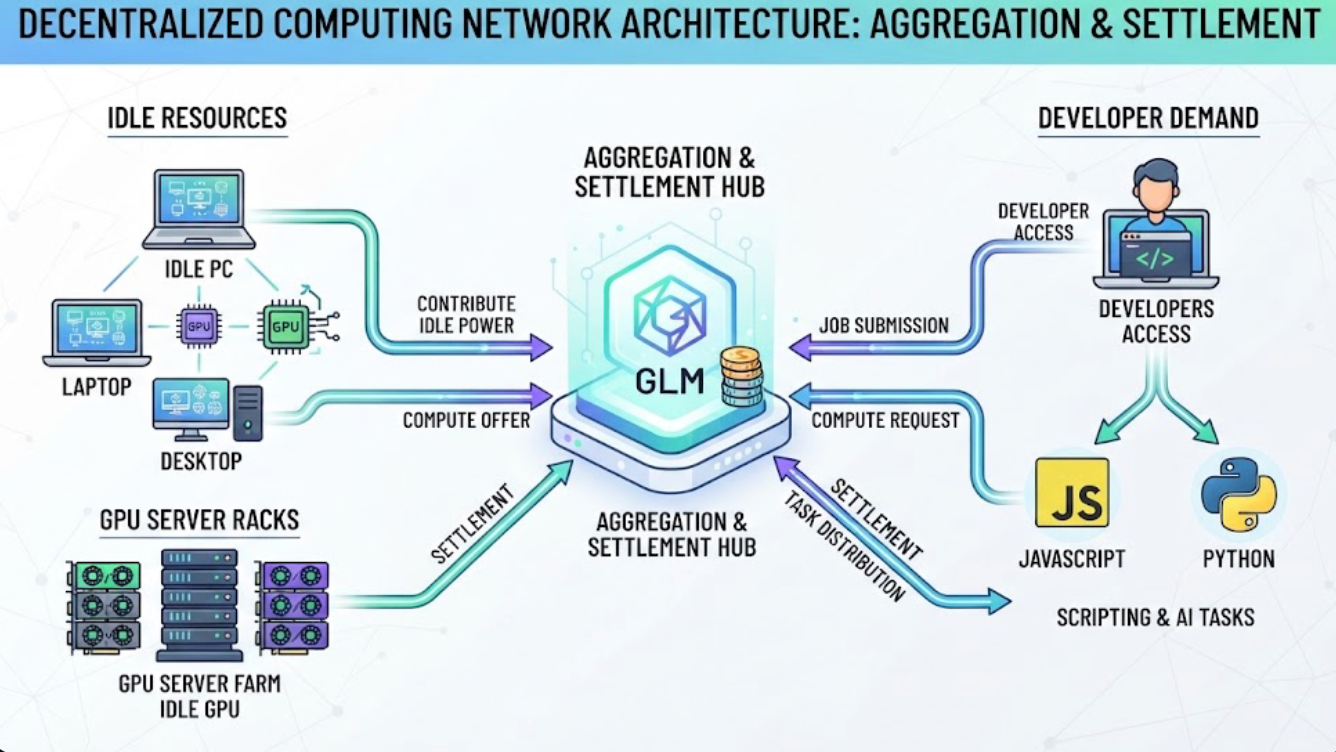
Golem Network connects people who need computing resources with providers willing to rent out spare capacity. Requestors can run workloads through the network, while providers receive GLM for supplying computing power.
GLM is an ERC-20 token on Ethereum. It serves as the settlement asset between requestors and providers rather than functioning as a governance token for a new Layer 1 blockchain.
The network supports developer tools for JavaScript and Python, along with Ray integration for distributed computing. Its documentation presents data processing, rendering and AI workloads as potential applications.
This gives GLM a real utility case: access to decentralized computing resources. It does not prove that the network currently handles enough paid activity to justify any particular token valuation.
Why GLM Has Returned to Market Attention
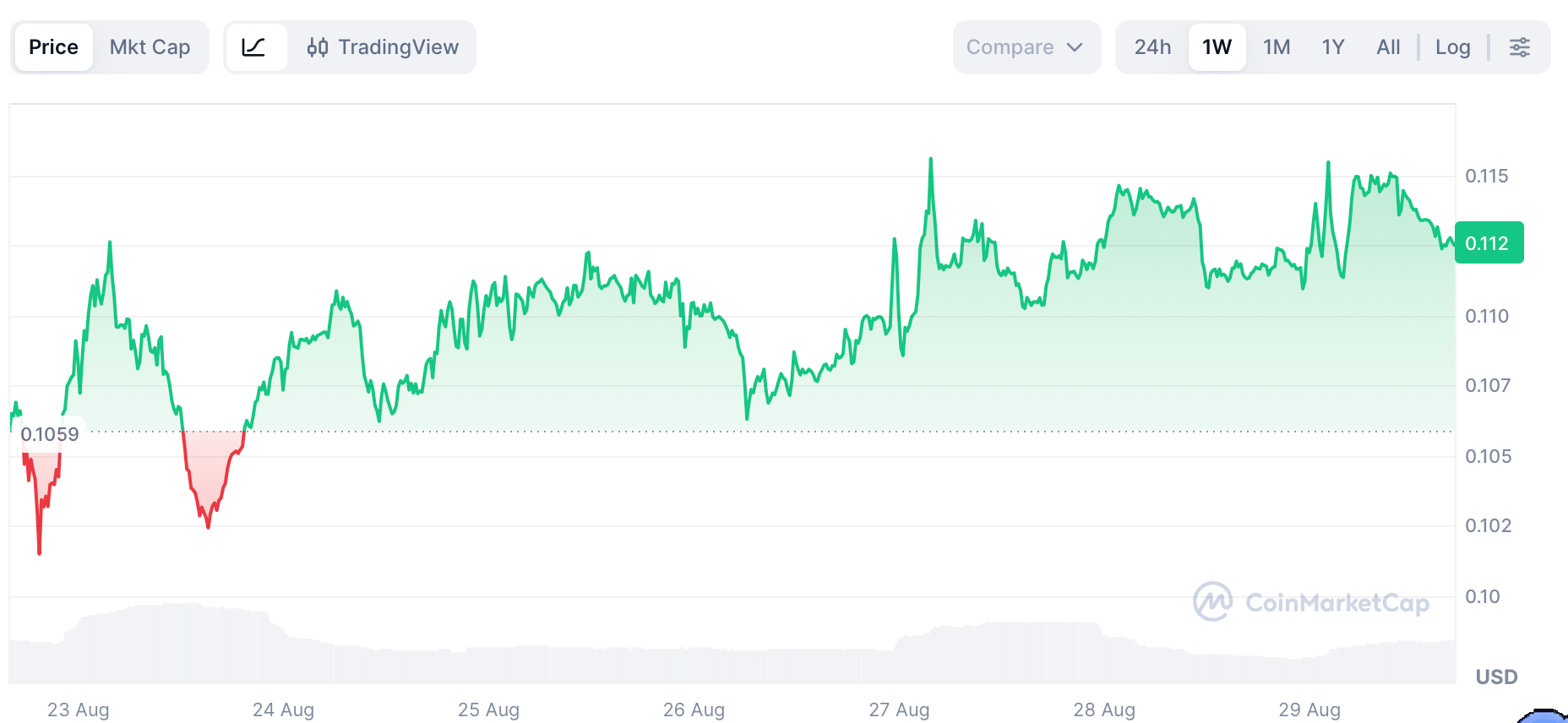
Historical market data show GLM rising from around $0.088 on August 17 to approximately $0.113 by August 26. Daily trading volume also increased during parts of the rally, reaching several million dollars.
No single Golem announcement explains the full move.
The more likely driver is sector rotation. AI infrastructure and DePIN remain active crypto narratives, and Golem fits both labels. It offers a decentralized market for computing power and allows developers to use distributed resources for workloads that can include AI processing.
That positioning gives traders a familiar way to gain exposure to the compute narrative without buying a newly launched token. Golem has been operating for years, has public development tools and uses a fixed maximum token supply inherited from its original GNT structure.
Broader market conditions also matter. GLM rose alongside improving sentiment across Bitcoin and altcoins. For a token with moderate liquidity, a combination of market beta and renewed sector attention can produce a sizable move without a project-specific catalyst.
Golem Has a Product, but Adoption Is the Missing Number
Golem’s case is stronger than a token built only around an AI label. Its software allows providers to offer resources and developers to run distributed workloads. The project maintains documentation, development libraries and a functioning payment role for GLM.
What remains difficult to establish is the commercial scale of that activity.
A decentralized compute network should eventually be judged by workloads completed, active requestors, provider availability, payment volume and repeat usage. Those measurements show whether customers are choosing the service for practical reasons rather than whether traders like the narrative.
Public project materials explain how the network works, but they do not provide enough current commercial data to connect August’s token rally directly with a surge in paid computing demand.
That distinction is central to the GLM outlook. Network activity creates transaction demand for the token. Market interest alone creates price demand. The two can move together, but they are not the same thing.
What Could Support GLM Beyond the Current Rally?
A stronger GLM case would begin with measurable network usage.
Growth in paid workloads would show that requestors are choosing Golem for actual computing tasks. Consistent provider earnings would indicate that the marketplace can attract and retain hardware supply. Higher GLM settlement volume linked to network services would provide a clearer connection between product adoption and token demand.
AI could contribute to that growth, but only if developers run meaningful workloads through Golem. Adding AI to a project description is easy. Competing with centralized cloud platforms and other decentralized compute networks on price, reliability and developer experience is much harder.
Continued software development is positive, but releases and documentation should ultimately lead to users and payments.
Where the GLM Trade Can Go Wrong
The absence of a clear catalyst leaves GLM exposed to changes in market sentiment. If the recent move was driven mainly by AI and DePIN rotation, attention could shift quickly to larger or newer projects.
Liquidity is another consideration. GLM is more established than many low-cap tokens, but its daily turnover remains modest compared with the leading crypto assets. A reduction in volume can make exits more difficult during a sharp reversal.
Golem also operates in a competitive market. Centralized cloud companies provide mature infrastructure, while crypto-native networks compete for GPU providers, developers and AI workloads. A long operating history does not guarantee that Golem will capture a large share of future demand.
The Rally Has Reopened the Golem Question
GLM’s August rise has brought an older decentralized-compute project back into view. The narrative is timely, the token has a defined role, and Golem provides working tools for developers and computing providers.
What the rally has not yet supplied is evidence that network demand rose at the same pace.
The next useful signal will come from usage rather than another price candle: more paid jobs, more active requestors, reliable provider capacity and clearer GLM payment activity. Until then, GLM remains a credible decentralized-compute project trading partly on an AI and DePIN narrative that still needs stronger operating data.
Tapbit readers can follow digital asset research and broader market developments through Tapbit. Log in to access an existing account or register to get started.
Frequently Asked Questions
What is GLM crypto?
GLM is the ERC-20 utility token of Golem Network. It is used to pay providers who rent computing resources to requestors running workloads on the network.
Why did the GLM token rise in August 2026?
GLM rose by more than 20% from its mid-August level as interest returned to AI, DePIN and decentralized-compute tokens. No major Golem-specific announcement has been verified as the sole cause of the rally.
Is GLM connected to the GLM-5.3 AI model?
No verified connection exists. GLM-5.3 is an AI model associated with Z.ai, while GLM is the cryptocurrency used by Golem Network. AI-model tokens used for API billing are not the same as crypto tokens.


