

The CLARITY Act is approaching a consequential Senate test on September 15, but the date should not be confused with final passage. According to Ripple Chief Legal Officer Stuart Alderoty, senators are expected to vote on a motion to proceed—the procedural step that determines whether the chamber can begin formal debate. That motion is expected to require 60 votes, making bipartisan support the immediate question.
The stakes extend beyond token prices. Alderoty argues that continued uncertainty could encourage crypto companies, investment and skilled jobs to move outside the United States. For readers following the policy debate and broader digital-asset market, creating a Tapbit account offers access to supported markets and trading tools while the legislative process develops.
What Happens on September 15?
September 15 is expected to be the first Senate floor test for advancing the market-structure legislation. A successful motion to proceed would open the door to debate and amendments. It would not send the bill to the president, nor would it guarantee that the Senate eventually approves the same text passed by the House.
Alderoty called the date a “bellwether” because failure to clear the procedural threshold could sharply reduce the time available for Congress to complete the bill. If the motion succeeds, lawmakers would still need to debate the measure, resolve amendments and hold a final vote.
What the CLARITY Act Would Change
The House version of the Digital Asset Market Clarity Act, H.R. 3633, passed in July 2025 by a 294–134 vote. Its central objective is to establish a federal framework for digital-asset markets and clarify how responsibilities are divided between the Securities and Exchange Commission and the Commodity Futures Trading Commission.
In broad terms, the proposal would give the CFTC a larger role in overseeing digital commodities and registered trading intermediaries, while preserving SEC authority over securities and investment contracts. It also contains registration, disclosure, customer-protection and anti-illicit-finance provisions. The Senate Banking Committee released its own market-structure text in May 2026, meaning the final Senate product may differ from the House bill.
Why Ripple’s CLO Says U.S. Crypto Jobs Are at Risk
Alderoty’s warning focuses on regulatory durability. Agency rules and enforcement priorities can change when administrations or leadership teams change. A statute passed by Congress is harder to reverse and can give companies a longer planning horizon for hiring, product development and compliance investment.
He cited National Cryptocurrency Association research estimating that crypto-related activity supports roughly 232,000 U.S. jobs and about $55 billion in economic activity. Those figures include direct employment at digital-asset companies as well as suppliers, professional services and spending supported by industry wages. The argument is straightforward: if firms cannot determine which regulator applies or how a token is classified, some may build in jurisdictions with clearer rules.
That does not mean passing one bill automatically creates jobs. Employment depends on market demand, capital conditions and the quality of the final rules. Still, policy uncertainty can raise compliance costs and make long-term U.S. investment harder to justify.
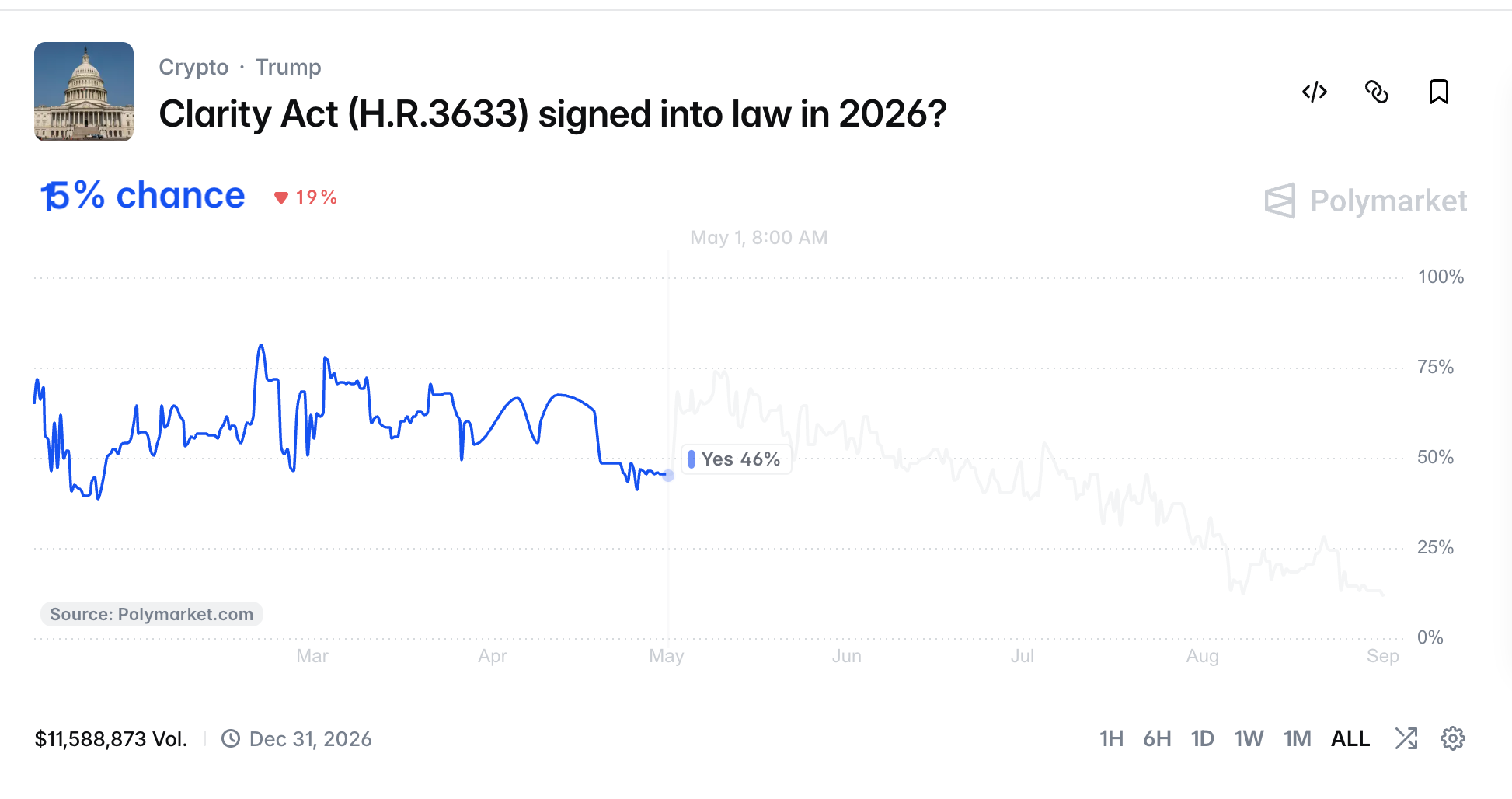
House Passage Does Not Mean the Bill Is Law
| Stage | What It Means | Main Hurdle |
|---|---|---|
| Motion to proceed | Allows Senate debate to begin | Expected 60-vote threshold |
| Senate debate and amendments | Lawmakers can revise the text | Consumer protection, DeFi and agency jurisdiction |
| Final Senate vote | Approves a Senate version | Maintaining bipartisan support |
| House reconciliation | House considers Senate changes | Both chambers must approve identical text |
| Presidential action | Bill can be signed into law | Only possible after congressional passage |
This sequence matters because headlines often compress a multi-stage process into a single “vote.” Even if the Senate begins debate on September 15, the legislation could still be amended, delayed or returned to the House in a substantially different form.
The Senate’s Main Points of Disagreement
The broad concept of clearer market structure has bipartisan appeal, but the details remain difficult. Senators must decide how to define a digital commodity, when an asset moves beyond an investment-contract transaction, and how trading platforms should register. DeFi treatment, custody, disclosures, conflicts of interest and protections for retail customers are also likely to draw scrutiny.
Another challenge is avoiding regulatory gaps. Expanding CFTC jurisdiction may require additional funding and technical capacity, while the SEC and CFTC still need workable coordination rules. A framework that is clear on paper but slow to implement could leave companies in a prolonged transition.
Why the Vote Matters for XRP and Crypto Markets
Ripple is closely associated with the U.S. debate over token classification because of its long-running dispute with the SEC. However, the September vote is not an XRP-specific catalyst. The legislation could affect exchanges, brokers, custodians, token issuers and investors across the market.
A successful procedural vote may improve sentiment by showing that Congress can still advance a bipartisan framework. A failed vote could revive concerns that U.S. market-structure legislation will slip further, leaving agencies to rely more heavily on rulemaking and existing statutes. Either outcome can produce short-term volatility, but traders should separate political headlines from actual changes in law.
What Markets Should Watch Next
The first number to watch is the vote count: clearing 60 votes would signal meaningful cross-party support. The second is the amendment process, especially changes involving DeFi, custody and the boundary between SEC and CFTC authority. Investors should also monitor whether House leaders are willing to accept the Senate text or demand further negotiations.
Finally, statements from the SEC and CFTC matter even if Congress stalls. Alderoty noted that both agencies are expected to continue developing crypto rules. Regulation can therefore advance without the CLARITY Act, although agency action may offer less permanence than legislation.
Conclusion
The September 15 vote is best understood as a gateway, not a finish line. If the Senate agrees to begin debate, the CLARITY Act gains momentum and a credible path toward further consideration. If it fails, the window for comprehensive legislation narrows and the risk of continued regulatory fragmentation increases. Alderoty’s jobs warning adds an economic argument to a debate that is often framed only around tokens and enforcement: where companies choose to build may depend partly on whether the United States can provide durable, workable rules.
FAQ
Is the Senate voting on final passage of the CLARITY Act on September 15?
No. The expected vote is a procedural motion to proceed, which would allow debate to begin. Final passage would require additional Senate action.
How many votes are expected to be needed?
The motion is expected to require 60 votes, so supporters need bipartisan backing.
What does the CLARITY Act regulate?
It proposes a federal market-structure framework for digital assets, including clearer SEC and CFTC jurisdiction, registration requirements and customer protections.
Why does Ripple care about the bill?
Ripple has been directly affected by uncertainty over U.S. token classification. Its CLO argues that durable legislation would support investment, innovation and employment in the country.
Will passage immediately change XRP’s legal status or price?
No single procedural vote determines XRP’s legal status or future price. Any market reaction should be distinguished from the bill’s actual legal effect and implementation timeline.


