

Aleph Cloud has spent years building the kind of infrastructure crypto projects often say they need: decentralized storage, virtual machines, web hosting, blockchain indexing, serverless functions and GPU compute.
Yet its token tells a much harsher story.
ALEPH remains close to 99% below its 2022 all-time high, despite continued product development and a market that has become newly interested in AI infrastructure, decentralized compute and DePIN. That gap is not simply a question of market timing. It exposes a harder issue for infrastructure tokens: a useful network does not automatically create lasting demand for its token.
Aleph Cloud Is Trying to Be More Than Decentralized Storage
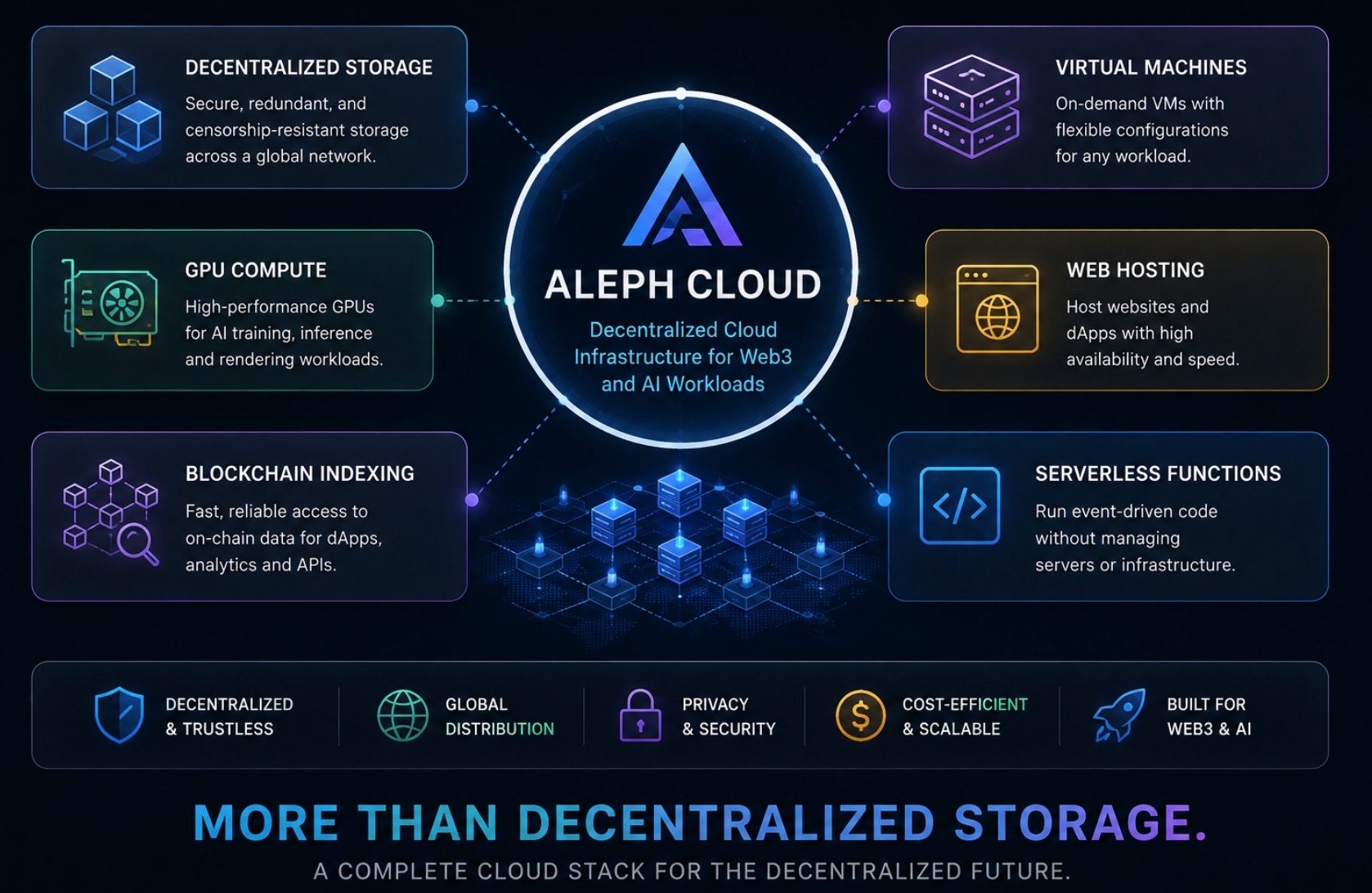
Aleph Cloud is sometimes grouped with decentralized storage projects, but that is only part of the picture. Its offering includes persistent and on-demand virtual machines, GPU instances, data storage, application hosting and blockchain data services.
The pitch is straightforward. Developers building Web3 applications often use decentralized blockchains for settlement while relying on conventional cloud providers for the rest: frontend hosting, databases, compute and indexing. Aleph Cloud aims to provide a distributed alternative for those off-chain layers.
That gives it a broader ambition than a pure storage protocol. It is competing for a place in the cloud stack, where developers care less about token narratives than reliability, cost, speed and support.
The project has also pushed further into GPU and confidential-computing services, two areas that fit the current AI infrastructure conversation. Its documentation describes GPU workloads, virtual machines and confidential instances designed to protect data while it is being processed.
The Token Fell Because the Market Needed More Than a Good Narrative
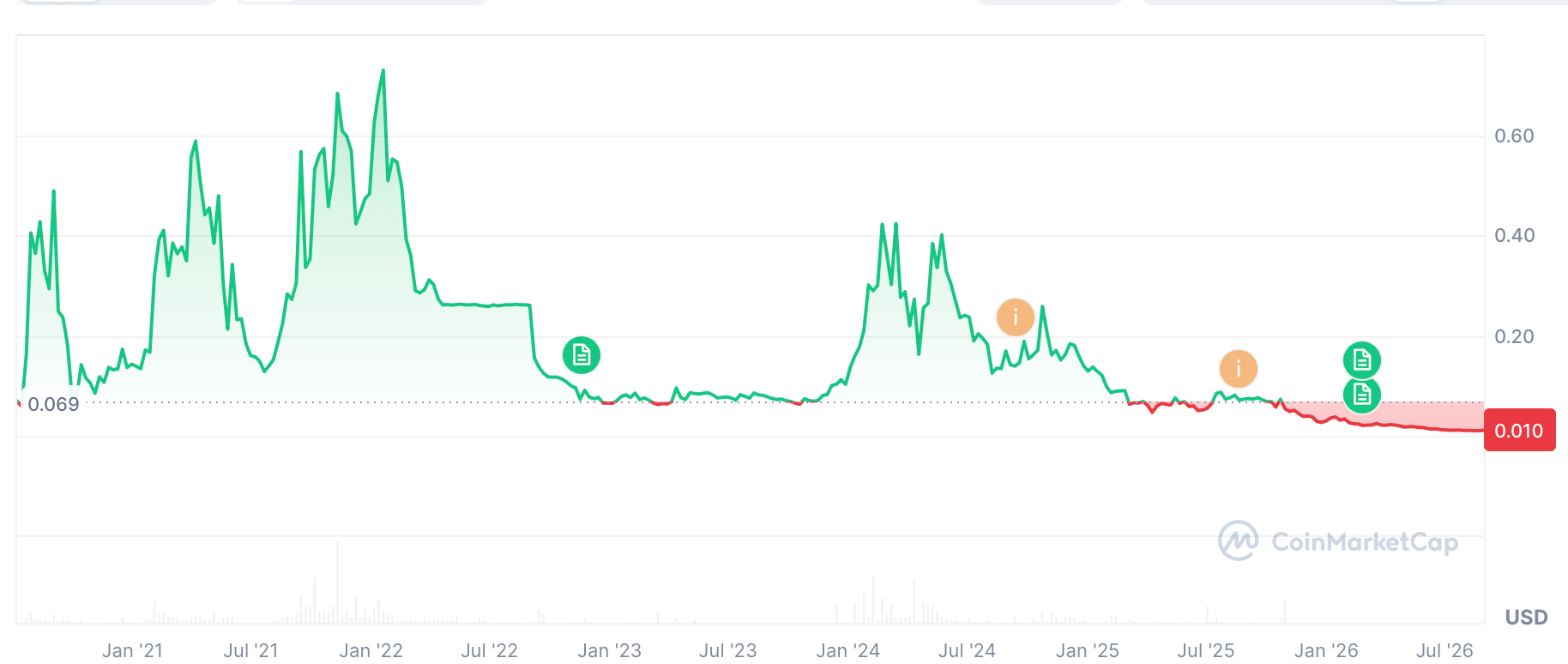
ALEPH reached its peak during the previous crypto cycle, when investors were assigning high valuations to infrastructure tokens long before many networks had proven sustainable demand.
The subsequent decline was severe. But it would be too simple to blame it on one unlock, one exchange event or one round of selling. The more important explanation is structural.
Running decentralized infrastructure is expensive. Node operators pay for machines, bandwidth, maintenance and electricity. If their rewards mainly come from token emissions, the system becomes vulnerable when the token price falls. Lower token prices can reduce the incentive to operate infrastructure, even if the technology itself continues to improve.
Aleph Cloud acknowledged this economic problem in its own development work. The challenge is not only how to build decentralized cloud services. It is how to pay the people providing those services without relying forever on token-funded subsidies.
That is the background to its latest tokenomics direction.
The Real Test Is Whether Customers Pay for the Network
Aleph Cloud has been moving toward a model in which node operators and stakers receive a share of customer payments. The project says that 95% of customer credit payments are allocated to Compute Resource Node operators and stakers, with the remaining 5% reserved for protocol development.
On paper, that is a more credible model than rewarding operators mainly through new token issuance. If customers pay for compute, storage or GPU capacity, those payments could support the network’s participants through actual usage.
But there is an important catch.
Customers can buy Aleph Cloud credits with assets such as USDC and ETH as well as ALEPH. That makes the service easier to use, particularly for developers who do not want exposure to a volatile token just to run an application. It also weakens the direct link between cloud adoption and open-market demand for ALEPH.
In other words, the network can grow without every new customer becoming a token buyer.
The protocol may still create value for node operators and stakers. Whether it creates enough recurring demand for ALEPH is a separate question, and it remains unanswered.
AI Could Help the Business, but It Does Not Settle the Token Debate
AI has given decentralized compute projects a fresh narrative. Demand for GPUs, model hosting, private data processing and distributed infrastructure is real across the technology sector. Aleph Cloud’s product range puts it in a position to participate in that conversation.
Still, AI is not a shortcut to token recovery.
A project can offer GPU capacity without attracting enough developers. It can sign partnerships without generating meaningful paid workloads. It can announce new infrastructure without proving that users will stay once incentives are reduced.
That is why the next meaningful ALEPH signal is unlikely to be another short-term price spike. It will be evidence of sustained commercial use: more paid workloads, more recurring customers, higher utilization of compute resources and a growing share of network revenue coming from users rather than emissions.
A Network Can Be Useful Without Its Token Becoming Scarce
Aleph Cloud has a functioning infrastructure stack and a visible attempt to improve its economics. It has moved beyond the simple promise of “decentralized storage” and is trying to build a broader cloud platform for Web3 and AI-related workloads.
But the investment question is narrower than the technology question.
Can Aleph Cloud win enough paying users to fund its network? And if it does, will that activity translate into measurable, durable demand for ALEPH?
Until those answers become clearer, ALEPH remains a high-risk infrastructure trade rather than a straightforward AI or DePIN comeback story.
Follow broader crypto market coverage and learn more about digital asset markets on Tapbit. Existing users can sign in, while new users can register here.
Frequently Asked Questions
What is ALEPH crypto?
ALEPH is the utility token associated with Aleph Cloud, a decentralized cloud infrastructure network. It is used within the ecosystem for services, staking, node incentives and governance-related functions.
What does Aleph Cloud provide?
Aleph Cloud offers decentralized storage, virtual machines, serverless functions, web hosting, blockchain indexing and GPU compute. Its goal is to provide developers with alternatives to relying entirely on centralized cloud infrastructure.
Why did ALEPH fall so far from its all-time high?
The decline followed the end of the 2021 infrastructure-token cycle, but the larger issue is economic. Product development did not create a clear enough link between network use and token demand, while small-cap liquidity and broader market conditions added pressure.


