

CSPR has nearly doubled from its July low, though the recovery now faces a clear test.
A scheduled release of roughly 433 million CSPR is pending, while Casper works to generate demand through AI‑agent payments, regulated assets, and improved US market access.
That leaves a straightforward question: can new applications for Casper scale quickly enough to offset the expanding supply?
CSPR Price Recovers After a Difficult Year
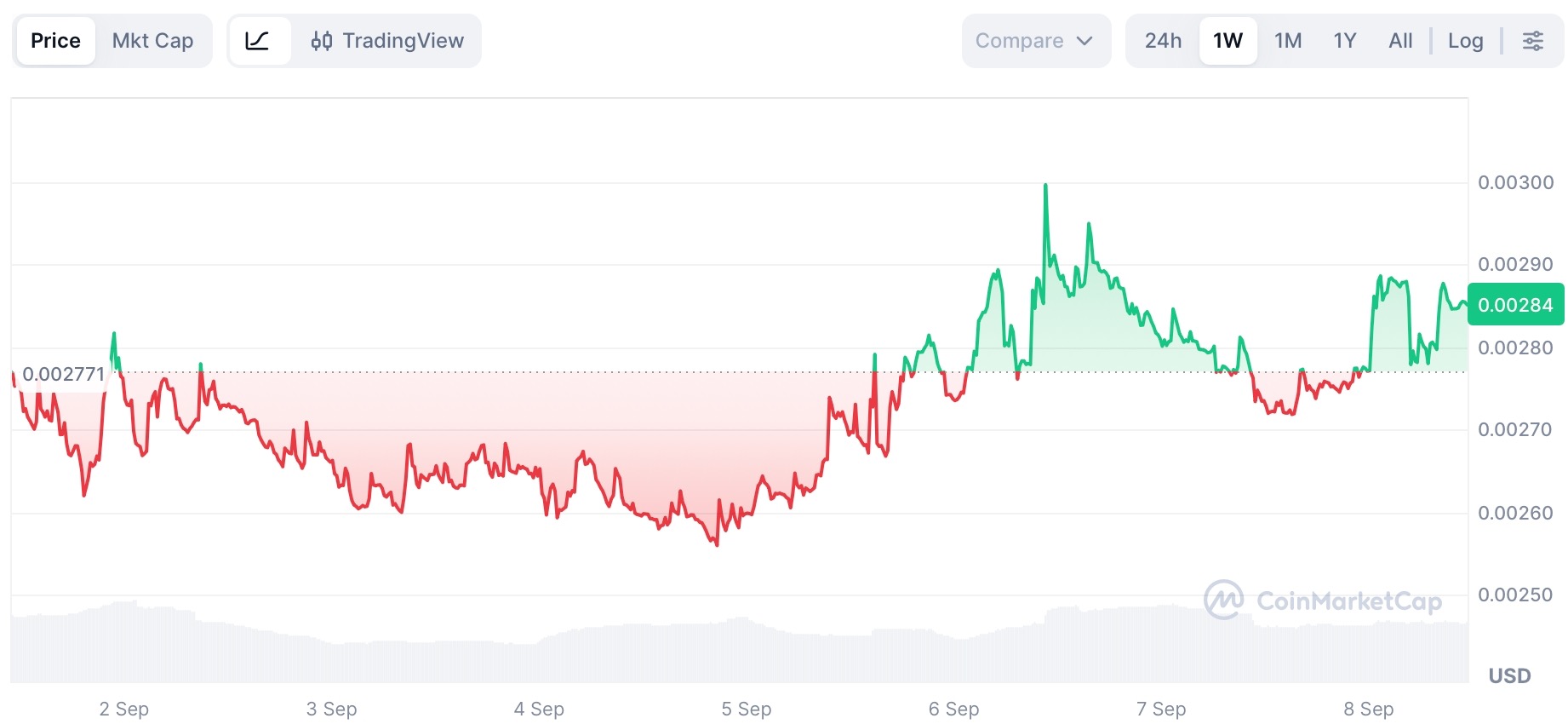
CSPR reached an all-time low of approximately $0.00146 on July 21, 2026. By September 8, CoinGecko showed the token near $0.00287, representing a recovery of roughly 95% from that low.
The rebound has not repaired the longer-term chart. CSPR remains about 71% below its price from the same period in 2025 and more than 99% below the $1.33 peak recorded shortly after trading began in 2021.
Its market capitalization currently sits near $48 million, with daily volume generally ranging from $1.5 million to $3 million. That is enough to support active trading, but still leaves CSPR far outside the largest Layer 1 markets.
The July recovery coincided with several developments, including a new US exchange listing and the launch of Casper’s AI-payment infrastructure. Supply conditions, however, remain an equally important part of the story.
Kraken Opened a New Route Into CSPR
Kraken added CSPR trading on July 21, the same date the token fell to it all-time low.
The listing gave eligible US users direct access to CSPR and added a recognized exchange to the token’s remaining markets. Kraken’s CSPR/USD pair has since become one of its more visible trading venues.
A listing can improve access and liquidity, particularly for an asset that has struggled to attract capital. It does not create lasting demand by itself. That depends on whether users need CSPR for staking, transactions, applications or other activity on Casper.
The timing still matters. Kraken helped improve market access just as CSPR was attempting to recover from its weakest price level.
Casper 2.2 Changed the Supply Equation
Casper 2.2.0 went live on March 23, 2026. The upgrade implemented validator-approved changes to network funding and token distribution.
The most significant change was a one-time issuance equal to as much as 33% of the supply at the time of activation. Casper described the measure as a recapitalization intended to fund exchange integrations, stablecoin support, liquidity, protocol work and ecosystem development.
Approximately 1.3 billion CSPR became available when the upgrade was activated. A further 433 million CSPR is scheduled to unlock every quarter through March 2028.
The first quarterly release took place on June 23. Based on the published schedule, the next release is expected around September 23, although the precise execution should be confirmed through an official update or treasury transaction.
Casper’s recurring inflation rate remains 8% a year. Under the new structure, 6% is directed to validators and delegators, while 2% funds ecosystem development and operations.
The distinction is important. Annual inflation did not increase, but the network also created a separate one-time allocation. Investors therefore need to consider both recurring issuance and the scheduled release of recapitalization tokens.
An Unlock Is Not Automatically a Sale
The September release does not mean that 433 million CSPR will immediately reach exchanges. Casper has said that much of the recapitalized supply will be staked or held in designated treasury wallets. Some funds are intended for liquidity, integrations and ecosystem programs. The price impact will depend on how much is transferred, where it goes and whether recipients hold or sell it.
The market will need better disclosure to assess that risk. Relevant information includes treasury wallet movements, staking transactions, grants, payments to partners and allocations to market makers.
With CSPR’s market capitalization below $50 million, even a fraction of the scheduled release could be material if it becomes liquid. Transparent treasury reporting is therefore as important as the unlock schedule itself.
x402 Gives Casper a More Specific Use Case
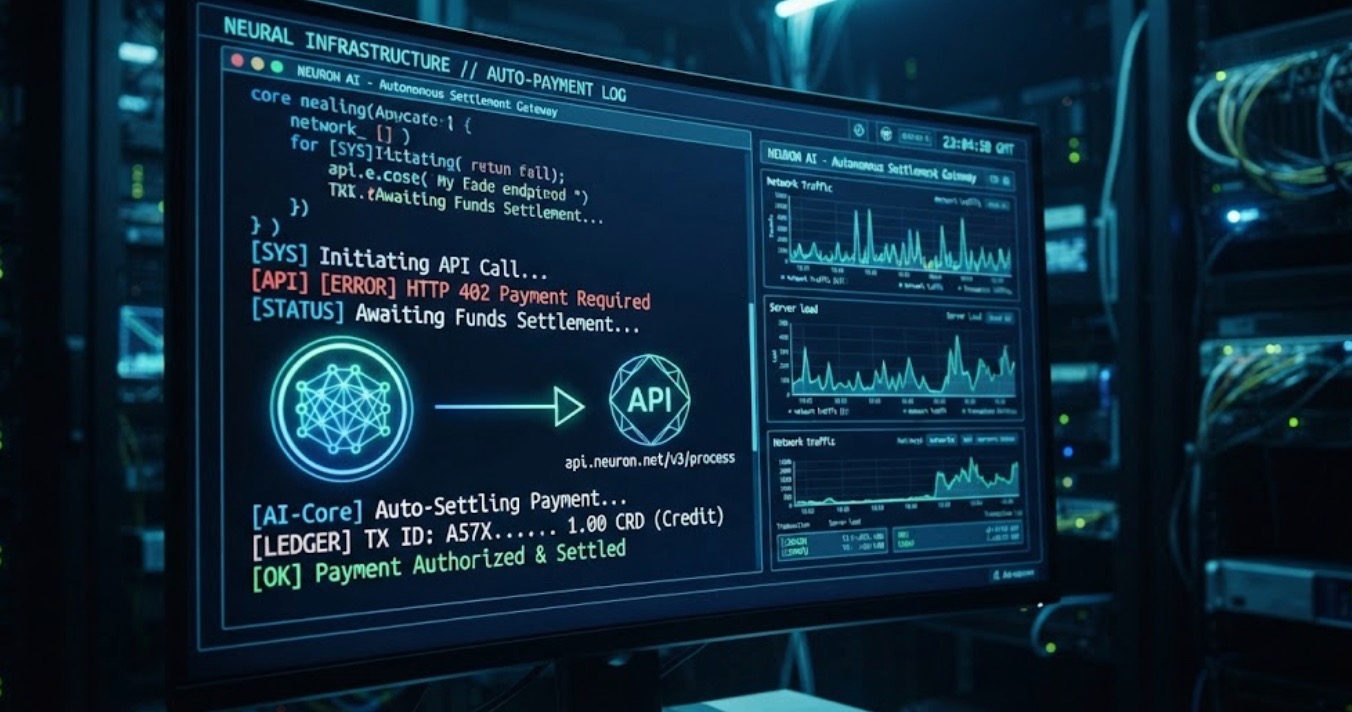
Casper’s recent strategy has moved beyond the broad “enterprise blockchain” label. It is now targeting machine-to-machine payments through x402.
The x402 protocol turns the HTTP “402 Payment Required” response into a payment flow. An AI agent can request access to an API, receive a price, authorize payment and obtain the requested data without a human completing a checkout process.
Casper has released a mainnet x402 facilitator along with Go and TypeScript tools for developers. The infrastructure supports on-chain settlement using CEP-18 tokens, with public implementations using assets such as wrapped CSPR.
This is more substantial than a roadmap announcement. Developers can use the software and settle supported payments on Casper today.
What remains unclear is the level of external demand. Casper has not published enough data to establish how many independent services use its facilitator, how much value has been settled or how much network activity comes from genuine AI-agent payments.
x402 is live infrastructure. Its commercial scale is still unproven.
The Payouts.com Deal Moves the Idea Closer to Production
On August 25, Casper announced an integration with Payouts.com, which develops financial tools for companies and autonomous software.
The plan is to use Casper as a settlement layer for Payouts.com’s AgentWallet and Digital Employees products. Approved payments would settle through Casper using csprUSD, a dollar-denominated token being developed for the network’s machine-payment ecosystem.
Implementation is underway, with a phased rollout planned over the coming months. No transaction volume, client numbers or revenue estimates have been disclosed.
That makes the partnership relevant but not yet measurable. It could become a real source of network activity if Payouts.com customers begin settling frequent payments on Casper. Until those transactions appear, it remains an integration in progress.
The 2024 Exploit Is No Longer the Main Issue
Casper suffered a privilege-escalation exploit in July 2024. Thirteen accounts were affected, with unauthorized transfers estimated at $6.7 million.
Validators temporarily stopped consensus to contain the incident. A patch was deployed, and the network resumed after 64 validators representing approximately 85% of staked CSPR approved the recovery.
The incident remains relevant when assessing Casper’s security history and governance. It does not appear to be the direct cause of the current market pressure. The vulnerability was addressed, and Casper has continued releasing protocol updates, including versions 2.2.1 and 2.2.2.
CSPR’s present challenge is less about whether the network can operate and more about whether enough activity will develop around it.
September Will Test Both Sides of the CSPR Story
CSPR’s rebound has given Casper some breathing room. Kraken expanded market access, x402 is running on mainnet and the Payouts.com integration gives the machine-payment strategy a potential commercial outlet.
None of those developments has yet produced enough public data to prove sustained adoption.
The approaching token release brings that gap into focus. If the network can show clear treasury movements, rising payment activity and progress toward its EVM deadline, the market will have something concrete to evaluate. If new supply arrives while usage remains difficult to measure, CSPR may continue to struggle despite its technical progress.
Casper is still building. The harder task is proving that people and machines have a reason to use what it builds.
Tapbit Academy tracks the technology, market structure and supply events that shape digital assets. Explore additional research on Tapbit, manage an existing account through Tapbit Login, or begin with registration.
Frequently Asked Questions
Why has the CSPR price recovered from its July low?
The recovery followed CSPR’s July 21 listing on Kraken, improved broader market conditions and growing attention around Casper’s x402 AI-payment strategy. The rebound does not yet prove that network demand has recovered.
What is the next CSPR token unlock?
Casper’s published schedule provides for approximately 433 million CSPR to unlock each quarter through March 2028. Based on that schedule, the next release is expected around September 23, 2026. The final timing should be confirmed through an official announcement or on-chain transaction.
Did Casper increase its inflation rate?
Casper’s base annual inflation remains 8%. Six percent now goes to validators and delegators, while 2% supports ecosystem development and operations. Separately, Casper approved a one-time issuance equal to as much as 33% of the previous supply.


