

Why PLTR Is a Major AI Software Stock
Palantir Technologies is one of the most important public companies at the intersection of big data, artificial intelligence, and government software.
The company is best known for building data platforms used by government agencies, defense organizations, and commercial enterprises. Its core products help organizations connect fragmented data, analyze complex systems, and make operational decisions.
In the AI era, Palantir has gained new attention through its Artificial Intelligence Platform, often called AIP. The platform is designed to help organizations apply AI models to real business workflows, not just run experiments.
This makes PLTR different from many AI stocks. Instead of selling chips or cloud infrastructure, Palantir sells software that helps institutions turn data into decisions.

Can PLTR Stock Keep Rising in 2026?
PLTR can keep rising in 2026 if Palantir proves that enterprise AI demand is real, monetizable, and durable.
The company has already seen strong interest from government and commercial customers. If Palantir continues expanding contract value, improving revenue growth, and converting AI demand into long-term platform adoption, the stock could regain momentum.
| Bullish Driver | Why It Matters |
|---|---|
| AIP adoption | Shows real enterprise demand for AI workflows |
| U.S. commercial growth | Reduces reliance on government contracts |
| Government renewals | Supports predictable revenue |
| Large contract wins | Increases revenue visibility |
| Margin expansion | Helps justify premium valuation |
| AI software demand | Strengthens the long-term growth narrative |
A strong rally would likely require both revenue acceleration and investor confidence that Palantir can remain a leader in enterprise AI software.
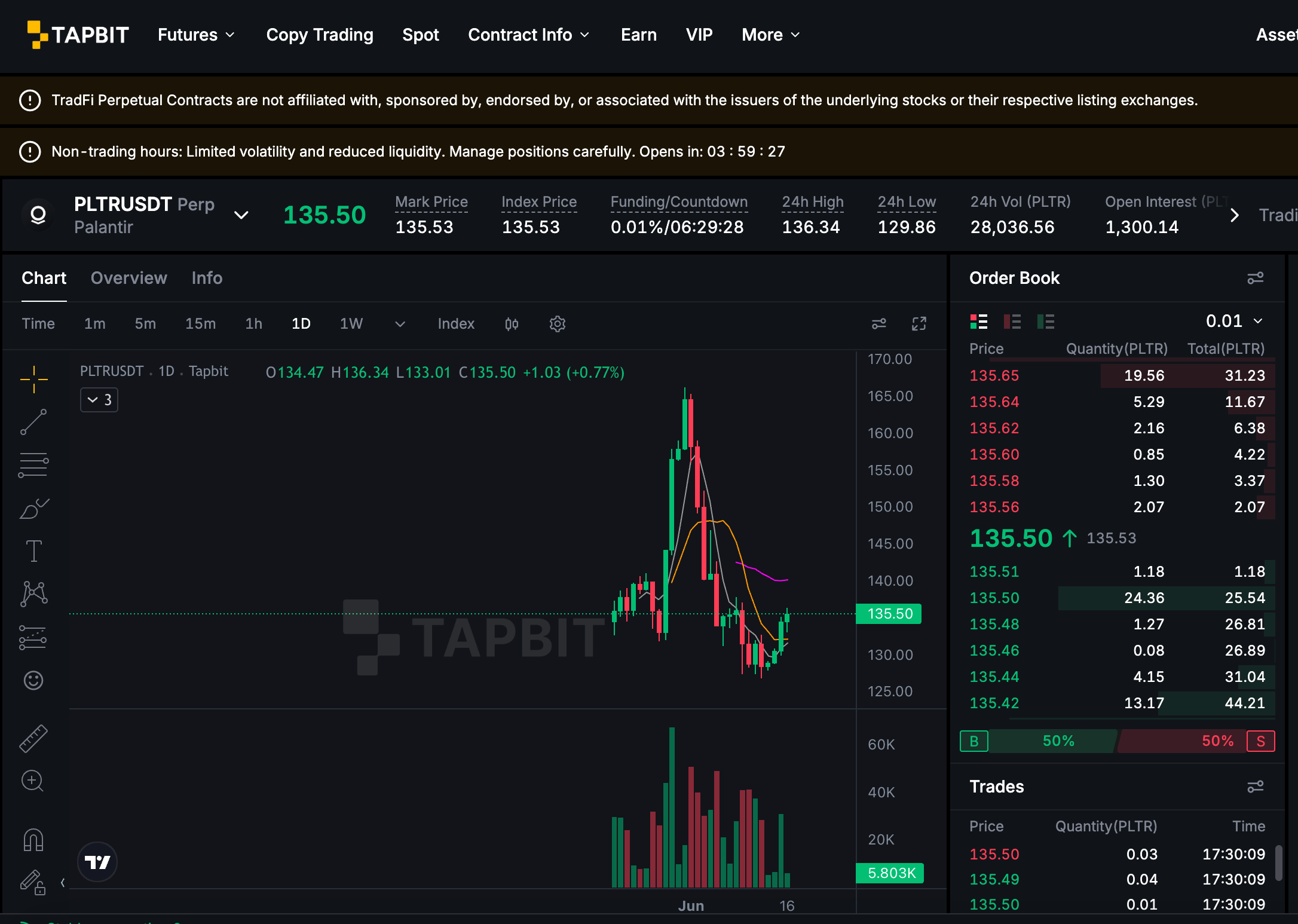
At the time of writing, PLTR stock is trading around 135.50$. This current price gives investors a clearer reference point for evaluating whether Palantir can extend its AI-driven rally in 2026.
What Could Push PLTR to New Highs?
PLTR can reach new highs in 2026 if several conditions align.
First, Palantir would need to maintain strong growth from AIP and commercial customers. Second, the company would need to show that its government business remains stable while commercial revenue becomes a larger driver. Third, the broader AI software sector would need to remain attractive to investors.
A bullish path may include:
- Strong quarterly earnings
- Higher full-year guidance
- More U.S. commercial contract wins
- Larger average customer spending
- Continued government demand
- Clear evidence of AI platform monetization
- Strong Nasdaq and software-sector sentiment
If these signals appear together, PLTR could attract renewed momentum buyers.
Neutral Scenario for PLTR
In a neutral scenario, Palantir continues growing, but valuation limits upside.
This could happen if the business remains strong while investors become more cautious about paying high multiples for AI software stocks. PLTR may then trade in a wide range, moving around earnings, contract announcements, and broader tech-market sentiment.
| Neutral Signal | Possible Meaning |
|---|---|
| Solid revenue growth | Business remains healthy |
| Slower upside surprises | Market reduces valuation premium |
| Mixed customer growth | Commercial adoption remains uneven |
| Range-bound Nasdaq | Limits breakout potential |
| AI software fatigue | Investors rotate into other sectors |
This scenario would not mean Palantir is failing. It would mean expectations are already high.
Bearish Scenario for PLTR
The bearish case centers on valuation and execution risk.
PLTR has often traded at a premium because investors expect strong AI-driven growth. If growth slows or margins disappoint, the stock can fall quickly. Government-contract risk also matters because Palantir's business is closely tied to public-sector and defense customers.
Key downside risks include:
- AI software spending disappointment
- Slower commercial adoption
- Government contract delays
- Political or ethical controversy
- High valuation compression
- Insider selling pressure
- Broader tech-stock weakness
Palantir's business may remain strategically important even if the stock becomes volatile.
How PLTR-USDT Futures Fit Into the Market
For traders who want exposure to Palantir-linked price action through crypto-style derivatives, Tapbit offers a PLTR-USDT futures market.
This allows users to follow PLTR-related market moves through USDT-settled futures rather than traditional equity brokerage access.
Potential use cases include:
- Trading AI software market narratives
- Taking long or short exposure
- Responding to earnings or contract news
- Tracking U.S. tech-stock momentum
- Using USDT-settled derivatives for flexible market access
However, futures trading is risky. Leverage can amplify both gains and losses, and fast price moves can trigger liquidation.
What Could Push PLTR Higher?
Several catalysts could support PLTR in 2026.
The most important catalyst is continued AIP adoption. If customers keep expanding usage and Palantir shows that AI software demand is converting into durable revenue, investors may become more confident.
Other catalysts include:
- Major government contract wins
- Strong commercial revenue growth
- Improved operating margins
- Positive analyst upgrades
- Strong AI software sector sentiment
- Broader Nasdaq strength
- New product or platform announcements
If Palantir can show that it is more than a hype-driven AI stock, PLTR may sustain a stronger valuation.
What Could Stop PLTR From Rallying?
The biggest obstacle is valuation.
Palantir has already been priced as a high-growth AI software leader. That means the market expects strong performance. If results are merely good but not exceptional, the stock may struggle.
Investors should also watch controversy risk. Palantir's government and defense work can attract political and ethical criticism, which may affect sentiment even when the company's financial results are strong.
Risk Management for PLTR Traders
PLTR can move sharply around earnings, analyst notes, government contract news, AI-sector sentiment, and broader Nasdaq volatility.
A disciplined approach may include:
- Avoiding oversized leveraged positions
- Monitoring earnings and guidance
- Watching U.S. commercial growth trends
- Tracking government contract announcements
- Reviewing valuation multiples
- Managing liquidation risk when using futures
- Avoiding emotional entries after sudden price spikes
Users interested in broader platform campaigns can also explore the Tapbit rewards page.
Conclusion
PLTR remains one of the most important AI software stocks in 2026. Palantir's focus on big data analytics, government software, commercial AI adoption, and operational decision-making gives it a strong narrative in the AI market.
Can PLTR stock keep rising? Yes, if AIP demand remains strong, commercial revenue expands, government contracts stay stable, and broader AI sentiment remains positive. But the stock also carries significant risk because expectations are high.
For traders using PLTR-linked futures, risk management is essential. PLTR price outlooks should be treated as scenarios, not promises.
FAQ
Can PLTR stock keep rising in 2026?
PLTR could keep rising if Palantir sustains AI platform adoption, commercial growth, and strong contract expansion. However, the outlook remains uncertain.
Can PLTR reach new highs?
It can if earnings, guidance, and AI software demand remain strong. But high valuation and market volatility could limit upside.
What does Palantir do?
Palantir Technologies provides software for big data analytics, artificial intelligence workflows, government agencies, and commercial enterprises.
Where can traders follow PLTR-linked futures?
Traders can view the PLTR-USDT futures market on Tapbit.
Are PLTR futures risky?
Yes. Futures can involve leverage, liquidation risk, and fast price swings, especially around earnings and major contract news.
What are the main risks for PLTR?
Main risks include valuation pressure, government-contract dependence, political controversy, slower commercial adoption, and broader AI-stock volatility.


