

Bloom Energy shares returned to the spotlight after the fuel-cell company reported record second-quarter results and raised its full-year outlook. The numbers were strong enough to reverse much of the stock’s sharp decline during the regular trading session on July 28.
Bloom Energy is increasingly being valued as part of the AI infrastructure trade. Data centers need enormous amounts of reliable electricity, while grid connections can take years to secure. Bloom’s onsite power systems offer developers another way to bring computing capacity online.
That opportunity is substantial, but so are the expectations already reflected in BE stock. Investors now need to weigh rapid revenue growth against project execution, valuation, regulatory obstacles and unresolved supply-chain questions.
What Happened to Bloom Energy Stock?
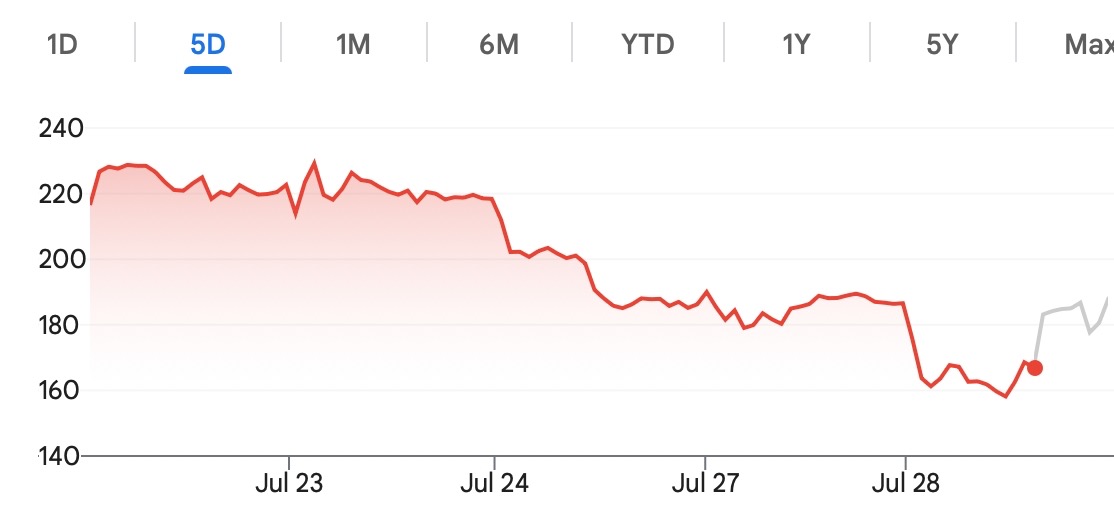
Bloom Energy, which trades on the New York Stock Exchange under the ticker BE, closed at $166.84 on July 28, down 11.34% for the session. After the company released its results, the stock rebounded 12.69% in after-hours trading to approximately $188.01.
The reaction almost erased the regular-session loss, but it did not return the stock to its recent peak. BE reached a 52-week high of $351.28 in June before suffering a steep correction.
That price action captures the current debate around Bloom Energy. Its business is expanding rapidly, but investors have also become less willing to overlook delays, supply questions or execution risks after the stock’s earlier surge.
Bloom Energy Delivered a Record Quarter
Bloom Energy reported second-quarter revenue of $1.065 billion, the first time its quarterly sales have exceeded $1 billion. Revenue increased 165.5% from $401.2 million a year earlier, while product revenue climbed 215.4% to $935.4 million.
Profitability improved alongside sales. GAAP gross margin rose from 26.7% to 33.4%, while non-GAAP gross margin reached 34.3%. The company recorded GAAP diluted earnings of $0.62 per share and non-GAAP diluted earnings of $0.78 per share.
Operating cash flow was another notable part of the report. Bloom generated $226.4 million from operations, compared with a cash outflow of $213.1 million in the same quarter last year.
Market estimates collected by Google Finance had pointed to approximately $827 million in revenue and adjusted earnings of around $0.41 per share. The reported figures therefore came in well above expectations.
Readers can review the complete figures and GAAP reconciliations in Bloom Energy’s official second-quarter earnings release.
Higher Guidance Strengthened the Bull Case
Bloom Energy also raised its 2026 financial guidance. The company now expects full-year revenue of between $3.9 billion and $4.2 billion, up from its previous range of $3.4 billion to $3.8 billion.
At the midpoint, the new forecast represents approximately 100% year-over-year growth. Bloom also expects a non-GAAP gross margin of about 34%, non-GAAP operating income of $800 million to $900 million and non-GAAP earnings of $2.55 to $2.85 per share.
The previous guidance called for non-GAAP operating income of $600 million to $750 million and earnings of $1.85 to $2.25 per share. The size of the upgrade suggests management is seeing more than a temporary increase in demand.
Still, guidance is a forecast rather than guaranteed revenue. Bloom must manufacture, deliver and install its systems on schedule for these projections to hold.
Why AI Data Centers Need New Power Sources
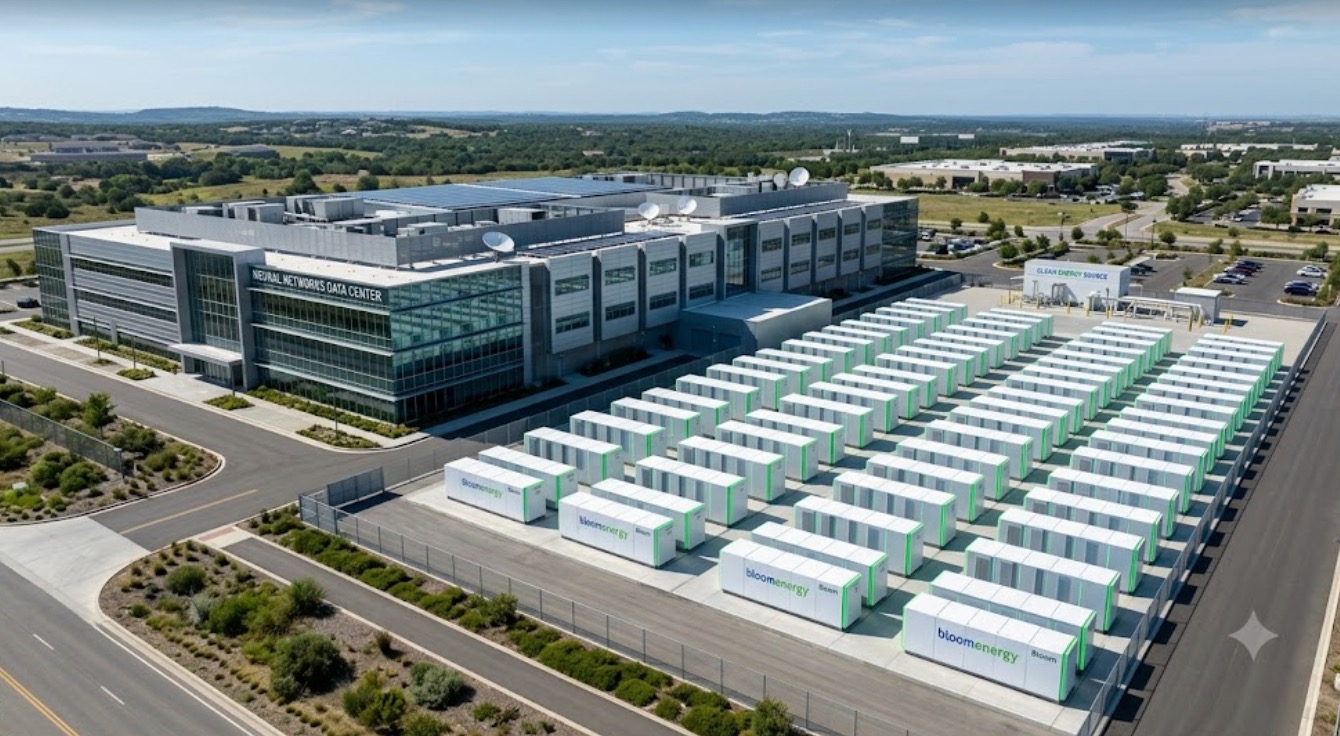
The expansion of AI infrastructure has created a power problem. High-density computing requires continuous electricity, but many regional grids cannot add large new loads quickly enough. A data center may secure land and computing equipment before it receives a firm grid connection.
Bloom Energy’s solid oxide fuel cells generate electricity at or near the point of consumption. They can operate using natural gas, biogas or hydrogen and do not rely on the conventional combustion process used by gas turbines.
The attraction for data center developers is mainly speed and reliability. Onsite systems can reduce dependence on transmission construction and long interconnection queues. They can also provide continuous power for workloads that cannot tolerate interruptions.
Bloom’s management said in its latest earnings release that major US hyperscalers and more than a dozen neocloud companies, AI laboratories and colocation operators have approved its power solutions. That statement comes from the company and does not disclose every customer or the size of each potential project, but it helps explain why investors increasingly connect BE stock with AI spending.
For traders following technology, energy and other global markets, Tapbit provides access to market information and trading services from one platform.
The Oracle Agreement Is a Major Catalyst
In April, Bloom Energy announced an expanded agreement with Oracle covering as much as 2.8 gigawatts of fuel-cell capacity. An initial 1.2GW has been contracted, with deployment underway across Oracle projects in the United States.
The companies had already completed an earlier installation in 55 days, ahead of the original 90-day schedule. That speed supports Bloom’s argument that onsite fuel cells can help data center operators secure power faster than many conventional alternatives.
There is an important distinction in the announcement. The agreement supports up to 2.8GW, but only the initial 1.2GW was described as contracted. The remaining capacity should not yet be treated as confirmed revenue.
The full terms are available in Bloom Energy’s Oracle partnership announcement.
What Does the $25 Billion Brookfield Partnership Mean?
Bloom Energy and Brookfield also expanded their AI infrastructure partnership in June. Brookfield increased its project-financing framework from $5 billion to $25 billion, with the capital intended to support power projects for AI infrastructure.
The arrangement could make it easier to finance large deployments. This matters because data center power projects require significant upfront capital, even when the underlying demand is strong.
However, the $25 billion figure is a financing framework, not $25 billion of guaranteed Bloom Energy revenue. Its eventual value to Bloom will depend on the projects that move forward, the equipment selected and the timing of deployment.
This difference is especially important when evaluating companies connected to large infrastructure announcements. Financing capacity can support growth, but it should not be confused with booked sales.
Supply-Chain Questions Remain Unresolved
Bloom Energy has also faced scrutiny over scandium oxide, a material used in its fuel-cell technology. In July, Hunterbrook Media published a report questioning Bloom’s statements about its supply chain and potential dependence on China. Hunterbrook disclosed that it might hold positions that would benefit from a decline in BE stock.
Bloom rejected the report’s conclusions. In a filing with the US Securities and Exchange Commission, the company said it had sufficient scandium oxide for current demand and backlog, was not dependent on China and had visibility into enough supply to support annual production of 25GW.
At this stage, investors are dealing with competing claims from a short seller and the company. Bloom’s latest financial results reduce immediate concerns about its ability to deliver current orders, but they do not independently settle every question about long-term material sourcing.
Key Risks for BE Stock
Execution is the most immediate risk. Bloom’s raised guidance assumes continued production growth and timely delivery. Delays involving construction, permits, customer sites or fuel infrastructure could shift revenue between quarters.
Valuation also matters. Even after its correction, BE remains far above its 52-week low. A stock priced for rapid growth can fall sharply when results are merely good rather than exceptional.
Regulatory issues may affect individual projects. Bloom’s systems produce fewer local pollutants than conventional combustion technologies, but systems running on natural gas still emit carbon dioxide. Large installations may face scrutiny involving pipelines, emissions, land use and local communities.
Customer and project concentration should also be watched. Partnerships with Oracle and other large infrastructure operators provide scale, but delays involving a major customer can have an outsized effect on reported revenue.
Finally, BE is a highly volatile stock. Its double-digit decline during regular trading and double-digit rebound after earnings occurred on the same day. Traders should account for that volatility when considering position size and leverage.
Conclusion
Bloom Energy is rebounding because its second-quarter results provided concrete evidence that AI-related power demand is translating into revenue, profit and cash flow. Record sales, stronger margins and higher full-year guidance gave investors reasons to revisit the stock after its recent correction.
The company also occupies a valuable position in the AI infrastructure chain. Data centers cannot operate without electricity, and traditional grids are struggling to connect new projects quickly. Bloom’s onsite fuel cells offer a potential answer to that bottleneck.
The opportunity does not remove the risks. Some partnership figures represent maximum capacity or financing frameworks rather than guaranteed revenue. Project delays, regulatory reviews, supply-chain questions and a demanding valuation could continue to produce sharp price movements.
Traders interested in following global asset trends can create a Tapbit account or log in to Tapbit to explore available markets and trading tools.
Frequently Asked Questions
What is Bloom Energy?
Bloom Energy is a US energy technology company listed on the New York Stock Exchange under the ticker BE. It manufactures solid oxide fuel-cell systems that generate electricity onsite for data centers, manufacturers, utilities and other commercial customers.
Why is Bloom Energy stock rebounding?
BE stock rebounded after Bloom reported record second-quarter revenue, stronger margins and earnings above market expectations. The company also raised its 2026 revenue and profit guidance, strengthening investor confidence in its growth outlook.
How did Bloom Energy perform in the second quarter of 2026?
Bloom Energy generated $1.065 billion in revenue, up 165.5% year over year. Its GAAP diluted earnings reached $0.62 per share, while non-GAAP diluted earnings were $0.78 per share. The company also generated $226.4 million in operating cash flow.


