
SK Hynix has been at the center of the AI trade for much of 2026. Its HBM chips are essential for advanced AI systems, and rising memory prices have pushed earnings and cash generation to record highs.
That success, however, hasn't translated into a stable stock.
Shares listed in South Korea (KRX: 000660) have seen sharp swings as investors weigh record profits against high expectations, increased capital spending, and growing competition in HBM4. A 40 trillion won share buyback has added another layer to the debate.
The question is no longer whether AI demand benefits SK Hynix — it clearly does. What matters now is whether HBM4 shipments, shareholder returns and future cash flow can justify a stock that has already priced in substantial growth.
SK Hynix Stock Remains Highly Volatile
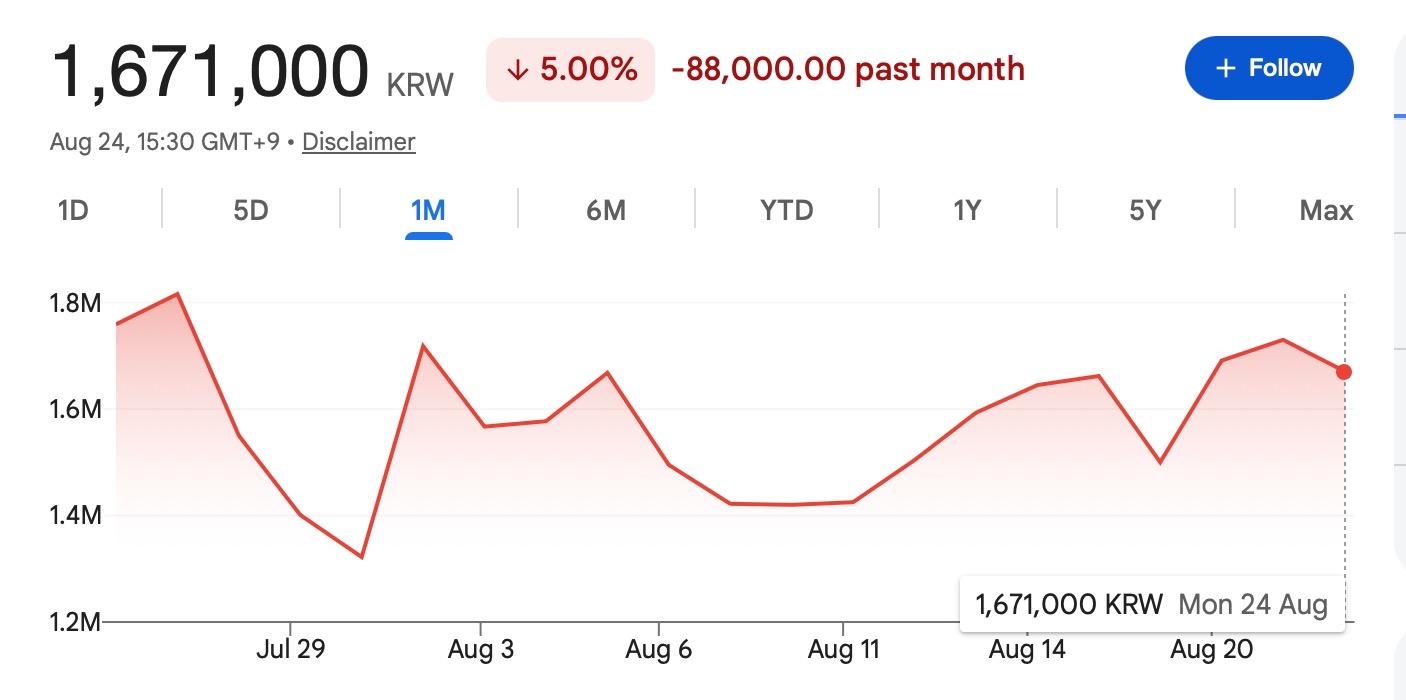
SK Hynix closed near 1,675,000 won on August 24, 2026, down approximately 3.2% for the session, according to historical market data. The decline followed a powerful two-day recovery: 000660 gained about 12.7% on August 20 and another 2.3% on August 21.
Those moves show how quickly sentiment can change. The stock rose after SK Hynix announced a historic buyback, but it remained sensitive to broader weakness in Korean semiconductor shares and the KOSPI.
The recent volatility also reflects the size of the expectations built around the company. SK Hynix can report record earnings and still fall if revenue, shipments or guidance fail to clear increasingly aggressive forecasts.
Investors researching the company should make sure they are following the correct security. 000660 is the common stock traded on the Korea Exchange. Its price should not be confused with the company’s US-listed depositary shares, overseas GDRs or trading products that reference SK Hynix.
The 40 Trillion Won Buyback Changed the Short-Term Picture
The most immediate catalyst arrived on August 19, when SK Hynix approved a plan to repurchase and cancel 40 trillion won worth of common shares.
Based on the reference price used in the announcement, the program covers approximately 24.07 million shares, equal to around 3.3% of the company’s issued stock. Purchases are scheduled to take place over roughly three months beginning on August 20, with the acquired shares cancelled after completion.
Cancellation matters because the shares are removed rather than retained as treasury stock. Assuming the company completes the program as announced, the lower share count should increase each remaining shareholder’s proportional ownership of the business.
SK Hynix also raised its shareholder return target. The company now plans to return more than 50% of cumulative free cash flow generated between 2025 and 2027 through buybacks, cancellations and dividends. Additional details may be provided with its third-quarter results.
The scale of the program sends a clear message: management believes the market is not fully reflecting the company’s earnings power and cash position. At the end of the second quarter, SK Hynix reported approximately 69.4 trillion won in net cash, giving it room to return capital while continuing to invest.
Still, a buyback cannot settle every concern surrounding the stock. It can reduce share supply and support earnings per share, but the lasting value of the program depends on where the shares are purchased and whether the business continues generating enough cash to fund expansion.
HBM4 Is Moving From Promise to Revenue
HBM places multiple layers of DRAM close to a processor, allowing large amounts of data to move quickly while using less power than conventional memory arrangements. This makes it especially important for AI accelerators, where processors must repeatedly access large models and datasets.
SK Hynix said it began mass shipments of HBM4 during the second quarter of 2026 and plans to increase production during the second half. The company also completed sample shipments of HBM4E in the first half of the year.
This is an important step. The market has discussed HBM4 for several quarters, but commercial shipments allow investors to begin measuring customer demand, production yields and revenue contribution rather than relying only on product demonstrations.
SK Hynix says its HBM4 has reached customer-required operating speeds while maintaining competitive power efficiency and production economics. It has also completed long-term agreements with around ten customers as major technology companies seek more predictable access to advanced memory.
Those agreements may make future demand easier to plan. They do not remove execution risk. SK Hynix still needs to raise production without sacrificing yields, deliver products on schedule and maintain its position as Samsung Electronics and Micron expand their own HBM4 businesses.
Record Earnings Were Not Enough to Satisfy the Market
SK Hynix reported 79.32 trillion won in second-quarter revenue and 60.54 trillion won in operating profit, producing an operating margin of 76%. Revenue increased 257% from the same period a year earlier, while operating profit rose 557%.
AI-server memory, HBM and enterprise SSDs helped drive the result. Prices for both DRAM and NAND also increased during the quarter.
The figures were exceptional, but the stock initially fell after the announcement. The reaction was a reminder that markets trade expectations, not just headline growth.
Analysis published by S&P Global Market Intelligence found that revenue came in about 0.8% below the Visible Alpha consensus. Conventional DRAM performance was softer than expected, and HBM shipment volumes also missed the estimates used in that analysis. Strong pricing, NAND performance and cash generation offset part of the shortfall.
Management expects third-quarter DRAM bit shipments to grow by approximately 10% from the previous quarter. It also raised 2026 capital expenditure guidance into the high-40-trillion-won range.
This creates a more complicated picture. Higher spending may help SK Hynix meet future AI memory demand, but it also raises the amount of capital committed before the company knows how long current pricing conditions will last.
Capacity Expansion Is Both an Opportunity and a Test
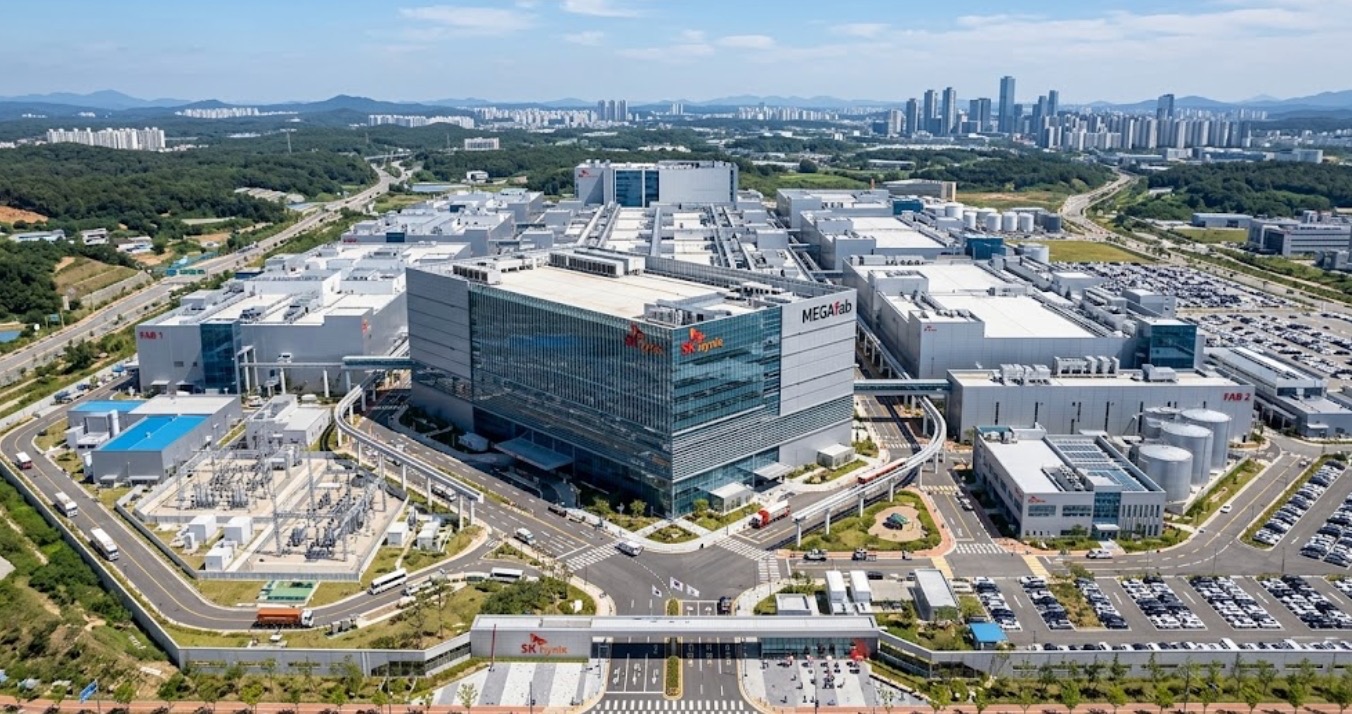
SK Hynix is not treating the AI memory cycle as a temporary spike. In August, the company announced 54 trillion won of investment in the Yongin Y2 and Cheongju M17 facilities to build additional production capacity.
The investment supports a broader shift in the memory industry. AI systems require more than processors. They also need HBM, conventional DRAM, high-capacity storage and advanced packaging. SK Hynix is expanding across several parts of that stack.
This could strengthen the company’s position if AI infrastructure spending continues. It could also leave SK Hynix with higher depreciation and underused capacity if demand slows or competitors add supply faster than expected.
Memory has historically been a cyclical industry. Periods of tight supply and high prices encourage manufacturers to invest, eventually increasing production and putting pressure on prices. HBM has stronger technical barriers and closer customer relationships than standard memory, but it is not completely insulated from that pattern.
Samsung and Micron Are Closing In
SK Hynix remains a leading HBM supplier, but HBM4 is developing into a more competitive market.
Samsung Electronics and Micron have been working through customer validation for their own HBM4 products. TrendForce has indicated that all three major memory manufacturers could participate in the next generation of Nvidia’s HBM supply chain.
A broader supplier base would be healthy for customers, which generally prefer not to depend on one manufacturer. For SK Hynix shareholders, however, it may limit the company’s pricing power and market share.
The competitive question is not simply who ships an HBM4 product first. Yield, power consumption, packaging capacity, delivery reliability and the ability to customize products for major customers can determine which supplier receives the most valuable orders.
SK Hynix’s established customer relationships give it an advantage. That advantage must be defended with each new product generation.
What Matters After the Buyback Rally
The 40 trillion won buyback gives SK Hynix shareholders something tangible: a scheduled source of demand and the planned cancellation of approximately 3.3% of issued shares.
HBM4 offers a different kind of support. It gives the company exposure to one of the most important bottlenecks in AI infrastructure, but its value will depend on shipments, customer adoption and production economics.
That leaves 000660 caught between unusually strong fundamentals and unusually high expectations. Record profits have strengthened the company’s balance sheet, yet the market is already looking beyond today’s results to the durability of the AI memory cycle.
The next useful signals will come from HBM4 shipment growth, memory contract pricing, capital expenditure discipline, competitive market share and the execution of the buyback. Those figures will say more about the stock’s direction than the size of any single daily move.
Readers can follow global market research and educational coverage through Tapbit. Existing users can log in here, while new users can create an account.
Frequently Asked Questions
What is the stock code for SK Hynix in South Korea?
SK Hynix common shares trade on the Korea Exchange under the stock code 000660. This is the company’s Korean-listed stock and should not be confused with its US depositary shares, overseas GDRs or other products that track SK Hynix.
Why is SK Hynix stock attracting attention?
The stock is being watched because of strong AI memory demand, the start of HBM4 mass shipments and SK Hynix’s 40 trillion won share repurchase program. Record earnings have also strengthened the company’s ability to invest and return capital to shareholders.
How large is the SK Hynix share buyback?
SK Hynix plans to repurchase and cancel 40 trillion won worth of common shares. Based on the reference price in its announcement, the program covers approximately 24.07 million shares, or about 3.3% of issued stock.


