

Zama (ZAMA) has moved back into the market spotlight as traders pay closer attention to privacy infrastructure, confidential DeFi and on-chain execution risk.
The latest catalyst is Zama Confidential RFQ, a private beta product launched on Ethereum that allows users to trade on-chain without publicly revealing trade size, direction or, in future versions, the asset being traded.
That matters because public blockchains are transparent by design. For small trades, that transparency may not feel like a major issue. For large traders, funds, market makers and institutions, it can expose strategy, invite front-running and create worse execution.
Zama is trying to solve that problem with Fully Homomorphic Encryption, or FHE. For traders watching emerging crypto infrastructure narratives, this makes ZAMA one of the more interesting tokens in the confidential finance sector.
For users following fast-moving crypto themes, Tapbit provides access to market tools and trading opportunities across major digital asset narratives:
What Is Zama?
Zama is a cryptography company focused on bringing confidentiality to public blockchains.
Its core technology is Fully Homomorphic Encryption. In simple terms, FHE allows data to remain encrypted while still being processed. For blockchain users, that means balances, transaction amounts and sensitive financial data can stay private while the network remains verifiable and composable.
This is different from traditional privacy tools that try to hide activity entirely. Zama’s positioning is closer to confidential finance: keeping sensitive information private while still supporting auditability, compliance controls and institutional use cases.
That distinction is important. Zama is not only trying to appeal to privacy-focused retail users. It is also targeting institutions that may want to move capital on-chain without exposing every trade, balance or strategy to the public.
Why Is ZAMA Trending Now?
ZAMA is trending because Zama recently announced the private beta of Zama Confidential RFQ on Ethereum. RFQ stands for request for quote. It is a trading model where a user requests a price from market makers, and those market makers compete to provide the best quote.
In traditional finance, RFQ systems are often used for large or less liquid trades. Zama is bringing that idea on-chain, but with confidentiality built into the process.
According to Zama, the Confidential RFQ private beta keeps trade size and direction encrypted during the trading lifecycle. The public launch is planned for September, with multi-chain support expected later.
This gives ZAMA a clearer product catalyst than many short-term trending tokens. The market is not only reacting to a price chart. It is reacting to a new product that fits a growing need in on-chain trading.
Why Confidential RFQ Matters
Large on-chain trades have a visibility problem. When a large order is visible on a public blockchain, other traders and bots may detect the transaction before it settles. That can lead to front-running, sandwich attacks or worse execution prices. This is one reason many large crypto trades still happen through OTC desks, private chats or off-chain arrangements.
Zama Confidential RFQ is designed to reduce that problem. A trader submits an encrypted intent. Market makers quote against that intent without seeing the full public trade details. The protocol then selects the best encrypted quote and settles the trade on-chain.
The idea is to keep the benefits of blockchain settlement while reducing the information leakage that often hurts large traders.
This is why the product fits the MEV protection narrative. It does not mean all MEV disappears, and traders should be careful with that claim. But it does address one of the main sources of MEV risk: visible order flow.
The FHE Narrative
FHE is one of the more technical narratives in crypto, but the market reason is simple. Public blockchains expose too much information for many serious financial use cases. If every wallet balance, trade size and transaction path is visible, institutions may avoid moving sensitive activity on-chain.
FHE offers a possible answer. It allows encrypted data to be used in smart contract applications without revealing the underlying information.
That could matter for several areas:
-
Confidential DeFi
-
Private on-chain trading
-
Institutional vaults
-
Stablecoin settlement
-
Tokenized real-world assets
-
Treasury management
-
Payroll and payments
-
Private token distribution
Zama’s argument is that confidentiality may be a missing layer for institutional on-chain finance. The Confidential RFQ launch gives that argument a more concrete trading use case.
Zama and Elliptic: Privacy With Compliance
Another reason Zama is getting attention is its recent partnership with Elliptic. On July 21, Zama announced that it is working with Elliptic to bring wallet risk screening to confidential financial applications. The goal is to support compliance checks without exposing encrypted balances, transaction amounts or other sensitive financial information.
This matters because privacy in crypto is often misunderstood.
For institutions, privacy cannot simply mean hiding everything from everyone. They still need sanctions screening, counterparty risk controls and compliance workflows. Zama is positioning itself around the idea that confidentiality and compliance can exist together.
That makes the Zama story different from older privacy coin narratives. The project is trying to build confidential finance that can still fit regulated market expectations.
ZAMA Tokenomics and Buyback Narrative
ZAMA also has a tokenomics angle behind the current attention. Zama states that 100% of swap fees from the Confidential RFQ product will go toward buying back and burning ZAMA tokens. This gives the token a clearer link to future usage of the RFQ product.
However, traders should treat this carefully.
A buyback-and-burn mechanism does not guarantee price appreciation. Its impact depends on real trading volume, fee generation, product adoption and broader market conditions. If Confidential RFQ does not attract meaningful usage, the tokenomics effect may be limited.
Still, the mechanism gives the market a reason to watch product adoption closely. If RFQ usage grows, traders may begin to track fees and burn activity as part of the ZAMA thesis.
What the Market Data Shows
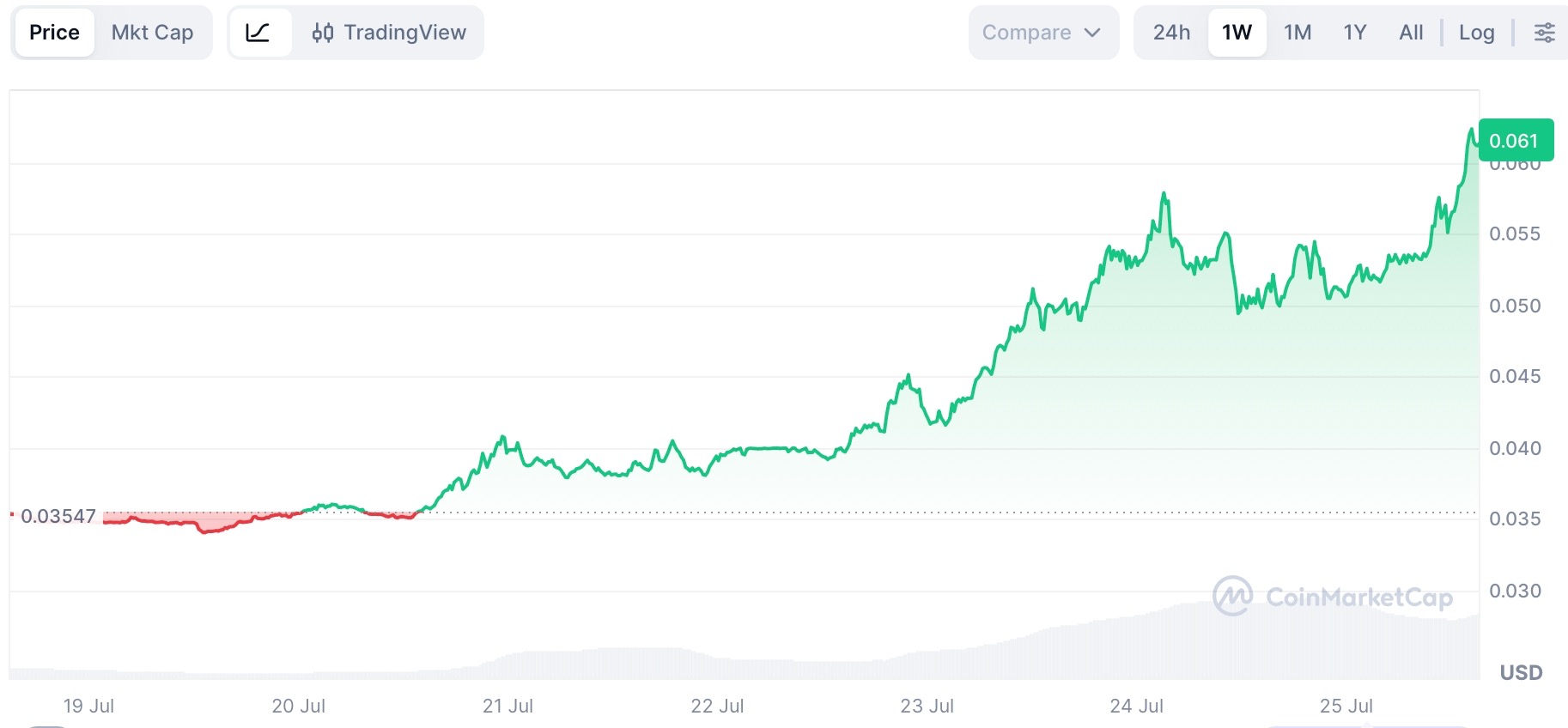
CoinGecko data reviewed on July 25, 2026, showed ZAMA trading around $0.061, with a market capitalization of roughly $112 million and 24-hour trading volume above $90 million.
The token had gained around 46% to 47% over the previous seven days, helped by the Confidential RFQ launch and renewed attention around confidential DeFi.
CoinGecko also listed “Zama Launches Confidential RFQ Protocol” as a recent event connected to the token’s move.
That said, ZAMA was not in a clean vertical breakout at the time of review. The token had already reacted to the news, and traders should watch whether volume and interest remain strong after the first wave of attention.
Bottom Line
Zama is trending because it sits at the intersection of several important crypto themes: confidential DeFi, FHE, MEV protection, institutional privacy and compliant on-chain finance.
The Confidential RFQ private beta gives Zama a concrete product catalyst. It directly addresses a real problem in on-chain trading: large trades often reveal too much information before they settle.
The Elliptic partnership also helps frame Zama as a compliance-aware confidentiality project rather than a simple anonymity tool.
But ZAMA is not risk-free. Confidential RFQ is still early, public adoption has not yet been proven, and the token has already reacted to recent news. Traders should separate the long-term potential of confidential finance from short-term price excitement.
For users interested in emerging crypto narratives, Zama is worth watching because it asks a serious question: can public blockchains support private, compliant and institution-ready markets?
New users can register on Tapbit here.
Frequently Asked Questions (FAQ)
What is Zama?
Zama is a cryptography company focused on bringing confidentiality to public blockchains. It uses Fully Homomorphic Encryption, or FHE, to help keep sensitive financial data private while still allowing blockchain applications to process encrypted information.
What is ZAMA?
ZAMA is the token associated with the Zama ecosystem. It is connected to Zama’s confidential blockchain infrastructure and tokenomics mechanisms such as staking and product-related buyback-and-burn activity.
Why is ZAMA trending?
ZAMA is trending because Zama launched the private beta of its Confidential RFQ product on Ethereum. The product is designed to let users trade on-chain without publicly revealing trade size, direction or, in future versions, the asset being traded.


