

Pons has become one of the most closely watched projects in the Robinhood Chain ecosystem. Its native token, PONS, recorded a sharp weekly rally as traders responded to the growth of Robinhood Chain, a planned V2 upgrade and the prospect of new trading pairs involving tokenized real-world assets.
As of July 25, 2026, CoinGecko priced PONS near $0.0387, representing an increase of about 275% over seven days. Its market capitalization was approximately $30.4 million, while 24-hour trading volume stood near $8 million. The token had also reached an all-time high of roughly $0.0488 on July 22.
Those figures help explain the renewed attention, but price momentum is only part of the story. The more important question is whether Pons can turn its early traction into lasting activity after its V2 upgrade goes live.
What Is Pons?
Pons is a non-custodial platform for launching and trading tokens on Robinhood Chain. Users can browse new launches, inspect token information and trade directly from their wallets.
Because the platform is non-custodial, Pons does not hold user funds during a transaction. Launches and trades are executed through wallet-approved on-chain transactions.
The platform currently uses a launch model in which tokens move into a Uniswap liquidity pool after reaching a defined threshold. Its documentation also warns that newly launched tokens may be volatile, illiquid or lose their entire value.
One distinction is important: Pons is built on Robinhood Chain, but it is not an official Robinhood product. Its presence on the network should not be interpreted as a partnership, endorsement or investment recommendation from Robinhood.
Why Is PONS Rising?
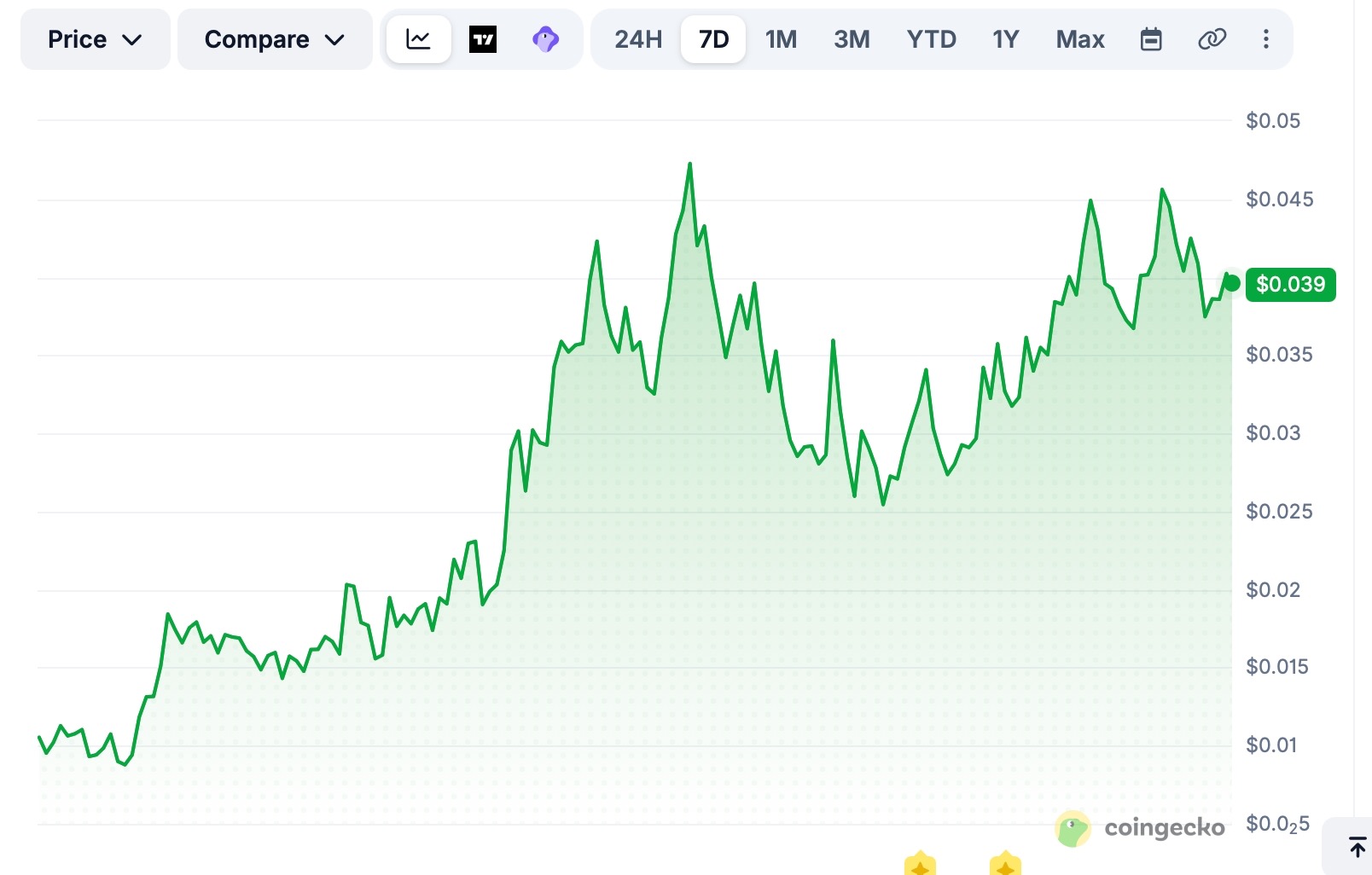
The recent rally appears to reflect several overlapping narratives rather than a single announcement.
Robinhood Chain launched its public mainnet on July 1, 2026, creating a dedicated Ethereum Layer 2 for tokenized financial assets and on-chain applications. Built with Arbitrum technology, the network uses ETH for transaction fees and includes infrastructure for stock tokens, stablecoins, decentralized trading and lending.
That launch created an early market for applications built specifically for the new network. Pons attracted attention as traders searched for native Robinhood Chain projects with exposure to token launches and trading activity.
The second catalyst is the planned Pons V2 upgrade. Announced on July 23, V2 is expected to change how tokens launch, generate liquidity and distribute fees.
The third catalyst is the RWA narrative. Pons has said that V2 will support custom trading pairs involving assets such as USDG and tokenized versions of NVDA, AAPL and HOOD. This gives the project a possible role in the broader tokenized-stock ecosystem, rather than limiting it to conventional crypto launchpad activity.
Finally, the PONS buyback and burn mechanism has added another point of interest. Protocol activity may create recurring purchases of PONS, although this mechanism should not be treated as a guarantee of price appreciation.
What Changes With Pons V2?
The planned V2 release introduces an ETH-denominated bonding curve. Newly launched tokens would trade on that curve before graduating into a decentralized liquidity pool.
Under the announced design, a token would remain on the bonding curve until liquidity reaches 4.2 ETH. The accumulated liquidity would then be transferred through an automated process into a permanently locked Uniswap V4 position.
The move to Uniswap V4 is expected to give Pons more control over fee routing and pool behavior through V4 Hooks. It may also make the graduation process more flexible than the platform’s existing Uniswap V3 model.
Pons also plans to remove trading restrictions for regular wallets. Restrictions would remain configurable for developer wallets, but other users and third-party trading applications should be able to interact with launches more freely.
Creator payments are another area being revised. Under V2, creators would receive fees in ETH by default instead of accumulating small balances of the token they launched. Supported alternative payout assets may also be selected during deployment.
These changes could improve the experience for token creators and traders. However, V2 was still awaiting deployment at the time of writing. Reports indicate that its contracts are undergoing audits with two service providers, and individual features may change before the final release.
Why RWA Trading Pairs Matter
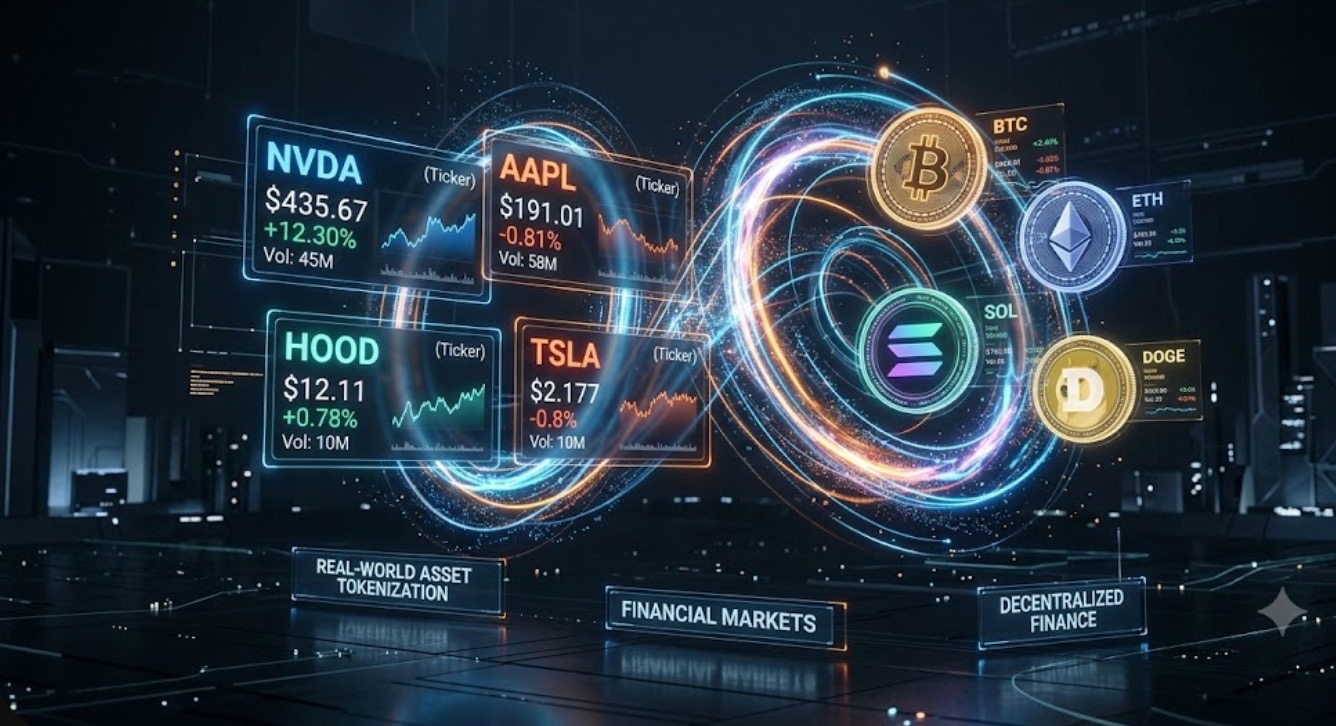
The most distinctive part of the V2 plan is support for custom quote assets. Traditional crypto launchpads usually pair new tokens with ETH, SOL or a stablecoin. Pons V2 would allow developers to create markets using supported assets such as USDG or tokenized stocks as the quote asset.
Examples mentioned in the V2 announcement include NVDA, AAPL and HOOD. In practice, this could allow a newly launched token to trade against a tokenized representation of Nvidia, Apple or Robinhood stock instead of trading only against ETH.
This fits Robinhood Chain’s wider focus on tokenized real-world assets. Robinhood has positioned the network as infrastructure for bringing stocks and other financial products on-chain, with decentralized trading and lending applications built around those assets.
Custom RWA pairs could therefore give Pons a position between two markets: speculative token launches and tokenized financial assets.
Still, the distinction between a trading pair and asset backing must remain clear. Supporting a PONS/NVDA or another stock-token pair would not mean that PONS is backed by Nvidia shares. Holding PONS does not automatically provide ownership, dividend or voting rights in any company represented by a tokenized asset.
Actual availability will also depend on deployment, liquidity, regional eligibility and the rules governing the relevant tokenized assets.
How the PONS Buyback and Burn Mechanism Works
Pons documentation describes a protocol revenue model connected to PONS buybacks.
Under the current model, 80% of protocol fees are used for PONS purchases through an automated time-weighted average price process. Purchased tokens are sent to a burn address, permanently removing them from the active supply. The remaining 20% supports infrastructure and team operations.
CoinGecko estimates that approximately 790 million PONS were circulating at the time of writing, compared with an original maximum supply of 1 billion tokens.
This mechanism creates a possible connection between platform activity and PONS demand. If more tokens launch and generate fees, the protocol may have more resources available for buybacks.
There are limits to this argument. The documentation states that the 80% allocation is not yet immutable. Protocol revenue can also fluctuate sharply, particularly when activity is driven by short-lived speculative launches. A buyback program reduces supply, but it cannot guarantee sustained demand or a higher market price.
Key Risks for PONS
PONS remains a relatively small token operating in a young ecosystem. Its recent gains may attract more traders, but they also increase the risk of rapid profit-taking.
Liquidity deserves particular attention. A token can report millions of dollars in daily volume while still having limited order-book or liquidity-pool depth. Large transactions may therefore experience significant slippage and move the market quickly.
The V2 upgrade also carries execution risk. The proposed features are meaningful, but the contracts were still being audited at the time of writing. Delays, design changes or technical issues could weaken the market narrative that helped drive the rally.
RWA trading pairs are another source of uncertainty. Announcing support for tokenized-asset pairs does not guarantee that those markets will attract durable liquidity. Their development may depend on asset availability, oracle reliability, market-maker participation and regulatory restrictions.
The buyback mechanism should also be evaluated carefully. The percentage allocated to buybacks is not yet permanently fixed, and future purchases will depend on actual protocol revenue.
Finally, users should verify the PONS contract address before interacting with the token. Names and symbols can be copied by unrelated issuers. The address listed in the Pons documentation and on CoinGecko is: 0x39dBED3a2bd333467115dE45665cC57F813C4571
Bottom Line
PONS is rising as several active crypto narratives come together: the launch of Robinhood Chain, growing interest in tokenized stocks, expectations surrounding Pons V2 and a protocol-funded buyback and burn mechanism.
The planned upgrade could make Pons more flexible by adding an ETH-based bonding curve, Uniswap V4 liquidity, revised creator payments and custom RWA trading pairs. Those changes give the project a clearer market story, but they have not yet been fully tested through a public V2 deployment.
For now, PONS remains a high-volatility token whose valuation depends heavily on the successful launch of V2 and the platform’s ability to retain activity after the initial Robinhood Chain excitement fades.
Traders can track live market conditions through the Tapbit homepage. Existing users can access their accounts through Tapbit login, while new users can begin from the Tapbit registration page.
Frequently Asked Questions
What is Pons?
Pons is a non-custodial token launch and trading platform built on Robinhood Chain. Users can launch tokens, browse new projects and trade directly through their wallets without depositing funds with Pons.
What is the PONS token?
PONS is the native token associated with the Pons ecosystem. The protocol uses part of its fee revenue to buy PONS and send the purchased tokens to a burn address.
Why is PONS rising?
The rally appears to be driven by growing interest in Robinhood Chain, expectations surrounding the planned Pons V2 upgrade, proposed support for RWA trading pairs and the project’s buyback and burn mechanism.


