

Cardano is back in the market conversation, but not for the reasons that usually drive a fast-moving altcoin rally. Instead, Cardano’s current case rests on infrastructure: a completed network upgrade, an ambitious scaling roadmap, new cross-chain connections and an effort to deepen stablecoin liquidity.
ADA was trading near $0.167 in the latest market snapshot, with a market capitalization of roughly $6.2 billion. The token had recovered from recent lows, but remained far below the levels seen during earlier market cycles.
That makes the current setup easy to misread. ADA’s rebound may show that sellers are losing some control, but a low-price recovery is not the same as a confirmed breakout. For Cardano to earn a broader revaluation, its technical roadmap must begin producing measurable economic activity.
The real question is no longer whether Cardano can ship upgrades. It is whether those upgrades can attract capital and users.
ADA Is Recovering, but the Market Has Not Confirmed a New Trend
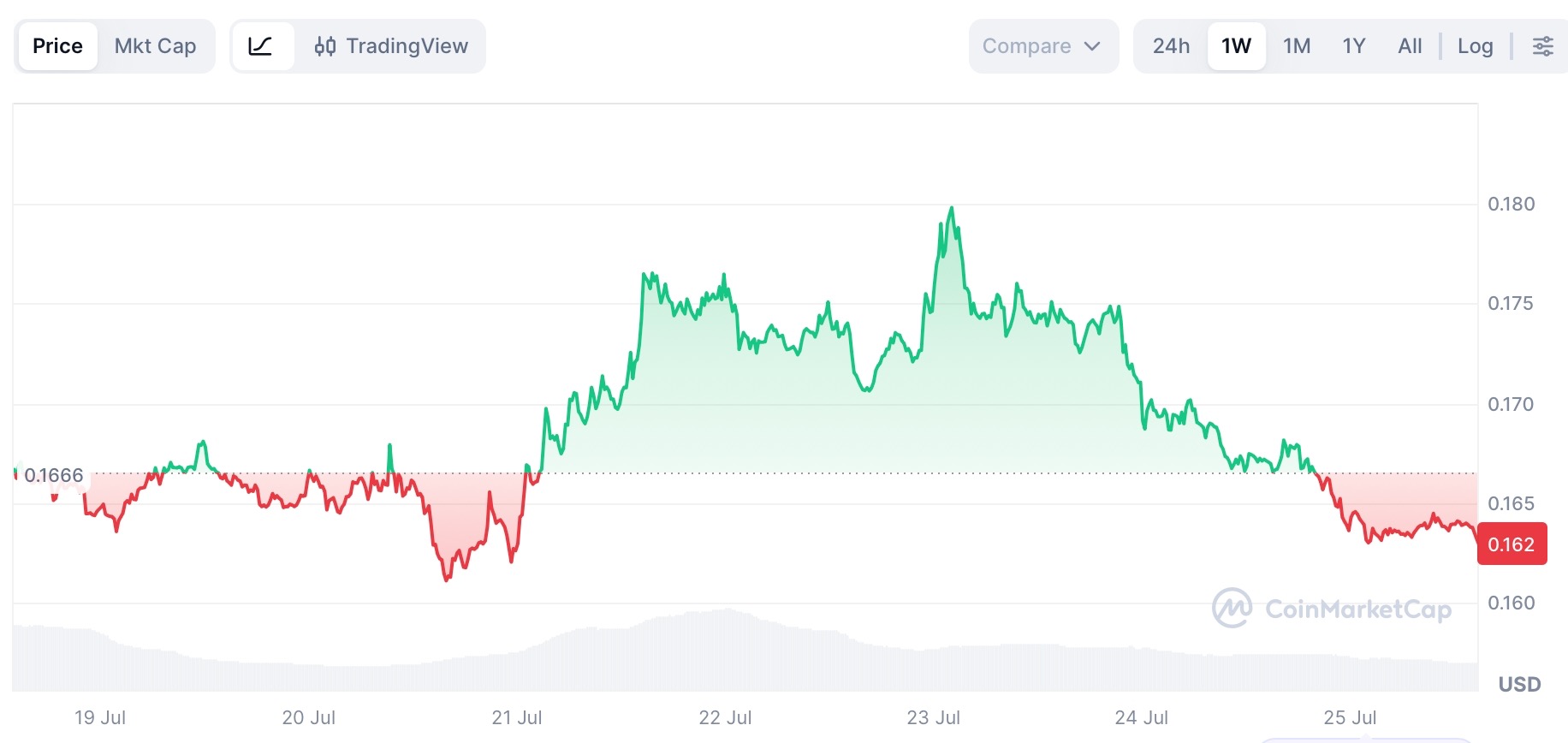
ADA’s recent movement has renewed optimism among long-term Cardano supporters. After months of weak sentiment, even a moderate recovery can attract attention, particularly when it arrives alongside visible network development.
Still, the market backdrop remains fragile. At approximately $0.167, ADA would need to rise close to sixfold to reach $1. With roughly 37 billion ADA circulating, a $1 price would imply a market capitalization near $37 billion.
That is not impossible in a strong crypto cycle, but it would require much more than short-term momentum. Cardano would need stronger liquidity, higher application usage, sustained capital inflows and a favorable market for large-cap altcoins.
For now, ADA is better described as attempting a recovery rather than entering a confirmed bull market.
The van Rossem Upgrade Is Now Live
One of Cardano’s clearest 2026 milestones is the van Rossem upgrade. Cardano’s official hard-fork timeline shows that van Rossem was implemented on July 18, 2026, at epoch 644, moving the network to protocol version 11.0. The upgrade introduced cleaner ledger rules, VRF key-uniqueness improvements, better Plutus smart-contract performance and new cryptographic built-ins.
This matters because van Rossem is not merely a proposed roadmap item. It is active on mainnet.
The upgrade strengthens Cardano’s development environment and prepares the network for more advanced applications. Improvements to Plutus and cryptographic capabilities could help developers build more efficient smart contracts, zero-knowledge applications and other security-sensitive tools.
But the effect on ADA is indirect. A protocol upgrade can improve what developers are able to build. It does not guarantee that applications will attract users or that those users will generate meaningful demand for ADA.
The next stage of the story therefore depends on adoption.
Ouroboros Leios Could Be Transformational—but It Is Not Live Yet
Ouroboros Leios is Cardano’s most important scaling project. The proposed architecture separates transaction diffusion from transaction sequencing. Instead of forcing every stage of block production through the same serial process, Leios introduces additional block types and parallel validation mechanisms designed to increase throughput without abandoning Cardano’s security model.
Input Output has proposed ₳27.7 million in treasury funding to move Leios from a testnet prototype toward a mainnet-ready release candidate by late 2026. Its phased design targets a potential throughput improvement of approximately 10 to 65 times, depending on the rollout stage and configuration.
Those targets are significant, but they should be reported carefully.
Leios is not currently operating on Cardano mainnet. Cardano’s own glossary describes it as a proposal still in research and prototyping, with deployment dependent on further development, formal verification and a future hard fork.
The accurate interpretation is therefore: Cardano has a serious scaling roadmap, but the market is still waiting for delivery.
ADA may benefit if Leios moves successfully from testnet work to production and supports applications that need substantially higher throughput. Until that happens, its projected performance remains a future capability rather than current network capacity.
LayerZero Could Address Cardano’s Liquidity Problem
Cardano has historically operated as a relatively isolated ecosystem compared with Ethereum, Solana and networks connected through large cross-chain liquidity systems.
The planned LayerZero integration could help change that. Cardano announced that the integration would roll out in phases during 2026, including network endpoints, Stargate liquidity infrastructure and developer tools. The stated goal is to connect Cardano with a broader multichain environment and potentially support the movement of more than 800 assets.
However, the implementation is not fully complete. A Cardano Critical Integrations status report published in May listed LayerZero cross-chain messaging and bridge infrastructure as being in active delivery.
This distinction matters. The number of assets that could theoretically become accessible is less important than the amount of capital that actually moves onto Cardano. Traders should eventually look for growth in bridged assets, DEX liquidity, stablecoin supply, active applications and transaction volume.
Connectivity creates an opportunity. Capital inflows determine whether the opportunity becomes economically meaningful.
Cardano Has USDCx, Not Conventional Native USDC
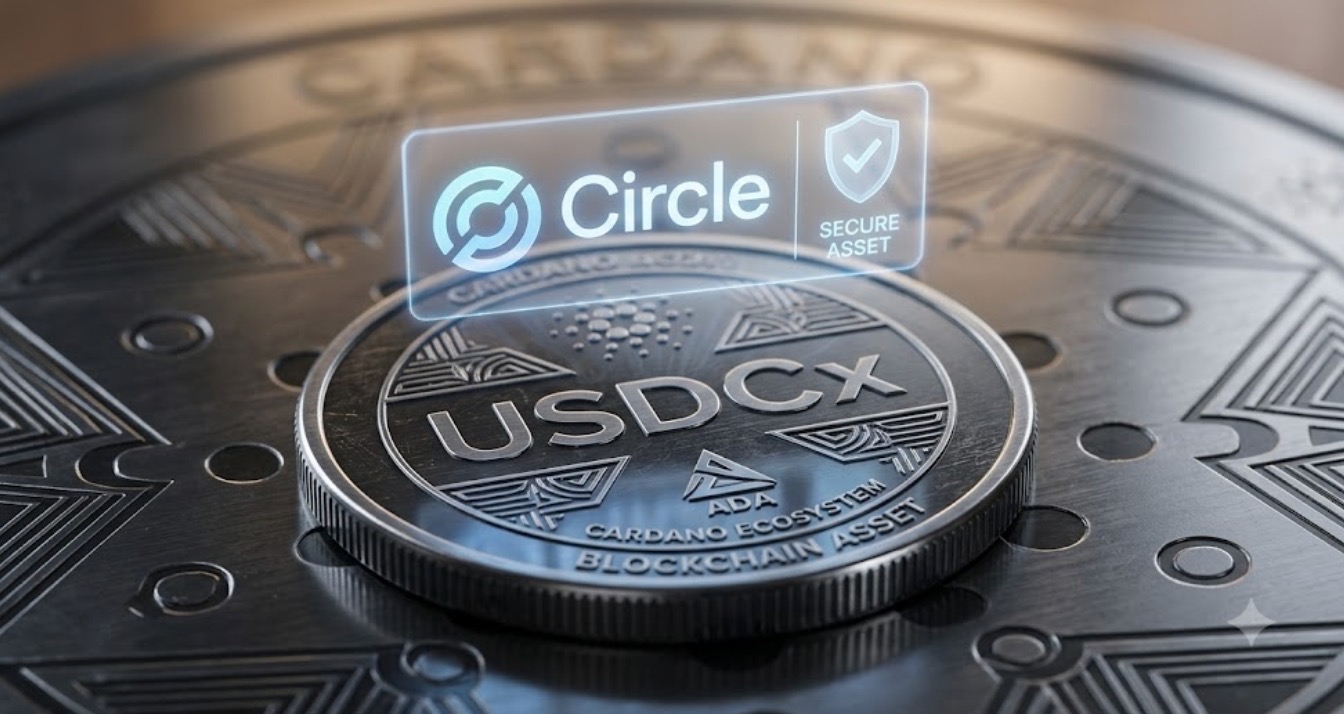
Stablecoin liquidity is another important part of the Cardano recovery thesis. Circle’s official release notes show that support for USDCx on Cardano through xReserve was added on February 27, 2026. The same support was introduced for Cardano’s preproduction testnet.
This is a meaningful improvement because dollar-denominated liquidity is essential for lending, decentralized exchanges, payments and collateralized financial products.
But the terminology should remain precise. USDCx issued through xReserve is backed by USDC reserves and provides Cardano users with access to Circle-supported dollar liquidity. It should not automatically be described as identical to the conventional native USDC issued directly on every Circle-supported network.
For the market, the branding distinction is less important than adoption. The key measurements will be how much USDCx enters Cardano, where it is used, how deep its trading pairs become and whether it helps attract new DeFi participants.
The Spot ADA ETF Story Needs a Reset
ETF speculation has appeared frequently in Cardano price forecasts, but the current situation is less straightforward than many headlines suggest.
The SEC’s official record shows that NYSE Arca’s proposed rule change to list and trade shares of the Grayscale Cardano Trust ETF was withdrawn on September 29, 2025.
That means this earlier spot ADA ETF proposal is not currently waiting for a final approval decision.
There are Cardano-related investment products using futures or leveraged exposure, but those should not be confused with a conventional U.S. spot ETF directly holding ADA.
A new spot application could emerge in the future. Until an exchange or issuer files one and the SEC confirms it, a spot ADA ETF should be treated as a possible future catalyst—not an active approval event.
This removes one of the easiest bullish narratives from the near-term ADA outlook. Cardano’s case now depends more heavily on its own ecosystem execution.
ADA Outlook for the Rest of 2026
ADA’s outlook can be considered through three broad scenarios.
Gradual Recovery
In the base scenario, Cardano continues shipping upgrades and integrations, but DeFi growth remains slow. ADA may recover with the broader crypto market, yet struggle to achieve a lasting independent revaluation.
This would reflect progress without a major adoption shift.
Adoption-Led Revaluation
The stronger scenario would require van Rossem to support new applications, LayerZero to bring meaningful liquidity, USDCx usage to expand and Leios development to meet its milestones.
If those factors are accompanied by a strong altcoin market, ADA could move beyond a simple relief rally and attract investors who previously viewed Cardano as technically capable but commercially underused.
Continued Underperformance
The bearish scenario is not necessarily a technical failure.
Cardano could continue building while ADA remains weak if stablecoin growth stalls, DeFi liquidity remains small and competing networks capture most new users and developers.
In that case, the market may continue discounting future upgrades until Cardano demonstrates stronger economic results.
Tapbit View
Cardano has made measurable progress in 2026. The van Rossem upgrade is live. Leios is advancing through development and testing. LayerZero integration is being delivered in stages. Circle-supported USDCx has created a new stablecoin route for the ecosystem.
Those are real developments, not empty roadmap promises.
But ADA’s price outlook still depends on what happens next. Cardano needs to turn better infrastructure into stronger liquidity, more applications, higher fees and sustained user activity. Without that conversion, ADA may remain a technically respected asset whose valuation depends mainly on the broader crypto cycle.
For Tapbit users, the main takeaway is straightforward: Cardano’s roadmap is improving, but ADA still needs adoption confirmation.
Traders can track live market conditions through the Tapbit homepage. Existing users can access their accounts through Tapbit login, while new users can begin from the Tapbit registration page.
Frequently Asked Questions (FAQ)
What is the current Cardano price?
ADA was trading near $0.167 in the latest available market snapshot, with a market capitalization of approximately $6.2 billion. Crypto prices change continuously.
What is the van Rossem upgrade?
Van Rossem is Cardano’s protocol version 11.0 upgrade. It was implemented on July 18, 2026, and introduced cleaner ledger rules, improved VRF key security, Plutus performance improvements and new cryptographic functions.
Is Ouroboros Leios live?
No. Leios remains in research, prototyping and testnet development. Input Output aims to move it toward a mainnet-ready release candidate, but it is not currently active on Cardano mainnet.


