
Using a low-power Bitaxe device, a solo miner found Bitcoin block #957,382 through Public Pool and earned a full block reward of 3.1382 BTC. At the time of the first reports, that reward was worth roughly $200,000.
The story spread quickly because the device was not an industrial mining rig. It was a small, open-source ASIC miner often sold for around $60 to $150, with hashrate close to 1 TH/s.
It sounds like the perfect crypto headline: a small mine, a cheap device and a six-figure Bitcoin reward.
But the real lesson is more serious.
This was not proof that small Bitcoin mining has suddenly become easy or profitable. It was an extremely rare solo mining success. The event shows that Bitcoin remains open to anyone, but it also shows how difficult it is for small miners to compete against the global Bitcoin network.
For traders and crypto users, this is not a get-rich-quick mining story. It is a lesson in probability, network difficulty, and Bitcoin’s open proof-of-work design.
What Happened?
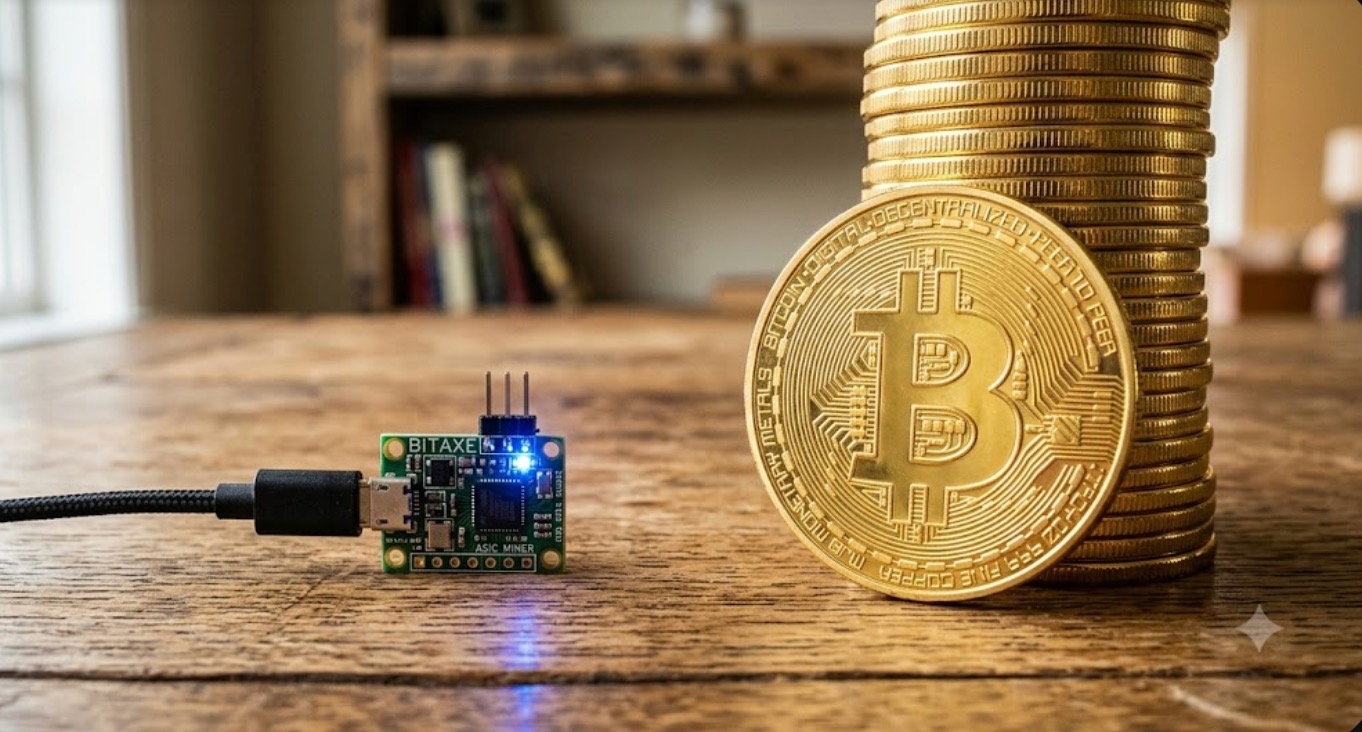
Bitcoin block #957,382 was found on July 10, 2026, through Public Pool, a solo mining pool. The miner received 3.1382 BTC, including the block subsidy and transaction fees.
Reports said the miner used a Bitaxe device averaging around 995 GH/s, or close to 1 TH/s. The device reportedly ran for only several hours before finding the block.
That is what made the story so striking. Modern Bitcoin mining is dominated by large industrial miners and mining pools operating at massive scale. The total Bitcoin network hashrate is measured in exahashes per second, while this device operated in terahashes per second.
The gap is enormous. That is why the event was so unlikely.
Why This Was a Lottery-Like Event
Solo mining means a miner is trying to find a Bitcoin block independently rather than sharing rewards with a pool.
If the miner finds a valid block, they can receive the full reward. If they do not, they receive nothing.
For large miners, solo mining can still be risky. For a 1 TH/s miner, it is almost entirely a probability game.
Several reports compared the chance of a small Bitaxe device finding a full Bitcoin block to a once-in-thousands-of-years event. One estimate described the odds as roughly equivalent to finding a block once every 16,000 to 18,000 years at that hashrate level.
That does not mean it can never happen. Bitcoin mining is probabilistic. Each hash is a new attempt. A small miner can get lucky, just as a large miner can go through periods without finding a block.
But probability is not the same as expected income. The miner won because the network allowed it, not because the economics became favorable for small-scale solo mining.
What Is Bitaxe?
Bitaxe is an open-source Bitcoin ASIC miner project. Unlike industrial mining rigs, Bitaxe devices are small, low-power, and often used by hobbyists, educators, home miners, and Bitcoin enthusiasts. Some models use chips related to those found in larger mining hardware, but at a much smaller scale.
A Bitaxe Gamma device may operate around 1 to 1.3 TH/s and consume roughly 15 to 21 watts, depending on configuration. It is not designed to compete with industrial mining farms on expected yield.
Its value is different. Bitaxe makes Bitcoin mining more understandable and accessible. It lets users run real proof-of-work hardware, connect to a mining pool, learn how block discovery works, and participate directly in the Bitcoin network.
That educational value is important. But users should not confuse educational access with reliable profitability.
Why Public Pool Matters
Public Pool is a solo mining pool. Unlike traditional mining pools, which combine hashrate and distribute rewards proportionally, a solo pool allows miners to submit work while still keeping the full block reward if their miner finds a valid block.
This setup is attractive for hobby miners because it preserves the “solo” nature of the reward while making the mining process easier to connect and monitor.
In this case, Public Pool helped route the miner’s work to the Bitcoin network. When the miner found a valid block, the reward went to that miner.
The result was rare, but the mechanism was completely consistent with Bitcoin’s design. Anyone with valid mining hardware can try. The network does not care whether the hash comes from a warehouse-scale mining farm or a small device on a desk.
Bitcoin Mining Difficulty Is Still High
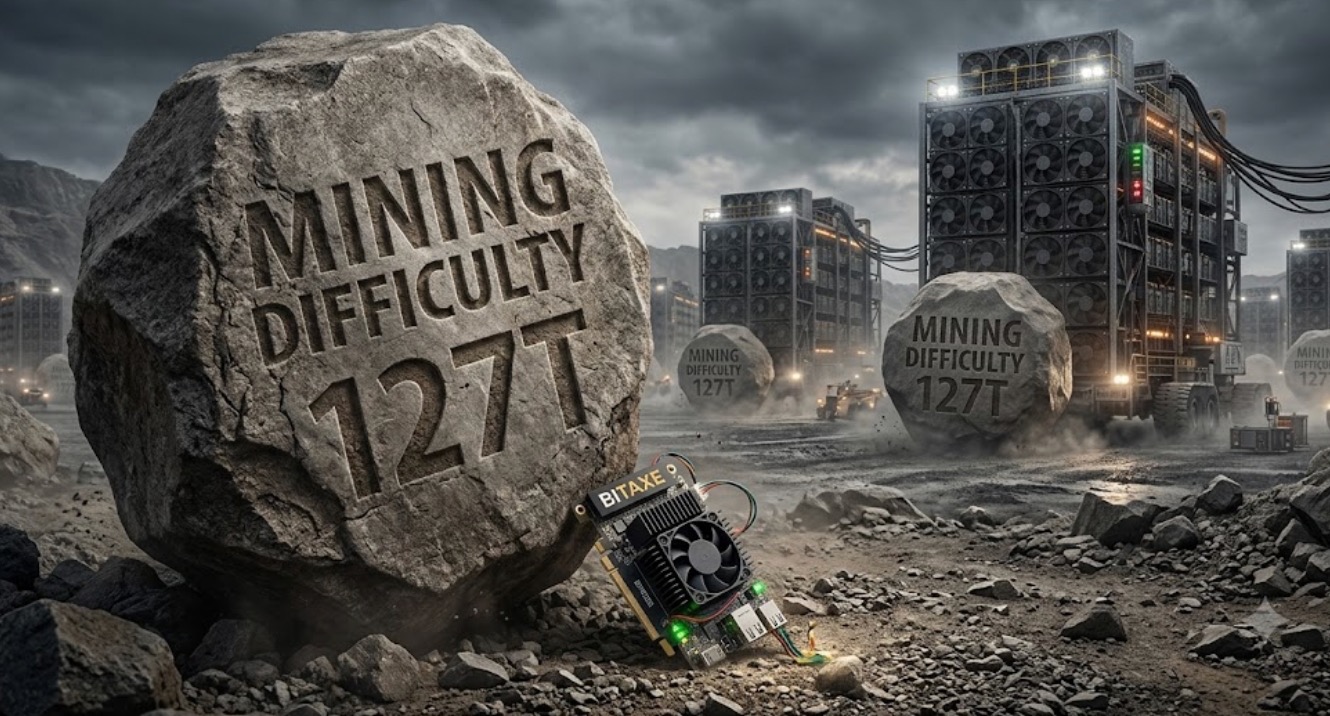
The broader mining environment remains competitive. Bitcoin mining difficulty was recently around 127.17T, even after a short-term difficulty adjustment. The total network hashrate remained near the high hundreds of exahashes per second.
That means the Bitcoin network is still heavily secured by large-scale mining power. A difficulty decline can make mining slightly easier compared with the previous adjustment period, but it does not make Bitcoin mining easy for small devices.
The key point is scale. A 1 TH/s miner is competing against a global network operating at nearly 1,000 EH/s. That is a difference of roughly one billion times.
The small miner can still win. But the odds are extremely low.
Why the Story Still Matters
Even though the event was rare, it matters for Bitcoin. It shows that Bitcoin mining remains open.
A solo miner does not need permission from a bank, broker, government, or corporation to participate in block production. They need hardware, electricity, software, and a connection to the network.
That is part of Bitcoin’s design. Proof-of-work is competitive, but it is not closed. Anyone can attempt to produce a valid block. The network verifies the block based on rules, not based on the miner’s size or identity.
This is why the Bitaxe win became symbolic. It reminded the market that Bitcoin is still a permissionless network. Large miners dominate the economics, but small participants are not technically excluded.
The Decentralization Lesson
Bitcoin decentralization is not only about who holds BTC. It is also about who can run nodes, verify blocks, broadcast transactions, and participate in mining.
Small miners like Bitaxe users may not control meaningful hashrate compared with industrial players, but they still play an educational and cultural role. They keep mining understandable. They make proof-of-work visible. They show that Bitcoin participation is not limited to institutions.
That does not solve mining centralization concerns. Large pools and industrial miners still represent most of the network hashrate. Energy costs, hardware access, and infrastructure scale remain major barriers.
But the Bitaxe block reminds users that Bitcoin’s protocol remains open at the base layer. That openness is one of Bitcoin’s strongest features.
Why Traders Should Care
At first glance, a solo mining story may not seem important for traders. But it does connect to larger Bitcoin market themes.
Mining economics affect miner behavior. Miner selling can influence supply. Difficulty adjustments reflect changes in hashrate. Transaction fees affect block rewards. Hardware efficiency shapes mining profitability. BTC price determines whether miners expand, hold, or sell.
The Bitaxe story is not a direct trading signal. It does not mean BTC price will rise. It does not mean miners are more profitable. It does not mean small-scale mining is suddenly sustainable.
But it does remind traders that Bitcoin’s security model depends on incentives, probability, and open participation. Those fundamentals remain part of the Bitcoin investment thesis.
Conclusion
A solo miner using a small Bitaxe device recently found Bitcoin block #957,382 and earned 3.1382 BTC.
The story is impressive. It is also easy to misunderstand. This was not a normal mining result. It was a rare statistical event. A small miner happened to find a valid block in a network dominated by massive industrial hashrate.
That makes the story valuable as education. It explains how block rewards work. It shows why mining difficulty matters. It highlights the difference between solo mining and pooled mining. It reminds users that Bitcoin remains permissionless.
But it should not be sold as a reliable income path. A $150 miner can participate in Bitcoin mining. It cannot reliably produce $200,000 rewards. That difference is the real lesson.
Traders can track live market conditions through the Tapbit homepage. Existing users can access their accounts through Tapbit login, while new users can begin from the Tapbit registration page.
Frequently Asked Questions (FAQ)
What happened with the Bitaxe solo miner?
A solo miner using a small Bitaxe device found Bitcoin block #957,382 through Public Pool and earned 3.1382 BTC in block rewards and fees.
How much was the reward worth?
At the time of early reports, the reward was widely estimated at around $200,000, depending on the BTC price used.
What is solo Bitcoin mining?
Solo Bitcoin mining means a miner attempts to find a full Bitcoin block independently. If successful, they receive the full block reward. If not, they receive nothing.


