
PENGU is not hard to understand at first glance. It is cute. It is liquid. It has a recognizable brand behind it. And in crypto, that combination is usually enough to get traders’ attention.
But PENGU is also more complicated than a normal meme coin. Most meme tokens are built almost entirely on attention. The joke spreads, liquidity rotates in, the chart moves, and the community tries to keep the story alive for as long as possible.
PENGU has attention, but it also has something stronger behind it: Pudgy Penguins. That matters because Pudgy Penguins is one of the few NFT brands that has managed to escape the usual Web3 bubble. It is not just a profile-picture collection anymore. The brand has toys, retail distribution, social reach, and a consumer-facing identity that people can recognize without needing to understand crypto.
That gives PENGU a better story than many meme coins. It also raises a harder question. If Pudgy Penguins keeps growing as a brand, does the PENGU token actually capture that value? That is where traders need to be careful.
PENGU Is a Brand Trade Before It Is a Fundamentals Trade

PENGU should not be analyzed like Bitcoin or Ethereum. Bitcoin trades around scarcity, liquidity, and macro demand. Ethereum trades around network activity, settlement, fees, and developer adoption. DeFi tokens can sometimes be judged by revenue, TVL, or protocol usage.
PENGU is different. It trades around culture. Its price is linked to the strength of the Pudgy Penguins brand, NFT sentiment, social attention, community energy, exchange liquidity, and whether traders believe the token can become more than a mascot for a successful IP.
That can be powerful. Crypto markets love assets that are easy to understand and easy to share. Pudgy Penguins has that. The brand is friendly, recognizable, and already more mainstream than most NFT projects ever became.
But a strong brand does not automatically create a strong token. A toy can sell well without the token going up. A retail partnership can bring attention without creating direct token demand. A new ecosystem launch can sound exciting without changing the economics of the asset. That gap between brand success and token value is the main thing PENGU has to close.
The $0.006 Area Is Where the Market Is Deciding
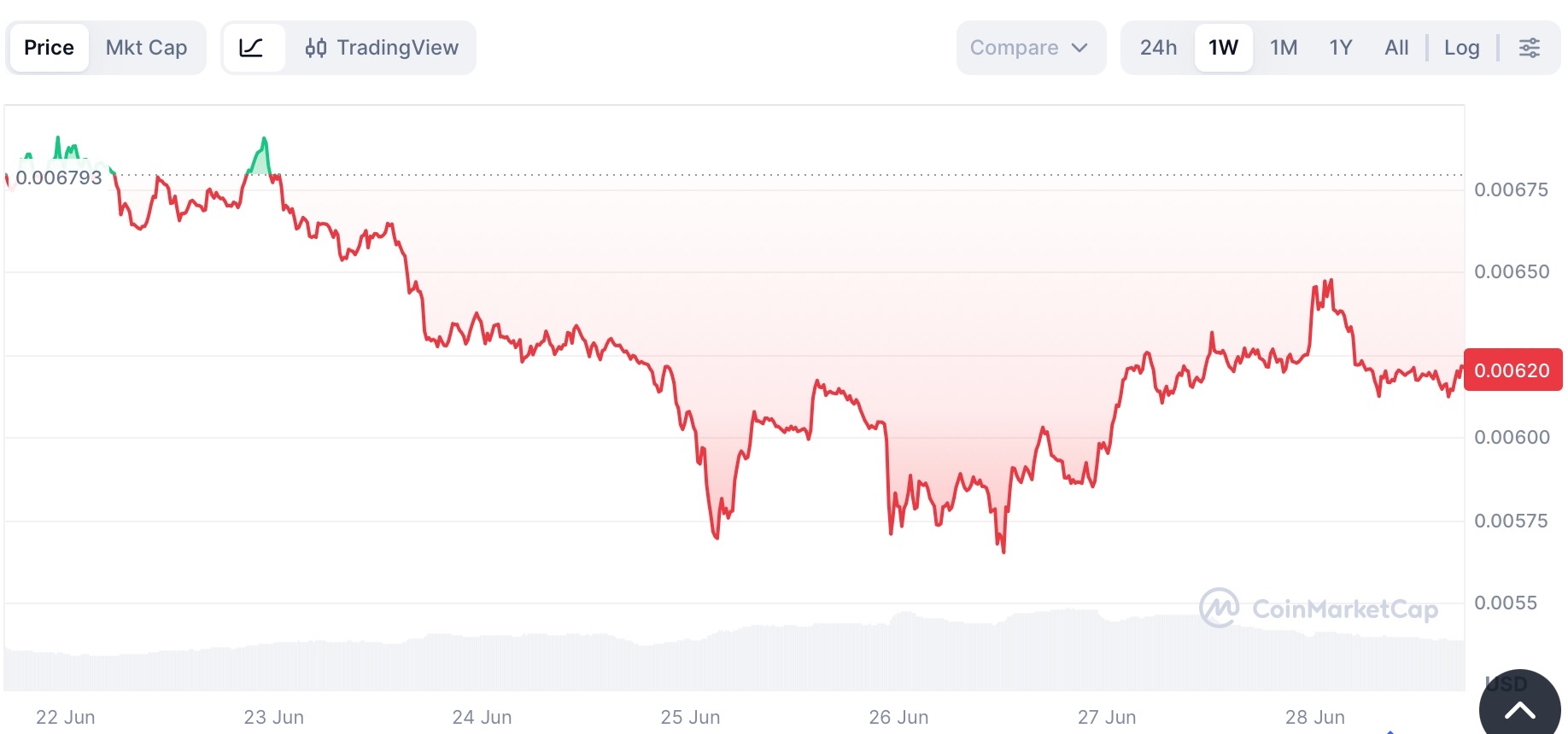
Right now, PENGU is still fighting around the $0.006 area. That level matters because it has become the short-term line between “still holding” and “needs more time.”
If buyers continue defending $0.006, the chart has a chance to rebuild. A move back through the $0.00630–$0.00640 area would make the short-term setup look healthier and could bring $0.00670–$0.00700 back into play.
But if PENGU loses $0.006 clearly, the tone changes. Then traders may start looking toward $0.00580 or lower for the next area of support. For a token driven heavily by sentiment, losing a visible level can quickly turn buyers into spectators.
That does not mean the Pudgy Penguins brand has failed. It simply means the token market may not be ready to price the story higher yet.
PENGU is not in a clean breakout. It is still waiting for confirmation.
The ETF Story Is Interesting, But It Is Not a Free Pass
One reason PENGU has stayed on traders’ radar is the Canary PENGU ETF filing. That headline is unusual. A product connected to PENGU and Pudgy Penguins NFTs is not something the market sees every day. It gives the token a more serious-sounding catalyst than the average meme coin.
But traders should not overstate it. A filing is not an approval. An approval is not the same as strong inflows. And strong headlines do not automatically create lasting demand.
For now, the ETF story is best treated as optionality. It can bring attention. It can create short-term volatility. It can make PENGU feel more important than a normal meme token.
But it is not a guarantee. If the market buys too much into the ETF narrative before anything is confirmed, disappointment can hit quickly. That is why ETF headlines are useful for momentum traders, but dangerous if treated as certainty.
Pudgy Penguins Has Real Consumer Reach
The strongest part of the PENGU story remains Pudgy Penguins itself. This is where the project stands apart from most NFT-era brands. Pudgy Penguins has managed to build something people can see outside crypto. Toys on retail shelves are not the same as a Discord campaign. A recognizable character in a major store has a different kind of power from a floor-price chart on an NFT marketplace.
That gives the brand a real advantage. It reaches people who may never buy an NFT. It gives the project a consumer identity. It makes Pudgy Penguins feel less like a closed crypto community and more like an IP that could travel.
This is the part bulls like. If Pudgy Penguins becomes a larger consumer brand, PENGU could become the liquid market proxy for that success.
But the market will eventually ask the same question again:
-
What does the token do?
-
Does it unlock access?
-
Does it reward participation?
Abstract Could Make the Story Bigger
Abstract, the consumer-focused Ethereum Layer 2 connected to the Pudgy Penguins ecosystem, gives PENGU another possible angle.
The idea is easy to like. Pudgy Penguins already has brand recognition. If Abstract can bring in apps, users, games, creators, and consumer crypto activity, PENGU may become part of a broader ecosystem story rather than just a token attached to an NFT brand.
That is the bullish version.
The cautious version is that new chains are easy to announce and hard to fill. Crypto has seen many ecosystem launches that looked exciting at the start but struggled to keep users after the first wave of attention. For Abstract to matter to PENGU, it needs real activity. Not just branding. Not just launch hype.
If Abstract gets that, the PENGU story becomes more interesting. If it does not, the token may keep trading mostly on sentiment and headline cycles.
Unlocks Are the Part Traders Should Not Ignore
PENGU also has a supply story. That is not as exciting as toys, ETFs, or consumer crypto, but it matters.
Token unlocks and vesting schedules can create pressure if the market is not ready to absorb new supply. In strong conditions, unlocks may pass without much damage. In weak conditions, they can make the chart feel heavy.
For a token like PENGU, where demand is closely tied to attention and liquidity, supply timing matters. Traders should watch unlock schedules, large wallet movement, exchange inflows, and whether whales are holding or distributing.
A good story can still struggle if too much supply hits the market at the wrong time. This is especially true for meme and IP tokens because they rely on confidence. Once traders start worrying about supply, the narrative has to work harder.
What Tapbit Users Should Watch
For Tapbit users, PENGU is a good example of how crypto narratives are evolving. The old meme coin formula was simple: attention creates liquidity. PENGU adds another layer: attention plus consumer IP.
Before trading PENGU or similar tokens, users should check whether the market is supported, how liquid it is, what spreads look like, and whether the token is moving on real news or short-term social momentum.
For IP-linked meme tokens, position sizing matters. A strong brand can support attention. It cannot remove volatility.
Users can visit Tapbit to follow supported crypto markets and review available trading opportunities. Existing users can log in, while new users can register here.
Frequently Asked Questions (FAQ)
What is PENGU?
PENGU is the token connected to the Pudgy Penguins ecosystem, one of the most recognizable NFT and consumer IP brands in Web3. It trades as a crypto asset and is often viewed as a liquid way to gain exposure to the Pudgy Penguins brand narrative.
Is PENGU a meme coin?
PENGU has meme-like trading characteristics, but it is not a typical meme coin. Unlike many meme tokens that rely only on social hype, PENGU is tied to Pudgy Penguins, a Web3 brand with NFT history, retail products, toys, and consumer-facing visibility.
Why is Pudgy Penguins important to PENGU?
Pudgy Penguins gives PENGU a stronger brand foundation than many community tokens. The project has expanded beyond NFTs into toys, retail distribution, social media, and consumer crypto narratives, which helps keep the token on traders’ radar.


