

What Is QQQUSDT?
QQQUSDT is a market pair name that combines two ideas: QQQ and USDT. QQQ usually refers to Nasdaq-100-linked exposure, while USDT is the quote currency used in many crypto trading pairs. In simple terms, QQQUSDT means a QQQ-related product priced against USDT.
For many traders, the search intent behind what is QQQUSDT is practical. They want to know whether it is a coin, an ETF, a stock, a tokenized stock, or a futures contract. The answer depends on the platform, but on Tapbit the relevant product is a QQQ-linked perpetual futures market.
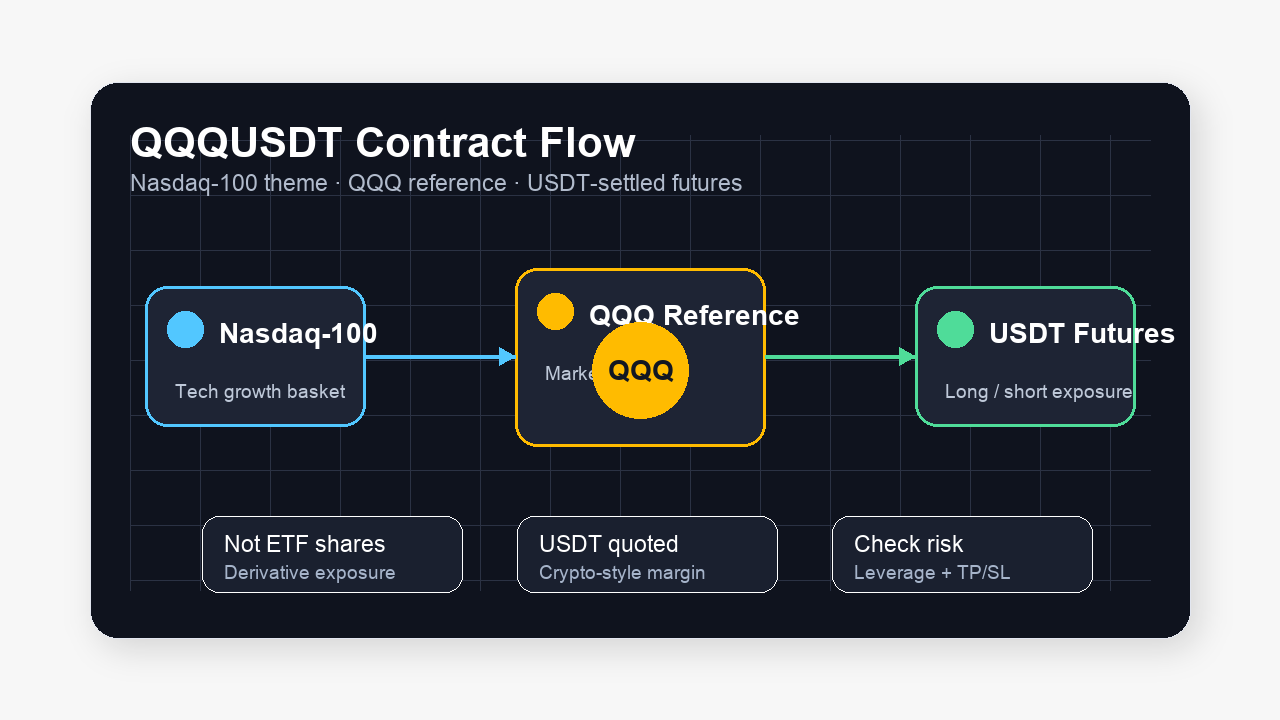
That means QQQUSDT is best understood as a TradFi-linked crypto futures pair, not as direct ownership of the QQQ ETF. It gives price exposure to a QQQ-style market reference in a USDT-settled trading format.
Why QQQ Matters in Crypto Markets
QQQ is widely watched because it tracks technology-heavy U.S. equity exposure through the Nasdaq-100 theme. The Nasdaq-100 includes many large non-financial companies, especially names tied to software, semiconductors, cloud computing, artificial intelligence, consumer internet, and digital platforms.
Crypto traders care about QQQ because risk appetite often moves across markets. When large technology stocks rally, traders may become more comfortable taking risk in crypto. When QQQ weakens, high-beta assets such as altcoins, AI tokens, and leveraged crypto positions can also face pressure.
This is why QQQUSDT sits between two worlds:
- Traditional market signal: U.S. technology and growth-stock sentiment.
- Crypto trading format: USDT settlement, futures-style interface, and faster access.
- Macro context: interest rates, earnings, AI demand, liquidity, and risk-on/risk-off behavior.
For broader market comparison, Tapbit Learn's what is S&P 500 index guide explains how equity benchmarks can reflect investor sentiment. You can also compare QQQ-style exposure with broader U.S. market ideas in the Dow Jones Completion Index guide.
QQQUSDT vs QQQ ETF vs Tokenized Stocks
QQQUSDT can sound similar to QQQ, tokenized stocks, and stock-linked crypto products, but the structure is different. Beginners should separate the names before taking action.
| Product Type | What It Represents | Typical Settlement | What Users Should Check |
|---|---|---|---|
| QQQ ETF | ETF exposure to Nasdaq-100-linked companies | Traditional brokerage currency | ETF issuer, expense ratio, trading hours |
| QQQUSDT futures | Derivative exposure linked to QQQ-style price movement | USDT margin and settlement | Contract rules, leverage, funding, liquidation |
| Tokenized stock product | Blockchain-based stock or stock-like exposure | Varies by issuer and platform | Issuer, custody, rights, redemption rules |
The key point: QQQUSDT is not the same as holding the QQQ ETF. It is a derivative-style product. It may be useful for traders who want short-term exposure, hedging, or market views, but it does not automatically carry ETF shareholder rights.
If you are comparing this with on-chain equity products, Tapbit Learn's guide to what tokenized stocks mean explains the difference between tokenized exposure, issuer claims, and actual stock ownership.
How QQQUSDT Works on Tapbit
On Tapbit, QQQUSDT appears as a USDT-quoted futures market. The product lets users take a view on QQQ-linked price movement without buying the ETF through a traditional brokerage account.
The basic mechanics are:
- The pair is quoted against USDT.
- Users can open long or short positions.
- Margin and leverage settings affect position size and liquidation risk.
- Price movement, funding, order book liquidity, and volatility all matter.
This format is familiar to crypto futures traders. The difference is that the underlying market theme is linked to a traditional finance asset rather than a native crypto token. Similar logic appears in other TradFi-linked products, such as oil, silver, or stock-linked futures.
For a broader comparison between traditional assets and crypto-style market access, see Tapbit Learn's crypto vs stocks guide.
How to Trade QQQ-USDT Futures on Tapbit
Before trading QQQUSDT, make sure you understand that futures can amplify both gains and losses. A small market move can have a larger impact if leverage is used.
QQQ-USDT Futures Steps
- Open the QQQ-USDT futures page on Tapbit.
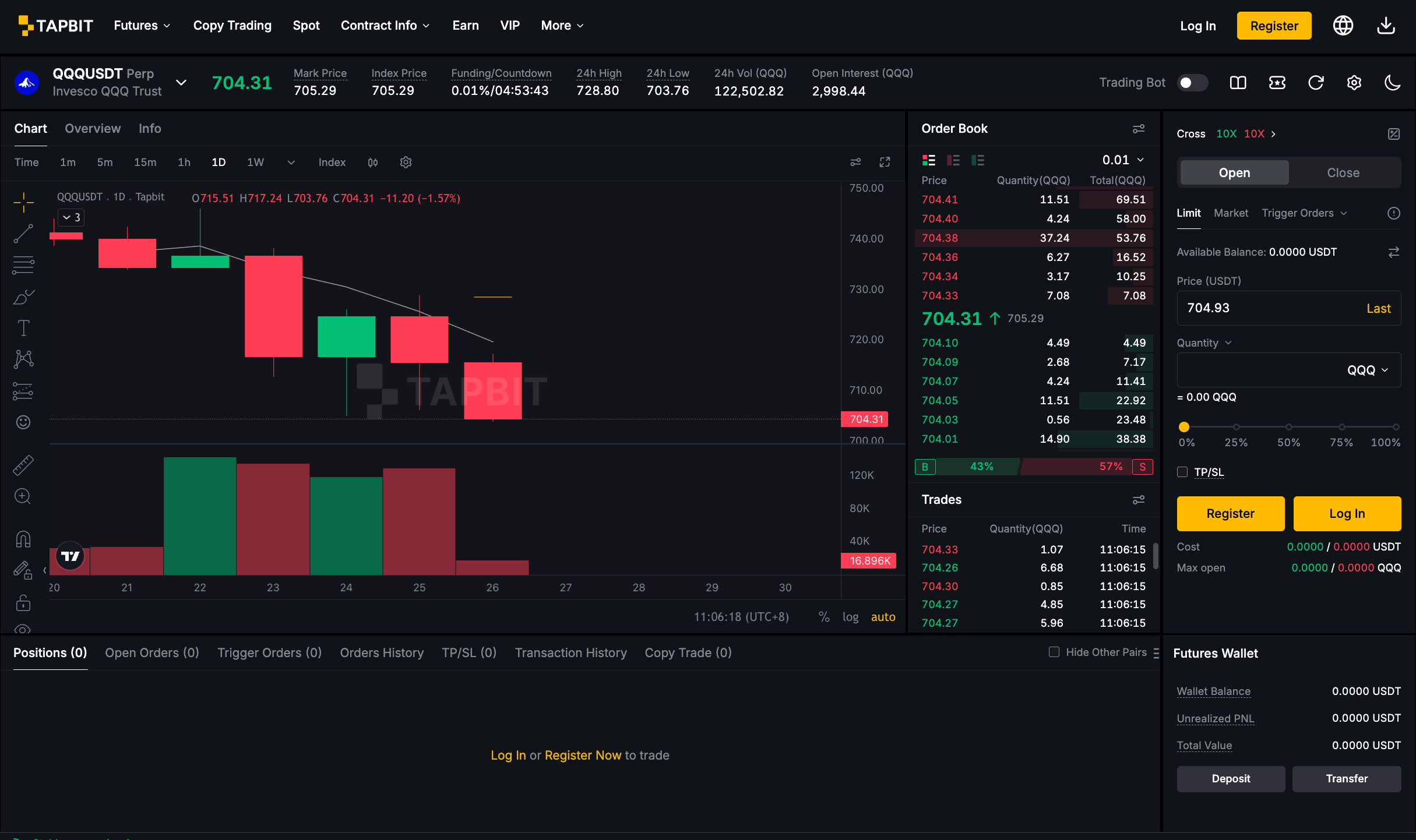
2. Check the latest price, 24H change, 24H volume, order book, funding information, and market depth.
3. Choose margin mode, leverage, order type, and position direction based on your trading plan.
4. Set TP/SL before opening a long or short position, and review Tapbit's fee structure before trading.
If you are new to Tapbit, you can create an account first and explore the interface. You can also view crypto prices to compare broader market conditions before deciding whether QQQUSDT fits your strategy.
When Traders Watch QQQUSDT
QQQUSDT may attract attention when technology stocks, AI themes, semiconductor earnings, or U.S. macro events are moving the market. For example, traders may watch QQQ-linked exposure around:
- U.S. Federal Reserve rate decisions.
- Major earnings reports from large technology companies.
- Semiconductor and AI infrastructure headlines.
- Broad risk-on or risk-off sessions.
- Nasdaq volatility after market-moving economic data.
Because QQQ is heavily associated with growth and technology sentiment, QQQUSDT may be useful as a fast-moving proxy for that theme. However, it should not be treated as a simple replacement for long-term ETF investing.
If your trading view is tied to individual technology names, remember that single-stock narratives can move differently from index-linked products. QQQUSDT is broader than one company, but it can still react sharply when large technology names lead market sentiment.
What to Check Before Trading QQQUSDT
Before opening a QQQUSDT position, check the contract details carefully. This matters because the same ticker-like term can mean different products across different platforms.
Focus on:
- Product type: futures, not direct ETF ownership.
- Quote currency: USDT.
- Margin and leverage: higher leverage increases liquidation risk.
- Liquidity: thin order books can increase slippage.
- Funding: funding costs can affect longer-held positions.
- Market hours and reference pricing: TradFi-linked products may behave differently from crypto-only markets.
For beginners, the safest first step is to treat QQQUSDT as a learning case: understand the contract, compare it with QQQ ETF exposure, then decide whether a USDT-settled futures product matches your trading style.
FAQ
Is QQQUSDT a crypto coin?
No. QQQUSDT is not a standalone crypto coin. It is generally used as a trading pair name for QQQ-linked exposure quoted in USDT. On Tapbit, the relevant product is a futures market.
Is QQQUSDT the same as QQQ?
No. QQQ is an ETF linked to Nasdaq-100 exposure, while QQQUSDT is a USDT-quoted derivative-style trading product. Holding QQQUSDT does not mean owning ETF shares.
What does USDT mean in QQQUSDT?
USDT is the quote currency. In QQQUSDT, it means the QQQ-linked product is priced and settled against USDT rather than U.S. dollars in a traditional brokerage account.
Can QQQUSDT be shorted?
On futures platforms, users can generally open both long and short positions if the product supports it. Always check the Tapbit contract page, margin settings, and risk controls before trading.
Is QQQUSDT suitable for beginners?
It can be useful for learning how TradFi-linked futures work, but beginners should be careful with leverage. Start by understanding QQQ, USDT settlement, funding, margin, and liquidation rules before placing any order.


