

Antfarm Token has recently appeared on price trackers with some upward movement. As of August 24, 2026, CoinGecko reported ATF near $0.079, roughly 22% higher over the past seven days.
That looks like the start of a recovery — but the trading data suggests otherwise.
Over the previous 24 hours, ATF generated only about $16 in reported volume. Protocol activity remains modest, and the team's attention has shifted toward a newer product called Bundles.fi,which has its own token (BUN) and an economic model that overlaps with ATF's original purpose.
So the question isn't simply why ATF moved. It's whether ATF still has a sustainable role as Antfarm continues to evolve.
A 22% Gain on $16 of Volume
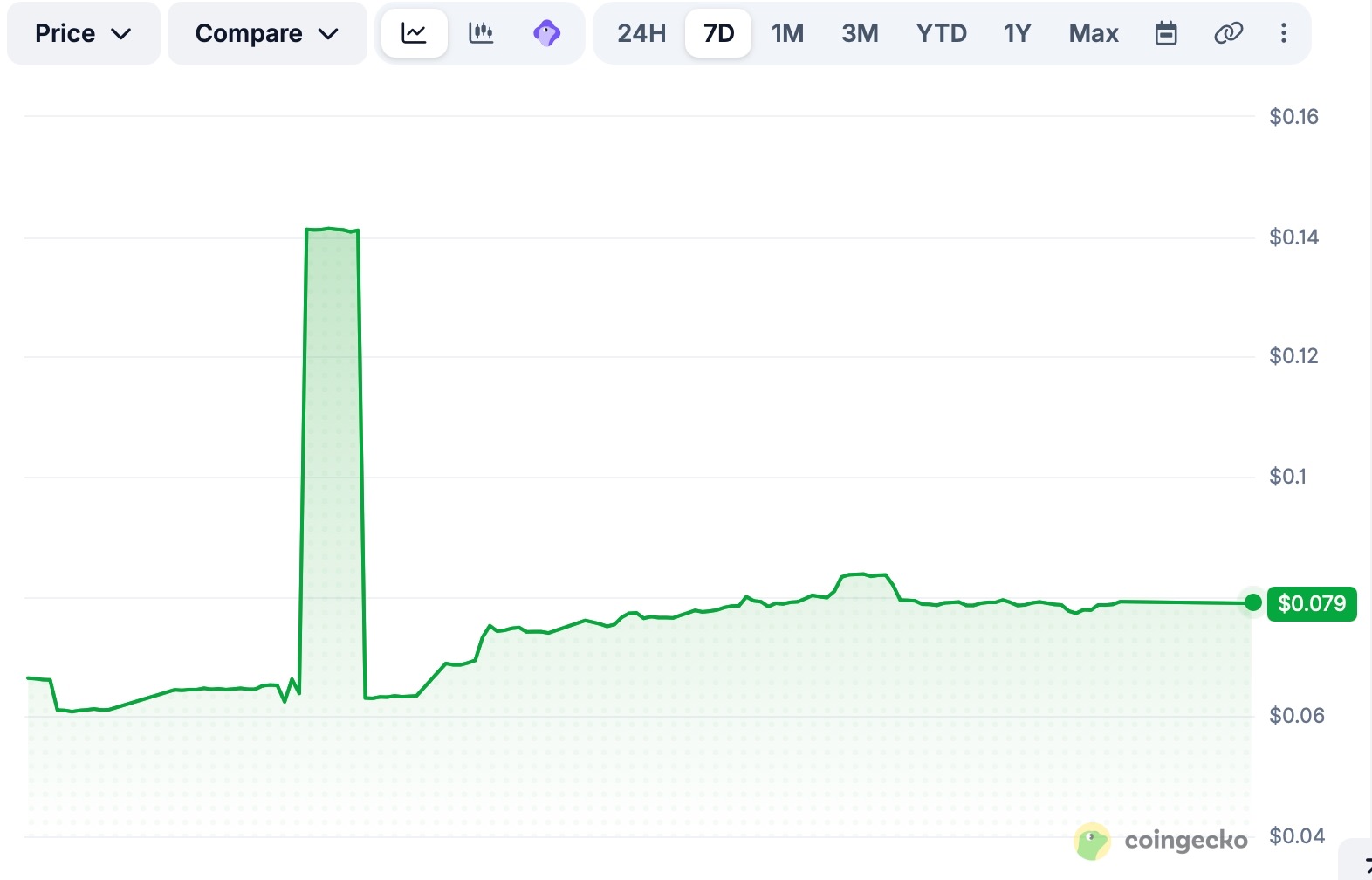
ATF was trading near $0.0788. Its circulating market capitalization was approximately $433,000, with about 5.5 million tokens counted as tradable.
The token remained roughly 68% below its March 2024 all-time high of $0.2479. It was also about 63% above the record low of $0.0484 reached in June 2026. Those figures suggest a recovery from the bottom, but the market behind them is extremely thin.
CoinGecko tracked ATF primarily through Antfarm’s own Ethereum exchange. Its listed pools showed only limited activity, with some markets recording no recent trades and only a few hundred dollars of depth within 2% of the quoted price.
In a market this small, the displayed price can move sharply without substantial capital entering the token. A handful of transactions may be enough to produce a double-digit weekly gain.
ATF’s recent rise should therefore be described as a low-liquidity move, not evidence of a broad change in investor demand.
Antfarm Was Built for Rebalancing, Not Regular Swaps
Antfarm is an on-chain liquidity protocol based on a modified Uniswap V2 design. Instead of competing with conventional decentralized exchanges for frequent, low-fee trades, it uses unusually high swap fees to create rebalancing thresholds.
Consider a pool containing ETH and USDC. When ETH moves far enough from the pool’s reference price, the difference eventually becomes large enough for an arbitrage trader to act despite the elevated fee. That transaction changes the pool’s asset balance and moves the portfolio back toward its intended allocation range.
Antfarm calls this tolerance-band rebalancing.
The model was built for liquidity providers who want automated portfolio adjustment rather than constant trading volume. Pool fees can range from 1% to much higher levels, with the chosen rate determining how far prices must move before arbitrage becomes worthwhile.
ATF sits inside this system as the fee token. Swap fees are paid in ATF, 85% goes to liquidity providers and the remaining 15% is burned. In theory, more rebalancing activity should produce more ATF demand and more token burns.
The important qualification is “in theory.” The model requires active pools, useful liquidity and enough price movement to attract arbitrage. A deflationary mechanism has little economic effect when protocol usage is low.
Bundles Is the New Center of the Project
Open the Antfarm application and a banner now tells users that Antfarm is upgrading. It directs them to migrate ATF and visit Bundles.fi.
Bundles takes the original rebalancing concept and turns it into on-chain crypto indexes. Rather than selecting individual Antfarm pools, users can buy a single ERC-20 token representing a portfolio of underlying assets. The protocol then adjusts the portfolio according to predetermined weights and price thresholds.
Its current products include the Core Bundle, Blue Chip Bundle and Good Fortune. Each is designed around a different asset mix and risk profile.
This is easier to understand than Antfarm’s original pool design. An investor chooses a portfolio, buys one token and lets the protocol handle rebalancing. Bundles also allows users to create and manage their own indexes.
The shift addresses one of Antfarm’s central challenges: its technology may be interesting, but its original presentation was aimed at users already comfortable with liquidity pools, arbitrage and impermanent loss.
BUN Now Occupies ATF’s Old Position
The transition becomes less straightforward when the token model is considered. Bundles uses BUN as its native utility token. According to its website, BUN must represent at least 5% of every bundle. It is also used to pay swap and rebalancing fees, with part of those fees burned.
That resembles the original ATF model. ATF was supposed to gain demand because every Antfarm pool used it for fees. BUN is now positioned as the token connecting the Bundles ecosystem and capturing activity from index rebalancing.
This does not mean ATF has been abandoned.
Antfarm governance approved a program offering 100,000 ATF as rewards for staking the CORE Bundle. Earlier proposals also moved DAO liquidity from Antfarm into Bundles products and BUN-related pools. On-chain records show that migration is taking place through governance decisions rather than existing only as a marketing plan.
Even so, rewards are not the same as lasting utility. Distributing ATF may encourage early Bundles deposits, but those tokens still need a reason to be held or used after the incentive period ends.
Public documentation has not yet provided a complete answer. It remains unclear whether ATF will be converted into BUN, retain an independent role, coexist with BUN indefinitely or gradually lose relevance as more activity moves to Bundles.
Migration Can Create Both Demand and Selling Pressure
Token migrations often produce volatile markets because users do not receive the same information at the same time.
Some holders may expect ATF to receive a formal conversion arrangement. Others may interpret “Migrate ATF” as evidence that the token will be retired. Users earning ATF through Bundles incentives may sell those rewards if they do not need the token elsewhere.
Thin liquidity amplifies each of these reactions.
The current ATF price should not be used to infer a widely accepted migration valuation. CoinGecko’s market data is based on a small number of decentralized pools, and daily turnover can fall below the value of an ordinary retail trade.
Before acting on a migration narrative, holders need clear information about the conversion mechanism, deadline, eligible networks, destination contract and rights attached to any replacement asset. Those details should come from official documentation and verified contracts.
What Would Make the ATF Case Stronger?
The next meaningful signal is unlikely to be another short-lived price increase.
ATF needs a clearly documented role in the Bundles ecosystem. That could take the form of a transparent conversion into BUN, continued fee utility, permanent inclusion in selected bundles or another mechanism connected to actual product usage.
Trading conditions also need to improve. A token with daily volume measured in tens of dollars cannot support reliable price discovery, regardless of its market capitalization.
Protocol data will show whether the transition is working. Rising Bundles TVL, recurring rebalancing activity and growing fee revenue would support the broader product story. Whether that activity benefits ATF depends on the final token design.
For now, Antfarm has a functioning protocol, an identifiable on-chain model and an active transition toward a simpler product. ATF remains part of that transition, but its position is no longer as clear as it once was.
The migration to Bundles may revive the ecosystem. It may also shift value toward BUN. Until the relationship between the two tokens is fully documented, ATF’s low-volume rally says less than the price chart suggests.
Readers can follow crypto market research and educational coverage through Tapbit. Existing users can log in here, while new users can create an account.
Frequently Asked Questions
What is Antfarm Token?
Antfarm Token, or ATF, is the utility token of the original Antfarm protocol. It is used to pay swap fees within Antfarm pools. Liquidity providers receive 85% of those fees, while 15% is burned.
Why has ATF increased in price?
CoinGecko showed ATF gaining approximately 22% over seven days as of August 24, 2026. No single verified catalyst explains the move. Daily trading volume was only about $16, meaning a small number of trades may have produced the increase.
Is ATF actively traded?
ATF can be traded through decentralized pools on Antfarm, but liquidity and turnover are extremely limited. Some tracked markets have gone for hours without a trade, so quoted prices may not represent a level at which larger positions can be executed.


