

The latest PROVE token unlock has placed Succinct’s token supply under close scrutiny. Public unlock trackers estimate that slightly more than 200 million PROVE became eligible for release, with figures ranging from about 203.3 million to 208.3 million depending on the methodology used.
The difference matters because an unlock this large can materially change the relationship between circulating supply, market capitalization and daily liquidity. It does not mean every unlocked token will be sold immediately. Some allocations may remain unclaimed, move to long-term wallets or be held by contributors and investors with different time horizons.
What Happened in the PROVE Token Unlock?
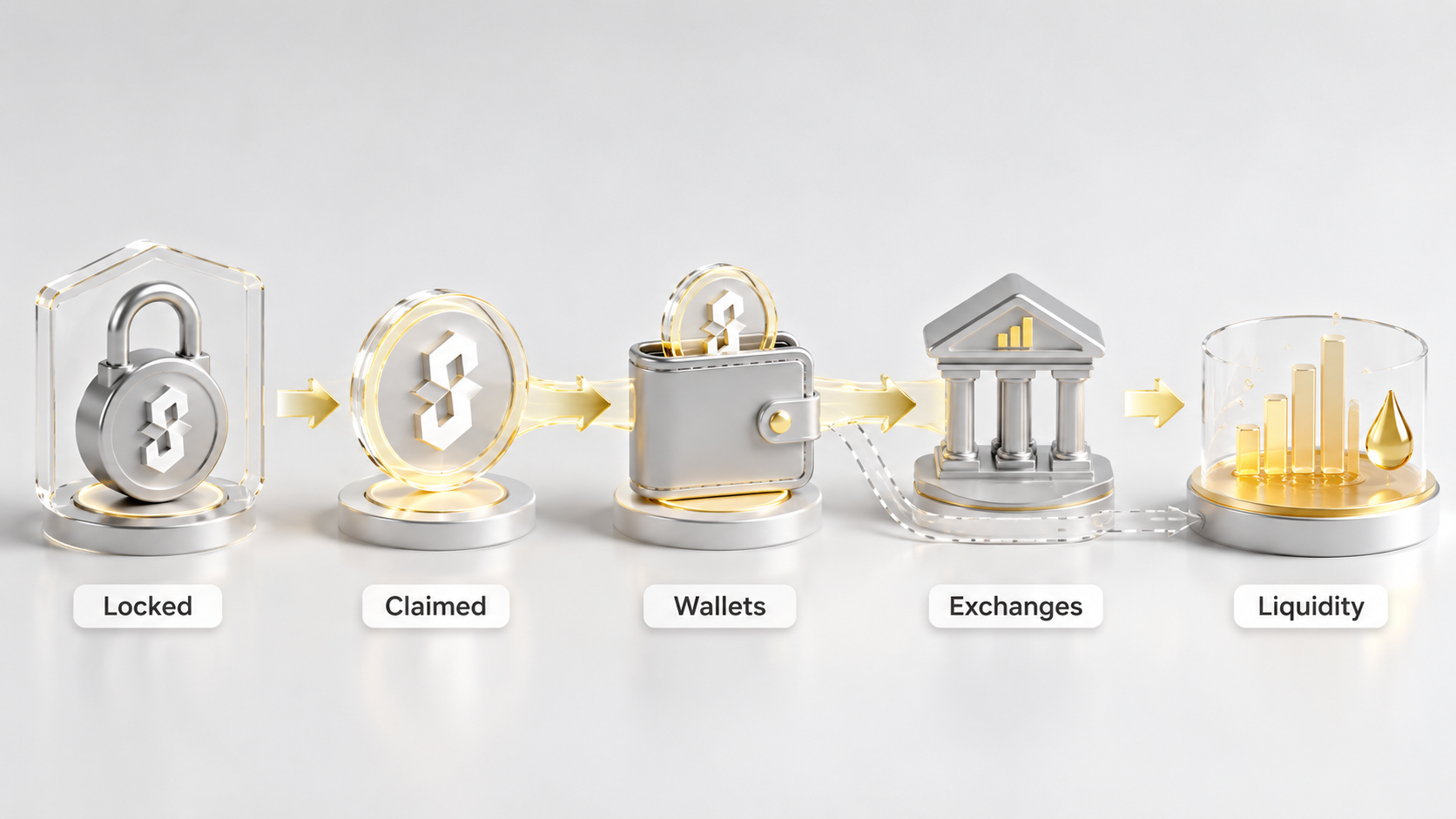
A token unlock removes transfer restrictions from previously locked allocations. For PROVE, the August event appears to include a large scheduled release tied to early stakeholders and ecosystem allocations. The market therefore has to price two separate questions: how much supply is technically unlocked, and how much of that supply actually becomes active selling pressure.
Traders should avoid treating “unlocked” and “circulating on exchanges” as interchangeable. The most useful evidence comes from claim transactions, wallet movements and deposits to centralized exchanges after the unlock.
How Many PROVE Tokens Were Unlocked?
Available trackers show a range rather than one universally agreed number. One estimate places the release near 203.33 million PROVE, while another is closer to 208.33 million. Differences can come from whether a data provider includes treasury allocations, claimable but unclaimed tokens or a specific vesting timestamp.
The completed publication should use the latest Succinct documentation and on-chain vesting contracts as the primary reference. If the release exceeded the prior circulating float, the percentage change in tradable supply is more important than the dollar value quoted in a headline.
Who May Receive the Unlocked Tokens?
Large cliff unlocks often involve several recipient groups:
- Core contributors: team members and developers whose tokens vest after an initial lock.
- Early investors: backers who accepted long holding periods before receiving transferable tokens.
- Ecosystem or treasury allocations: tokens reserved for incentives, grants, partnerships or operations.
These groups do not behave identically. A treasury transfer to a controlled wallet is different from an exchange deposit by an early investor. That is why wallet classification should be part of any post-unlock analysis.
Why Can a Large Unlock Affect PROVE Price?
Circulating-Supply Expansion
If the number of actively tradable tokens rises faster than demand, buyers may require a lower price to absorb the additional supply. Market capitalization can remain stable even while the token price falls if circulating supply increases sharply.
Liquidity and Trading Volume
A market with deep order books can absorb selling more effectively than a thin market. Compare the value of newly unlocked tokens with normal daily spot volume, order-book depth and exchange concentration. A large unlock relative to genuine volume can create slippage and abrupt moves.
Expectations Before the Event
Unlocks are usually scheduled in advance. If traders have already reduced exposure, the event may produce less additional downside than expected. In some cases, price recovers after the unlock because the uncertainty has passed and actual selling is smaller than feared.
How to Check Whether the Unlock Created Selling Pressure
- Track claims from official vesting contracts.
- Monitor transfers from identified investor and contributor wallets.
- Compare exchange inflows with the seven-day baseline.
- Watch whether spot volume rises together with falling price.
- Check whether open interest and funding indicate crowded short positioning.
A price decline without notable exchange inflows may reflect anticipation rather than direct token distribution. Conversely, repeated deposits to exchanges accompanied by weak bids would make the supply-risk thesis stronger.
How to Measure the Real Dilution Risk
The most useful dilution calculation compares the newly active supply with the supply that was already circulating before the event. A large percentage increase matters because the same market capitalization is now divided across more tradable tokens. However, the calculation should use tokens that are genuinely transferable and likely to reach the market, not every allocation shown in a long-term tokenomics chart.
Volume also needs adjustment. Reported exchange volume can include market-maker activity, short-term arbitrage and repeated turnover of the same inventory. A better stress test compares likely recipient selling with visible order-book depth near current price levels. If relatively small sell orders move price sharply, the market may not be deep enough to absorb a large distribution without a discount.
Finally, traders should separate one-time dilution from continuing emissions. A cliff unlock can create a sudden repricing, while monthly vesting can keep pressure in place for longer. The post-event outlook improves when the largest cliff has passed, future releases are smaller and demand begins growing faster than new supply.
PROVE Price Outlook After the Unlock
Bull Case
The market absorbs claims, exchange inflows stay contained and PROVE reclaims its first post-unlock resistance area with stronger volume. This would suggest the headline supply shock was larger than the effective selling pressure.
Base Case
PROVE trades in a wide consolidation range as new supply is gradually distributed. Volatility remains elevated, but neither buyers nor sellers establish a decisive trend.
Bear Case
Claim activity accelerates, exchange balances rise and price closes below the post-unlock support zone. The bearish scenario becomes stronger if daily volume expands mainly on down days and rebounds repeatedly fail below former support.
What Would Confirm or Invalidate a Recovery?
A recovery is more credible when price forms a higher low, reclaims resistance and does so while exchange inflows stabilize. It is invalidated when the token continues setting lower lows, newly unlocked wallets send tokens to exchanges or liquidity contracts during the selloff.
Tapbit does not currently offer a confirmed PROVE spot or futures market. Do not use an unofficial pair or assume support from a similarly named asset. Readers can create an account to review the markets currently available on Tapbit, but should verify the exact ticker, chain and contract before trading any token.
FAQ
How many PROVE tokens were unlocked?
Public trackers place the event between roughly 203.3 million and 208.3 million PROVE. The final article should use the latest official vesting data.
Does an unlock mean all tokens are sold?
No. Unlocking makes tokens transferable; it does not prove that recipients sold them.
Why can token unlocks lower price?
They can increase tradable supply faster than demand, particularly when liquidity is limited.
Is PROVE available on Tapbit?
No confirmed Tapbit PROVE spot or futures market is cited in this article.


